

Sexual harassment claims in Mid-Wilshire offices and co-working spaces like WeWork present distinct challenges that many employees misunderstand. The shared nature of co-working environments creates confusion about who holds responsibility and how to report incidents effectively. Traditional corporate offices have clear HR channels, but co-working spaces involve multiple management layers, landlords, and tenant companies. This guide clarifies your legal rights, explains reporting procedures specific to Mid-Wilshire workplaces, and provides actionable steps to protect yourself when facing harassment in any office environment.
Table of Contents
- Key takeaways
- Understanding sexual harassment claims in Mid-Wilshire corporate offices and co-working spaces
- Reporting sexual harassment in Mid-Wilshire offices and WeWork spaces: Steps and considerations
- Legal rights and protections for Mid-Wilshire employees facing sexual harassment claims
- Navigating sexual harassment claims in shared workspaces like WeWork: Unique challenges and strategies
- Legal support for sexual harassment claims in Mid-Wilshire offices
- Frequently asked questions about Mid-Wilshire sexual harassment claims
Key Takeaways
| Point | Details |
|---|---|
| Harassment types and law | Quid pro quo and hostile environment claims are illegal in all Mid Wilshire workplaces, including co working spaces. |
| Structural reporting differences | In corporate offices the employer bears clear responsibility while in shared spaces liability may involve landlords and other tenants. |
| California protections apply | California law protects employees regardless of workspace configuration and requires prompt investigation of complaints. |
| Documentation and evidence | Prompt, detailed documentation including dates, times, locations, witnesses, and saved communications strengthens claims. |
Understanding sexual harassment claims in Mid-Wilshire corporate offices and co-working spaces
Sexual harassment takes two primary forms in workplace law. Quid pro quo harassment occurs when supervisors condition job benefits on sexual favors or punish employees who refuse advances. Hostile work environment harassment involves unwelcome conduct severe or pervasive enough to create an intimidating, offensive workplace. Both types violate California law in all workplace types, including co-working spaces.
Mid-Wilshire’s diverse office landscape complicates harassment claims. Traditional corporate offices maintain direct employer control over premises, policies, and personnel. Co-working spaces like WeWork operate differently. Multiple companies share facilities under a landlord or management company that controls common areas, security, and building policies. Your employer rents space but may lack authority over other tenants or building staff.
This structural difference affects liability and reporting. In corporate offices, your employer bears clear responsibility for preventing and addressing harassment. In shared workspaces, responsibility may extend to building owners, property managers, and other tenant companies whose employees create hostile conditions. Sexual harassment complaints in Mid-Wilshire offices require understanding these distinctions.
California’s Fair Employment and Housing Act protects employees regardless of workspace configuration. Employers must maintain harassment-free environments, implement prevention policies, and respond promptly to complaints. This obligation doesn’t diminish because your company rents co-working space rather than owning facilities. The law recognizes that employees deserve protection whether harassment comes from coworkers, supervisors, clients, or individuals from other tenant companies sharing your workspace.
Key factors distinguishing corporate and co-working harassment claims include:
- Control over premises and security varies between workspace types
- Reporting chains may involve multiple entities in shared spaces
- Evidence preservation requires documenting interactions across tenant boundaries
- Liability determination depends on employer authority and building management responsibilities
Recognizing these workplace-specific factors helps you navigate the claims process effectively and identify all responsible parties.
Reporting sexual harassment in Mid-Wilshire offices and WeWork spaces: Steps and considerations
Prompt, detailed documentation forms the foundation of successful harassment claims. Record each incident immediately, noting dates, times, locations, specific words or actions, and witnesses present. Save emails, texts, and other communications. Photograph inappropriate materials if safe to do so. This evidence becomes crucial if you pursue legal action or if your employer disputes your account.

Corporate office reporting typically follows established HR procedures. Review your employee handbook for designated complaint channels and follow them precisely. Submit written complaints documenting incidents and requesting investigation. Keep copies of all submissions and responses. If HR fails to act appropriately, escalate to senior management while continuing to document the process.
Co-working space reporting requires a dual approach. First, report to your direct employer through their established channels, even if the harasser works for another tenant company or building management. Your employer must address harassment affecting your work environment. Second, notify building management or the co-working space operator about incidents involving their staff or other tenants. Employees should document incidents promptly and use internal reporting channels designed for their workplace type to protect their rights.
Follow these steps when reporting harassment:
- Document the incident in writing with specific details before memory fades
- Report to your employer’s designated contact, typically HR or a supervisor
- If in a co-working space, also notify building management about incidents involving non-employees
- Request written confirmation of your complaint and any investigation steps
- Continue documenting any retaliation, ongoing harassment, or inadequate responses
- Consult an employment attorney if internal processes fail or retaliation occurs
- File administrative complaints with DFEH or EEOC within legal deadlines
California law imposes strict filing deadlines. You generally have three years to file a civil lawsuit for harassment, but administrative complaints with the Department of Fair Employment and Housing must be filed within three years of the last incident. These deadlines don’t pause while your employer investigates, so consulting legal counsel early protects your options.
Shared workspace reporting presents unique challenges. You may not know which company employs someone who harasses you. Building management may deflect responsibility to tenant companies. Multiple parties may claim lack of authority over the situation. Persistence matters. Document every report, follow up in writing, and don’t accept vague promises without concrete investigation timelines.
Pro Tip: Always submit harassment complaints in writing via email, creating an automatic timestamp and paper trail that employers cannot dispute later.
Legal rights and protections for Mid-Wilshire employees facing sexual harassment claims
California employment law provides comprehensive protections for harassment victims. You have the right to a workplace free from sexual harassment regardless of your job title, employment status, or workspace type. Employers must take reasonable steps to prevent harassment, investigate complaints promptly, and remedy hostile conditions. These obligations apply equally to companies using co-working spaces and those operating traditional offices.
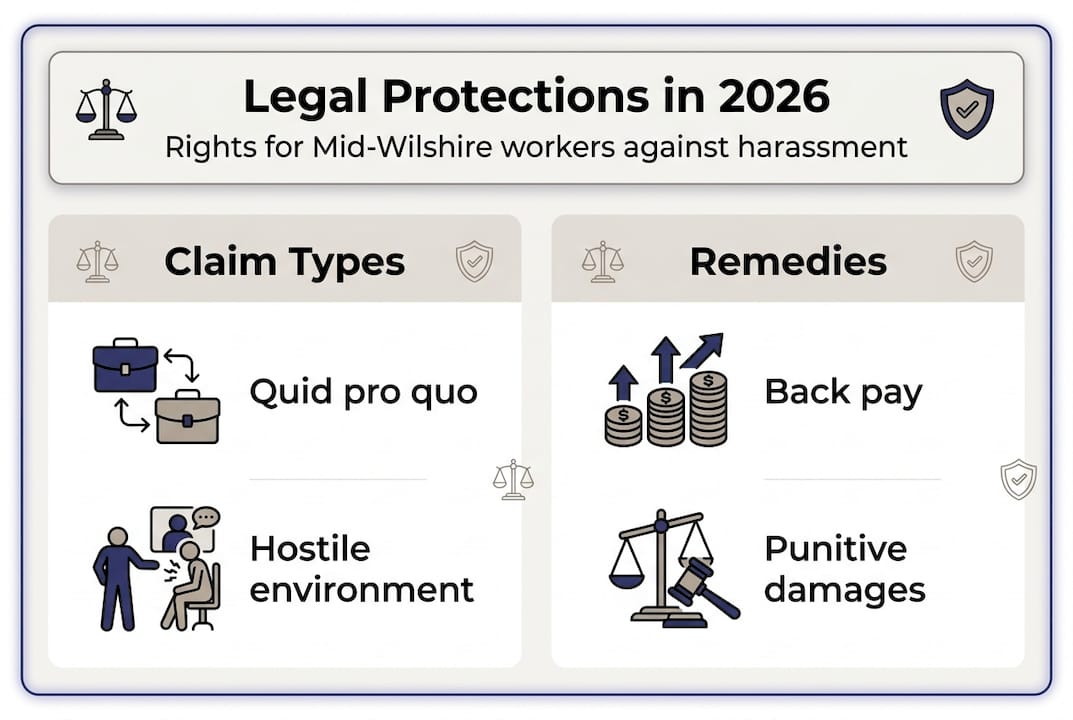
Anti-retaliation protections safeguard employees who report harassment. Your employer cannot fire, demote, reduce pay, or otherwise punish you for making good faith harassment complaints. Retaliation claims often succeed even when underlying harassment claims face challenges, because retaliation focuses on your employer’s response rather than proving harassment severity. California law provides robust retaliation protections and various legal remedies, including damages and injunctive relief, for workplace sexual harassment victims.
Your fundamental rights include:
- Protection from quid pro quo and hostile work environment harassment
- Prompt, thorough investigation of harassment complaints
- Reasonable accommodations to avoid ongoing contact with harassers
- Freedom from retaliation for reporting harassment or participating in investigations
- Confidentiality of complaints to the extent possible during investigations
- Access to legal remedies through administrative agencies and courts
Multiple enforcement avenues exist for harassment claims. Administrative complaints with the Department of Fair Employment and Housing or Equal Employment Opportunity Commission initiate government investigations. These agencies may mediate settlements or issue right-to-sue letters allowing you to file civil lawsuits. Direct civil litigation in California courts provides another path, particularly when seeking substantial damages.
| Remedy Type | Administrative Process | Civil Lawsuit |
|---|---|---|
| Filing entity | DFEH or EEOC | California Superior Court |
| Investigation | Government agency investigates | Your attorney conducts discovery |
| Timeline | 6-18 months typically | 1-3 years to trial |
| Potential outcomes | Mediation, settlement, right-to-sue letter | Compensatory damages, punitive damages, injunctions |
| Cost to employee | Free filing | Attorney fees (often contingency) |
Available remedies for proven harassment include back pay for lost wages, compensation for emotional distress, punitive damages when employers act with malice, attorney fees, and injunctive relief requiring policy changes. Successful claims may recover substantial damages, particularly when harassment was severe or your employer failed to respond appropriately.
Employer responsibilities extend beyond simply prohibiting harassment. California law requires companies with five or more employees to provide harassment prevention training. Supervisors must receive two hours of training every two years. Employers must maintain written policies, investigate complaints within reasonable timeframes, and take corrective action when harassment occurs. These obligations don’t disappear because your company uses co-working space rather than dedicated offices.
Pro Tip: Document not just harassment incidents but also your employer’s response timeline, because inadequate investigation or delayed action can strengthen retaliation and negligence claims even if harassment itself is disputed.
Understanding gender discrimination claims in Mid-Wilshire firms helps employees recognize when harassment intersects with broader discrimination patterns affecting workplace opportunities and treatment.
Navigating sexual harassment claims in shared workspaces like WeWork: Unique challenges and strategies
Co-working environments create liability complications absent in traditional offices. When harassment involves employees from different tenant companies or building staff, determining responsible parties requires legal analysis. Your employer may argue they lack control over other tenants. Building management may claim tenant companies control their employees. These finger-pointing scenarios require strategic legal approaches.
Liability in shared workspaces depends on control and responsibility. Harassment claims in co-working spaces involve complex liability due to shared ownership and management arrangements. Your employer remains liable for harassment by supervisors and coworkers regardless of workspace type. Building owners and management companies may be liable for harassment by their staff, inadequate security enabling harassment, or failing to address known harassment between tenants.
Legal ambiguities arise when harassment crosses tenant boundaries. If another tenant company’s employee harasses you, both your employer and theirs may bear responsibility. Your employer must address the hostile environment affecting you. The harasser’s employer must discipline their employee. Building management must maintain safe common areas and may need to restrict access or implement security measures.
Strategies for co-working harassment claims:
- Identify all potentially responsible parties early, including your employer, building owner, property management, and harasser’s employer
- Report to multiple entities simultaneously to establish notice and trigger investigation obligations
- Document building management’s awareness of harassment patterns or security failures
- Preserve evidence of how shared workspace configuration enabled or exacerbated harassment
- Consult attorneys experienced with premises liability and multi-party employment claims
Evidence preservation takes on heightened importance in shared spaces. Security footage from common areas may capture incidents but gets overwritten quickly. Witness employees from other companies may be difficult to locate later. Building access records showing when harassers entered your workspace may disappear. Act quickly to request evidence preservation from all potentially liable parties.
“Workplace design significantly impacts employee well-being and can either mitigate or exacerbate harassment risks. Shared spaces require thoughtful management to ensure safety and respect across diverse tenant populations.”
Seek legal counsel familiar with employment law in Mid-Wilshire co-working environments. These cases require understanding both employment discrimination law and premises liability principles. Attorneys experienced with multi-party claims can identify all responsible entities, preserve critical evidence, and develop strategies addressing the unique challenges shared workspaces present.
Shared workspace harassment claims may involve additional legal theories beyond traditional employment discrimination. Premises liability claims against building owners focus on inadequate security or failure to address known dangers. Negligent hiring or supervision claims may apply when building staff harass tenants. These supplemental theories expand potential recovery and pressure all responsible parties to participate in resolution.
Legal support for sexual harassment claims in Mid-Wilshire offices
Navigating harassment claims requires specialized legal knowledge, particularly in Mid-Wilshire’s diverse workplace landscape. Employment attorneys experienced with both corporate and co-working harassment cases understand the reporting complexities, liability issues, and strategic considerations these claims involve. Early legal consultation protects your rights before critical evidence disappears or deadlines pass.
Professional guidance proves invaluable when employers respond inadequately to complaints or retaliation begins. Attorneys can demand proper investigations, negotiate workplace accommodations, and preserve your legal options while internal processes unfold. If resolution proves impossible, experienced counsel can file administrative complaints, negotiate settlements, or litigate civil claims seeking full compensation for harassment’s impact on your career and wellbeing.
Understanding employee rights under 2026 discrimination laws helps workers recognize when harassment intersects with broader civil rights protections. Comprehensive legal representation addresses all dimensions of workplace mistreatment, from harassment to discrimination to retaliation. Specialized employment lawyers in Los Angeles bring deep knowledge of California law and local workplace dynamics to your case.
Mid-Wilshire employees facing sexual harassment complaints benefit from counsel familiar with the neighborhood’s unique mix of corporate offices, creative industry workplaces, and co-working spaces. Local expertise matters when navigating reporting channels, identifying liable parties, and developing case strategies tailored to your specific workplace environment.
Pro Tip: Consult an employment attorney before filing internal complaints when possible, as strategic guidance on documentation, reporting language, and evidence preservation significantly strengthens subsequent legal claims if internal resolution fails.
Frequently asked questions about Mid-Wilshire sexual harassment claims
How quickly should I report sexual harassment in a WeWork space?
Report harassment immediately to both your employer and building management. California law doesn’t impose strict reporting deadlines on employees, but prompt reporting strengthens your claim by demonstrating seriousness and preventing your employer from arguing you didn’t consider conduct severe. Document incidents in writing within 24 hours while details remain fresh.
Can I file a claim against both my employer and the co-working space management?
Yes, multiple parties may be liable depending on who controlled relevant aspects of your work environment and who employed the harasser. Your employer remains responsible for addressing harassment affecting you. Building management may be liable for inadequate security, harassment by their staff, or failing to address known problems between tenants. An attorney can identify all responsible parties.
What protections exist if my employer retaliates after I report harassment?
California law strictly prohibits retaliation for reporting harassment or participating in investigations. Retaliation includes termination, demotion, pay reduction, negative performance reviews, or other adverse employment actions. You can file separate retaliation claims even if harassment claims face challenges. Retaliation claims often succeed because they focus on your employer’s improper response rather than proving harassment severity.
Where can I get confidential advice about harassment claims in Mid-Wilshire?
Employment attorneys provide confidential consultations to evaluate your situation and explain legal options. Many offer free initial consultations and work on contingency fees for harassment cases, meaning you pay attorney fees only if you recover damages. Consulting an attorney doesn’t commit you to filing claims but protects your rights by ensuring you understand deadlines and preservation requirements. Understanding the sexual harassment legal framework in LA helps employees recognize when professional guidance becomes necessary.
Are legal deadlines different for complaints in co-working spaces versus corporate offices?
No, California’s filing deadlines apply equally regardless of workspace type. You generally have three years to file civil harassment lawsuits and three years to file administrative complaints with DFEH. However, evidence preservation and witness availability often present greater challenges in co-working spaces, making prompt action even more critical despite identical legal deadlines.
Recommended
- Sexual Harassment Complaints: Navigating Mid-Wilshire Offices – Law Office of Brian Y. Shirazi, PC
- Gender Discrimination Claims in Mid-Wilshire Firms – Law Office of Brian Y. Shirazi, PC
- Hostile Work Environment Claims in Mid-Wilshire Offices – Law Office of Brian Y. Shirazi, PC
- Seasoned Employment Lawyer in Mid-Wilshire