

Working in beauty retail at prestigious brands like Sephora and Aesop in Beverly Grove should mean fair pay for every hour you work. Yet many employees face unpaid overtime, missed breaks, and wage miscalculations without realizing their legal rights. California law provides strong protections for retail workers, but violations remain common even at well-known companies. This article explains the wage and hour violations you might encounter, your rights under California law, and the practical steps you can take to recover what you are owed.
Table of Contents
- Key takeaways
- Understanding wage and hour laws for beauty and skincare employees
- Common wage and hour violations at Sephora, Aesop, and similar brands
- How to protect your rights and address wage and hour violations
- Understanding potential outcomes and what to expect during dispute resolution
- Get legal support for wage and hour violations in Beverly Grove
- Frequently asked questions
Key Takeaways
| Point | Details |
|---|---|
| Common wage violations | Unpaid overtime, missed breaks, and wage miscalculations are common in beauty retail and are addressed by California wage laws. |
| Brand wage claims | Employees at Sephora and Aesop have reported unpaid overtime and wage miscalculations as part of broader wage and hour violations. |
| Legal rights to pay | California law protects retail workers and allows recovery of unpaid wages when violations occur. |
| Keep precise records | Maintain a personal log of hours, breaks, early setup and late tasks to compare with pay stubs and catch discrepancies. |
Understanding wage and hour laws for beauty and skincare employees
California maintains some of the strongest wage protections in the nation, especially for retail workers in the beauty and skincare industry. California law requires payment for all hours worked, including overtime and breaks, but many employees remain unaware of what qualifies as compensable time. Hours worked include not just your scheduled shift, but also time spent opening or closing the store, attending mandatory meetings, completing training modules, and performing inventory tasks. If your employer asks you to arrive early to set up displays or stay late to reconcile the register, that time must be paid.
Overtime rules in California differ significantly from federal standards. You earn overtime at 1.5 times your regular rate for any hours over eight in a single workday or over 40 in a workweek. Double time applies for hours beyond 12 in one day or over eight on your seventh consecutive workday. These thresholds apply regardless of whether your employer approved the overtime in advance. If you work the hours, you must be paid.
California also mandates specific rest and meal breaks for retail employees. You are entitled to a 10-minute paid rest break for every four hours worked or major fraction thereof. For shifts longer than five hours, you must receive an unpaid 30-minute meal break where you are completely relieved of duties. A second meal break is required for shifts exceeding 10 hours. Employers who fail to provide these breaks owe you one additional hour of pay at your regular rate for each violation.
Common employer violations include requiring employees to work through breaks, asking staff to clock out while finishing tasks, misclassifying employees to avoid overtime, and failing to pay for short periods of work like opening duties. Some managers pressure employees to underreport hours or manipulate time records to stay within budget. Others simply fail to track time accurately, leaving employees to absorb the financial loss.
Pro Tip: Keep a personal log of your actual work hours, including start and end times, breaks taken, and any off-the-clock tasks. Compare this log to your pay stubs regularly to catch discrepancies early.
Common wage and hour violations at Sephora, Aesop, and similar brands
Major beauty brands operating in Beverly Grove are not immune to wage and hour violations. Employees at Sephora and Aesop have reported unpaid overtime and incorrect wage calculations, often stemming from corporate policies that prioritize labor cost control over legal compliance. These violations take several distinct forms that affect employees differently depending on their role and schedule.
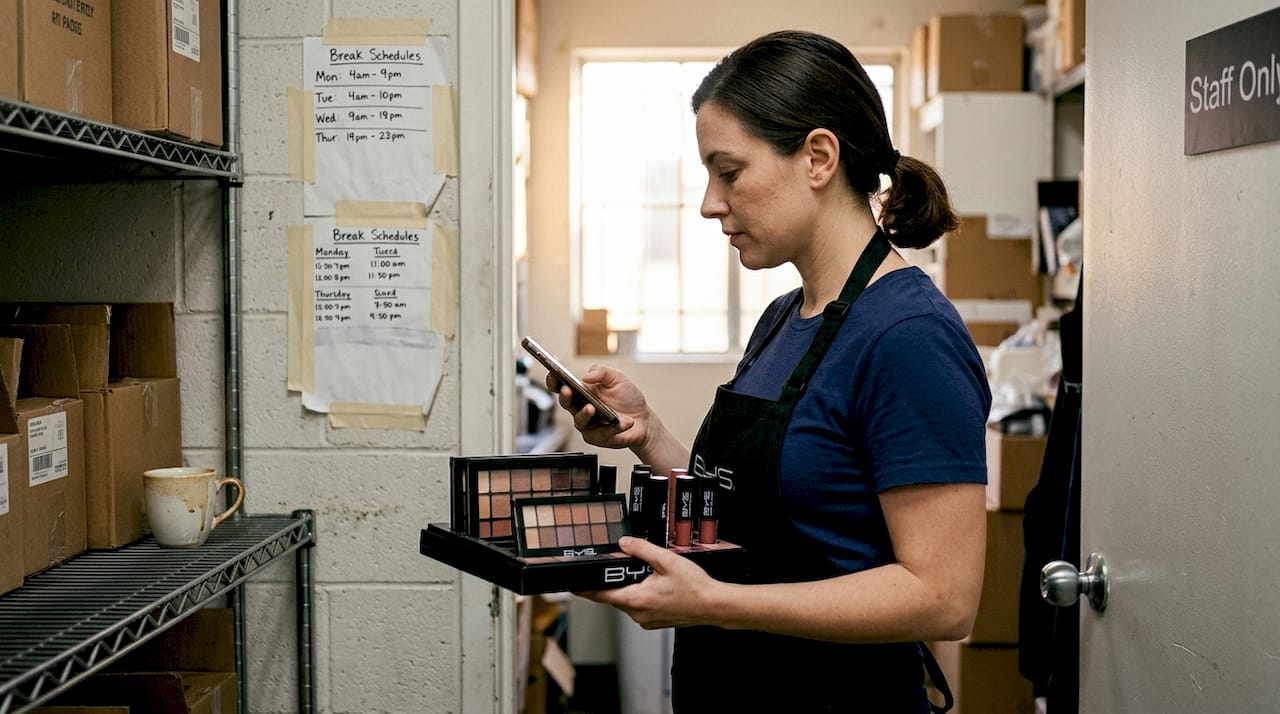
Unpaid overtime and off-the-clock work represent the most frequent complaints. Employees report being asked to arrive before their scheduled shift to prepare the sales floor, complete training modules at home without compensation, or stay after closing to finish inventory counts. Some managers instruct employees to clock out before completing closing duties like cleaning or restocking. Others schedule employees just under the overtime threshold but expect them to work additional hours without recording the time. Commission-based employees face unique challenges when employers fail to include commissions in the regular rate calculation for overtime purposes.
Wage misclassification and commission calculation errors create additional problems. Some employers misclassify retail workers as exempt from overtime, even though most beauty retail positions qualify as non-exempt under California law. Commission structures can be manipulated to reduce total compensation, especially when employers fail to pay the required minimum wage for all hours worked or miscalculate the overtime rate for employees earning both hourly wages and commissions. Discrepancies in how bonuses and incentives are calculated can also reduce your total pay.
Missed or delayed meal and rest breaks occur frequently in high-traffic retail environments. Managers may deny breaks during busy periods, ask employees to remain on-call during meal breaks, or schedule breaks so late in the shift that they become meaningless. Some employees skip breaks voluntarily to meet sales goals or avoid appearing unproductive, not realizing their employer still owes premium pay for the missed break.
| Violation type | Common examples | Impact on employees |
|---|---|---|
| Unpaid overtime | Working over 8 hours without overtime pay, off-the-clock closing duties | Loss of 1.5x or 2x pay for extra hours worked |
| Missed breaks | No meal break on 6-hour shift, interrupted rest breaks | One hour of pay owed per violation per day |
| Commission errors | Excluding commissions from overtime rate, incorrect calculations | Reduced total compensation and unpaid overtime |
| Misclassification | Treating non-exempt employees as exempt | Complete loss of overtime pay |
| Time shaving | Rounding down hours, requiring clock-out before tasks complete | Unpaid wages for actual time worked |
Pro Tip: Take photos of your posted schedule and any written instructions from managers about arriving early or staying late. These records can prove your employer knew you were working those hours.
How to protect your rights and address wage and hour violations
Protecting your rights begins with documentation and escalates through formal channels when necessary. Taking action promptly preserves your legal options and maximizes your potential recovery.
Follow these steps to document wage violations and gather evidence:
- Maintain detailed personal records of every shift, including actual start and end times, breaks taken, and any work performed off the clock.
- Save all pay stubs, timecards, schedules, and written communications about your hours or pay.
- Screenshot or photograph company policies, posted schedules, and any instructions from managers regarding work time.
- Note the names of coworkers who witnessed violations or experienced similar issues.
- Document any complaints you made to management and their responses.
Raising concerns with HR or managers can sometimes resolve violations without formal legal action. Request a private meeting to discuss specific discrepancies between your records and your pay. Bring documentation and remain factual rather than accusatory. Some employers will correct errors once they understand the problem, especially if the violation resulted from administrative mistakes rather than intentional wage theft. However, be aware that some employers may retaliate or become defensive, which is why documentation matters.
Filing wage claims with labor agencies provides a formal avenue for recovery. You can file a claim with the California Labor Commissioner’s Office, which investigates and adjudicates wage disputes at no cost to you. The process involves submitting your claim, providing evidence, and attending a hearing where both you and your employer present your cases. The Labor Commissioner can order your employer to pay back wages, penalties, and interest. You can also file a complaint with the California Division of Labor Standards Enforcement, which may investigate broader patterns of violations affecting multiple employees.
Consulting an employment lawyer in Beverly Grove becomes essential when violations are substantial, your employer retaliates, or administrative remedies prove insufficient. An attorney can evaluate your case, calculate total damages including penalties and interest, and determine whether filing a lawsuit makes sense. Lawyers can also represent you in Labor Commissioner hearings and negotiate settlements that exceed what you might recover on your own. Many employment attorneys work on contingency, meaning you pay nothing unless you recover compensation.
Taking action to recover unpaid wages is not just about your own compensation. It holds employers accountable and protects your coworkers from ongoing violations. California law prohibits retaliation against employees who assert their wage rights, and penalties for retaliation can exceed the original wage claim.
Understanding the statute of limitations is critical. You generally have three years to file a claim for unpaid wages, but waiting reduces your recovery and allows evidence to disappear. Employers must keep payroll records for only three years, and witnesses’ memories fade. Acting quickly strengthens your case and sends a clear message that violations will not be tolerated.
Understanding potential outcomes and what to expect during dispute resolution
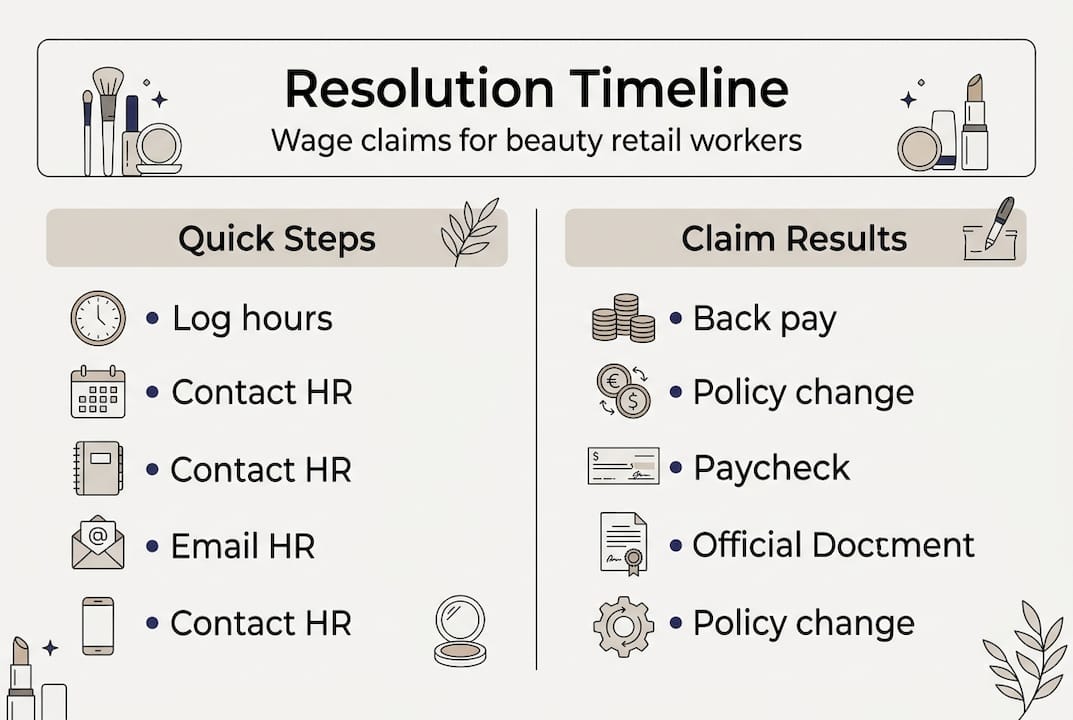
The path from filing a wage claim to resolution varies based on the complexity of your case and the dispute resolution method you choose. Understanding typical timelines and outcomes helps you make informed decisions and maintain realistic expectations.
Informal resolution through direct negotiation with your employer can happen quickly, sometimes within weeks. Your employer may agree to pay disputed wages once you present documentation, especially if the violation was unintentional. However, informal resolution depends entirely on your employer’s willingness to cooperate and may not include penalties or interest beyond the unpaid wages themselves. Some employers use informal discussions to delay formal claims or pressure employees into accepting less than they are owed.
Formal dispute resolution through the Labor Commissioner typically takes six to 12 months from filing to hearing, though complex cases can take longer. After you file your claim, the Labor Commissioner attempts to settle the case through a conference. If settlement fails, the case proceeds to a formal hearing where both sides present evidence and testimony. The hearing officer then issues a written decision ordering payment or dismissing the claim. Either party can appeal to superior court, which adds additional time and complexity.
Lawsuits filed in civil court offer broader remedies but involve longer timelines and greater complexity. Cases may result in injunctions, back pay awards, and sometimes settlements that include policy changes to prevent future violations. Class action lawsuits, where multiple employees join together to challenge widespread violations, can take years to resolve but may result in substantial recoveries for all affected workers. Individual lawsuits typically resolve faster, especially when your employer wants to avoid the cost and publicity of litigation.
Monetary outcomes vary based on the nature and extent of violations:
- Unpaid wages: You recover the full amount of wages owed, including overtime premiums and missed break pay.
- Waiting time penalties: If your employer fails to pay all wages owed at termination, you may recover up to 30 days of wages as a penalty.
- Interest: Unpaid wages accrue interest at 10% per year from the date they were due.
- Penalties: Labor Code violations can result in penalties of $50 to $100 per pay period, plus additional penalties for willful violations.
- Attorney fees: If you prevail in a lawsuit, your employer typically must pay your attorney fees and costs.
| Outcome type | Typical timeline | Potential recovery |
|---|---|---|
| Informal settlement | 2-8 weeks | Unpaid wages only, minimal penalties |
| Labor Commissioner claim | 6-12 months | Unpaid wages, interest, waiting time penalties |
| Individual lawsuit | 12-24 months | Full damages including penalties, interest, attorney fees |
| Class action settlement | 2-4 years | Proportional share of total recovery, policy changes |
Non-monetary outcomes can also matter. Some settlements include agreements that your employer will change policies, provide training to managers, or implement better timekeeping systems. These changes benefit current and future employees, though they do not directly compensate you for past violations.
Pro Tip: Keep copies of all documents you submit to the Labor Commissioner or your attorney. If your employer claims they never received notice or disputes the evidence, your copies prove what you filed and when.
Get legal support for wage and hour violations in Beverly Grove
Navigating wage and hour disputes in LA requires knowledge of complex California labor laws and experience dealing with employer defenses. Shirazi Law Office focuses exclusively on employment law, representing beauty retail workers and other employees throughout Beverly Grove, Beverly Hills, and surrounding Los Angeles neighborhoods. Our team understands the specific wage violations common in the beauty industry and knows how to build strong cases that maximize recovery. Whether you face unpaid overtime, missed breaks, or commission calculation errors, early consultation helps protect your rights and improve outcomes. We handle cases on a contingency basis, so you pay nothing unless we recover compensation for you. Contact an employment lawyer in Beverly Grove today to discuss your situation and learn about your options. Understanding your rights under employee rights 2025 discrimination laws and wage protections is the first step toward holding your employer accountable.
Frequently asked questions
What are common wage violations in the Beverly Grove beauty retail industry?
Unpaid overtime, off-the-clock work, missed meal and rest breaks, and wage misclassification are the most frequent violations. Employees often work through breaks during busy periods or perform opening and closing duties without compensation. Some employers miscalculate overtime rates for commission-based employees or pressure workers to underreport hours.
How can I document unpaid wages or overtime to support my claim?
Keep a detailed personal log of your actual work hours, including start and end times, breaks taken, and any tasks performed off the clock. Save all pay stubs, timecards, posted schedules, and written communications from managers about your hours or duties. Take photos of schedules and any instructions to arrive early or stay late. Note the names of coworkers who witnessed violations or experienced similar issues.
What steps should I take if my employer refuses to pay owed wages?
Start by documenting the violation and discussing your concerns with HR or management in writing. If your employer refuses to resolve the issue, file a wage claim with the California Labor Commissioner’s Office or consult an employment attorney. You can also file a complaint with the Division of Labor Standards Enforcement. Taking action quickly preserves your legal options and prevents the statute of limitations from expiring. Wage and hour disputes in LA often require legal expertise to navigate employer defenses and maximize recovery.
Can I file a wage and hour claim anonymously or without fear of retaliation?
California law strictly prohibits retaliation against employees who file wage claims or report labor law violations. Your employer cannot fire, demote, reduce your hours, or otherwise punish you for asserting your rights. While some administrative complaints can be filed confidentially, most wage claims require identifying yourself as the claimant. Consulting an employment lawyer in Beverly Grove helps protect your rights and provides guidance on how to minimize retaliation risks while pursuing your claim.
Recommended
- Beverly Hills Wage Disputes in Luxury Retail Stores – Law Office of Brian Y. Shirazi, PC
- Gender Pay Gap in Beverly Grove – Legal Solutions for Women – Law Office of Brian Y. Shirazi, PC
- Wage and Hour Violations in Downtown LA Workplaces
- Beverly Grove Gender Discrimination: 81% Pay Equity Challenge – Law Office of Brian Y. Shirazi, PC
- Garden Grove Overtime Violations: 25% Surge in Claims | Serendib Law Firm