

Pregnancy leave violations remain a persistent and troubling reality for employees in Downtown Los Angeles finance and banking institutions. Recent lawsuits reveal that 40% of women in banking report negative career impacts after taking pregnancy leave, including reduced bonuses, stalled promotions, and hostile treatment upon return. These violations not only harm individual careers but also expose employers to significant legal liability. Understanding your rights under federal and California law is essential for protecting your career and holding employers accountable. This article explains what pregnancy leave violations look like in Downtown LA finance, examines recent high-profile cases, clarifies legal protections, and provides actionable steps to enforce your rights.
Table of Contents
- What Are Pregnancy Leave Violations In Downtown Los Angeles Finance?
- Recent Cases Highlighting Pregnancy Leave Violations In Finance Institutions
- How Federal And California Laws Protect Pregnant Employees In Finance And Banking
- Practical Steps To Protect Yourself And Enforce Your Rights
- Get Expert Legal Support For Pregnancy Leave Violations In Downtown LA Finance
- Frequently Asked Questions
Key takeaways
| Point | Details |
|---|---|
| Pregnancy leave violations are documented | Finance employees face pay cuts, denied promotions, and retaliation after maternity leave. |
| Legal protections exist but need enforcement | Federal and California laws prohibit discrimination, yet violations persist in banking. |
| Recent lawsuits signal increased scrutiny | RBC and Wells Fargo cases highlight systemic bias and employer accountability. |
| Documentation is critical for legal claims | Employees must preserve evidence of discriminatory treatment to support complaints. |
| Expert legal help protects careers | Consulting experienced employment lawyers ensures rights are enforced effectively. |
What are pregnancy leave violations in Downtown Los Angeles finance?
Pregnancy leave violations occur when employers penalize employees for taking maternity or pregnancy-related leave. In Downtown LA finance and banking, these violations take several forms. Pay discrimination involves reducing base salary, bonuses, or commissions after an employee returns from leave. Denial of promotions means passing over qualified employees for advancement opportunities because they took pregnancy leave. Retaliation includes hostile behavior, unwarranted performance reviews, or termination following leave. Pregnancy discrimination in LA workplaces violates both federal and state protections.
The finance sector presents unique risks for pregnant employees. Bonus structures often depend on year-end performance evaluations, and taking leave during critical periods can result in reduced compensation. Career progression in banking typically follows rigid timelines, and interruptions due to pregnancy leave can derail advancement. Workplace culture in finance often rewards constant availability, creating environments where taking leave is viewed negatively. Empirical data shows women in finance who take pregnancy leave face career setbacks, with 40% reporting negative impacts on their professional trajectories.
Common violations in Downtown LA finance include:
- Cutting bonuses or commissions after maternity leave without legitimate business justification
- Reassigning high-value clients or accounts to other employees during or after leave
- Excluding returning employees from critical projects or decision-making processes
- Creating hostile work environments through comments or actions targeting new mothers
- Denying reasonable accommodations for pregnancy-related conditions
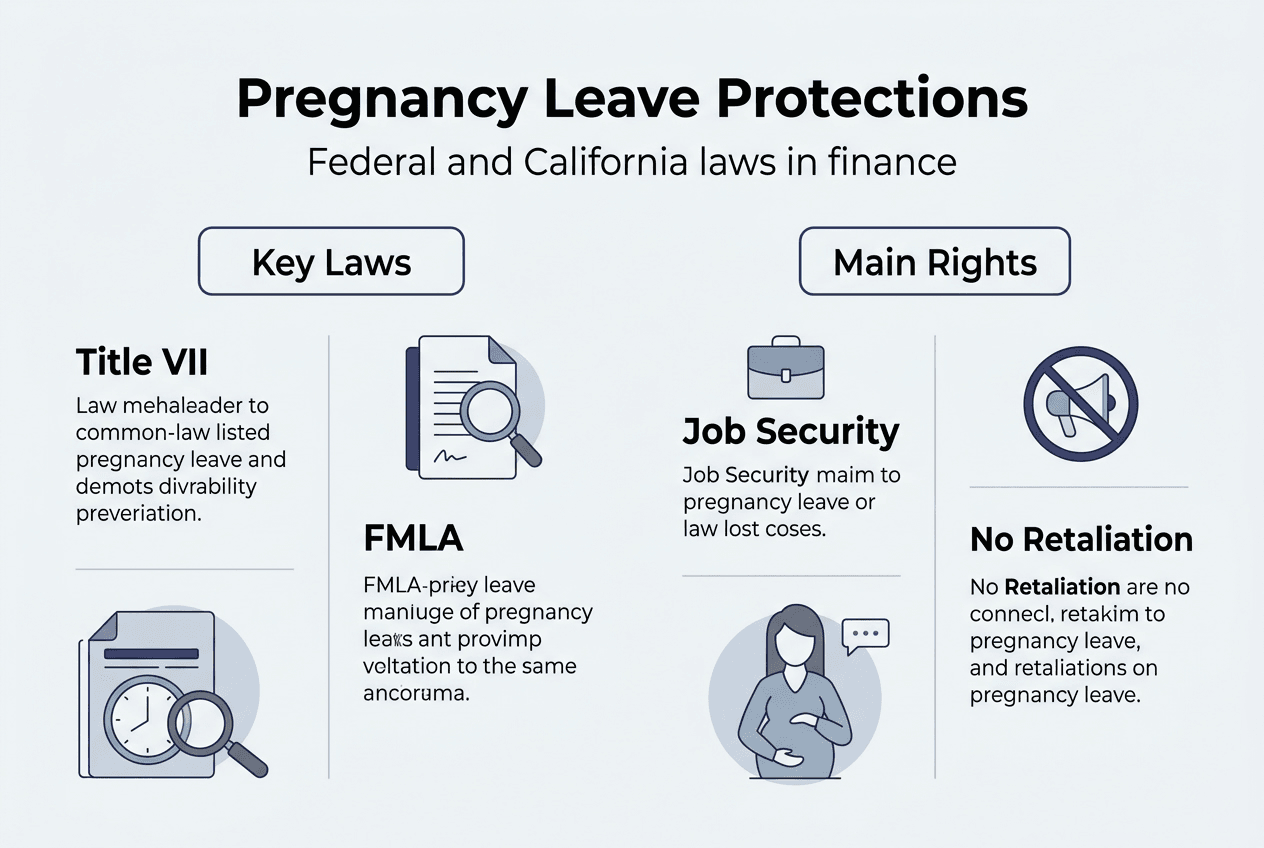
Legal protections exist under multiple frameworks. Title VII of the Civil Rights Act prohibits pregnancy discrimination in employment. The Family and Medical Leave Act (FMLA) guarantees eligible employees up to 12 weeks of unpaid leave. California’s Pregnancy Disability Leave Law (PDL) provides up to four months of leave for pregnancy-related disabilities. The California Fair Employment and Housing Act (FEHA) offers broader protections than federal law. Pregnancy and parental leave laws in California create strong safeguards, yet enforcement remains challenging.
Recent cases highlighting pregnancy leave violations in finance institutions
Two high-profile lawsuits illustrate the scope and severity of pregnancy leave violations in finance. The RBC Capital Markets case involves a former managing director who alleges the firm implemented a “pregnancy tax” by cutting bonuses for women on maternity leave by 30%. The lawsuit claims this practice persisted for over 14 years, affecting numerous female employees. The plaintiff also alleges that female managing directors faced significantly higher attrition rates compared to male counterparts, suggesting systemic bias. RBC has since updated its maternity leave policies, but the case underscores how entrenched discriminatory practices can become.
The Wells Fargo case presents different but equally concerning allegations. A bank manager claims she faced discrimination and retaliation after taking extended medical leave. Upon returning, she experienced adverse employment actions including negative performance reviews and eventual termination. The court allowed the case to proceed, recognizing sufficient evidence of potential discrimination. These cases reveal patterns of bias that extend beyond individual managers to institutional practices.
| Case | Key Allegations | Legal Claims | Outcome Status |
|---|---|---|---|
| RBC Capital Markets | 30% bonus cuts for maternity leave, 14-year pattern, higher female attrition | Pregnancy discrimination, pay bias, FEHA violations | Ongoing litigation, policy updates implemented |
| Wells Fargo | Retaliation after medical leave, negative reviews, termination | Discrimination, retaliation under federal and state law | Court denied dismissal, case proceeding |
Pro Tip: Document every communication related to your pregnancy leave, including emails, performance reviews, bonus calculations, and verbal comments. This evidence becomes critical if you need to file a legal claim.
These cases demonstrate broader industry problems. Finance institutions often maintain cultures that implicitly or explicitly penalize employees for taking leave. Performance evaluation systems may disadvantage employees who are absent during key periods. Compensation structures can create incentives for managers to discourage leave-taking. Retaliation after medical leave remains a persistent issue across Downtown LA finance firms.

Employment law experts emphasize the need for proactive compliance. As one attorney noted regarding similar cases, “Finance institutions must proactively review policies to avoid litigation and ensure equal treatment for employees taking protected leave.” The costs of discrimination extend beyond legal settlements to include reputational damage and decreased employee morale. Workplace retaliation in LA cases increasingly result in substantial damages for affected employees.
How federal and California laws protect pregnant employees in finance and banking
Multiple legal frameworks protect pregnant employees from discrimination and retaliation. The Pregnancy Discrimination Act (PDA) amended Title VII to prohibit employment discrimination based on pregnancy, childbirth, or related medical conditions. Employers must treat pregnancy the same as other temporary disabilities. The Family and Medical Leave Act (FMLA) provides eligible employees with up to 12 weeks of unpaid, job-protected leave for pregnancy and childbirth. FMLA also prohibits retaliation against employees who take protected leave.
California law offers additional protections. The Pregnancy Disability Leave Law (PDL) provides up to four months of leave for pregnancy-related disabilities, separate from FMLA entitlements. The California Family Rights Act (CFRA) provides up to 12 weeks of leave for bonding with a new child. FEHA prohibits discrimination based on pregnancy and requires reasonable accommodations for pregnancy-related conditions. The case raises claims under federal and state civil rights law, demonstrating how multiple legal protections apply simultaneously.
Key employee rights include:
- Maintained base pay and benefits during unpaid leave periods
- Equal consideration for promotions, raises, and bonuses upon return
- Reasonable accommodations for pregnancy-related conditions
- Protection from retaliation for taking protected leave
- Restoration to the same or equivalent position after leave
Anti-retaliation safeguards are particularly important. Employers cannot take adverse employment actions against employees who exercise their right to take pregnancy or medical leave. Adverse actions include termination, demotion, pay reduction, or creating hostile work environments. The lawsuit highlights potential pay bias and unequal opportunities that violate these protections.
If you believe your rights have been violated, follow these steps:
- Document all incidents, communications, and evidence of discriminatory treatment
- Review your employer’s maternity leave policies and compare your treatment to policy terms
- File an internal complaint with your HR department, requesting written responses
- File a complaint with the California Department of Fair Employment and Housing (DFEH) within three years of the violation
- File a charge with the Equal Employment Opportunity Commission (EEOC) within 300 days of the violation
- Consult an experienced employment lawyer to evaluate your case and legal options
Pregnancy discrimination job security depends on understanding and asserting these legal protections. Many employees hesitate to pursue claims due to fear of further retaliation, but legal safeguards exist to prevent such actions. Employee rights discrimination laws in California provide robust remedies including back pay, compensatory damages, punitive damages, and attorney’s fees.
Practical steps to protect yourself and enforce your rights
Protecting your rights begins before you take pregnancy leave. Request written confirmation of your employer’s maternity leave policies, including how leave affects bonuses, promotions, and performance evaluations. Clarify expectations for communication during leave and procedures for returning to work. Document your performance record before taking leave, including positive reviews, achievements, and client relationships. This baseline evidence helps demonstrate any discriminatory changes after your return.
During your leave, maintain appropriate documentation. Save all emails and written communications from your employer. Note any requests to work during leave or pressure to return early. Keep records of how similarly situated employees who did not take leave are treated. If your employer makes changes to your role, compensation, or responsibilities during your absence, request written explanations.
Upon returning from leave, monitor your treatment carefully. Compare your compensation, including bonuses and commissions, to pre-leave amounts and to colleagues with similar performance. Track whether you receive the same quality assignments and client relationships. Document any negative comments about your leave or status as a new mother. Note changes in performance evaluations or advancement opportunities. If you experience adverse treatment, address it promptly through internal channels while preserving evidence.
Pro Tip: Know the timing deadlines for filing complaints. California DFEH claims must be filed within three years, but EEOC charges require filing within 300 days. Missing these deadlines can eliminate your legal recourse.
Escalating your concerns requires strategic action:
- File written complaints with HR, clearly stating the discriminatory conduct and requesting specific remedies
- Request meetings with senior management or legal compliance departments
- File complaints with the California DFEH, which investigates and may mediate disputes
- File charges with the EEOC, which can investigate and potentially litigate on your behalf
- Consult an employment lawyer in Los Angeles experienced in finance sector discrimination cases
Choosing the right legal representation matters. Finance sector cases involve complex compensation structures and specialized employment practices. Attorneys familiar with banking industry norms can better evaluate whether your treatment violates legal standards. Expert advises finance institutions must proactively review policies to avoid litigation, and experienced lawyers understand how to hold employers accountable.
Preserving evidence strengthens your case. Maintain copies of all relevant documents including employment contracts, bonus calculations, performance reviews, and communications about your leave. Identify potential witnesses who observed discriminatory treatment. Track the treatment of comparable employees who did not take leave. Detailed contemporaneous notes about incidents carry significant weight in legal proceedings. Pregnancy discrimination in LA cases often turn on the quality and completeness of evidence.
Get expert legal support for pregnancy leave violations in Downtown LA finance
If you are facing pregnancy leave violations in Downtown Los Angeles finance or banking, specialized legal representation can protect your career and rights. Shirazi Law Office focuses exclusively on employment law disputes, with particular experience representing executives and senior management in complex discrimination and retaliation cases. The firm understands the unique challenges pregnant employees face in finance institutions, including sophisticated compensation structures and high-stakes career implications.
Early legal intervention offers significant advantages. An experienced attorney can evaluate the strength of your claims, identify all applicable legal protections, and develop a strategic approach tailored to your situation. Legal representation also signals to employers that you are serious about protecting your rights, often prompting more favorable settlement discussions. Confidential case evaluations help you understand your options without commitment.
Client benefits include:
- Personalized legal strategies addressing your specific circumstances and career goals
- Proven track record of successful outcomes in employee rights discrimination laws cases
- Compassionate support throughout the legal process, recognizing the stress of workplace disputes
- Comprehensive representation from initial complaints through litigation if necessary
Shirazi Law Office serves clients throughout Downtown Los Angeles and surrounding areas including Mid-Wilshire, Century City, Beverly Hills, and Culver City. The firm’s focus on employment law ensures deep knowledge of California labor protections and federal employment regulations. Whether you need help filing administrative complaints, negotiating settlements, or pursuing litigation, experienced employment lawyer in Los Angeles representation provides the expertise and advocacy you need. Workplace retaliation legal help is available for employees facing adverse actions after asserting their rights.
Frequently asked questions
What should I do if I think my maternity leave rights have been violated?
Start by documenting every incident of discriminatory treatment, including dates, witnesses, and specific actions or comments. Review your employer’s written maternity leave policies to understand what protections you should have received. File a complaint with your HR department and request a written response. Consult a qualified pregnancy discrimination rights in LA attorney who can evaluate your case and advise on filing complaints with government agencies.
Can my employer reduce my pay or bonuses because I took maternity leave?
No, employers cannot legally reduce your pay, bonuses, or commissions solely because you took maternity leave. Such actions constitute pregnancy discrimination under federal and California law. If your employer claims a legitimate business reason for reduced compensation, they must prove it is unrelated to your leave and applies equally to all employees. Consult an employee pay rights attorney if you experience compensation reductions after taking leave.
What legal protections exist against retaliation after pregnancy or medical leave?
Federal laws including FMLA and Title VII prohibit retaliation against employees who take pregnancy or medical leave. California law provides additional protections through FEHA, PDL, and CFRA. These laws prohibit adverse employment actions such as termination, demotion, pay cuts, or hostile treatment based on taking protected leave. Anti-retaliation protections secure your job and ensure equal treatment upon return.
How long do I have to file a pregnancy discrimination complaint?
In California, you have three years from the date of discrimination to file a complaint with the Department of Fair Employment and Housing. For federal EEOC charges, you must file within 300 days of the discriminatory act. These deadlines are strict, and missing them can eliminate your ability to pursue legal claims. Consulting an attorney early ensures you meet all filing requirements and preserve your rights.
What damages can I recover in a pregnancy leave violation case?
Successful pregnancy discrimination claims can result in multiple forms of damages. Back pay compensates for lost wages and bonuses due to discriminatory actions. Front pay covers future lost earnings if you cannot return to your position. Compensatory damages address emotional distress and harm to your professional reputation. Punitive damages may apply if the employer acted with malice or reckless indifference. You can also recover attorney’s fees and litigation costs, making it financially feasible to pursue claims.
Recommended
- Pregnancy and Parental Leave Laws in Los Angeles Workplaces
- Wage and Hour Violations in Downtown LA Workplaces
- Pregnancy Discrimination in LA | LA Employment Lawyer
- Pregnancy and Parental Leave—Key Legal Rights for Beverly Grove Employees – Law Office of Brian Y. Shirazi, PC
- France Blames UK Labor Laws: London Targeting Paris – xpath.global