

You reported sexual harassment at work, expecting protection and support. Instead, your shifts disappeared, your manager became hostile, or you were suddenly placed on indefinite leave. This scenario plays out more often than you might think in West Hollywood nightlife establishments, where reporting harassment can trigger swift retaliation rather than resolution. Despite California’s strong employment protections, employees in bars, clubs, and restaurants face unique vulnerabilities when they speak up about sexual misconduct. Understanding what retaliation looks like, how to recognize it early, and what steps to take can mean the difference between protecting your rights and losing your livelihood.
Table of Contents
- Understanding Retaliation Claims In West Hollywood Nightlife Establishments
- Legal Framework Protecting Nightlife Employees From Retaliation In California
- Recognizing Retaliation: Signs, Pitfalls, And Variations In West Hollywood Nightlife Workplaces
- Steps To Take If You Face Retaliation After Reporting Sexual Harassment In West Hollywood Nightlife
- Find Experienced Legal Support For Retaliation And Harassment Claims
Key takeaways
| Point | Details |
|---|---|
| Retaliation takes many forms | Schedule changes, demotions, hostile treatment, or forced leave often follow harassment reports in nightlife venues. |
| Legal protections exist but gaps remain | California law prohibits retaliation, yet enforcement gaps persist and underreporting reaches 42 to 75 percent. |
| Documentation is critical | Preserving evidence immediately after retaliation begins strengthens your legal position significantly. |
| Professional legal help matters | Employment attorneys navigate complex claims and protect your rights throughout the process. |
Understanding retaliation claims in West Hollywood nightlife establishments
Retaliation occurs when an employer takes adverse action against you for reporting sexual harassment or participating in a harassment investigation. In nightlife workplaces across West Hollywood, this can manifest through altered schedules that cut your hours, sudden demotions without explanation, forced leaves of absence, or increasingly hostile treatment from supervisors and coworkers. The informal culture common in bars, clubs, and restaurants creates environments where retaliation can flourish with little oversight.
A stark example emerged when a Soho House bartender faced indefinite leave after reporting assault by a supervisor. This case illustrates how quickly protective measures can transform into punitive actions. The bartender’s experience reflects a broader pattern where employees who report misconduct find themselves sidelined rather than supported.
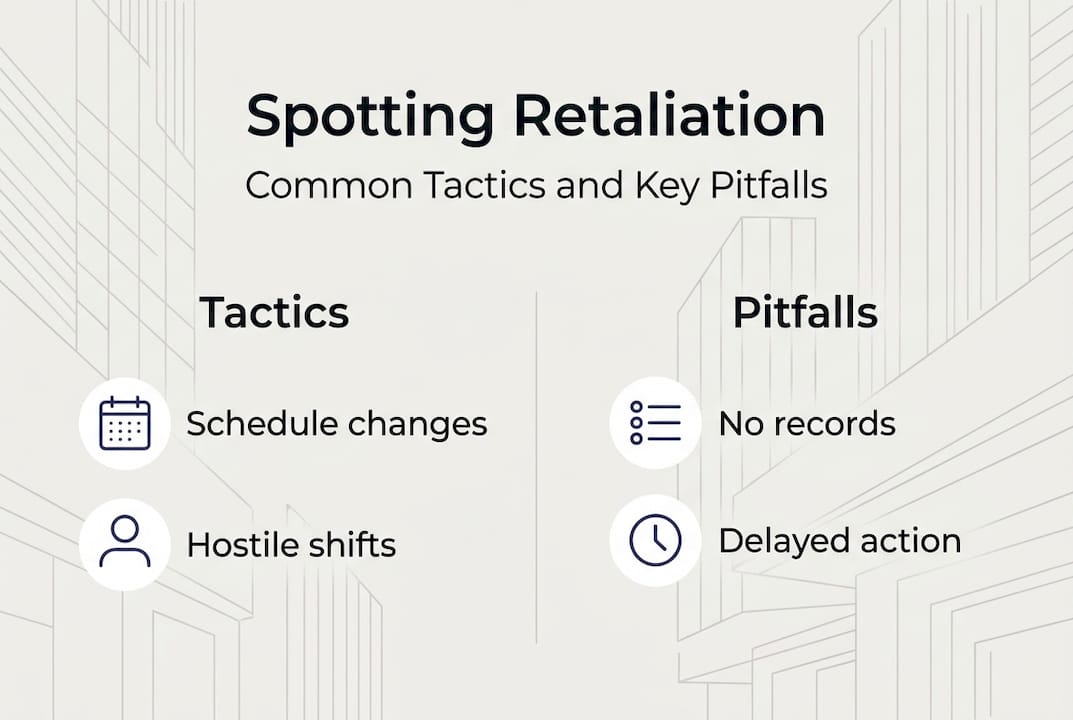
Common retaliation tactics in West Hollywood nightlife include:
- Reducing your shifts to minimal hours or scheduling you during unprofitable times
- Reassigning you to less desirable positions or removing you from lucrative sections
- Excluding you from staff meetings, training opportunities, or social events
- Subjecting you to heightened scrutiny or discipline for minor infractions
- Creating hostile conditions that pressure you to quit
The nightlife industry’s reliance on tips, flexible scheduling, and interpersonal dynamics makes employees particularly vulnerable. Management can weaponize schedule control without formal documentation, making retaliation harder to prove. Many employees depend on weekend and evening shifts for the majority of their income, so even subtle schedule changes can devastate their financial stability.
Legal protections exist under California law, but awareness gaps and fear of job loss keep many employees silent. Understanding your rights under sexual harassment West Hollywood protections empowers you to recognize when retaliation crosses legal boundaries. The key is distinguishing legitimate business decisions from retaliatory actions designed to punish you for speaking up.
Pro Tip: Start documenting any adverse actions immediately after filing a harassment complaint. Note dates, times, witnesses, and specific changes to your work conditions. This contemporaneous record becomes crucial evidence if you pursue a retaliation claim.
Legal framework protecting nightlife employees from retaliation in California
California maintains some of the nation’s strongest anti-retaliation statutes protecting employees who report workplace harassment. The California Fair Employment and Housing Act prohibits employers from retaliating against workers who oppose practices forbidden by the law or participate in proceedings related to discrimination or harassment. These protections extend to all employees regardless of immigration status, job title, or length of employment.
For nightlife workers in West Hollywood, these laws theoretically provide robust safeguards. Employers cannot legally fire, demote, reduce hours, or otherwise penalize employees for reporting sexual harassment. The law covers not just formal complaints but also informal reports to supervisors, participation in investigations, and testimony in legal proceedings. Protection extends to employees who assist coworkers facing harassment, creating broader accountability.

Despite these strong legal foundations, enforcement gaps persist in the post-MeToo era. Research examining California hospitality workplaces confirms that hostile work environments and retaliation antecedents remain common, with underreporting rates between 42 and 75 percent. Several factors contribute to this disconnect between legal protections and workplace reality.
Key elements of California’s anti-retaliation framework include:
- Prohibition of adverse employment actions following harassment complaints
- Protection for employees who participate in investigations or legal proceedings
- Burden on employers to prove legitimate business reasons for negative actions
- Extended statute of limitations allowing time to gather evidence and consult attorneys
- Remedies including reinstatement, back pay, emotional distress damages, and attorney fees
The hospitality and nightlife industries present unique enforcement challenges. High turnover rates, cash-based compensation, informal management structures, and power imbalances between supervisors and staff create environments where retaliation can occur with minimal documentation. Many nightlife establishments operate with lean management teams and limited HR infrastructure, making formal complaint processes inconsistent or nonexistent.
Understanding both your rights and the practical enforcement landscape helps you make informed decisions. While California law provides strong protections, successfully asserting those rights often requires strategic documentation and professional legal guidance. Consulting an attorney who specializes in California retaliation laws ensures you navigate the complex claims process effectively and maximize your chances of a favorable outcome.
Recognizing retaliation: signs, pitfalls, and variations in West Hollywood nightlife workplaces
Retaliation rarely announces itself openly. Instead, it typically emerges through subtle changes that collectively create untenable working conditions. Learning to recognize these patterns early allows you to document evidence and respond before the situation deteriorates further. In West Hollywood nightlife venues, retaliation often exploits the industry’s inherent flexibility and informal structures.
Specific retaliation behaviors to watch for include:
- Schedule manipulation: Suddenly receiving fewer shifts, being assigned only slow nights, or having your schedule changed with minimal notice
- Exclusion tactics: Being left out of staff communications, pre-shift meetings, or opportunities for advancement
- Increased scrutiny: Facing write-ups for minor issues that were previously overlooked or that don’t affect other employees
- Verbal hostility: Experiencing passive-aggressive comments, public criticism, or cold treatment from management
- Position changes: Being reassigned from profitable sections, losing preferred shifts, or facing demotions without explanation
Common mistakes employees make when facing retaliation include waiting too long to document incidents, failing to preserve communications, not identifying potential witnesses, and confronting employers without legal guidance. Each delay weakens your position and makes it harder to establish a clear pattern of retaliatory behavior. Hostile work environment claims often hinge on demonstrating a consistent pattern rather than isolated incidents.
Retaliation patterns vary significantly based on venue size and type. The following table illustrates how retaliation manifests differently across West Hollywood nightlife establishments:
| Venue Type | Common Retaliation Tactics | Documentation Challenges |
|---|---|---|
| Large clubs and venues | Schedule changes, section reassignments, exclusion from premium events | Multiple managers make identifying responsible parties difficult |
| Small bars and restaurants | Direct hostility, hour reductions, hostile scheduling | Close-knit staff dynamics and lack of HR infrastructure |
| Hotel nightlife venues | Formal write-ups, transfer requests, performance improvement plans | Corporate structures create paper trails but slow response times |
| Private membership clubs | Indefinite leave, forced resignations, client complaint fabrication | Exclusive environments limit witness availability and external oversight |
Research confirms that hospitality workplaces continue experiencing hostile environments and retaliation despite reforms. Meta-analysis of California nightlife venues shows that power dynamics, tip-based compensation, and informal management structures create conditions where retaliation thrives even when policies prohibit it.
Smaller establishments often lack formal HR departments, meaning complaints go directly to the same managers accused of harassment or complicit in retaliation. Larger venues may have more structured processes but also more layers of management that can obscure accountability. Private clubs like Soho House operate with membership models that prioritize client satisfaction, sometimes at employee expense.
Recognizing your specific situation’s dynamics helps you anticipate likely retaliation forms and prepare accordingly. Understanding how filing sexual harassment complaints triggers predictable employer responses allows you to stay ahead of retaliatory tactics.
Pro Tip: Before confronting your employer about suspected retaliation, consult with an employment attorney. Early legal guidance helps you avoid statements or actions that could inadvertently weaken your case while ensuring you preserve all available remedies.
Steps to take if you face retaliation after reporting sexual harassment in West Hollywood nightlife
If you experience retaliation after reporting sexual harassment, taking immediate, strategic action protects your rights and strengthens any potential legal claim. The following steps provide a roadmap for responding effectively while preserving evidence and exploring your options.
-
Document everything immediately. Create detailed written records of every retaliatory incident, including dates, times, locations, people involved, and specific actions taken. Save all emails, text messages, schedule changes, and written communications. Take screenshots of digital schedules before they change. Note witnesses who observed retaliatory behavior.
-
Report the retaliation internally if safe to do so. Many employers have formal complaint procedures requiring you to report retaliation through HR or management channels. Follow these procedures when possible, but prioritize your safety. Submit complaints in writing and keep copies of everything you submit.
-
File a complaint with the California Civil Rights Department. You can file a retaliation complaint with the state agency responsible for enforcing employment discrimination laws. This creates an official record and starts the investigation process. The agency can mediate disputes or issue a right to sue letter.
-
Preserve potential witness testimony. Identify coworkers who witnessed the harassment, your report, or subsequent retaliation. Collect their contact information while you still have access. Witnesses become harder to locate after you leave employment, so acting quickly matters.
-
Consult an experienced employment attorney immediately. Filing retaliation complaints in LA involves complex procedural requirements and tight deadlines. An attorney evaluates your case strength, advises on documentation strategies, and handles communications with your employer to prevent statements that could harm your claim.
-
Continue performing your job duties professionally. Maintain your work performance and professionalism despite the hostile environment. Employers often seize on any performance issues to justify adverse actions. Don’t give them legitimate grounds to take action against you.
-
Understand your timeline for legal action. California generally requires filing retaliation claims within specific deadlines, often between six months and one year depending on the legal theory. Missing these deadlines can permanently bar your claim, making prompt action essential.
The Soho House retaliation case remains ongoing, demonstrating the importance of timely legal action and thorough documentation. Cases like this highlight how employers may respond to harassment reports with immediate adverse actions, making swift employee response critical.
Understanding the sexual harassment claim filing steps helps you navigate both the initial harassment complaint and any subsequent retaliation. These processes often overlap, requiring you to manage multiple legal tracks simultaneously while continuing to work in a hostile environment.
Pro Tip: Create a secure backup of all documentation outside your work devices. Use personal email, cloud storage, or physical copies stored safely at home. Employers sometimes restrict access to work accounts or devices once legal disputes emerge, so maintaining independent records protects your evidence.
Find experienced legal support for retaliation and harassment claims
Navigating retaliation claims after reporting sexual harassment requires specialized legal knowledge and strategic guidance. Shirazi Law Office provides dedicated representation for West Hollywood nightlife employees facing retaliation, with deep experience in California employment law and the unique dynamics of hospitality workplaces. Our firm focuses exclusively on protecting employee rights, helping you understand your options and pursue the remedies you deserve.
We recognize that nightlife employees face distinct challenges when asserting their rights. Our employment lawyer in Los Angeles team understands how retaliation manifests in bars, clubs, and restaurants, and we know how to build compelling cases even when employers attempt to disguise retaliatory actions as legitimate business decisions. Staying current with employee rights 2026 discrimination laws ensures we provide accurate, up-to-date guidance.
If you’re experiencing workplace retaliation in LA after reporting harassment, contact us for a consultation. Early legal intervention protects your rights, preserves critical evidence, and positions you for the strongest possible outcome.
FAQ
Can I be fired for reporting sexual harassment in West Hollywood nightlife?
California law explicitly prohibits employers from firing you for reporting sexual harassment or participating in harassment investigations. However, retaliation often occurs through subtler means like schedule reductions, demotions, or creating hostile conditions that pressure you to quit. If you suspect your termination or adverse treatment resulted from reporting harassment, seek immediate legal advice to evaluate whether you have grounds for a workplace retaliation protections claim.
What evidence do I need to prove retaliation after reporting harassment?
Strong retaliation claims rely on documentation showing adverse actions followed your harassment report. Keep detailed records of schedule changes, demotions, disciplinary actions, or hostile treatment that began after you complained. Save all emails, text messages, and written communications from management. Identify witnesses who observed both the harassment and subsequent retaliation. The timing between your complaint and adverse actions is critical, so document everything with specific dates and details. Understanding requirements for proving workplace retaliation helps you gather the right evidence from the start.
How long do I have to file a retaliation claim in California?
California generally requires filing retaliation claims within six months to one year of the retaliatory action, depending on whether you pursue administrative complaints or civil lawsuits. These deadlines are strict, and missing them can permanently bar your claim regardless of its merits. Delays in seeking legal help reduce your options and weaken your position. Consult an attorney immediately after experiencing retaliation to ensure you meet all retaliation claim deadlines and preserve your rights.
Where can I get help if my employer retaliates against me in West Hollywood?
You have multiple resources available. Contact experienced employment attorneys who specialize in retaliation cases and understand nightlife industry dynamics. File complaints with the California Civil Rights Department, which investigates employment discrimination and retaliation claims. Consider reaching out to worker advocacy organizations that support hospitality employees. Prompt action increases your chances of successful resolution, so don’t wait to seek employment legal help Los Angeles professionals who can evaluate your situation and guide you through the process.





I precisely wanted to thank you very much again. I’m not certain the things that I could possibly have created without those solutions shared by you on such subject. Certainly was a very terrifying concern in my opinion, nevertheless considering this skilled mode you resolved it took me to cry over delight. I’m thankful for your advice as well as trust you realize what an amazing job your are doing training the others with the aid of your web page. Most probably you have never encountered any of us.