

Systemic gender discrimination in Century City’s private equity firms is not just an uncomfortable truth; it’s a documented reality affecting your career, your compensation, and your future leadership opportunities. Despite decades of progress, women hold only 10-15% of senior roles in private equity firms, while recent lawsuits expose pay gaps, hostile environments, and deliberate retaliation against those who speak up. This guide arms you with the legal knowledge and practical steps you need to recognize discrimination, protect your rights, and pursue justice in 2026.
Table of Contents
- Understanding Gender Discrimination In Century City Investment Firms
- Legal Protections For Women Facing Discrimination In Private Equity
- Case Spotlight: The Lowry Lawsuit And Its Implications
- California’s SB 164 And The Push For Transparency In Venture Capital
- Practical Steps For Female Professionals Facing Discrimination In Century City
- Find Expert Help For Gender Discrimination Challenges In Century City
- Frequently Asked Questions
Key takeaways
| Point | Details |
|---|---|
| Systemic gender bias impacts compensation, promotions, and leadership opportunities in Century City’s investment sector | Women executives face documented pay disparities, exclusion from key decisions, and glass ceiling barriers preventing advancement to partner or managing director roles |
| Multiple legal protections exist under California FEHA, CFRA, Equal Pay Act, and federal Title VII | These laws prohibit discrimination, retaliation, hostile environments, and protect medical leave rights with specific filing deadlines and remedies |
| Retaliation complaints represent over 50% of EEOC discrimination charges | Employers frequently retaliate against women who report bias or take protected leave, making retaliation claims central to many cases |
| Recent litigation highlights ongoing challenges in private equity | The 2025 Lowry v. Insight Venture lawsuit reveals typical patterns including harassment, pay cuts after medical leave, and wrongful termination |
| California’s SB 164 mandates demographic reporting by April 2026 | Venture capital and private equity firms must disclose diversity data to increase transparency and accountability for gender equity |
Understanding gender discrimination in Century City investment firms
Gender discrimination in private equity manifests in predictable, damaging patterns. You may experience unequal pay for comparable work, repeated denial of promotions despite strong performance, exclusion from critical meetings or client relationships, or outright hostility when raising concerns. These aren’t isolated incidents; they reflect structural bias embedded in firm cultures that prioritize male advancement.
The 2025 lawsuit against Insight Venture illustrates how discrimination operates at scale. Former executive Kate Lowry alleged systemic discrimination affecting non-male employees for decades, including below-market compensation, verbal harassment, and retaliation following protected medical leave. Her claims aren’t unique; they mirror experiences reported by women across Century City’s investment sector.
The glass ceiling effect prevents qualified women from reaching managing director or partner positions. Women hold only 10-15% of senior roles in private equity firms, a statistic that has barely improved over the past decade. This underrepresentation isn’t accidental; it results from deliberate decisions about promotions, compensation, and who gets access to high-value deals and mentorship opportunities.
Common manifestations of gender discrimination in LA private equity include:
- Pay disparities where women earn significantly less than male peers in identical roles
- Promotion denials justified by vague performance concerns despite documented achievements
- Exclusion from networking events, pitch meetings, or strategic planning sessions
- Hostile comments about pregnancy, caregiving responsibilities, or professional capabilities
- Assignment to administrative tasks while male colleagues handle high-profile deals
These conditions create hostile work environments that force talented women out of the industry entirely. Career stagnation becomes inevitable when firm leadership actively resists women’s advancement. Understanding these patterns helps you recognize discrimination when you experience it and builds the foundation for addressing gender discrimination and glass ceiling barriers effectively.
Legal protections for women facing discrimination in private equity
California provides robust legal protections specifically designed to combat workplace discrimination and retaliation. The Fair Employment and Housing Act (FEHA) prohibits discrimination based on gender, pregnancy, disability, and other protected characteristics. FEHA covers all aspects of employment including hiring, compensation, promotions, and termination decisions. You can file administrative complaints and pursue civil litigation when employers violate these protections.
The California Family Rights Act (CFRA) guarantees job-protected medical leave for serious health conditions affecting you or your family members. Employers cannot retaliate against you for taking CFRA leave, and any adverse action following your return triggers heightened legal scrutiny. The Insight Venture Partners lawsuit alleges violations of FEHA, CFRA, the California Equal Pay Act, and unfair competition law, demonstrating how multiple protections often apply simultaneously.
California’s Equal Pay Act goes beyond federal law by requiring equal pay for substantially similar work, not just identical jobs. Employers cannot justify pay disparities based on gender alone; they must prove legitimate, bona fide factors like education, experience, or seniority account for differences. This law shifts the burden to employers to explain compensation gaps.
Federal protections under Title VII complement California law. Title VII prohibits sex discrimination, harassment creating hostile work environments, and retaliation against employees who oppose discriminatory practices or participate in investigations. Retaliation is the most frequently alleged discrimination basis, appearing in over 50% of EEOC charges filed in 2022, reflecting how commonly employers punish workers who assert their rights.
Key protections available to you include:
- Administrative remedies through the California Civil Rights Department (CRD) and EEOC
- Civil lawsuits seeking back pay, future lost earnings, emotional distress damages, and punitive damages
- Reinstatement rights or front pay when returning to your position isn’t feasible
- Attorney fees and costs recovery when you prevail
- Protections against employer retaliation for filing complaints or participating in investigations
Proving discrimination often requires demonstrating patterns rather than isolated incidents. Statistical evidence showing firm-wide disparities in pay or promotions strengthens individual claims. Direct evidence like discriminatory emails or witness testimony provides powerful support, but circumstantial evidence establishing discriminatory intent is equally valid.
Pro Tip: Document everything immediately. Keep detailed records of discriminatory comments, performance reviews, compensation information, and any adverse actions following complaints or medical leave. Contemporary documentation becomes critical evidence if you pursue retaliation after medical leave claims or challenge wrongful termination.
Understanding your rights under employee discrimination laws empowers you to recognize violations and respond strategically. Legal protections mean little if you don’t know they exist or fail to act within statutory deadlines.
Case spotlight: The Lowry lawsuit and its implications
The 2025 Lowry v. Insight Venture Management lawsuit provides a detailed case study of how gender discrimination operates in private equity. Kate Lowry, a former Vice President, alleged being paid below market rate, experiencing verbal harassment, facing retaliation after medical leave, and suffering wrongful termination after years of documented discrimination.
Lowry’s allegations reveal the cumulative nature of workplace bias. She wasn’t just denied one promotion or subjected to a single inappropriate comment. Instead, she experienced years of systematic disadvantage:
- Initial hiring at below-market compensation compared to male peers
- Repeated verbal harassment and demeaning comments about her capabilities
- Discouragement from reporting concerns paired with warnings that promotions were “impossible for women”
- Retaliation immediately following her return from protected medical leave
- Pay cuts and performance criticisms appearing suddenly after raising discrimination concerns
- Eventual termination framed as performance-based despite positive prior reviews
This pattern illustrates why retaliation after medical leave becomes such a powerful legal claim. Employers often choose moments of perceived vulnerability, like returning from CFRA leave, to escalate adverse treatment. Timing alone can establish circumstantial evidence of discriminatory intent.
The lawsuit claims Insight systematically discriminated against non-male employees for decades, not just against Lowry individually. This allegation transforms an individual dispute into evidence of institutional bias. When firms demonstrate consistent patterns of treating women unfavorably across multiple employees and years, it strengthens every individual claim and supports class-wide remedies.
“The difficulty women face in private equity when challenging systemic bias stems from firms’ power to control narratives, access to legal resources, and professional networks that can make retaliation economically devastating.”
The implications extend beyond Lowry’s individual case. High-profile litigation creates public pressure for industry-wide reforms. It signals to other women experiencing discrimination that legal remedies exist and that staying silent isn’t your only option. It also warns private equity firms that discriminatory practices carry real legal and reputational costs.

Legal action like this lawsuit can drive accountability by forcing firms to examine their compensation structures, promotion practices, and workplace cultures. Even when cases settle confidentially, the mere filing often prompts internal policy changes to avoid future liability. Understanding wrongful termination risks helps you evaluate whether your situation warrants similar legal action.
California’s SB 164 and the push for transparency in venture capital
California’s SB 164 legislation represents a significant regulatory effort to increase diversity and equity in venture capital and private equity. SB 164 requires VC firms with a California nexus to collect and report demographic data on portfolio company founding teams starting in 2026. The Department of Financial Protection and Innovation (DFPI) enforces these requirements.
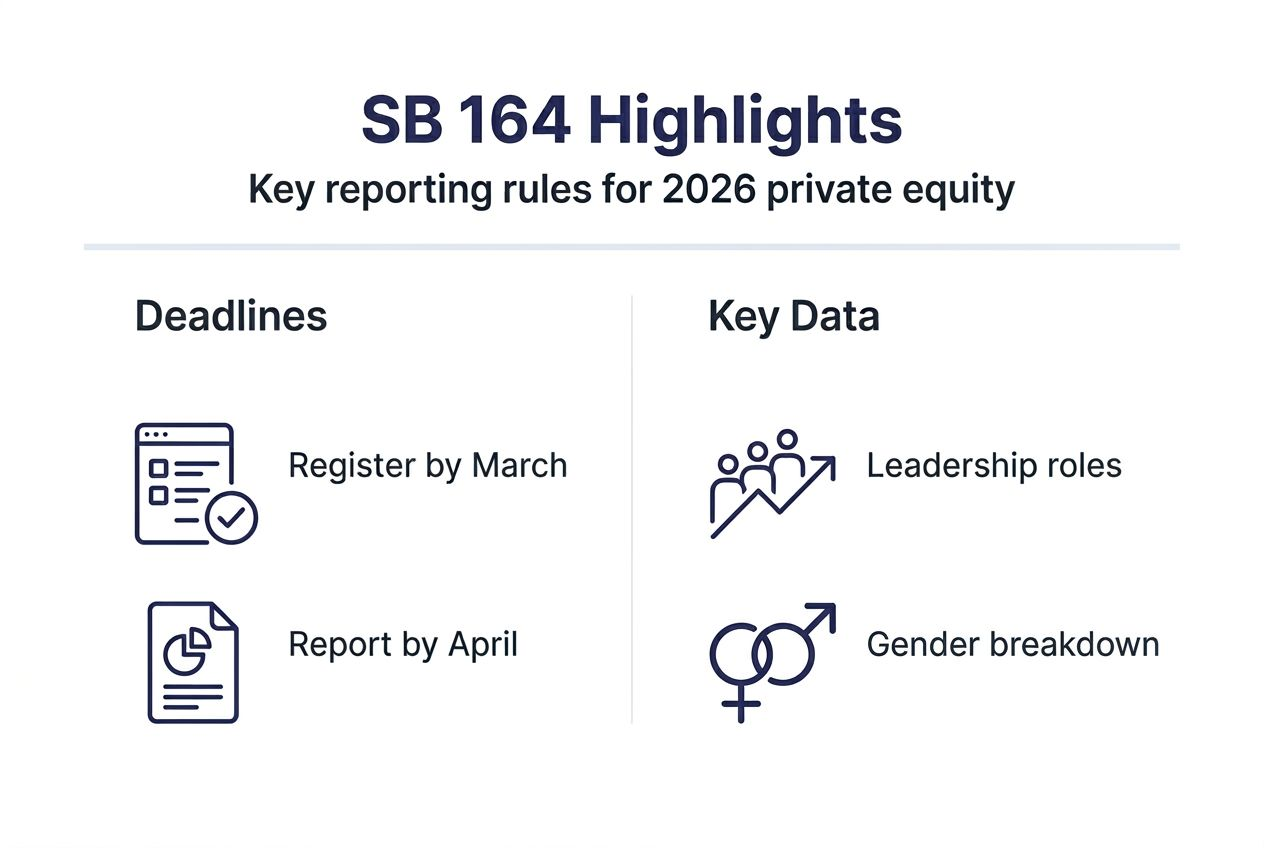
Firms must register with the DFPI by March 1, 2026, and submit their first demographic data reports by April 1, 2026. Reporting focuses on underrepresented groups including women, people of color, LGBTQ+ individuals, disabled persons, and veterans. The goal is to highlight disparities in funding allocation and leadership opportunities, creating public accountability for diversity outcomes.
Key reporting requirements include:
| Requirement | Details |
|---|---|
| Registration deadline | March 1, 2026, with DFPI for covered firms |
| First report due date | April 1, 2026, covering 2025 data |
| Data scope | Demographic characteristics of portfolio company founders and leadership |
| Covered firms | Venture capital and private equity firms with California operations or investments |
| Compliance obligations | Data retention, accurate reporting, and ongoing annual submissions |
The legislation aims to reduce disparities by making them visible. When firms must publicly report how few women or underrepresented minorities receive funding or hold leadership positions, it creates pressure for change. Transparency alone doesn’t guarantee equity, but it enables advocates, employees, and regulators to identify problematic patterns and target interventions.
For women working in private equity, SB 164 provides additional context for gender discrimination claims in Mid-Wilshire and Century City. If your firm’s reported data shows minimal women in leadership or founding roles, it corroborates your individual claims of systemic bias. Statistical evidence drawn from mandatory disclosures strengthens discrimination cases by demonstrating firm-wide patterns rather than isolated disputes.
Pro Tip: Monitor your firm’s SB 164 disclosures once they become public. If the data reveals significant gender disparities, it can support your discrimination claims by establishing the broader context in which your individual experience occurred.
Compliance with SB 164 also creates new documentation trails. Firms must maintain detailed records to satisfy reporting obligations, and these internal documents can become discoverable evidence in discrimination litigation. Increased regulatory oversight means firms face dual accountability through both DFPI enforcement and private civil actions.
Practical steps for female professionals facing discrimination in Century City
Recognizing discrimination requires understanding what behaviors cross legal lines. Pay attention to patterns, not just isolated events. Are you consistently passed over for promotions while less qualified male colleagues advance? Do performance reviews suddenly become negative after you report harassment or take medical leave? Are you excluded from client meetings, deal teams, or strategic planning sessions without explanation?
Document everything contemporaneously. Create a detailed written record including:
- Dates, times, and locations of discriminatory incidents
- Names of witnesses present during conversations or events
- Exact quotes of discriminatory statements when possible
- Copies of emails, performance reviews, compensation statements, and other relevant documents
- Notes about any adverse actions following complaints or protected activities
Save documentation outside your work systems. Use personal email or cloud storage to preserve evidence in case you lose access to company systems. Proving discrimination often requires demonstrating patterns and statistical disparities, not just isolated incidents, so comprehensive documentation over time becomes critical.
Understand your specific rights under California and federal laws. FEHA claims must be filed with the California Civil Rights Department within three years of the discriminatory act, though sooner is always better. Federal Title VII claims require EEOC filings within 300 days. Missing these deadlines can destroy otherwise valid claims, so acting promptly protects your options.
Consult an employment lawyer in Los Angeles experienced in gender discrimination cases early in the process. Don’t wait until you’ve been terminated or suffered severe retaliation. Early legal advice helps you understand your options, avoid common mistakes, and build stronger cases. Many employment attorneys offer free initial consultations to evaluate your situation.
Be strategically aware of retaliation risks. Reporting discrimination internally often triggers adverse treatment rather than remedial action. While retaliation is illegal, it happens frequently and can be professionally devastating. Consulting legal counsel before making internal complaints helps you anticipate risks and protect yourself.
Key protective steps include:
- Keeping personal copies of positive performance reviews and evidence of your contributions
- Documenting any changes in treatment following protected activities like medical leave or discrimination complaints
- Understanding your firm’s internal complaint procedures and any mandatory arbitration provisions in employment contracts
- Preserving evidence of hostile work environment in LA conditions before employers can destroy or manipulate records
Pro Tip: Before resigning in response to intolerable discrimination, consult an attorney about constructive discharge claims. If working conditions become so hostile that any reasonable person would resign, you may have wrongful termination claims even though you technically quit.
Taking action requires courage, but you don’t have to navigate these challenges alone. Legal protections exist specifically to empower you to challenge discrimination and seek accountability. Understanding your rights and documenting violations positions you to pursue justice effectively.
Find expert help for gender discrimination challenges in Century City
Navigating gender discrimination claims in Century City’s private equity sector requires specialized legal expertise. The Law Office of Brian Y. Shirazi focuses exclusively on employment law, representing executives and professionals facing discrimination, retaliation, and wrongful termination throughout Los Angeles. With deep knowledge of California FEHA, CFRA, Equal Pay Act protections, and federal employment laws, our firm provides strategic representation designed to protect your rights and professional reputation.
Timely legal advice is crucial. Consulting experienced counsel early helps you document discrimination effectively, understand filing deadlines, and avoid actions that might weaken your claims. Whether you’re experiencing ongoing bias, considering reporting discrimination internally, or facing retaliation after taking protected leave, strategic legal guidance can make the difference between successful recovery and lost opportunities.
We handle complex gender discrimination claims in Mid-Wilshire and Century City, understand the unique dynamics of private equity workplace disputes, and pursue maximum compensation for our clients. If you’re facing discrimination, don’t wait until your situation becomes untenable. Contact an experienced employment lawyer in Los Angeles to evaluate your case and protect your career. For executives dealing with termination following discrimination or retaliation, understanding your options for wrongful termination for Los Angeles executives is essential to securing fair outcomes.
Frequently asked questions
What are common signs of gender discrimination in private equity firms?
Signs include pay gaps compared to male colleagues in similar roles, repeated denial of promotions despite strong performance, exclusion from high-value deals or client relationships, hostile comments about gender or caregiving responsibilities, and sudden negative performance reviews after raising concerns. Gender discrimination in LA often manifests as patterns of unequal treatment rather than single incidents, making documentation over time critical to building strong legal claims.
How does the California Fair Employment and Housing Act protect me?
FEHA prohibits discrimination based on gender, disability, pregnancy, and other protected characteristics in all employment decisions including hiring, pay, promotions, and termination. It also protects your right to take medical leave without retaliation and provides remedies for hostile work environments. You can file administrative complaints with the California Civil Rights Department and pursue civil lawsuits seeking damages, making FEHA one of the strongest employee discrimination laws protecting workers in California.
What should I do if I face retaliation after reporting discrimination?
Document all instances of retaliation immediately, including dates, witnesses, and specific adverse actions like pay cuts, demotions, or termination. Consult an employment attorney promptly because retaliation claims have strict filing deadlines. Legal protections under FEHA and federal law prohibit employers from punishing you for reporting discrimination or taking protected leave, and retaliation after medical leave creates particularly strong claims when timing demonstrates discriminatory intent.
Can statistical data help prove gender discrimination in private equity?
Yes, statistical evidence showing firm-wide pay gaps, promotion disparities, or underrepresentation of women in leadership roles strongly supports claims of systemic discrimination. Courts routinely rely on statistical analysis alongside individual testimony to establish patterns of bias. California’s SB 164 reporting requirements will create new sources of statistical evidence, making it easier to demonstrate that your individual experience reflects broader discriminatory practices at private equity firms throughout Mid-Wilshire and Century City.
How long do I have to file a discrimination claim in California?
FEHA claims must be filed with the California Civil Rights Department within three years of the discriminatory act, though acting sooner protects your interests and preserves evidence. Federal Title VII claims require EEOC filings within 300 days. Some claims like Equal Pay Act violations have different limitation periods. Missing deadlines can destroy otherwise valid claims, so consulting an attorney immediately after experiencing discrimination ensures you preserve all available remedies and don’t forfeit rights due to procedural mistakes.
Recommended
- Gender Discrimination in LA | LA Employment Lawyer
- Gender Discrimination and Glass Ceiling in Beverly Grove
- Beverly Grove Gender Discrimination: 81% Pay Equity Challenge – Law Office of Brian Y. Shirazi, PC
- Gender Discrimination Claims in Mid-Wilshire Firms – Law Office of Brian Y. Shirazi, PC
- Handle sexual harassment in Costa Mesa tech in 2026 | Serendib Law Firm