
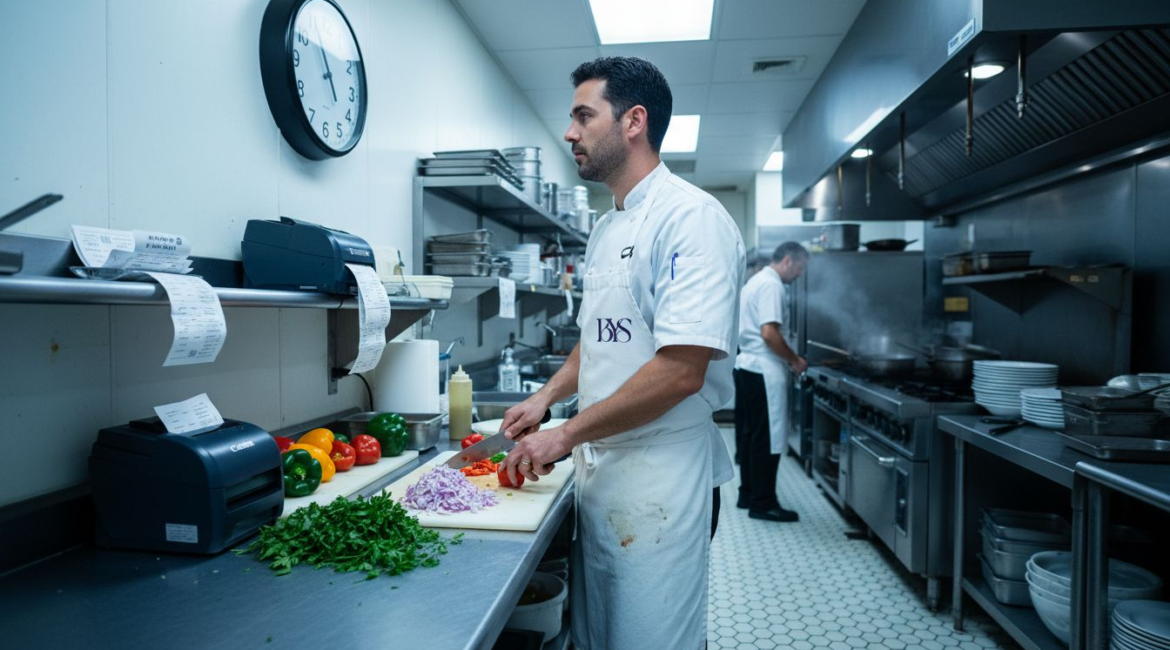
If you work at a restaurant along Melrose Avenue in the Fairfax District, there’s a startling 40% chance your employer has violated your wage rights. California Labor Commissioner audits reveal widespread wage theft across the neighborhood’s bustling restaurant scene. This article will walk you through recognizing unpaid wages, documenting violations, and pursuing legal claims to recover what you’re owed.
Table of Contents
- Understanding Wage Theft In Fairfax District Restaurants
- California Labor Laws Protecting Restaurant Workers
- Common Wage Theft Practices And Misconceptions In Fairfax District Restaurants
- How To Document And Prepare Your Wage Theft Claim
- Legal Pathways And Support For Fairfax District Restaurant Employees
- Get Expert Legal Help With Your Fairfax Wage Theft Claim
- Frequently Asked Questions About Fairfax District Wage Theft Claims
Key Takeaways
| Point | Details |
|---|---|
| Violation Rate | 40% of Fairfax District restaurants violate California wage laws, particularly along Melrose Avenue. |
| Legal Protections | California Labor Code protects your right to full wages and prohibits employer retaliation when you file claims. |
| Current Employees | You can file wage theft claims while still employed without fear of lawful termination. |
| Documentation Matters | Detailed time logs, pay stubs, and employer communications significantly strengthen your claim. |
| Legal Support | Shirazi Law Office specializes in recovering unpaid wages for Fairfax restaurant workers. |
Understanding Wage Theft in Fairfax District Restaurants
Wage theft affects thousands of restaurant workers across Los Angeles, but Fairfax District employees face particularly high violation rates. A 2022 California Labor Commissioner audit found that 40% of restaurants in the area failed to comply with basic wage and hour laws. These violations aren’t minor oversights. They represent systematic patterns of underpayment that cost workers thousands of dollars annually.
California law guarantees minimum wage for every hour worked and mandates overtime pay at 1.5 times your regular rate for hours beyond eight per day or 40 per week. Restaurants cannot require you to work off the clock, deny meal or rest breaks, or pool tips with managers and owners. Yet these violations happen constantly in Fairfax establishments, especially during busy dinner shifts when managers pressure staff to clock out early or skip breaks.
Common violations you might recognize include:
- Requiring prep work or closing tasks before clocking in or after clocking* out
- Denying overtime pay by manipulating timecards or misclassifying you as exempt
- Forcing you to share tips with managers, kitchen staff, or owners
- Automatically deducting break time whether you actually took breaks or not
- Paying below minimum wage by claiming tips make up the difference
Melrose Avenue’s high-volume restaurants create environments where wage theft risks flourish. Managers often lack proper training on California labor law, while owners prioritize profit margins over legal compliance. Many employees don’t even realize they’re experiencing wage theft until they compare notes with coworkers or consult legal resources.
Understanding these patterns is your first step toward claiming what you’ve earned. Recognition leads to documentation, and documentation leads to recovery.
California Labor Laws Protecting Restaurant Workers
California provides some of the strongest wage protections in the nation. Labor Code Section 1194 requires employers to pay all unpaid minimum wages and overtime, plus statutory penalties for violations. When restaurants fail to pay you properly, they owe you the missing wages and face additional financial consequences.
Labor Code Section 98.6 protects you from retaliation when you report unpaid overtime violations or file wage theft claims. Your employer cannot legally fire you, cut your hours, demote you, or create a hostile work environment because you asserted your rights. These protections apply whether you file through the Labor Commissioner or pursue a civil lawsuit.
Key legal protections include:
- Full payment of all unpaid wages dating back three years
- Penalties reaching 25% of the unpaid amount
- Recovery of attorney fees and legal costs
- Protection from termination or workplace punishment
- Interest on unpaid wages from the date they were due
| Protection Type | Legal Basis | Employee Benefit |
|---|---|---|
| Unpaid Wages | Labor Code 1194 | Full back pay plus penalties |
| Retaliation Shield | Labor Code 98.6 | Job security during claims process |
| Tip Pooling Limits | Labor Code 351 | Tips stay with customer-facing staff |
| Break Requirements | Labor Code 512 | Paid time for missed meal breaks |
Tip pooling deserves special attention because confusion runs rampant in Fairfax restaurants. California law permits tip sharing only among employees who directly serve customers. Managers, owners, and kitchen staff cannot participate in tip pools. If your restaurant forces you to share tips with back-of-house employees or management, that’s illegal wage theft.
Pro Tip: Screenshot your employer’s tip pooling policy if it exists in writing. This documentation becomes powerful evidence if you need to prove systematic violations affecting multiple employees.
These wage and hour protections exist specifically because restaurant industry violations occur so frequently. The law recognizes that service workers often face pressure to accept illegal practices or risk losing their jobs. California’s strong anti-retaliation provisions level the playing field.
Common Wage Theft Practices and Misconceptions in Fairfax District Restaurants
Unpaid overtime ranks as the most widespread violation in Fairfax restaurants. Managers routinely instruct servers, bartenders, and hosts to clock out after eight hours but continue working through closing duties. This practice alone costs employees thousands annually. Some restaurants manipulate digital timekeeping systems to automatically cap hours at 40 per week, regardless of actual time worked.

Off-the-clock work extends beyond closing duties. Many Fairfax establishments require employees to arrive 30 minutes early for unpaid prep work, attend unpaid staff meetings, or complete unpaid training sessions. Every minute you work for your employer must be compensated, period. There’s no legal exception for training, meetings, or prep time.
Misconceptions about tip pooling create another layer of wage theft. Employees often believe any tip sharing arrangement their employer implements must be legal. In reality, California strictly limits who can participate in tip pools. If you’ve shared tips with managers, owners, or kitchen staff, you’re entitled to recover those amounts.
Common illegal practices include:
- Requiring you to cover walkouts or dine-and-dash incidents from your tips
- Deducting credit card processing fees from your tips
- Forcing you to tip out more than 15% of your tips to support staff
- Pooling tips with employees who don’t directly serve customers
- Counting tips toward minimum wage instead of treating them as extra compensation
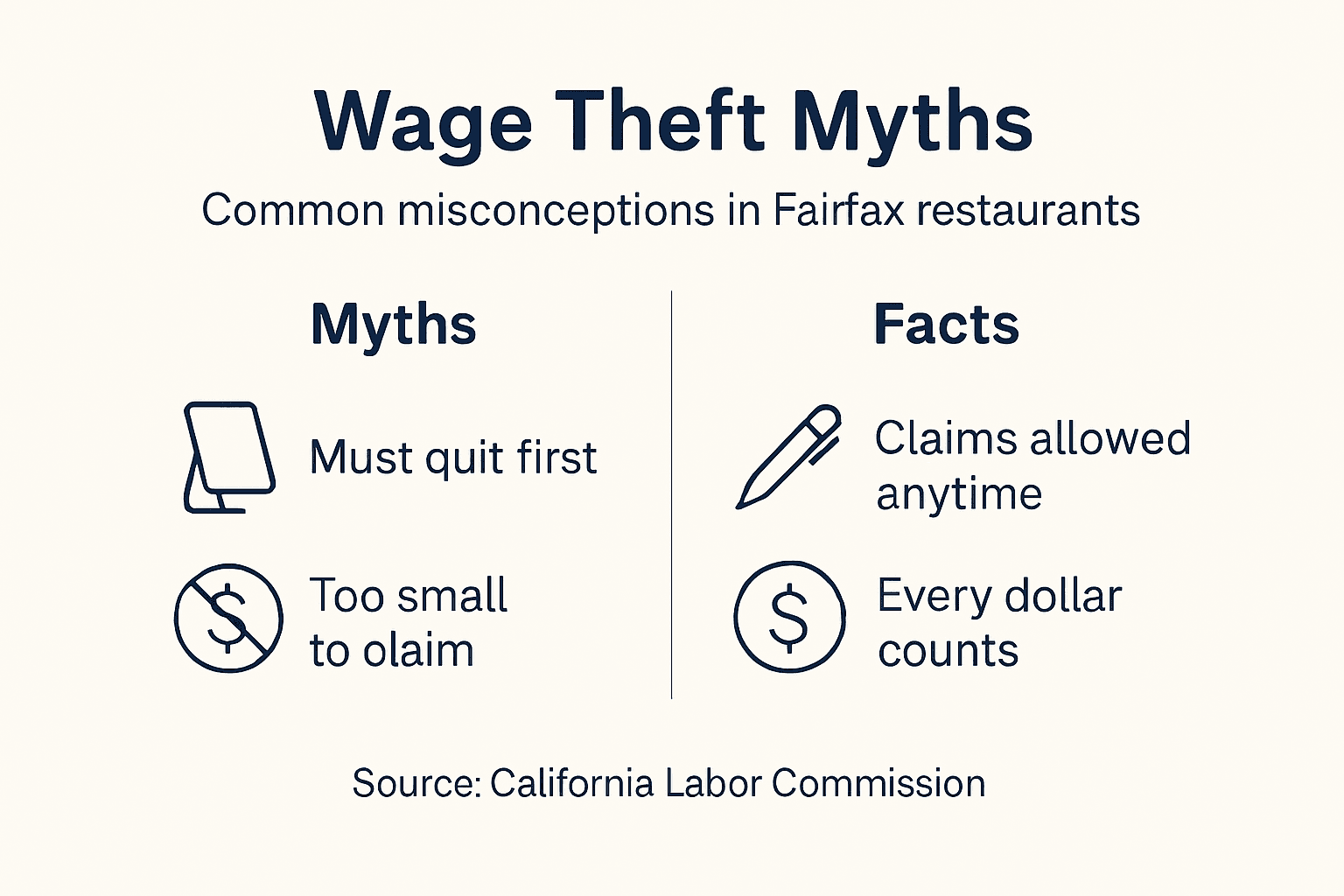
Many employees mistakenly believe they can only file wage theft claims after quitting. This misconception keeps workers silent while violations continue. California law explicitly protects your right to file claims while still employed. You don’t need to choose between recovering your wages and keeping your job.
Pro Tip: Track your actual hours worked in a personal notebook or phone app separate from your employer’s system. This independent record becomes crucial evidence if your employer later alters official timecards.
Another widespread myth suggests small amounts of wage theft aren’t worth pursuing. Even if your employer shorts you just 30 minutes per shift, that adds up to significant money over time. At $16 per hour minimum wage, 30 minutes daily equals $2,080 annually. The law doesn’t distinguish between large and small violations because wage theft is wage theft.
How to Document and Prepare Your Wage Theft Claim
Strong documentation transforms your wage theft claim from a credibility contest into a straightforward case with clear evidence. Start collecting proof the moment you suspect violations. California courts and the Labor Commissioner rely heavily on contemporaneous records, meaning documentation created at the time events occurred carries more weight than later recollections.
Follow these documentation steps:
- Create detailed daily logs noting your clock-in time, clock-out time, and actual start/end of work
- Photograph or screenshot your work schedule each week before it can be altered
- Save every pay stub, keeping both physical and digital copies in a secure location
- Document conversations with managers about wages, breaks, or hours through follow-up texts or emails
- Preserve any written policies, employee handbooks, or texts discussing pay practices
- Note specific dates and times when you worked off the clock or missed breaks
Your daily log should include specifics that prove the extent of violations. Write down what tasks you performed before clocking in, whether you took your required meal break, and what closing duties you completed after clocking out. These details make it impossible for employers to claim violations were isolated incidents rather than systematic practices.
Pay stub preservation matters because employers sometimes “correct” their records after employees file claims. Your original pay stubs prove what you were actually paid versus what you should have received. Compare your pay stubs against your personal time logs to identify discrepancies.
Critical evidence to gather:
- Time clock records or timecard photos
- Work schedules showing your assigned shifts
- Text messages or emails about work duties, hours, or pay
- Bank statements showing direct deposit amounts
- Tip reports or tip pool distribution records
- Employee handbook sections about wages, breaks, or tips
- Witness contact information for coworkers who observed violations
Pro Tip: Use your phone to take timestamped photos of the restaurant’s posted work schedule each week. If your employer later claims you weren’t scheduled for hours you worked, these photos provide indisputable proof.
Proper documentation practices significantly increase recovery amounts because they eliminate disputes about basic facts. When you present detailed logs, contemporaneous photos, and consistent records, employers find it nearly impossible to deny violations occurred. This evidence also helps calculate exact amounts owed, ensuring you recover every dollar you’ve earned.
Start your documentation system today, even if you’re uncertain whether you’ll file a claim. Having organized records gives you options and protects your rights regardless of what happens next at your workplace.
Legal Pathways and Support for Fairfax District Restaurant Employees
You have two primary options for pursuing wage theft claims in California: filing through the Labor Commissioner or bringing a civil lawsuit. Each pathway offers distinct advantages depending on your situation and goals. Filing through the Labor Commissioner provides a faster, lower-cost resolution process specifically designed for wage and hour disputes.
The Labor Commissioner’s office investigates your claim, holds hearings, and issues decisions requiring employers to pay unpaid wages plus penalties. This administrative process typically resolves within 12 to 18 months and doesn’t require you to hire an attorney, though legal representation often improves outcomes. The Labor Commissioner focuses specifically on recovering unpaid wages rather than broader employment law violations.
Civil lawsuits offer more comprehensive remedies but involve longer timelines and court procedures. You can pursue additional damages beyond unpaid wages, including compensation for emotional distress in some cases. Civil cases typically take 18 to 36 months to resolve and benefit significantly from experienced legal representation.
| Option | Timeline | Cost | Best For |
|---|---|---|---|
| Labor Commissioner | 12-18 months | Low/No cost | Straightforward wage claims |
| Civil Lawsuit | 18-36 months | Attorney fees (often contingency) | Complex cases with multiple violations |
| Class Action | 24-48 months | No upfront cost | Systematic violations affecting many employees |
California’s anti-retaliation protections shield you throughout the claims process. Your employer cannot legally fire you, reduce your hours, change your schedule to less desirable shifts, or create a hostile environment because you filed a wage claim. If retaliation occurs, you have additional legal claims for wrongful termination or retaliation that can result in substantial damages beyond your original wage theft claim.
Legal firms specializing in wage theft recovery have helped restaurant workers reclaim millions in unpaid wages. Shirazi Law Office focuses specifically on employment law violations affecting Fairfax District workers, understanding the unique challenges restaurant employees face. Professional legal guidance helps you navigate documentation requirements, meet filing deadlines, and maximize your recovery.
Key advantages of legal support:
- Expert evaluation of your claim’s strength and potential value
- Professional documentation organization and evidence presentation
- Strategic advice on which filing pathway best serves your interests
- Representation in hearings or court proceedings
- Protection against employer intimidation or retaliation
- Contingency fee arrangements that require no upfront payment
Pro Tip: Consult an employment attorney before filing your Labor Commissioner claim. Strategic guidance on documentation and claim structure can significantly increase your recovery amount, and most employment lawyers offer free initial consultations.
Shirazi Law Office provides specialized support for wage theft claims, walking you through every step from initial consultation through final resolution. Their experience with Fairfax District restaurant cases means they understand the specific violations you’re facing and how to prove them effectively.
Get Expert Legal Help with Your Fairfax Wage Theft Claim
If you’ve experienced wage theft at a Fairfax District restaurant, you don’t have to navigate the legal system alone. Shirazi Law Office specializes in representing restaurant workers throughout Los Angeles, with deep experience in wage and hour disputes specific to the service industry. They understand how Melrose Avenue establishments operate and what evidence proves wage theft most effectively.
The firm offers free initial consultations to evaluate your claim and explain your legal options. Their experienced attorneys work on contingency for most wage theft cases, meaning you pay nothing unless they recover money for you. This arrangement makes professional legal representation accessible regardless of your financial situation.
Early legal support dramatically increases your chances of full recovery. Employment lawyers in Los Angeles know how to document claims properly, meet strict filing deadlines, and negotiate effectively with employers. Don’t let confusion or intimidation prevent you from claiming wages you’ve rightfully earned.
Frequently Asked Questions about Fairfax District Wage Theft Claims
Can I file a wage theft claim while still employed?
Yes, California law explicitly allows you to file wage theft claims while still working for the employer who violated your rights. Labor Code Section 98.6 protects you from retaliation, making it illegal for your employer to fire, demote, or punish you for asserting your wage rights. Filing while employed often helps you recover ongoing violations more quickly.
What types of evidence strengthen a wage theft claim?
Timecards, pay stubs, work schedules, and written communications with managers provide the strongest evidence. Personal time logs created contemporaneously carry significant weight, especially when they reveal discrepancies between hours worked and hours paid. Text messages or emails discussing work duties, unpaid time, or tip pooling arrangements also strengthen your case substantially.
How does California protect me from employer retaliation?
Employers cannot lawfully terminate, demote, reduce hours, or otherwise punish you for reporting wage theft or filing claims. California Labor Code Section 98.6 creates a separate legal claim if your employer retaliates, allowing you to recover damages for wrongful termination or retaliation in addition to your unpaid wages. These protections apply from the moment you file a claim through the entire legal process.
What penalties can employers face for wage theft violations?
Employers found liable for wage theft must pay all unpaid wages plus penalties reaching 25% of the amount owed. They may also owe interest on unpaid wages, your attorney fees, and costs of pursuing the claim. The Labor Commissioner can impose additional penalties and pursue enforcement actions that result in ongoing monitoring of the employer’s pay practices.





Having read this I thought it was very informative. I appreciate you taking the time and effort to put this article together. I once again find myself spending way to much time both reading and commenting. But so what, it was still worth it!
I’ve read several excellent stuff here. Certainly value bookmarking for revisiting. I surprise how so much attempt you put to make such a magnificent informative web site.