

Creative directors and marketing executives in Fairfax face unique wrongful termination risks that often go unrecognized until it’s too late. High profile cases, including a Ruggable marketing director’s pregnancy discrimination suit, reveal how vulnerable professionals remain in California’s competitive creative industries. This guide clarifies your legal protections, documents evidence strategies, and outlines actionable steps to defend your career and reputation when facing discriminatory or retaliatory employment practices.
Table of Contents
- Understanding Wrongful Termination For Creative Professionals In Fairfax
- Legal Precedents Shaping Wrongful Termination Claims In California’s Creative Industries
- Best Practices For Documenting And Responding To Wrongful Termination Threats
- Navigating Legal Options And Seeking Counsel After Wrongful Termination In Fairfax
- Protect Your Career With Expert Wrongful Termination Legal Support
- Frequently Asked Questions
Key takeaways
| Point | Details |
|---|---|
| Legal protections exist | California law shields executives from discrimination, retaliation, and contract breaches in termination decisions. |
| Documentation is critical | Thorough records of workplace incidents, emails, and performance reviews strengthen wrongful termination claims significantly. |
| Early legal consultation pays | Consulting employment attorneys immediately after discrimination signs appear improves case outcomes and preserves evidence. |
| Multiple remedies available | Wrongfully terminated professionals can pursue reinstatement, compensatory damages, punitive awards, and front pay. |
| Industry patterns matter | Recent creative sector lawsuits reveal common discrimination trends affecting marketing and creative leadership roles. |
Understanding wrongful termination for creative professionals in Fairfax
Wrongful termination occurs when California employers fire employees for illegal reasons violating state or federal law. For creative directors and marketing executives, termination becomes wrongful when based on protected characteristics like gender, pregnancy status, age, sexual orientation, or retaliation for reporting workplace violations.
The creative industries present unique vulnerability. Fast paced environments, demanding cultures, and emphasis on youth and innovation can mask discriminatory practices. A former Ruggable marketing director’s case alleged pregnancy and gender discrimination, highlighting how even progressive companies may engage in unlawful termination practices.
Common wrongful termination grounds affecting creative professionals include:
- Gender discrimination limiting advancement opportunities for female executives
- Pregnancy related terminations disguised as performance issues
- Retaliation following complaints about harassment or unsafe conditions
- Age discrimination targeting experienced executives in favor of younger hires
- Disability discrimination after requesting reasonable workplace accommodations
- Family care discrimination penalizing parents for family responsibilities
Fairfax’s creative sector faces heightened risk due to industry image pressures and competitive workplace cultures. Companies may prioritize perceived cultural fit over legal compliance, creating environments where discrimination thrives unchecked.
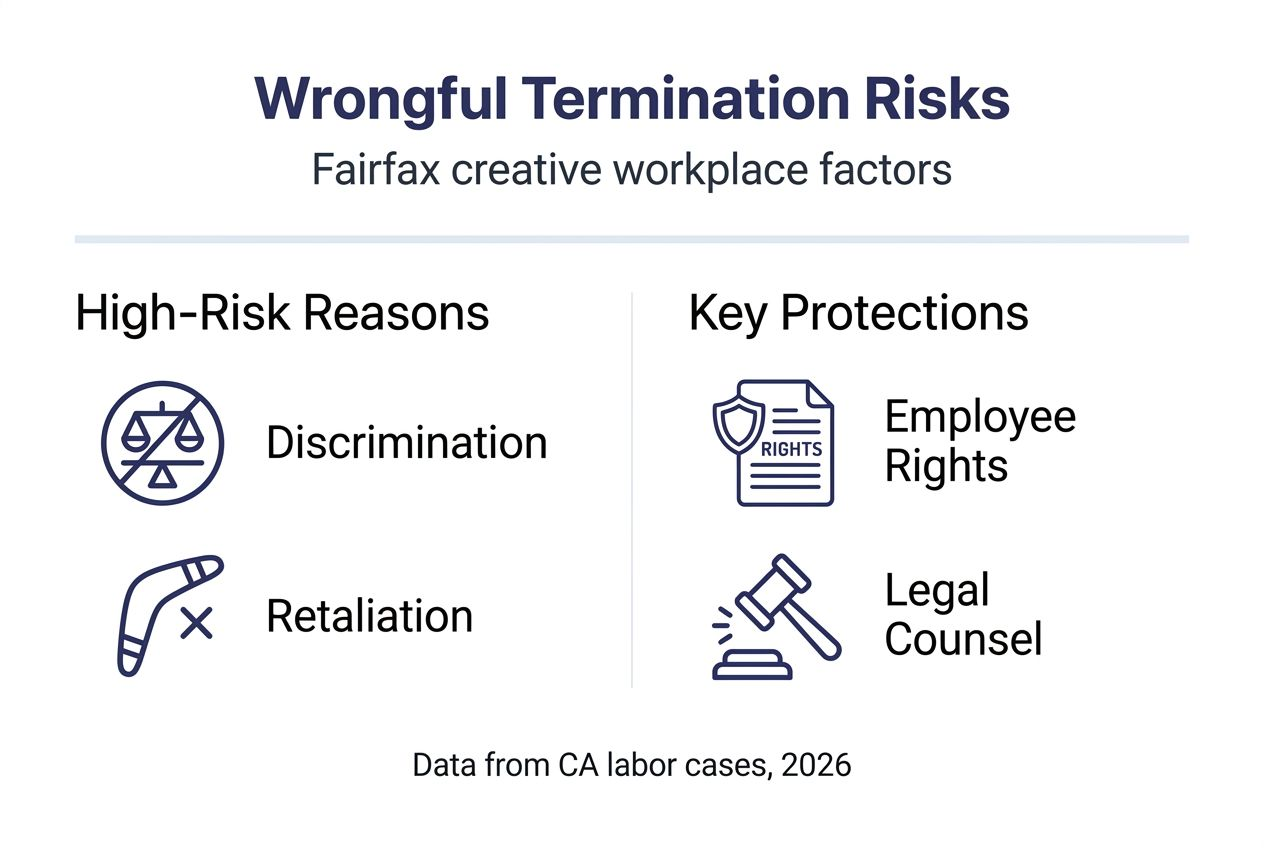
Recognizing early warning signs protects your position. Watch for sudden performance criticism after protected activities, exclusion from key meetings, reassignment of major projects, unexplained compensation reductions, or hostile treatment following discrimination complaints.
Pro Tip: Document every incident immediately in a personal journal with dates, times, witnesses, and exact statements. Save all relevant emails and communications to a personal device outside company systems. Early documentation becomes crucial evidence if you later pursue wrongful termination claims in LA.
Legal precedents shaping wrongful termination claims in California’s creative industries
California’s creative and entertainment sectors generate substantial wrongful termination litigation, establishing important precedents for marketing executives and creative directors. Understanding these cases reveals patterns, strengthens your awareness of rights, and illustrates how courts evaluate discrimination claims.

Age and sexual orientation discrimination lawsuits remain common in California entertainment industries, where youth focused cultures may systematically disadvantage experienced professionals. These cases often involve multiple discrimination bases, retaliation claims, and hostile work environment allegations.
A significant example involves a former Disney attorney alleging wrongful termination tied to gender pay disparities, where Alisa Clairet claimed unequal compensation compared to male colleagues performing identical work. Such cases demonstrate how compensation discrimination often precedes wrongful termination, with employers eliminating employees who challenge unfair practices.
| Case Type | Common Allegations | Typical Outcomes |
|---|---|---|
| Gender discrimination | Unequal pay, denied promotions, hostile comments, pregnancy bias | Settlements, compensatory damages, policy changes |
| Age discrimination | Replaced by younger workers, performance criticism after years of positive reviews | Reinstatement negotiations, front pay awards |
| Retaliation | Termination following complaints, demotion after protected activity | Punitive damages, injunctive relief |
| Sexual orientation bias | Hostile environment, exclusion, termination after disclosure | Compensatory awards, workplace training requirements |
These precedents establish several critical principles for Fairfax creative professionals:
- Multiple discrimination bases strengthen claims and increase potential damages
- Documenting pay disparities provides concrete evidence of gender discrimination
- Retaliation claims succeed when termination closely follows protected complaints
- Hostile work environment evidence supports wrongful termination allegations
- Settlement negotiations often result in substantial compensation for executives
Courts scrutinize timing carefully. Terminations occurring shortly after discrimination complaints, pregnancy announcements, or protected leave requests raise immediate red flags. Employers claiming performance issues must demonstrate consistent, documented concerns predating protected activities.
The entertainment and creative sectors face particular scrutiny because gender discrimination patterns persist despite public diversity commitments. Executives in these industries benefit from stronger legal presumptions when challenging termination decisions.
Pro Tip: Research whether your employer faces similar lawsuits or EEOC complaints. Public records reveal patterns that strengthen individual claims and demonstrate systemic discrimination, making it harder for employers to claim isolated incidents. Understanding wrongful termination risks for LA executives helps you recognize when your situation fits established patterns.
Best practices for documenting and responding to wrongful termination threats
Effective documentation separates strong wrongful termination claims from weak ones. Documenting discrimination instances proves essential in employment disputes, providing concrete evidence that supports your legal position and undermines employer defenses.
Follow this systematic approach when facing potential wrongful termination:
- Create a detailed incident log immediately when discrimination occurs, recording dates, times, locations, witnesses, and exact statements or actions
- Save all relevant emails, text messages, performance reviews, and written communications to personal devices or cloud storage outside company access
- Collect witness contact information and written statements from colleagues who observed discriminatory behavior or heard problematic comments
- Request copies of your complete personnel file, including all performance evaluations, disciplinary notices, and compensation records
- Document your job accomplishments, successful projects, positive feedback, and contributions to establish strong performance history
- Preserve evidence of similarly situated employees receiving better treatment, demonstrating discriminatory disparities
- Record any changes in treatment following protected activities like pregnancy announcements, discrimination complaints, or leave requests
- Photograph or screenshot workplace communications, social media posts, or other digital evidence before it disappears
Timing matters critically. Document incidents immediately while details remain fresh and before employers can construct alternative explanations. The strongest cases involve contemporaneous records created during events, not reconstructed months later.
Maintain professional communication throughout the process. Avoid emotional outbursts, threats, or unprofessional behavior that employers might use to justify termination decisions. Respond to concerns in writing, creating documented records of your professional conduct.
Pro Tip: Use encrypted cloud storage or email evidence to a personal account immediately after incidents occur. Employers frequently restrict system access without warning during termination processes, eliminating your ability to retrieve crucial evidence. Maintaining multiple backup copies in secure locations outside employer control protects your legal position.
Seek legal counsel early, before accepting severance agreements or termination proposals. Employment law expertise helps you understand rights, evaluate evidence strength, and plan strategic responses. Attorneys can send preservation letters preventing evidence destruction and negotiate favorable outcomes before litigation becomes necessary.
Raise internal concerns carefully. While reporting discrimination to HR creates protected activity, understand that HR represents employer interests, not yours. Document all internal complaints and responses thoroughly, as retaliation following internal reports strengthens wrongful termination claims significantly.
Navigating legal options and seeking counsel after wrongful termination in Fairfax
Wrongfully terminated executives have multiple legal remedies available under California employment law. Understanding options helps you make informed decisions about pursuing claims and selecting appropriate legal strategies.
Available legal remedies include:
- Reinstatement to your previous position with restored seniority and benefits
- Front pay compensating for future lost earnings when reinstatement proves impractical
- Back pay covering lost wages and benefits from termination through resolution
- Compensatory damages for emotional distress, reputational harm, and other losses
- Punitive damages punishing particularly egregious employer conduct
- Attorney fees and litigation costs
- Injunctive relief preventing ongoing discrimination or retaliation
| Claim Type | Legal Basis | Typical Remedies |
|---|---|---|
| Discrimination | Title VII, FEHA, California Constitution | Compensatory damages, punitive awards, reinstatement, policy changes |
| Retaliation | FEHA, Labor Code whistleblower protections | Back pay, front pay, emotional distress damages, injunctions |
| Contract breach | Written agreements, implied contracts | Contract damages, lost compensation, benefits recovery |
| Whistleblower | California Labor Code sections protecting reporting | Enhanced damages, attorney fees, job restoration |
Employers face substantial liability when failing to address discrimination complaints, creating strong negotiation leverage for wrongfully terminated executives. This liability exposure often motivates favorable settlements avoiding costly litigation.
Choosing qualified California employment attorneys requires careful evaluation:
- Verify specialization in wrongful termination and executive employment disputes specifically
- Review track records with similar cases involving creative industry professionals
- Confirm experience litigating against large corporations and sophisticated employers
- Assess communication style and responsiveness during initial consultations
- Understand fee structures, whether contingency based or hourly arrangements
- Request references from previous executive clients with comparable situations
Timing constraints require immediate attention. California wrongful termination claims face strict filing deadlines. DFEH complaints must typically be filed within three years of discriminatory acts, though shorter deadlines apply to certain claims. Federal EEOC complaints require filing within 300 days of discrimination.
Missing deadlines permanently bars claims, regardless of merit. Early legal consultation ensures compliance with all procedural requirements and preserves your ability to pursue available remedies.
Executives facing complex wrongful termination situations benefit enormously from specialized legal representation. Attorneys navigate procedural requirements, develop litigation strategies, gather additional evidence, and negotiate with employers from positions of legal strength. The complexity of wrongful termination risks for LA executives demands expert guidance.
Pro Tip: Consult multiple attorneys before selecting representation. Most experienced employment lawyers in LA offer free initial consultations. Comparing approaches, strategies, and communication styles helps you find the best fit for your specific situation and personality.
Protect your career with expert wrongful termination legal support
Navigating wrongful termination demands specialized legal expertise that understands both employment law complexities and creative industry dynamics. Shirazi Law Office focuses exclusively on protecting employees, executives, and senior management facing unlawful termination, discrimination, and workplace retaliation in Los Angeles.
Our comprehensive approach includes:
- Thorough case evaluation examining evidence strength and available legal claims
- Strategic litigation planning tailored to your career goals and situation
- Aggressive negotiation securing maximum compensation and favorable terms
- Expert settlement guidance weighing litigation risks against resolution benefits
We represent creative directors, marketing executives, and senior professionals throughout Fairfax, Beverly Hills, West Hollywood, and greater Los Angeles. Our deep understanding of California employment law combined with practical, results driven strategies helps clients assert rights, recover damages, and protect professional reputations.
Don’t face wrongful termination alone. Early legal intervention dramatically improves outcomes and preserves evidence before it disappears. Contact us for a confidential consultation about your wrongful termination situation and learn how experienced employment law representation can protect your career and rights.
Frequently asked questions
What are common signs of wrongful termination for creative executives?
Watch for sudden demotions, pay cuts, or exclusion from important meetings following protected activities. Retaliation after discrimination complaints, pregnancy announcements, or family leave requests signals potential wrongful termination. Discrimination based on pregnancy status, gender, age, or sexual orientation often precedes unlawful termination decisions.
How can creative directors document workplace discrimination effectively?
Maintain detailed records of all communications, emails, and discriminatory incidents with specific dates and witnesses. Collect written witness statements from colleagues and copies of performance reviews showing positive evaluations. Save everything to secure personal storage outside company systems, creating multiple backup copies that survive termination.
What legal remedies are available for wrongful termination claims in California?
California law provides reinstatement rights or front pay when returning proves impossible. Wrongfully terminated executives can recover compensatory damages for lost wages and emotional distress, plus punitive damages for egregious conduct. Courts may issue injunctions preventing further retaliation and order policy changes addressing systemic discrimination.
When should marketing professionals seek legal counsel for employment disputes?
Consult employment attorneys immediately when discrimination or retaliation signs appear, before situations escalate. Seek legal advice before accepting any severance agreements, termination proposals, or signing releases waiving legal rights. Early consultation helps evaluate case strength, preserve critical evidence, and develop strategic responses protecting your position.
Recommended
- Wrongful Termination in LA | Employee Rights & Remedies
- Wrongful Termination for Los Angeles Executives: Key Risks
- Wrongful Termination of Executives in Beverly Hills – Law Office of Brian Y. Shirazi, PC
- Wrongful Termination Risks in Beverly Hills Retail
- Remote Work Policy | Kickass Online
- Career Advice Articles – MeetAssist Blog | MeetAssist