

One out of every four American employees has suffered from wage theft, according to research in California workplaces. For finance, retail, and office workers in Downtown Los Angeles, missed paychecks or unpaid overtime are more than just paperwork errors. These wage and hour violations can quickly impact your financial security and peace of mind. Understanding your rights, and how California laws protect you, puts real power back in the hands of American workers facing these challenges.
Table of Contents
- Defining Wage and Hour Violations in LA
- Common Violations in Finance, Retail, and Offices
- California Laws Governing Wages and Hours
- Employee Rights and Employer Obligations
- Risks, Penalties, and Legal Remedies
Key Takeaways
| Point | Details |
|---|---|
| Wage Theft is Common in Downtown LA | Many workers face wage theft through unpaid overtime, misclassification, and denial of mandated breaks. Employers often exploit workers’ lack of knowledge about their rights. |
| California Labor Laws Offer Strong Protections | Workers are entitled to specific rights under California law, including minimum wage of $15.50 per hour and protections against retaliation for reporting violations. |
| Document Everything | Employees should maintain detailed records of hours worked and communication to protect themselves from wage theft and to support any potential legal claims. |
| Severe Penalties for Employers | Employers face significant financial repercussions for wage violations, including steep fines and potential personal liability for management, creating a strong deterrent against misconduct. |
Defining Wage and Hour Violations in LA
Wage and hour violations represent serious legal infractions that impact workers across Downtown Los Angeles workplaces. These violations occur when employers fail to comply with established California labor regulations regarding compensation, overtime, meal breaks, and other worker protections. Wage theft can manifest through multiple channels, including underpaying employees, denying required rest periods, or misclassifying workers to avoid paying proper wages.
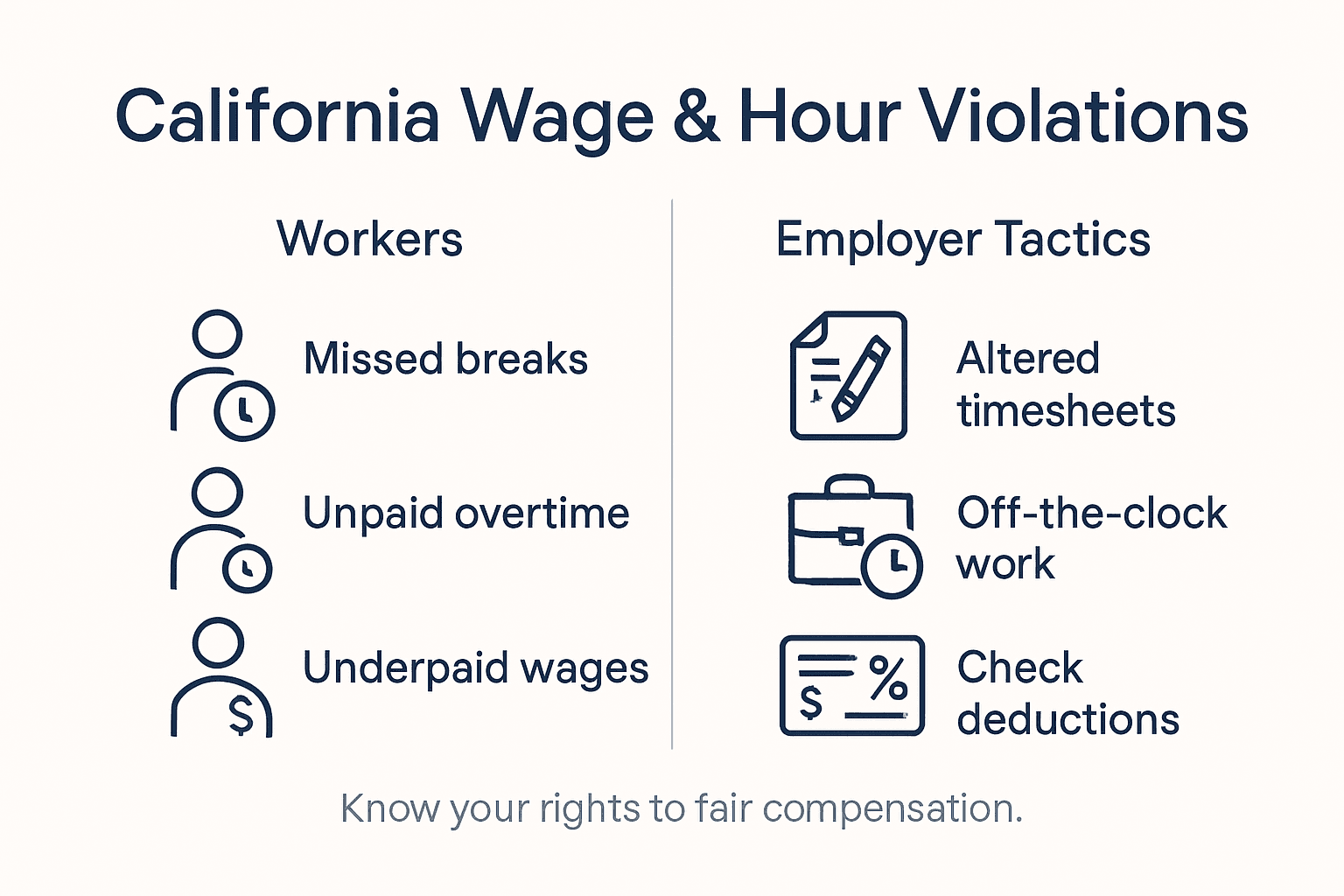
In Downtown LA, common wage and hour violations often involve specific scenarios like unpaid overtime, minimum wage infractions, and systematic denial of mandated meal and rest breaks. Employers might deliberately manipulate time records, pressure employees to work off the clock, or implement policies that systematically undercompensate workers. The Employment Law Practice at Shirazi Law Office recognizes these sophisticated tactics that frequently exploit workers’ limited understanding of their legal rights.
California labor laws provide robust protections for employees, establishing strict standards for minimum wage, overtime compensation, and mandatory break times. Workers are entitled to receive at least $15.50 per hour as of 2023, with overtime pay calculated at 1.5 times their regular rate for hours worked beyond 8 in a single day or 40 in a week. Employers who deliberately circumvent these regulations can face significant legal penalties, including back wage payments, financial damages, and potential civil sanctions.
Pro Tip for Workers: Document every hour worked, including unofficial tasks performed outside standard work hours, and maintain detailed records of your time and compensation to protect yourself against potential wage theft.
Common Violations in Finance, Retail, and Offices
Wage and hour violations in Downtown Los Angeles frequently target workers in finance, retail, and office environments through sophisticated and systematic practices designed to minimize labor compensation. Misclassification represents one of the most prevalent strategies, where employers deliberately categorize employees as independent contractors or exempt workers to avoid paying overtime, providing benefits, or adhering to minimum wage requirements.
In financial sectors, common violations include requiring employees to attend mandatory training or meetings without compensation, pressuring workers to complete administrative tasks outside standard work hours, and systematically underreporting actual hours worked. Retail environments often experience violations through off-the-clock work, such as compelling employees to complete inventory, cleaning, or opening/closing procedures without proper wage recognition. Practice Areas at employment law firms like Shirazi Law Office specialize in identifying these nuanced wage theft strategies that disproportionately impact hourly workers.
Office environments in Downtown LA frequently encounter wage violations through unpaid overtime, manipulated time tracking systems, and implicit expectations of additional uncompensated work. Employers might implement policies that discourage accurate time reporting, create cultures of perpetual availability through digital communication, or establish implicit performance expectations that require excessive unpaid labor. California labor regulations explicitly protect workers against these practices, mandating that all work performed must be compensated at appropriate rates, including overtime and minimum wage standards.

Pro Tip for Workplace Protection: Maintain a personal time log independent of employer records, documenting all work activities, communication timestamps, and potential uncompensated labor to create a contemporaneous record of your actual work hours.
Here’s a summary of typical wage and hour violations by industry in Downtown Los Angeles:
| Industry | Common Violation Type | Typical Employer Tactic |
|---|---|---|
| Finance | Unpaid training and meetings | Mandatory off-the-clock work |
| Retail | Off-the-clock inventory, cleaning | No wage recognition for extra tasks |
| Office | Unpaid overtime, time manipulation | Discouraging accurate hour reporting |
California Laws Governing Wages and Hours
California maintains some of the most comprehensive and employee-protective wage and hour regulations in the United States, establishing rigorous standards that go beyond federal requirements to safeguard workers’ compensation rights. Wage protection laws in the state create a complex framework of regulations designed to ensure fair compensation, prevent exploitation, and mandate transparent employment practices across various industries in Downtown Los Angeles and beyond.
The California Division of Labor Standards Enforcement establishes detailed guidelines that cover multiple aspects of worker compensation. These regulations include mandatory minimum wage requirements, which currently stand at $15.50 per hour statewide, with specific provisions for overtime compensation. Employers must pay 1.5 times the regular rate for hours worked beyond 8 in a single day or 40 in a week, and double time for work exceeding 12 hours in a single shift. Additional protections mandate meal and rest breaks, requiring employers to provide a 30-minute unpaid meal break for shifts longer than 5 hours and a 10-minute paid rest break for every 4 hours worked.
Unique to California, wage and hour laws create additional complexity through local municipal regulations that can supersede state standards. Downtown Los Angeles, for instance, may have more stringent requirements than statewide minimums, particularly for specific industries like hospitality, retail, and healthcare. These laws also address critical issues such as worker misclassification, requiring employers to correctly categorize workers as employees or independent contractors, with significant penalties for deliberate misclassification designed to avoid providing proper wages and benefits.
Pro Tip for Legal Compliance: Keep comprehensive, contemporaneous records of all hours worked, including unofficial tasks and communication outside standard work hours, to protect yourself against potential wage theft and support potential legal claims.
Employee Rights and Employer Obligations
Employees in Downtown Los Angeles are protected by a comprehensive set of legal rights that establish clear standards for fair compensation, workplace treatment, and professional respect. Wage protection represents a fundamental cornerstone of these rights, ensuring workers receive appropriate compensation for their time, effort, and contributions across various industries and employment contexts.
California wage and hour laws establish robust frameworks that mandate specific employer obligations, including accurate worker classification, timely wage payments, and maintenance of detailed payroll records. Employers must provide itemized wage statements, pay at least minimum wage, compensate overtime at prescribed rates, and ensure employees receive mandated meal and rest breaks. Critical protections explicitly prohibit employer retaliation against workers who file legitimate wage complaints or assert their legal rights, creating a critical safeguard against potential workplace exploitation.
The legal landscape for employee rights in Downtown Los Angeles extends beyond basic compensation, encompassing comprehensive protections against discriminatory practices and workplace misconduct. Employees are entitled to work environments free from harassment, with clear mechanisms for reporting violations and seeking legal recourse. Employers bear significant responsibilities in creating transparent, fair workplace systems, including maintaining comprehensive documentation, implementing non-discriminatory policies, and responding promptly to workplace concerns. Violations of these standards can result in substantial financial penalties, potential civil litigation, and administrative sanctions from state labor enforcement agencies.
Pro Tip for Workplace Rights: Document all workplace interactions, communications, and potential rights violations contemporaneously, creating a comprehensive record that can serve as critical evidence if legal disputes arise.
Risks, Penalties, and Legal Remedies
Wage and hour violations in Downtown Los Angeles carry significant legal and financial consequences that can devastate businesses and create substantial financial liability for employers. Statutory penalties represent a complex landscape of potential financial and legal repercussions designed to discourage systematic workplace compensation infractions and protect employee rights across various industries.
California wage violation enforcement imposes steep monetary penalties ranging from $100 to $15,000 per individual violation, with potential escalation in cases of repeated or intentional misconduct. Employers may face waiting time penalties extending up to 30 days of additional wages, and individual managers can be held personally liable for willful violations. These penalties create a powerful deterrent against wage theft, with state agencies aggressively pursuing enforcement through administrative complaints, civil litigation, and potential criminal sanctions.
Legal remedies for workers extend beyond immediate financial compensation, encompassing comprehensive options for recovering unpaid wages, addressing systemic workplace violations, and protecting against potential retaliation. Employees can pursue claims through the California Labor Commissioner’s Office, file individual or class action lawsuits, and seek remedies including back pay, interest, liquidated damages, and potential punitive compensation. The legal framework intentionally creates multiple avenues for workers to assert their rights, recognizing the power imbalance between employees and employers in wage dispute resolution.
Pro Tip for Legal Protection: Preserve all employment documentation, including pay stubs, communication records, and work schedules, as comprehensive evidence can significantly strengthen potential wage violation claims.
This table highlights major legal remedies available to employees facing wage and hour violations:
| Remedy Option | How It Works | Typical Outcome |
|---|---|---|
| Labor Commissioner Claim | File complaint for investigation | Back pay, penalties, damages |
| Individual Lawsuit | Sue employer in court | Settlement, punitive damages |
| Class Action Lawsuit | Join with other affected workers | Wide compensation, policy change |
Protect Your Rights Against Wage and Hour Violations in Downtown Los Angeles
Wage and hour violations can leave hardworking employees in Downtown Los Angeles feeling undervalued and powerless. If you have experienced unpaid overtime, denied meal breaks, or suspect misclassification that affects your pay, these practices are serious breaches of California labor laws. Understanding your rights and employer obligations is the first step to reclaiming what you deserve and stopping further exploitation.
At Shirazi Law Office, we specialize in employment disputes including wage and hour violations. Our experienced team provides strategic legal support to help you recover unpaid wages, enforce your rights, and hold employers accountable. Do not let hidden wage theft or workplace retaliation damage your career and well-being. Visit Shirazi Law Office to learn how we protect employees and executives in Downtown Los Angeles. Take action now to secure fair treatment and just compensation by contacting us for a consultation about your unique situation. Your fight for rightful wages starts here.
Frequently Asked Questions
What are common wage and hour violations in Downtown LA workplaces?
Common wage and hour violations in Downtown LA include unpaid overtime, minimum wage violations, denial of mandatory meal and rest breaks, and misclassification of employees as independent contractors to avoid paying proper wages.
What protections do California labor laws provide for employees regarding wages?
California labor laws establish minimum wage standards of at least $15.50 per hour, require employers to pay 1.5 times the regular rate for overtime worked beyond 8 hours in a day or 40 hours in a week, and mandate meal and rest breaks for employees.
What should I do if I believe I am a victim of wage theft?
If you suspect you are a victim of wage theft, document every hour worked and any unpaid tasks, maintain detailed records, and consider filing a complaint with the California Labor Commissioner’s Office or seeking legal advice from an employment law firm.
What legal remedies are available to employees facing wage and hour violations?
Employees can pursue claims through the California Labor Commissioner’s Office, file individual or class action lawsuits, and seek remedies such as back pay, interest, liquidated damages, and potential punitive compensation.





[…] with the California Labor Commissioner’s Office serving as the primary administrative route. Wage dispute resolution typically begins with filing a wage claim through the Division of Labor Standards Enforcement, […]
[…] Wage and Hour Violations in Downtown LA Workplaces […]
[…] unions reduces retaliation risks and increases success rates. The union’s legal team can pursue wage and hour violations downtown LA cases when internal grievances fail to resolve […]