

Facing unwelcome advances or inappropriate comments in a West Hollywood bar or hotel can leave you feeling exposed and powerless. For hospitality and entertainment workers, the constant push to satisfy customers and rely on tips often means tolerating uncomfortable behavior that crosses professional boundaries. With staggering prevalence rates—studies show 54 to 81 percent of women report some form of sexual harassment in hospitality jobs—understanding your legal rights and the steps needed to create a safer workplace is crucial.
Table of Contents
- Defining Sexual Harassment In Hospitality Work
- Types Of Sexual Harassment Employees Face
- Legal Protections Under California Law
- Employer Responsibilities And Preventive Measures
- Employee Rights And Reporting Procedures
- Risks Of Retaliation And Enforcement Remedies
Key Takeaways
| Point | Details |
|---|---|
| Prevalence of Sexual Harassment | A significant percentage of women in hospitality (54-81%) report experiencing unwelcome sexual behavior at work. |
| Types of Harassment | Sexual harassment falls into two main categories: quid pro quo and hostile work environment, each with distinct implications for employees. |
| Legal Protections | California’s Fair Employment and Housing Act mandates strong protections against sexual harassment, obligating employers to implement preventive measures. |
| Reporting Rights | Employees can report harassment through internal and external channels, with protections against retaliation for those who come forward. |
Defining Sexual Harassment in Hospitality Work
Sexual harassment in West Hollywood’s hospitality industry represents a complex and pervasive workplace challenge, particularly affecting workers in restaurants, hotels, bars, and entertainment venues. Sexual harassment dynamics in hospitality reveal staggering prevalence rates, with studies indicating that 54 to 81 percent of women experience some form of unwelcome sexual behavior at work.
Legally, sexual harassment encompasses multiple problematic behaviors including unwelcome sexual advances, inappropriate physical contact, sexually suggestive comments, explicit requests for sexual favors, and any conduct creating a hostile work environment. In the hospitality sector, these interactions can involve customers, managers, coworkers, and other industry professionals who exploit power dynamics or misinterpret professional interactions.
The unique characteristics of hospitality work create heightened vulnerability. Employees frequently interact with strangers, work in close physical proximity, operate during late hours, depend on tips and customer satisfaction, and often face pressure to appear friendly and accommodating. These factors can make workers feel pressured to tolerate inappropriate behavior or fear reporting incidents might jeopardize their employment.
Pro tip: Document every inappropriate interaction immediately, including date, time, witnesses, and specific details to strengthen potential legal claims and protect your professional rights.
Types of Sexual Harassment Employees Face
Sexual harassment in West Hollywood workplaces manifests through two primary legal classifications: quid pro quo and hostile work environment harassment. Types of workplace sexual harassment reveal complex dynamics where power, consent, and professional boundaries intersect in potentially damaging ways.
Quid pro quo harassment occurs when employment benefits are explicitly or implicitly conditioned on sexual cooperation. This might involve a manager promising promotion, raise, or preventing termination in exchange for sexual favors. In the hospitality industry, where job security often depends on supervisor recommendations, workers can feel particularly vulnerable to such coercive tactics.
Hostile work environment harassment involves pervasive, unwelcome sexual behaviors that create an intimidating, offensive, or degrading workplace atmosphere. These behaviors can include inappropriate sexual comments, unwanted physical contact, sexually suggestive gestures, displaying offensive materials, or persistent romantic/sexual advances that make employees uncomfortable. Unlike quid pro quo scenarios, hostile environment harassment does not require a direct threat to employment status but significantly impacts worker dignity and professional performance.

Here’s how the two major types of workplace sexual harassment compare in hospitality settings:
| Harassment Type | Typical Behavior Example | Impact on Employee | Need for Direct Threat? |
|---|---|---|---|
| Quid Pro Quo | Promotion for sexual favors | Pressure, coercion | Required |
| Hostile Environment | Persistent suggestive remarks | Ongoing discomfort | Not required |
Pro tip: Maintain a confidential, detailed written record of any harassment incidents, including dates, times, witnesses, and specific behaviors, which can provide critical evidence if legal action becomes necessary.
Legal Protections Under California Law
California provides robust legal safeguards for workers facing sexual harassment, with the Fair Employment and Housing Act (FEHA) establishing comprehensive workplace protections. This groundbreaking legislation extends far beyond federal standards, offering employees comprehensive protection against discriminatory and harassing workplace behaviors across multiple protected categories.
Under California law, employers bear significant responsibility for preventing and addressing sexual harassment. They are legally mandated to implement proactive prevention strategies, including comprehensive sexual harassment training programs, establishing clear reporting mechanisms, and promptly investigating any reported incidents. The law requires employers to create workplace environments that are free from harassment, with potential legal consequences for failing to take appropriate corrective actions when harassment is reported.
The legal framework provides multiple avenues for workers seeking recourse. Employees can file complaints with the California Department of Fair Employment and Housing, pursue civil litigation, and potentially recover damages including lost wages, emotional distress compensation, and legal fees. These protections specifically cover various forms of harassment based on sex, gender, sexual orientation, pregnancy status, and other related characteristics, ensuring a comprehensive approach to workplace dignity and respect.
Pro tip: Understand your workplace rights by requesting a copy of your employer’s sexual harassment policy and documenting any incidents thoroughly, which can be crucial evidence if legal action becomes necessary.
Employer Responsibilities and Preventive Measures
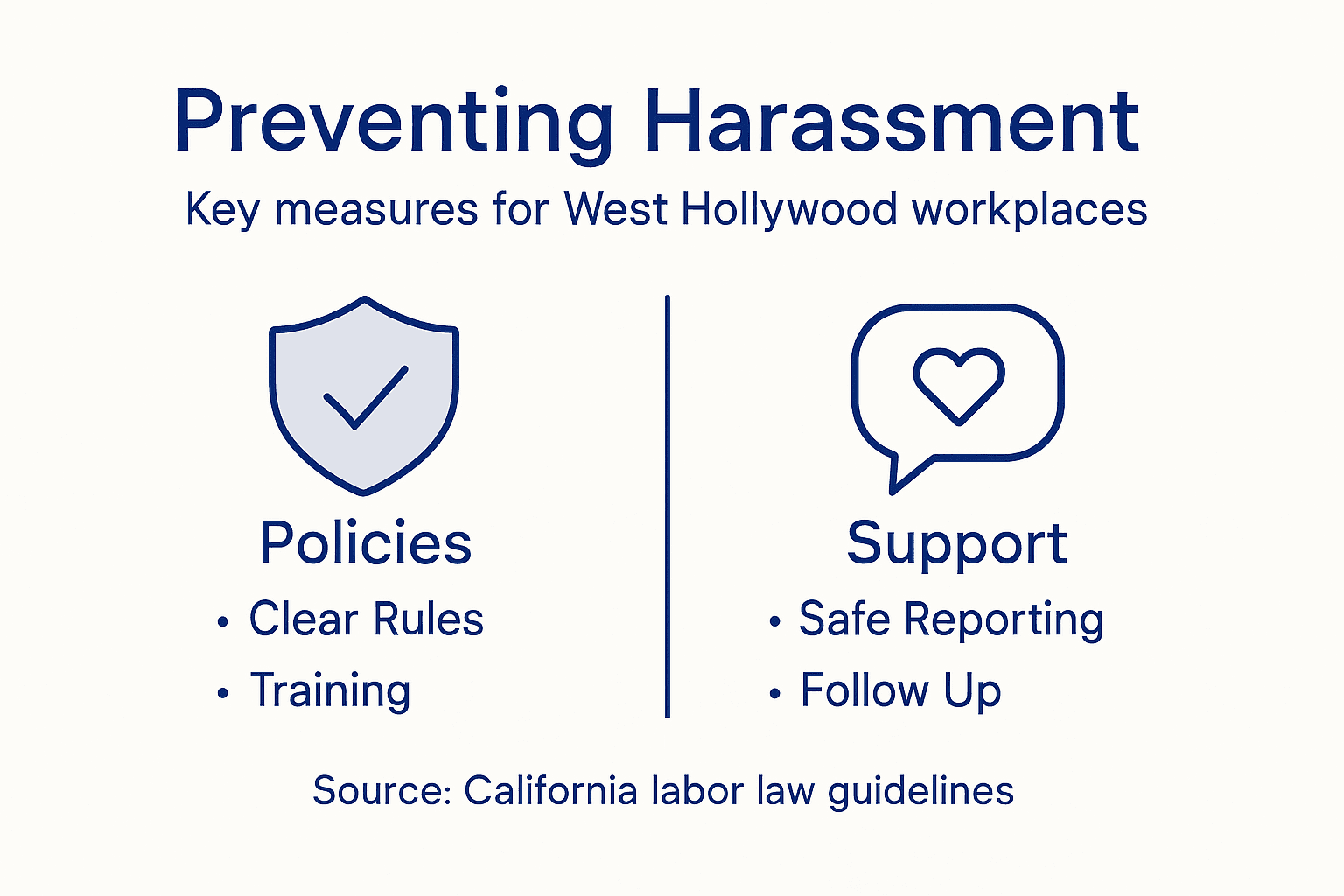
Employers in West Hollywood face critical legal obligations for preventing sexual harassment, with comprehensive workplace prevention strategies serving as their primary defense against potential litigation. These proactive measures are not optional but mandatory requirements designed to create safe, respectful work environments across all industries.
Key employer responsibilities include developing and implementing robust sexual harassment policies that clearly define unacceptable behaviors, establish reporting mechanisms, and outline potential consequences. Organizations must provide mandatory training for all employees, focusing on recognizing, preventing, and responding to sexual harassment. This training should cover specific scenarios relevant to the workplace, emphasize the importance of consent and professional boundaries, and educate staff about their rights and reporting procedures.
Effective prevention requires more than just documentation. Employers must create confidential reporting channels, conduct thorough and impartial investigations into all harassment claims, and take swift, appropriate disciplinary actions when misconduct is confirmed. Leadership must consistently model appropriate behavior, demonstrate zero tolerance for harassment, and foster a workplace culture that prioritizes mutual respect, professionalism, and individual dignity.
Pro tip: Conduct annual anonymous workplace climate surveys to identify potential harassment risks and measure the effectiveness of your prevention strategies before issues escalate.
Employee Rights and Reporting Procedures
In West Hollywood’s diverse work environments, employees have critical legal protections against sexual harassment, with clear reporting procedures designed to safeguard their professional dignity and personal safety. The California Fair Employment and Housing Act (FEHA) guarantees fundamental workplace rights that empower workers to challenge inappropriate conduct without fear of professional repercussions.
Employees possess multiple avenues for reporting sexual harassment, including internal channels through human resources departments and external mechanisms like filing complaints with the Department of Fair Employment and Housing (DFEH). The reporting process requires documentation of specific incidents, including dates, times, locations, potential witnesses, and detailed descriptions of inappropriate behaviors. Confidentiality is paramount, with legal protections ensuring that workers who report harassment are shielded from potential retaliation or professional marginalization.
Critical employee rights include the ability to file complaints within one year of the harassment incident, request confidential investigations, and seek remedies such as workplace policy changes, damages, potential reinstatement, and recovery of legal expenses. California law mandates that employers take these complaints seriously, conducting thorough and impartial investigations that prioritize the safety and professional integrity of the reporting employee. Workers are not required to confront harassers directly and can utilize formal reporting mechanisms to address workplace misconduct.
Below is a quick reference outlining key legal rights and reporting procedures for hospitality workers in California:
| Right or Action | Description | Who Provides It |
|---|---|---|
| File Complaint | Within one year of incident | DFEH, HR Departments |
| Request Confidential Process | Investigation without public exposure | Employers, DFEH |
| Legal Remedies | Damages, reinstatement, expenses | Courts, DFEH |
Pro tip: Maintain a confidential, contemporaneous written record of all harassment incidents, including digital communications, which can serve as crucial evidence if legal action becomes necessary.
Risks of Retaliation and Enforcement Remedies
Workplace retaliation represents a serious legal violation that can manifest through numerous subtle and overt actions against employees who report sexual harassment. Legal protections against workplace retaliation are designed to shield workers from adverse professional consequences stemming from their decision to challenge inappropriate workplace conduct.
Retaliation can take multiple sophisticated forms beyond direct termination, including strategic professional marginalization such as denying career advancement opportunities, assigning punitive work schedules, excluding employees from critical meetings, delivering unwarranted negative performance evaluations, or creating hostile work environments intended to force resignation. These actions are legally prohibited and can constitute independent grounds for additional legal claims, potentially expanding the scope of potential workplace litigation.
Employees facing retaliation have robust enforcement remedies available through state and federal agencies. Workers can file complaints with the California Department of Fair Employment and Housing (DFEH) or the Equal Employment Opportunity Commission (EEOC), seeking remedies that may include financial compensation, reinstatement, mandatory workplace policy changes, and legal fees. The burden of proof requires demonstrating a direct causal relationship between the harassment report and subsequent adverse employment actions.
Pro tip: Preserve all documentation of workplace interactions, communications, and potential retaliatory actions, creating a comprehensive chronological record that can substantiate legal claims.
Protect Your Rights Against Sexual Harassment in West Hollywood
Sexual harassment in the hospitality industry creates a hostile and unsafe work environment that many West Hollywood workers face daily. If you are dealing with unwelcome sexual advances, coercion, or retaliation, you deserve strong legal support to defend your dignity and secure your workplace rights. Understanding concepts like quid pro quo and hostile work environment harassment is critical because you should never feel pressured to tolerate these unlawful behaviors.
At Shirazi Law Office, we specialize in protecting employees against sexual harassment and workplace retaliation. Our experienced team understands the unique challenges faced by West Hollywood workers and is dedicated to holding employers accountable under California law. Don7t wait until the harassment escalates or retaliation begins. Visit our Sexual Harassment and West Hollywood pages to learn how we can guide you through reporting procedures and legal remedies.
Take control of your workplace safety today by contacting us through Shirazi Law Office for a confidential consultation and protect your career and well-being before it7s too late.
Frequently Asked Questions
What constitutes sexual harassment in the hospitality industry?
Sexual harassment includes unwelcome sexual advances, inappropriate physical contact, sexually suggestive comments, explicit requests for sexual favors, and conduct creating a hostile work environment.
How can employees document incidents of sexual harassment?
Employees should document every inappropriate interaction immediately, noting the date, time, witnesses, and specific details about the incident to strengthen potential legal claims.
What legal protections do workers have against sexual harassment?
Workers are protected under the Fair Employment and Housing Act (FEHA), which mandates proactive prevention strategies, clear reporting mechanisms, and timely investigations of harassment claims.
What should employees do if they experience retaliation after reporting harassment?
Employees facing retaliation can file complaints with the California Department of Fair Employment and Housing (DFEH) or the Equal Employment Opportunity Commission (EEOC) and seek remedies such as financial compensation or reinstatement.





[…] Sexual Harassment Risks for West Hollywood Workers […]