

Getting shunned after speaking up on a Hollywood set feels isolating and unfair, especially when the stakes are your career and reputation. For film professionals, retaliation for whistleblowing is not just personal drama—it’s a legally defined threat with real consequences. California employment law offers powerful protections against retaliation, providing legal recourse and support for those who report misconduct. Understanding what counts as unlawful retaliation means you can spot it early and act before your future is at risk.
Table of Contents
- Defining Retaliation on Hollywood Sets
- Common Forms of Retaliation in the Industry
- California Laws Protecting Whistleblowers
- Legal Rights and Employer Obligations
- How to Respond and Seek Remedies
Key Takeaways
| Point | Details |
|---|---|
| Definition of Retaliation | Retaliation occurs when an employee faces negative consequences after reporting illegal or unethical behavior, and is recognized legally in the context of Hollywood. |
| California Protections | California law provides robust protections for whistleblowers, prohibiting retaliation and allowing employees to report misconduct without fear of repercussions. |
| Common Forms of Retaliation | Retaliation may manifest as job loss, demotion, exclusion from projects, or harassment, and can sometimes be subtle, leading to confusion. |
| Documentation is Crucial | Maintaining detailed records of reports and subsequent actions is essential for establishing a link between whistleblowing and retaliation. |
Defining Retaliation on Hollywood Sets
Retaliation in the Hollywood film industry context means something specific and legally defined. It’s not just a personality conflict or a boss having a bad day. When an employee reports illegal activity, unethical behavior, or workplace violations, and then faces negative consequences because of that report, that’s retaliation. On sets, this might look like sudden demotions, reduced hours, exclusion from projects, public humiliation, or termination. The key element isn’t the specific form the punishment takes, but rather the connection between the whistleblowing act and the negative response.
A whistleblower is someone who exposes illegal, unethical, or dangerous practices within an organization, often acting to protect the public good. In Hollywood, whistleblowers might report harassment, wage theft, safety violations, discrimination, or financial misconduct. When production companies or individuals in power learn about these reports, they sometimes punish the person who spoke up. This punishment comes in many forms. Some employees face job loss following their disclosures, while others experience demotion, harassment, reduced work assignments, or blacklisting. What makes this legally significant is that California employment law recognizes these actions as wrongful retaliation, and employees have protections against them. The retaliation doesn’t have to be dramatic to be illegal, either. A seemingly small action like removing someone from a key project or excluding them from crew meetings can constitute retaliation if it stems from their whistleblowing activity.
Understanding what retaliation looks like matters because workplace retaliation in California carries serious legal consequences for employers. You need to recognize when what you’re experiencing moves beyond normal workplace conflict into illegal territory. Sometimes retaliation happens immediately after you report wrongdoing. Other times, it’s delayed but still connected to your report. Perhaps you reported harassment on set, and three weeks later you suddenly weren’t called back for the next production. Maybe you flagged a safety concern, and suddenly your contract wasn’t renewed. These chains of events can establish a pattern that points to retaliation. The challenge is that studios and production companies don’t always make their retaliation obvious. Some create plausible alternative explanations for their actions, claiming budget cuts or creative differences when the real reason is your protected activity. This is why building a clear record of your reporting is crucial and why understanding the legal definition matters.
Here’s a quick guide to recognizing retaliation versus legitimate workplace actions in Hollywood:
| Indicator | Likely Retaliation Example | Legitimate Business Reason |
|---|---|---|
| Timing | Demotion follows report within days | Change occurs months after annual review |
| Pattern | Previously positive reviews suddenly drop | Consistent feedback over many projects |
| Employer Explanation | Vague reasons like “creative differences” | Specific evidence of budget cutbacks |
| Impact Scope | Sudden exclusion from all key projects | Minor changes affecting whole crew |
Pro tip: Document your whistleblowing reports in writing by sending emails summarizing what you reported, to whom, and when, and keep records of any negative employment changes that follow within weeks or months of your report.
Common Forms of Retaliation in the Industry
Retaliation in Hollywood takes many shapes, and understanding the specific ways employers punish whistleblowers is essential for recognizing when you’ve crossed from normal workplace tension into illegal territory. The most severe form is outright termination. A production company fires you shortly after you report safety violations, harassment, or financial misconduct. This is direct and unmistakable, though studios often try to justify it with invented reasons like budget cuts or contract non-renewal. Less obvious but equally damaging is demotion or role reduction. You might be removed from a lead position and reassigned to smaller responsibilities, or suddenly excluded from major productions you were previously assigned to. Some employees experience salary reductions or withheld pay increases following their reports, which can cripple a freelancer’s ability to sustain themselves in an expensive city like Los Angeles. These financial punishments can be particularly insidious because they’re sometimes framed as market conditions rather than deliberate retaliation.

Harassment is another common tactic used against whistleblowers on sets. This might involve public criticism of your work, exclusion from crew meetings, or creation of a hostile environment where colleagues are instructed to avoid you. Some employees face unfavorable performance reviews or evaluations that suddenly drop in quality right after whistleblowing, turning what might have been satisfactory assessments into documentation of supposed failures. Blacklisting represents a more subtle but deeply damaging form of retaliation. After you report misconduct, you stop getting called for jobs. Production companies pass your name around, and opportunities dry up. In an industry built on relationships and reputation, this can effectively end careers. Some producers engage in character assassination, spreading rumors or negative information about whistleblowers to damage their professional standing. Being labeled difficult, unreliable, or problematic can follow someone through the industry for years, even when the accusations are baseless or exaggerated responses to legitimate reporting.
The timing of retaliation matters legally. Sometimes the negative action follows immediately after your report, making the connection obvious. Other times, retaliation is delayed by weeks or months, which studios hope will obscure the causal relationship. They might claim they only discovered performance problems during a routine review, or that budget constraints forced difficult decisions. This is why wrongful termination following whistleblowing requires examining the full context rather than just the immediate trigger. Courts and employment lawyers look for patterns. Did your performance ratings change after you reported? Were you suddenly excluded from projects you had been promised? Did communication from management shift from positive to critical after your disclosure? These patterns help establish that retaliation, not legitimate business reasons, drove the negative employment action. In Hollywood’s fast-paced environment where contracts are fluid and work is project-based, retaliation can be masked more easily than in traditional employment settings. A production company simply doesn’t call you back for the next season. No formal termination letter. No official explanation. Just silence and no more work.
Pro tip: Keep detailed records of all your work assignments, performance feedback, and communications before and after you report misconduct, then compare them to identify any sudden shifts that suggest retaliation rather than legitimate business decisions.
California Laws Protecting Whistleblowers
California stands apart from many states because it has created multiple layers of legal protection for people who report wrongdoing. These protections exist at both the state and federal levels, and they specifically target retaliation. The core California statute is Labor Code Section 1102.5, which prohibits employers from retaliating against employees who disclose information to government agencies or internally report violations of law. This law covers a broad range of misconduct, from safety violations to discrimination to financial fraud. What makes this statute powerful for Hollywood workers is that it doesn’t require you to prove the misconduct actually occurred, only that you reasonably believed you were reporting a violation of law. You reported what you thought was illegal harassment, and that’s sufficient protection even if the investigation later found no wrongdoing. California also provides protections under Labor Code Section 1102.6, which specifically guards employees who file complaints with labor agencies or participate in workplace investigations. These statutes create strong legal protections preventing retaliation for disclosing violations of law, ensuring that employees can speak up without fear of losing their jobs or facing other adverse employment actions.
Beyond general whistleblower statutes, California employment law offers additional protections that apply to film industry workers. Public Policy Exception to At-Will Employment stands as a critical doctrine in California. Traditionally, California is an at-will employment state, meaning employers can fire workers for almost any reason or no reason at all. However, California courts have carved out significant exceptions when firings violate public policy. If you’re terminated because you reported illegal conduct, complained about unsafe conditions, or refused to participate in unlawful activities, that violates public policy and you can sue for wrongful termination. This doctrine has protected countless whistleblowers across industries. Additionally, California’s anti-retaliation statutes include provisions designed to keep whistleblowers’ identities confidential when possible, reducing the risk that your name becomes public knowledge in ways that could trigger further retaliation. Some whistleblowers may also qualify for financial rewards through programs that encourage reporting of fraud or misconduct, though these are more common in government contracting or healthcare fraud cases than in general entertainment industry situations. California whistleblower protections include provisions that prevent discrimination based on protected disclosures, creating a comprehensive framework that goes beyond simple job security to address various forms of retaliation.
The practical application of these laws means that if a studio retaliates against you for reporting harassment, safety violations, wage theft, or discrimination, you have legal recourse. You can file complaints with the California Labor Commissioner, which investigates retaliation claims and can order reinstatement, back pay, and damages. You can also file lawsuits in civil court for wrongful termination in violation of public policy. These cases often involve examining whether the timing of negative employment actions, the employer’s stated reasons versus actual reasons, and any pattern of similar treatment toward other whistleblowers. In Hollywood specifically, where retaliation sometimes takes the form of not rehiring someone rather than formal termination, these laws still apply. A production company that stops calling you for work because you reported misconduct has still engaged in unlawful retaliation. The challenge in entertainment industry cases is often proving the connection between your protected activity and the negative employment action, since studios can claim creative decisions or budget constraints. This is where detailed documentation becomes crucial. Your emails reporting the misconduct, your prior work assignments, and any changes in communication or opportunities following your report all serve as evidence. Understanding your employee rights and protections under California discrimination laws helps you recognize when retaliation has crossed from annoying into illegal territory.
Summary of main California whistleblower protections for entertainment industry workers:
| Law/Doctrine | What It Protects | Who Is Covered |
|---|---|---|
| Labor Code Section 1102.5 | Retaliation for protected disclosures | Employees, contractors |
| Labor Code Section 1102.6 | Protection for agency complaints | All employees |
| Public Policy Exception | Wrongful termination for reporting | At-will employees |
| Confidentiality Requirements | Keeps whistleblower identity private | Internal/external reporters |
Pro tip: Before reporting misconduct internally, research California Labor Code Section 1102.5 and consider consulting an employment lawyer, as certain reporting procedures and documentation practices can strengthen your legal position if retaliation occurs.
Legal Rights and Employer Obligations
You have specific legal rights as a whistleblower on Hollywood sets, and employers have corresponding obligations they cannot ignore. The foundation of these rights is straightforward: you have the legal right to be free from retaliation when you report wrongdoing. This isn’t a courtesy or a favor from your employer. It’s a legal obligation backed by California state law and federal statutes. Your employer cannot fire you, demote you, reduce your hours, exclude you from projects, or subject you to harassment because you reported illegal conduct, safety violations, discrimination, harassment, or financial misconduct. This applies whether you reported internally to a supervisor or human resources department, or externally to law enforcement or regulatory agencies. The protection covers both formal reports and informal complaints. You don’t need to use specific language or follow particular procedures to trigger legal protection, though having written documentation of your report strengthens your position if retaliation occurs.
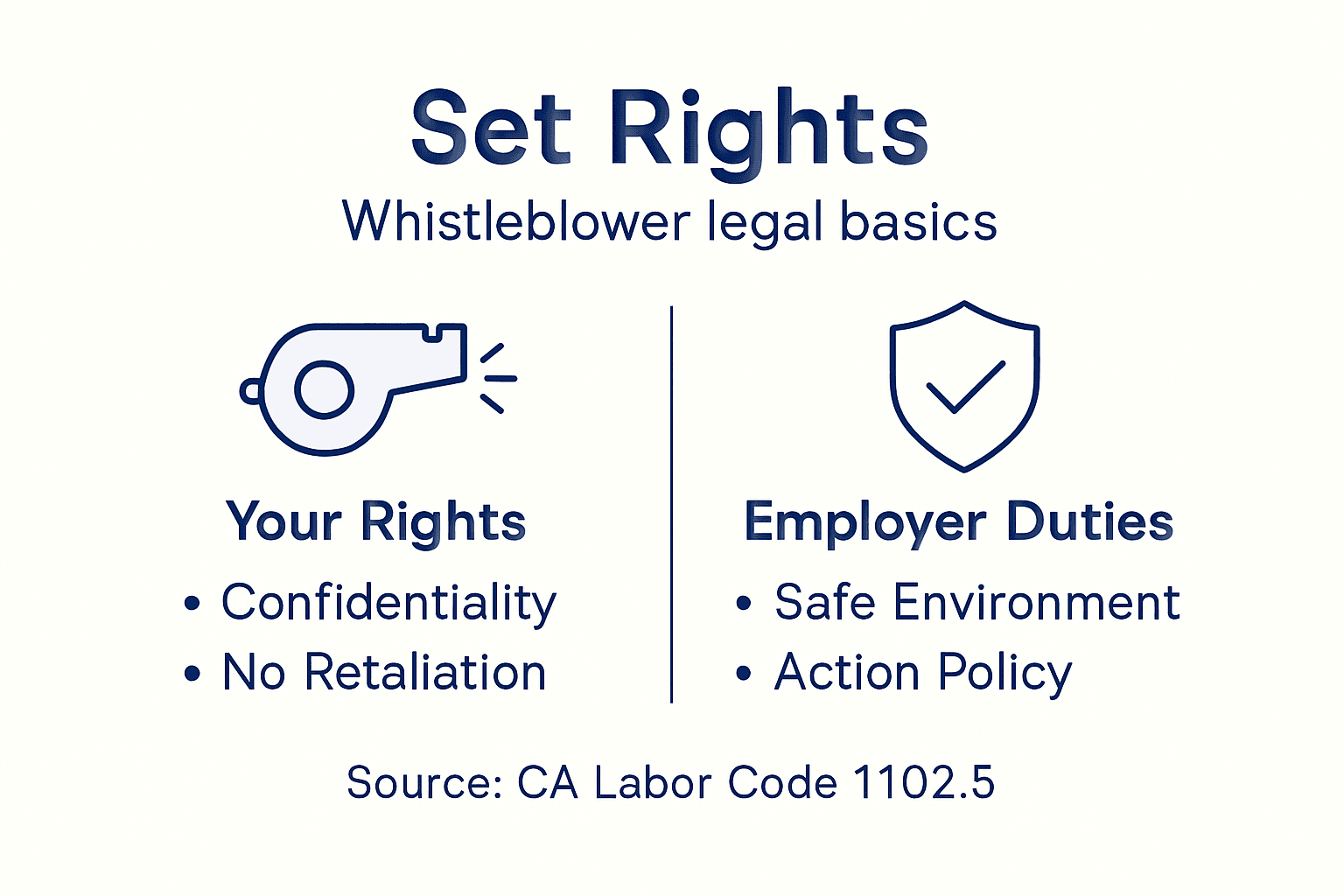
Employers are obligated to maintain an environment where whistleblowers are protected from adverse actions like firing, demotion, or harassment. This means production companies, studios, and producers cannot instruct colleagues to avoid you, spread negative rumors about you, or create a hostile work environment in response to your protected activity. They cannot blacklist you or coordinate with other studios to prevent you from working. If your employer retaliates, they violate California law and federal statutes that give you the right to sue for damages, reinstatement, back pay, and attorney fees. Some employers try to hide retaliation by disguising it as legitimate business decisions. They claim budget constraints forced layoffs, creative differences ended working relationships, or performance issues warranted termination. The law doesn’t accept these convenient explanations when the real reason was your whistleblowing. Courts and labor agencies look beyond what employers claim and examine whether retaliation more likely explains the timing and nature of the negative action.
Your rights also include confidentiality protections when possible. Employers should limit who knows you reported misconduct, though in close-knit Hollywood productions this proves challenging. You have the right to report misconduct to government agencies without fear of employer retaliation for making that report. Additionally, federal laws prohibit personnel actions that retaliate against whistleblowers who disclose violations of law or mismanagement, and you can file complaints with agencies like the California Labor Commissioner or federal agencies depending on the nature of the misconduct. When retaliation occurs, you have multiple remedies. You can file complaints with regulatory agencies that investigate at no cost to you. You can sue in civil court for damages including lost wages, emotional distress, and punitive damages in some cases. You can demand reinstatement to your position if you were terminated. Your attorney fees can be recovered from the employer if you win. These remedies exist specifically to make retaliation costly enough that employers think twice before punishing whistleblowers.
Understanding your specific situation may require discussing your circumstances with a legal professional. The relationship between your protected activity and any negative employment action isn’t always obvious, and timing matters significantly. If you were terminated six months after reporting misconduct, proving retaliation becomes more complex than if you were fired the week after your report. Documentation becomes crucial. Your emails, messages, performance reviews before and after your report, and communications from management all serve as evidence. Written records of what you reported, when you reported it, and to whom you reported it create a solid foundation for any legal claim. The burden shifts once you establish a timeline showing you engaged in protected activity and experienced adverse employment action. Then your employer must prove they had a legitimate, non-retaliatory reason for their action. If their explanation doesn’t hold up against the evidence, retaliation becomes the likely conclusion.
Pro tip: Document everything about your whistleblowing and any subsequent negative employment actions in writing, including dates, witnesses, and specific impacts on your work, then consult with an employment attorney before accepting any separation agreement or severance offer.
How to Respond and Seek Remedies
When retaliation happens, your response matters. Speed and documentation are your best tools. The first step is to stop and create a clear record of what occurred. Write down everything: the date of the retaliatory action, exactly what happened, who was involved, what was said, and any witnesses. Don’t rely on memory later. If you were excluded from a production, save the email notification or lack thereof. If your hours were reduced, document your schedule before and after your report. If you received a negative performance review, keep that document. These details form the backbone of any legal claim. Retaliation cases depend heavily on establishing a timeline that connects your protected whistleblowing activity to the negative employment action. Without written records, memories fade and details blur. With them, you have objective evidence of what happened and when.
Your next step is to report the retaliation internally if you feel safe doing so. Send a written email to human resources documenting the retaliation and explicitly stating that you believe you are experiencing unlawful retaliation for your prior protected disclosure. This creates a formal record within the company. However, understand that reporting internally sometimes triggers additional retaliation, so consider consulting an attorney before taking this step. Whistleblowers who experience retaliation should take steps such as documenting incidents, seeking legal advice, and filing complaints through administrative or legal channels. An employment lawyer can review your situation confidentially and advise you on whether internal reporting makes sense or whether you should proceed directly to external agencies. Many Hollywood professionals consult attorneys before acting further, and that consultation is protected attorney-client communication that studios cannot hold against you.
External remedies are available through multiple channels. You can file a complaint with the California Labor Commissioner, which is a free process that investigates retaliation claims without requiring you to hire a lawyer initially. The Labor Commissioner can order reinstatement, back pay, and other relief. You can also file a complaint with relevant federal agencies if your case involves federal whistleblower protections. Additionally, you can file a civil lawsuit for wrongful termination or retaliation, which allows you to seek damages including lost wages, future lost earnings, emotional distress, and sometimes punitive damages designed to punish the employer. Responding to retaliation involves acting promptly by reporting retaliation to appropriate agencies, consulting legal counsel, and utilizing whistleblower protection statutes. These remedies can result in substantial financial recovery. Some settlements in Hollywood retaliation cases have reached six or seven figures when the employer’s conduct was particularly egregious or the career impact severe.
Preserving evidence becomes critical once retaliation occurs. Don’t delete emails, messages, or files. Save copies of everything related to your work, your report, and the subsequent negative actions. Take screenshots if you’re concerned about evidence disappearing. If you have recordings of conversations where retaliation was discussed, understand California’s recording laws before using them. Create a comprehensive timeline document for yourself showing every relevant event with dates. This becomes invaluable when discussing your case with an attorney or presenting it to an agency investigator. Understand that settlement negotiations may occur, and you should not accept any settlement or severance offer without attorney review. Studios often include nondisclosure agreements and non-disparagement clauses in settlement agreements, which can limit your ability to discuss what happened or warn others. An attorney ensures the settlement protects your interests and compensates you fairly for your damages. Some whistleblowers also qualify for whistleblower reward programs if they reported fraud or financial misconduct, though these are more common in government contracting or financial services than entertainment.
Pro tip: Create a secure backup of all documentation on a personal device or cloud storage outside your employer’s systems immediately after experiencing retaliation, and send a summary email to yourself with timestamps to establish when you gathered the evidence.
Protect Your Rights Against Hollywood Retaliation Now
Facing retaliation after whistleblowing on Hollywood sets can feel isolating and overwhelming. The sudden loss of projects, demotions, or subtle workplace exclusion are serious violations under California law. Knowing your legal protections against these unfair actions, including those outlined in Workplace Retaliation – Law Office of Brian Y. Shirazi, PC and Hollywood – Law Office of Brian Y. Shirazi, PC, is crucial to safeguarding your career and peace of mind.
Take control before retaliation derails your professional future. The experienced team at Shirazi Law Office understands the unique challenges faced by entertainment industry workers reporting misconduct. We provide focused legal support tailored to wrongful termination, retaliation, and other workplace issues. Don’t wait until opportunities disappear. Visit Shirazi Law Office today for a confidential consultation and assert your rights with confidence.
Frequently Asked Questions
What constitutes retaliation on Hollywood sets?
Retaliation on Hollywood sets occurs when an employee faces negative consequences, such as demotion, exclusion from projects, or termination, after reporting illegal or unethical behavior, such as harassment or safety violations.
What legal protections do whistleblowers have in California?
Under California Labor Code Section 1102.5, employees are protected from retaliation for reporting laws or violations. This includes protections against job loss or adverse actions for whistleblowing about misconduct.
How can I recognize if I’m facing retaliation after reporting misconduct?
Signs of retaliation may include sudden changes in your work assignments, negative performance reviews after a whistleblower report, or exclusion from important projects. Documenting these changes can help establish a pattern of retaliation.
What steps should I take if I experience retaliation after reporting wrongdoing?
If you experience retaliation, it’s important to document all incidents in detail, report the retaliation internally if safe, and consult with an employment attorney to explore your legal options and remedies.