

Retaliation claims are becoming a reality for many American executives and senior managers working in Hollywood. Recent reports show that nearly half of entertainment professionals in California say they fear professional consequences after speaking out about misconduct. For those in Los Angeles, understanding workplace rights is not just about compliance but about protecting careers and reputations in a uniquely competitive environment. This article highlights the most important legal protections, common industry challenges, and practical steps to safeguard your position.
Table of Contents
- Retaliation Claims in Hollywood Explained
- Common Types of Retaliatory Actions on Set
- California Laws Protecting Hollywood Professionals
- Key Steps for Filing a Retaliation Claim
- Employer Duties and Legal Liabilities
Key Takeaways
| Point | Details |
|---|---|
| Retaliation Claims | Hollywood professionals face legal challenges when reporting misconduct due to potential adverse actions. Understanding these claims is essential for protection. |
| Documentation is Key | Keeping detailed records of incidents and communications related to misconduct can be crucial for any retaliation claims. |
| Legal Protections Exist | California employment law offers robust protections against retaliation, covering various forms of misconduct reporting. Professionals should familiarize themselves with these regulations. |
| Employer Responsibilities | Employers in Hollywood must implement comprehensive anti-retaliation policies to avoid legal repercussions, emphasizing the importance of preventing both direct and subtle retaliatory actions. |
Retaliation Claims in Hollywood Explained
Retaliation in Hollywood represents a serious legal challenge that impacts entertainment professionals across California. The Hollywood Commission defines workplace retaliation as any adverse employment action taken against an employee who reports misconduct, effectively creating a system designed to silence workers and protect powerful interests.
Under California employment law, retaliation claims emerge when an employer takes punitive actions against an employee after they engage in legally protected activities. These protected activities might include reporting sexual harassment, discrimination, wage violations, or unsafe working conditions. The U.S. Equal Employment Opportunity Commission (EEOC) clarifies that materially adverse actions can range from termination and demotion to more subtle forms of workplace punishment like reduced hours, reassignment, or exclusion from professional opportunities.
Hollywood’s unique power dynamics make retaliation particularly complex. Entertainment industry professionals often face significant career risks when challenging misconduct, with potential blacklisting or professional ostracism serving as implicit threats. Retaliation can manifest through subtle mechanisms like reducing screen time, eliminating future project considerations, or creating hostile work environments designed to force an employee’s resignation.
Pro Tip for Entertainment Professionals: Document every interaction related to potential workplace misconduct, including dates, times, witnesses, and specific behaviors. Contemporaneous, detailed records can provide critical evidence if you need to pursue a retaliation claim in the future.
Here’s a summary of how retaliation typically impacts entertainment professionals and the documentation needed to support a claim:
| Impact of Retaliation | Common Industry Examples | Evidence Professionals Should Collect |
|---|---|---|
| Career Limitations | Reduced screen time, loss of future roles | Emails, scripts to show role changes |
| Reputation Damage | Professional rumors, networking interference | Witness statements, communication logs |
| Financial Harm | Lost earnings from blacklist, fewer projects | Pay records, offer retractions |
| Emotional Stress | Hostile work environment, isolation | Diary entries, mental health records |
Common Types of Retaliatory Actions on Set
In the high-stakes world of Hollywood, retaliatory actions can take numerous sophisticated forms designed to undermine a professional’s career trajectory. The entertainment industry often employs subtle yet damaging mechanisms to punish individuals who challenge existing power structures or report misconduct.

These retaliatory tactics frequently manifest through professional marginalization strategies. A director or producer might systematically reduce an actor’s screen time, limit speaking roles, or strategically exclude them from future project considerations. More insidious forms include spreading professional rumors, creating hostile work environments, or deliberately undermining an individual’s reputation through calculated networking interference. Academic research on workplace retaliation suggests these actions are intentionally designed to isolate and discourage individuals from pursuing legitimate workplace complaints.
Additionally, retaliatory actions can extend beyond immediate professional settings. Some entertainment professionals experience blacklisting across production companies, where informal communication networks effectively prevent future employment opportunities. This might involve casting directors, talent agencies, and production managers sharing negative information about an individual who has previously reported misconduct, creating systemic barriers to career advancement.
Pro Tip for Talent Protection: Build a comprehensive documentation trail of all professional interactions, communications, and potential retaliatory behaviors. Contemporaneous, detailed records can provide critical evidence and legal protection if you need to challenge discriminatory or retaliatory workplace practices.
California Laws Protecting Hollywood Professionals
California employment law provides robust protections for entertainment industry professionals facing workplace misconduct, with specific legal mechanisms designed to shield workers from retaliatory actions. Employment discrimination laws in the state offer comprehensive safeguards that extend far beyond traditional workplace protections, recognizing the unique power dynamics prevalent in Hollywood’s competitive environment.
The Equal Employment Opportunity Commission (EEOC) guidance establishes clear legal frameworks protecting employees who engage in protected activities. These protections specifically cover individuals who file discrimination complaints, participate in workplace investigations, or speak out against harassment, ensuring that entertainment professionals can challenge misconduct without fear of professional retaliation. California law goes further by providing additional layers of protection, including prohibitions against subtle forms of workplace punishment that might not be immediately apparent.
Moreover, California’s legal landscape includes unique provisions that address the entertainment industry’s specific challenges. These laws recognize that retaliation in Hollywood can manifest through complex mechanisms like professional blacklisting, strategic career marginalization, and informal communication networks designed to impede future employment opportunities. State regulations provide meaningful recourse for professionals who can demonstrate systematic efforts to undermine their career prospects in response to reporting misconduct.
Pro Tip for Industry Professionals: Understand the nuanced legal protections available to you by maintaining comprehensive, contemporaneous documentation of all workplace interactions, communications, and potential retaliatory behaviors. Detailed records can provide critical evidence and legal leverage if you need to challenge discriminatory practices.
The table below compares key legal protections and strategic actions for Hollywood professionals facing workplace retaliation:
| Legal Protection | What It Covers | Practical Action for Professionals |
|---|---|---|
| California Employment Law | All forms of retaliation, including subtle ones | Maintain detailed, contemporaneous records |
| EEOC Guidelines | Protection for reporting or participating in investigations | Understand reporting procedures and timelines |
| Internal Employer Policies | Safeguards in company anti-retaliation policies | Review and follow reporting protocols |
| Civil Litigation | Damages for proven retaliation | Consult legal counsel, prepare evidence |
Key Steps for Filing a Retaliation Claim
Filing a retaliation claim in the entertainment industry requires a strategic and methodical approach. Workplace retaliation claims demand meticulous documentation and a clear understanding of the legal processes that protect entertainment professionals from discriminatory actions.
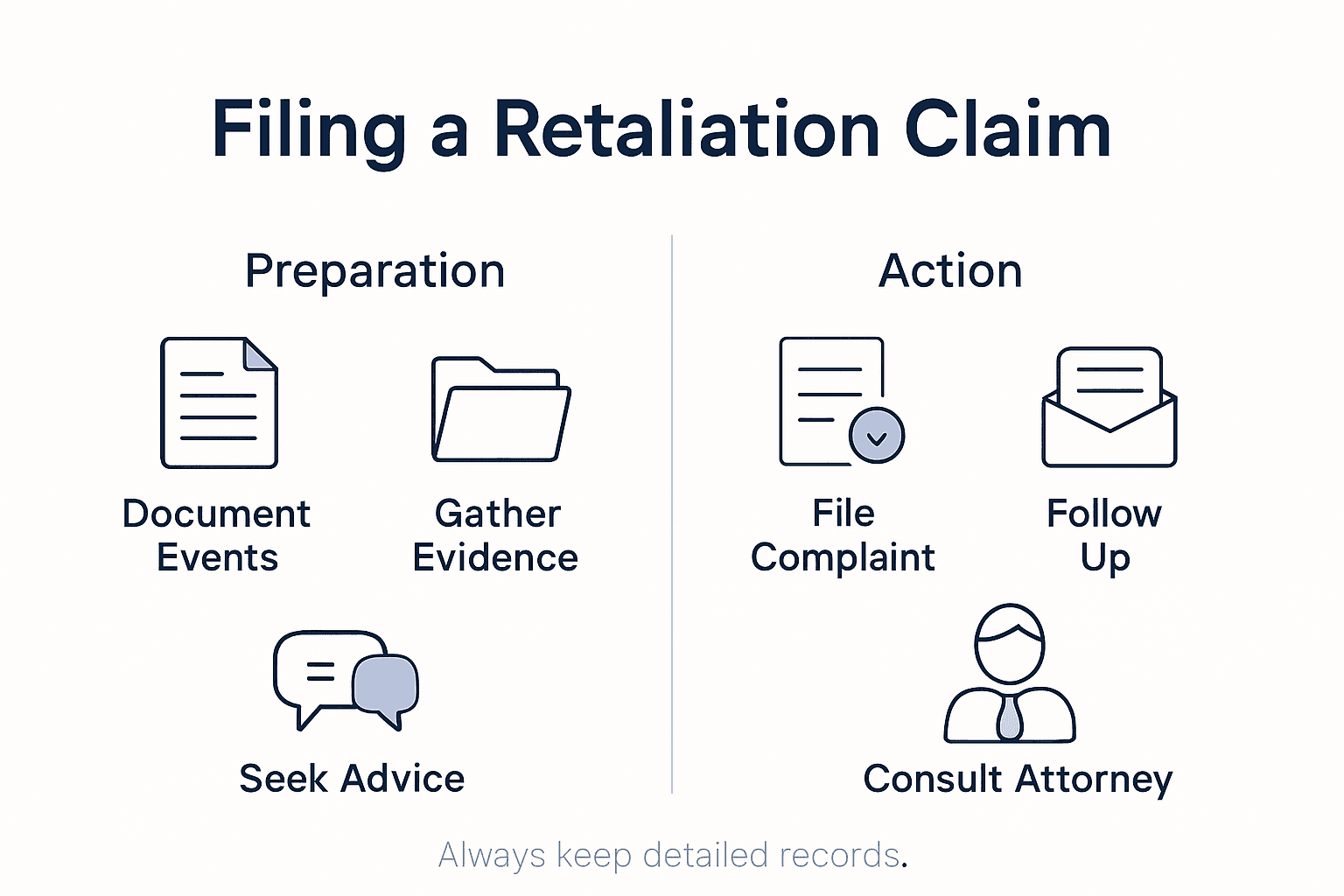
EEOC guidelines recommend comprehensive documentation when preparing a retaliation claim. This involves creating a detailed timeline that establishes three critical elements: the protected activity you engaged in, the adverse action taken against you, and a demonstrable causal connection between these events. Professionals should compile evidence including emails, performance reviews, witness statements, and communication records that substantiate the retaliatory behavior.
The claim process involves multiple potential avenues, including filing with the California Labor Commissioner, the Equal Employment Opportunity Commission, or pursuing direct civil litigation. Each pathway requires specific procedural steps, strict filing deadlines, and nuanced documentation. Entertainment industry professionals must be prepared to demonstrate how the retaliatory actions directly impacted their career trajectory, potential earnings, and professional reputation. This often involves gathering comprehensive evidence of professional damages, including lost opportunities, reduced screen time, or systematic exclusion from industry networks.
Pro Tip for Legal Preparedness: Create a secure, chronological digital file containing all relevant workplace communications, performance documentation, and incident reports. Organize these materials with timestamps and context to provide a clear, compelling narrative of potential workplace retaliation.
Employer Duties and Legal Liabilities
In the entertainment industry, employer legal responsibilities extend far beyond traditional workplace management, particularly when addressing potential retaliatory actions against employees. California employment law imposes stringent obligations on employers to maintain fair and non-discriminatory work environments that protect employee rights and prevent systematic workplace misconduct.
EEOC guidelines establish clear legal obligations that require employers to refrain from retaliatory actions against employees who engage in protected activities. These protections cover a wide range of scenarios, including reporting harassment, participating in workplace investigations, or challenging discriminatory practices. Employers who violate these guidelines can face substantial legal consequences, including financial penalties, civil litigation, and regulatory sanctions that can significantly damage their professional reputation and operational capabilities.
The legal landscape for Hollywood employers is particularly complex, given the industry’s unique power dynamics and interconnected professional networks. Employers must implement comprehensive internal policies that not only prevent direct retaliation but also address subtle forms of professional marginalization. This includes protecting employees from informal blacklisting, strategic career interference, and systemic exclusion mechanisms that can undermine an individual’s professional trajectory. Failure to establish robust anti-retaliation frameworks can result in significant legal exposure, potentially leading to costly litigation and regulatory investigations.
Pro Tip for Workplace Compliance: Develop and regularly update a comprehensive, transparent anti-retaliation policy that clearly outlines protected activities, reporting mechanisms, and potential consequences for violations. Implement regular training programs that educate management about legal obligations and potential risks associated with retaliatory behaviors.
Protect Your Career and Rights Against Hollywood Retaliation
Facing retaliation in Hollywood can feel isolating and overwhelming. The risk of career damage, blacklist consequences, and professional exclusion are real challenges for entertainment professionals who stand up against workplace misconduct. If you have experienced adverse actions like reduced roles, exclusion from projects, or subtle professional punishment after reporting harassment or discrimination you need trusted legal support that understands the complex nature of retaliation claims in California’s entertainment industry.
Shirazi Law Office specializes in protecting employees, executives, and senior management from unlawful retaliation and workplace disputes throughout Los Angeles. With deep knowledge of California employment law and a focus on cases involving retaliation, wrongful termination, and hostile work environments, our experienced attorneys provide strategic guidance to help you document your claims, safeguard your reputation, and pursue the justice you deserve. Learn more about how we defend your rights in workplace retaliation cases and take action now to stop retaliation before it irreversibly harms your career.
Do not wait for your professional future to be compromised. Contact Shirazi Law Office today to schedule a consultation and begin building your strong legal case against retaliation in Hollywood.
Frequently Asked Questions
What constitutes retaliation in Hollywood?
Retaliation in Hollywood occurs when an employer takes adverse employment actions against an employee for engaging in legally protected activities, such as reporting misconduct or participating in investigations.
What are common examples of retaliatory actions on set?
Common forms of retaliation on set include reducing an actor’s screen time, limiting their involvement in future projects, spreading rumors, and creating hostile work environments that lead to professional isolation.
How can entertainment professionals document retaliatory actions?
Entertainment professionals can document retaliatory actions by keeping detailed records of interactions, including dates, times, witnesses, and specific behaviors related to potential retaliation or misconduct.
What legal protections exist for Hollywood professionals facing retaliation?
California employment law provides protections against all forms of retaliation, ensuring individuals who report issues like discrimination or harassment can do so without the fear of adverse impacts on their careers.
Recommended
- Employment Law – Law Office of Brian Y. Shirazi, PC
- Practice Areas – Law Office of Brian Y. Shirazi, PC
- About Me – Law Office of Brian Y. Shirazi, PC
- Law Office of Brian Y. Shirazi, PC – California Law Firm for Workers
- Location Scouting Explained: Process, Types, and Legalities
- What Is CCPA and How Does It Impact Email Marketing?





[…] retaliation claims in Hollywood landscape shows consistent patterns across studios. Executives report initial positive performance […]