

Retaliation after reporting harassment can upend careers and well-being for tech professionals in places like Culver City. Identifying workplace retaliation is not always straightforward, especially when adverse actions are disguised as routine management decisions. If you notice sudden exclusion from projects or unwarranted negative reviews following a complaint, understanding your legal protections under California law could be a game-changer for safeguarding your rights and future opportunities.
Table of Contents
- Recognizing Retaliation at Culver City Tech Firms
- Common Forms of Employer Retaliation Tactics
- California Laws Protecting Tech Employees
- Proving Retaliation After Reporting Harassment
- Employee Rights and Remedies in Retaliation Cases
- Steps to Take if You Experience Retaliation
Recognizing Retaliation in Tech Workplaces
| Point | Details |
|---|---|
| Understanding Retaliation | Workplace retaliation is a serious violation and can occur in various subtle forms. Identifying these actions early is crucial for employee protection. |
| California Legal Protections | Tech employees in California are protected against retaliation by robust laws, allowing them to report misconduct without fear of consequences. |
| Documenting Evidence | Maintaining thorough records of interactions and changes in performance can serve as crucial evidence in retaliation claims. |
| Immediate Action Required | If retaliation is suspected, it is essential to document incidents, report through official channels, and seek legal consultation promptly. |
Recognizing Retaliation at Culver City Tech Firms
Retaliation in tech workplaces represents a serious violation of employee rights, particularly in innovative tech hubs like Culver City. Workplace retaliation occurs when an employer punishes an employee for engaging in legally protected activities such as reporting harassment or discrimination. Understanding these dynamics is crucial for protecting your professional standing and personal well-being.
Tech firms in Culver City often have complex workplace dynamics that can make identifying retaliation challenging. The subtle forms of workplace retaliation might include:
- Sudden negative performance reviews after reporting misconduct
- Exclusion from key meetings or projects
- Reduced responsibilities or professional opportunities
- Increased scrutiny or micromanagement
- Unexplained changes in work assignments
California law provides robust protections against such retaliatory actions. Protected activities that cannot legally result in workplace punishment include reporting sexual harassment, documenting discriminatory behavior, or participating in workplace investigations. Tech employees should recognize that retaliation can manifest in nuanced ways beyond direct termination.
Warning signs of potential workplace retaliation often emerge subtly. Managers might create a hostile environment, impose unrealistic performance standards, or systematically undermine an employee’s professional credibility. California civil rights laws explicitly prohibit such behaviors, offering legal recourse for impacted tech workers.
Pro tip: Document every interaction, performance change, and communication following your harassment report to build a comprehensive evidence trail for potential legal proceedings.
Common Forms of Employer Retaliation Tactics
Employers in tech industries often deploy sophisticated and nuanced strategies to retaliate against employees who report harassment or discrimination. Employer retaliation tactics range from overt actions to subtle psychological manipulation designed to undermine an employee’s professional standing and credibility.
The most common forms of employer retaliation in Culver City tech firms include:
- Unexpected negative performance evaluations
- Systematic exclusion from critical meetings or projects
- Sudden job reassignments to less desirable roles
- Reduction in work hours or compensation
- Increased micromanagement and excessive workplace scrutiny
- Creating hostile work environments
- Professional isolation and social marginalization
Professional retaliation can manifest through complex psychological tactics that are challenging to document. Managers might strategically spread false rumors, fabricate performance issues, or gradually erode an employee’s professional reputation. These actions are calculated to discourage future reporting of workplace misconduct and create an environment of fear and intimidation.

Warning signals of potential retaliation often emerge incrementally. The Department of Labor guidelines highlight that retaliatory behaviors can include direct threats, intimidation, or more subtle forms of professional undermining. Tech employees should remain vigilant and recognize these patterns as potential legal violations.
Pro tip: Maintain a contemporaneous, detailed log of all interactions, performance changes, and potential retaliatory actions to create a robust evidentiary trail for potential legal proceedings.
California Laws Protecting Tech Employees
Tech employees in California enjoy robust legal protections against workplace retaliation through comprehensive state legislation. California civil rights laws provide extensive safeguards for workers reporting harassment, discrimination, or other workplace misconduct, ensuring employees can speak up without fear of professional consequences.
Key legal protections for tech employees include:
- Coverage under the Fair Employment and Housing Act (FEHA)
- Protection for employees in companies with five or more workers
- Comprehensive remedies for adverse employment actions
- Legal recourse for various forms of workplace retaliation
- Guaranteed protection for reporting discriminatory practices
- Strict prohibitions against retaliatory employment decisions
Workplace retaliation is explicitly prohibited under California law, with the state providing multiple enforcement mechanisms to protect employee rights. The law covers a wide range of adverse actions, including termination, demotion, salary reduction, job reassignment, and creating hostile work environments designed to discourage reporting of workplace misconduct.
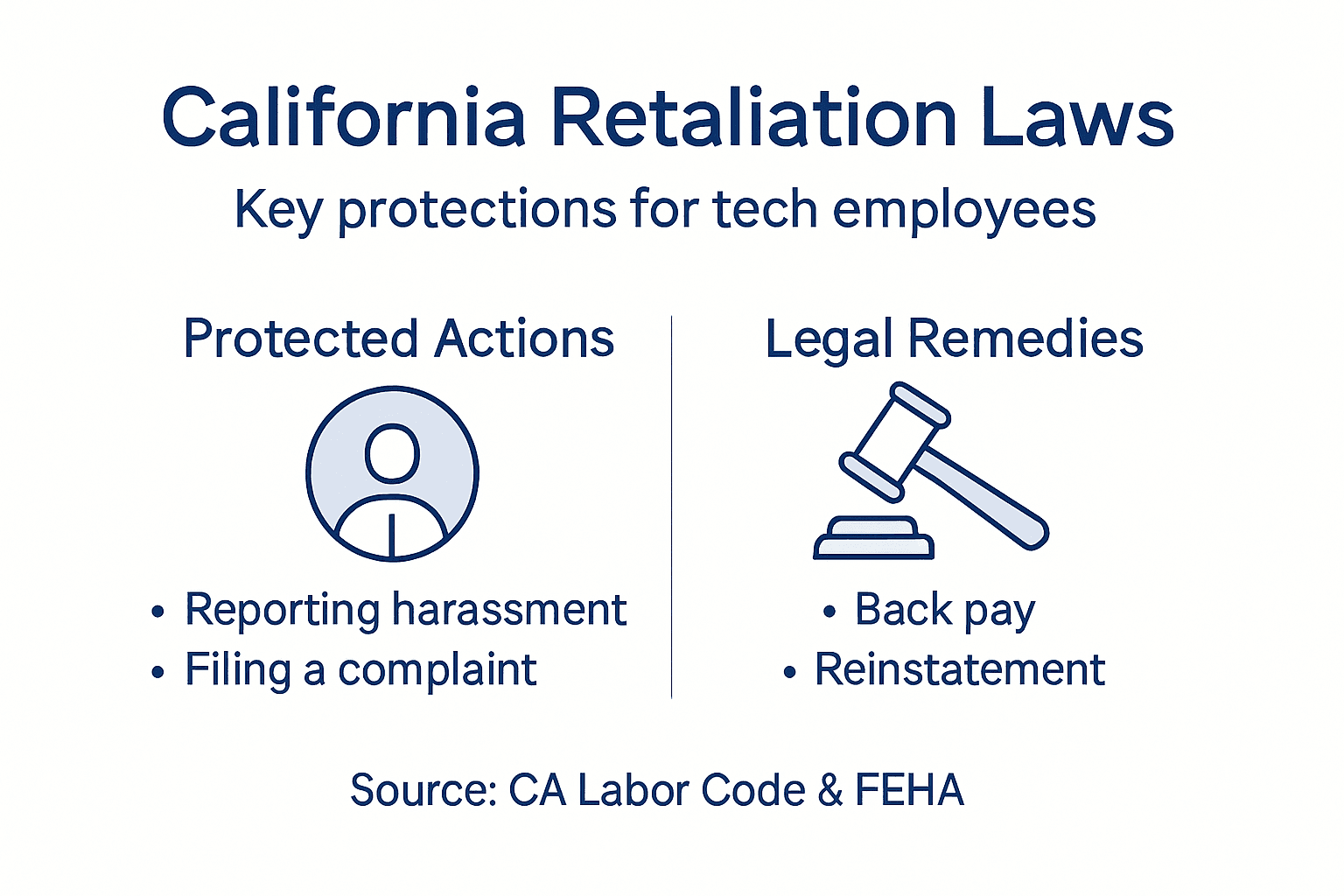
The Labor Commissioner’s Office plays a critical role in enforcing these protections, offering employees multiple avenues for addressing retaliation. Tech workers have the right to file complaints, seek reinstatement, recover back pay, and potentially receive additional penalties against employers who violate these fundamental workplace protections.
Pro tip: Consult with an employment attorney within one year of experiencing potential retaliation to preserve your legal rights and maximize your chances of successful remediation.
Here’s a summary of how California laws protect tech employees against retaliation:
| Legal Protection | Who Is Covered | Remedies Available | Enforcement Bodies |
|---|---|---|---|
| Fair Employment and Housing Act (FEHA) | Companies with 5+ employees | Reinstatement, compensation, penalties | Labor Commissioner, DFEH |
| Prohibition on Retaliatory Acts | All tech employees | Job restoration, back pay, damages | Civil Rights Department, EEOC |
| Legal Right to File Complaints | Retaliation victims | Attorney’s fees, possible promotion | State and federal agencies |
Proving Retaliation After Reporting Harassment
Proving workplace retaliation requires a strategic and meticulous approach to documenting evidence. Legal proof of retaliation involves establishing three critical elements that demonstrate a clear connection between reporting harassment and subsequent adverse employment actions.
The key components for proving retaliation include:
- Demonstrating engagement in a protected activity
- Identifying specific adverse employment actions
- Establishing a direct causal relationship
- Documenting timeline of events
- Collecting supporting witness statements
- Gathering performance records before and after reporting
Protected activities form the foundation of a retaliation claim. These include reporting sexual harassment, participating in workplace investigations, or opposing discriminatory practices. Tech employees must understand that the law protects not just formal complaints, but also informal reports and supportive actions taken on behalf of other workers experiencing workplace misconduct.
The United States Department of Justice guidelines emphasize that retaliation claims require demonstrating intentional adverse actions directly linked to an employee’s protected activity. Courts examine the temporal proximity between the reported harassment and subsequent employment decisions, looking for patterns that suggest deliberate professional punishment.
Pro tip: Maintain a comprehensive, contemporaneous digital and physical record of all interactions, communications, and performance documents to create a robust evidentiary trail for potential legal proceedings.
Review this quick comparison of retaliation vs. performance management in the workplace:
| Practice | Purpose | Key Signs | Legal Impact |
|---|---|---|---|
| Retaliation | Punish protected activity | Timing after complaint, hostility | Prohibited by law |
| Legitimate Performance Management | Address work quality | Documented concerns, progressive feedback | Allowed if non-discriminatory |
Employee Rights and Remedies in Retaliation Cases
Tech employees facing workplace retaliation have robust legal protections and multiple avenues for seeking justice. California labor law remedies provide comprehensive mechanisms for addressing and potentially compensating employees who have experienced discriminatory workplace actions.
Potential remedies for employees include:
- Reinstatement to original position
- Back pay for lost earnings
- Front pay for future income losses
- Compensatory damages for emotional distress
- Punitive damages to deter future misconduct
- Restoration of lost benefits
- Attorney’s fees and legal costs
- Potential job reassignment or promotion
Legal recourse offers tech workers multiple strategies for addressing retaliation. Employees can file complaints with the California Labor Commissioner’s Office, pursue private litigation, or seek administrative settlements. Each approach provides different advantages depending on the specific circumstances of the workplace harassment and subsequent retaliation.
The California Civil Rights regulations emphasize that remedies are designed not just to compensate victims, but to fundamentally transform workplace cultures and prevent future discriminatory practices. Tech firms in Culver City must understand that retaliation can result in significant financial and reputational consequences.
Pro tip: Consult an employment attorney immediately after experiencing potential retaliation to preserve evidence and maximize your legal options.
Steps to Take if You Experience Retaliation
Navigating workplace retaliation requires a strategic and systematic approach to protecting your professional rights and legal interests. Workplace retaliation response strategies emphasize the critical importance of immediate and purposeful action when experiencing discriminatory workplace treatment.
Immediate steps to address workplace retaliation include:
- Document every incident in detail
- Preserve all communication records
- Report incidents through official channels
- Request written documentation of interactions
- Collect potential witness statements
- Maintain a chronological timeline of events
- Avoid confrontational or emotional responses
- Seek confidential legal consultation
Internal reporting represents the first critical line of defense for tech employees experiencing retaliation. Most Culver City tech firms have established human resources departments or designated complaint mechanisms designed to address workplace misconduct. Employees should utilize these internal processes while simultaneously preparing external documentation.
The Equal Employment Opportunity Commission guidelines recommend creating a comprehensive record of all potential retaliatory actions. Tech workers must understand that contemporaneous documentation serves as crucial evidence should legal proceedings become necessary, providing a clear narrative of workplace discrimination.
Pro tip: Create a secure, password-protected digital folder containing all relevant documentation, ensuring evidence is preserved and easily accessible for potential legal review.
Protect Your Rights After Reporting Harassment in Culver City Tech Workplaces
Experiencing retaliation after reporting harassment can feel isolating and threatening to your career. If you have faced sudden negative evaluations, exclusion, or job reassignment following a harassment complaint you took the right step by speaking up. At Shirazi Law Office, we understand the complex challenges of workplace retaliation in tech firms around Culver City. Our team is dedicated to helping you navigate the legal protections under California law and build a strong case to defend your rights.
Do not let retaliation jeopardize your professional future. Visit our Workplace Retaliation page and discover how we have helped employees stand up to unfair treatment. For cases specifically related to harassment issues, our Sexual Harassment resources provide tailored support. If you are in the Culver City area, connect with us through our Culver City page to find local expertise dedicated to protecting your employment rights. Act now to safeguard your future with trusted representation from Shirazi Law Office. Reach out today for a confidential consultation and assert your workplace rights before time runs out.
Frequently Asked Questions
What is considered workplace retaliation after reporting harassment?
Workplace retaliation occurs when an employer punishes an employee for engaging in legally protected activities, such as reporting harassment or discrimination. This can include negative performance reviews, exclusion from projects, job reassignments, or increased scrutiny.
How can I recognize the signs of retaliation in my tech workplace?
Signs of retaliation may include sudden negative performance evaluations, exclusion from important meetings, a hostile work environment, or any changes in responsibilities that seem unjustified. It’s important to document these changes and seek advice if you feel you are being retaliated against.
What legal protections do employees have against retaliation in California?
California law provides robust protections for employees against workplace retaliation through laws like the Fair Employment and Housing Act (FEHA). This includes safeguards against termination, demotion, or any adverse actions resulting from a protected activity, such as reporting discrimination or harassment.
What steps should I take if I experience retaliation after reporting harassment?
If you experience retaliation, document every incident in detail, preserve communication records, report incidents through official channels, and seek legal consultation. Maintaining a detailed log and gathering witness statements can be essential for potential legal proceedings.





[…] Retaliation After Reporting Harassment in Culver City Tech – Law Office of Brian Y. Shirazi, P… […]
[…] retaliation after reporting harassment helps victims recognize illegal employer responses. California law prohibits adverse employment […]