

Losing a leadership role with a major company like Farmers Insurance can upend careers and reputations almost overnight. For executives in the Mid-Wilshire area, understanding the difference between an unfair dismissal and an illegal firing is crucial, especially since California’s at-will employment state status is often misunderstood by employers and employees alike. Clear knowledge of wrongful termination rights helps prevent costly mistakes and can empower professionals to protect their future in Los Angeles’s competitive corporate environment.
Table of Contents
- Defining Wrongful Termination In California
- Common Corporate Violations And Misconceptions
- Key Legal Protections For Executives
- Case Spotlight: Farmers Insurance Lawsuits
- Employee Rights And Employer Liability
- Steps To Take After Unlawful Termination
Key Takeaways
| Point | Details |
|---|---|
| Understanding Wrongful Termination | Wrongful termination in California involves firing an employee for illegal reasons, including discrimination or retaliation. Employees have legal protections despite the at-will employment status. |
| Documentation is Crucial | Keeping detailed records of workplace interactions and performance evaluations can serve as vital evidence in wrongful termination cases. |
| Employee Rights are Protected | California law offers robust protections against discriminatory and retaliatory actions, ensuring employees can seek recourse for violations. |
| Immediate Action Post-Termination | After a wrongful termination, it is essential to request a written explanation and avoid signing agreements without legal review to preserve rights. |
Defining Wrongful Termination in California
Wrongful termination occurs when an employer fires an employee for illegal reasons prohibited by California and federal labor laws. Despite California being an at-will employment state, employees still possess critical legal protections against unjust dismissal. Wrongful termination can manifest through several distinct scenarios that violate fundamental workplace rights.
In California, wrongful termination encompasses a range of prohibited employment practices that infringe upon employee legal protections. Key scenarios include:
- Termination based on discriminatory factors like race, gender, age, disability, or national origin
- Retaliation for reporting workplace harassment or illegal activities
- Dismissal that violates established company policies or employment contracts
- Firing an employee for exercising legal rights such as whistleblowing or requesting reasonable workplace accommodations
The legal framework protecting employees recognizes that at-will employment does not grant employers unlimited discretion to terminate workers arbitrarily. Wrongful termination laws protect employees from illegal dismissal practices by establishing clear boundaries for acceptable employment decisions.
Pro tip: Document all workplace interactions, performance reviews, and communication if you suspect potential wrongful termination, as evidence can be crucial in establishing your legal case.
Common Corporate Violations and Misconceptions
Corporate violations in wrongful termination cases often stem from misunderstandings about employment law and employer rights. Common misconceptions about termination practices can lead executives and employees into complex legal territory where seemingly unfair treatment might not constitute actual legal wrongdoing.
Several key corporate violations frequently emerge in wrongful termination scenarios:
- Discriminatory termination based on protected characteristics
- Retaliatory firing after an employee reports workplace misconduct
- Breach of explicit or implied employment contracts
- Termination that violates established company policies or public workplace regulations
- Dismissal as a form of indirect workplace harassment or intimidation
Many corporations mistakenly believe they have unlimited discretion in employment decisions, but legal boundaries strictly limit their actions. Wrongful termination laws establish clear employer restrictions that protect employee rights and prevent arbitrary dismissal.
Understanding the nuanced differences between unfair treatment and legally actionable wrongful termination is crucial for executives navigating complex workplace environments. Employers cannot simply terminate employees for subjective reasons or personal disagreements when those reasons intersect with protected legal categories.
To better understand the distinction between unfair treatment and legally actionable wrongful termination, consider this comparison:
| Aspect | Unfair Treatment | Wrongful Termination |
|---|---|---|
| Legal Recourse | Usually limited | Protected by law in California |
| Examples | Personality conflicts, favoritism | Retaliation, discrimination |
| Evidence Required | Often subjective | Requires objective documentation |
| Outcome Potential | Internal resolution possible | Possible litigation or claim |
Pro tip: Maintain comprehensive documentation of all workplace interactions, performance evaluations, and communication patterns to build a strong foundation for potential legal claims.
Key Legal Protections for Executives
Executives in Mid-Wilshire and across Los Angeles enjoy robust legal protections against unfair workplace treatment. Executive retaliation claims provide critical workplace safeguards that shield professionals from arbitrary or discriminatory employment actions.
Key legal protections for executives encompass multiple critical areas of workplace rights:
- Protection against discrimination based on age, gender, race, or disability
- Safeguards for whistleblowing and reporting corporate misconduct
- Contractual rights preventing arbitrary termination
- Legal recourse for breach of employment agreements
- Protection from retaliatory actions after internal complaints
- Preservation of professional reputation and career trajectory
California law recognizes that executive-level employees require specialized legal protections due to the unique vulnerabilities inherent in high-stakes corporate environments. Wrongful termination risks for executives demand comprehensive legal understanding of complex employment regulations and potential violation scenarios.

Understanding these protections requires nuanced knowledge of both state and federal employment statutes, which provide multiple layers of defense against potential workplace injustices. Executives must remain vigilant and proactive in protecting their professional rights and maintaining their career integrity.
Here’s a quick reference to the main legal protections executives have under California law:
| Protection Type | State Law Coverage | Federal Law Coverage |
|---|---|---|
| Discrimination Shield | Yes (FEHA, Cal. Labor Code) | Yes (Title VII, ADA, ADEA) |
| Contractual Protections | Enforced in CA courts | Enforced under federal statutes |
| Whistleblower Safeguards | Yes (CA Whistleblower Act) | Yes (SOX, False Claims Act) |
| Retaliation Claims | Strong protections | Available under federal law |
Pro tip: Consult an employment law specialist immediately if you experience any workplace treatment that seems potentially discriminatory or retaliatory, as timing can be critical in preserving your legal options.
Case Spotlight: Farmers Insurance Lawsuits
Farmers Insurance has faced multiple significant legal challenges that shed light on complex workplace and corporate litigation dynamics in Los Angeles. Major class-action settlements reveal systemic legal vulnerabilities within the company’s operational practices, particularly regarding employee rights and corporate accountability.
Key litigation patterns involving Farmers Insurance include:
- Employment discrimination claims
- Wrongful termination disputes
- Breach of contract allegations
- Retaliation against whistleblowing employees
- Complex insurance coverage litigation
- Corporate policy violation lawsuits
The legal landscape surrounding Farmers Insurance litigation demonstrates the intricate challenges executives face when confronting potential workplace misconduct. Court cases highlight complex employer-employee disputes that often involve nuanced interpretations of employment law and corporate responsibility.
These legal battles underscore the critical importance of understanding employee rights, documenting workplace interactions, and seeking timely legal counsel when confronting potential violations. Mid-Wilshire executives must remain vigilant and proactive in protecting their professional interests against potential corporate overreach.
Pro tip: Maintain a comprehensive, timestamped record of all workplace communications and interactions, as contemporaneous documentation can be crucial evidence in potential employment litigation.
Employee Rights and Employer Liability
The intricate landscape of employee rights and employer liability in California represents a delicate balance between workplace protections and organizational discretion. California employment law provides comprehensive legal safeguards that ensure employees are protected from arbitrary or discriminatory workplace actions.
Key aspects of employee rights and employer liability include:
- Protection from discriminatory termination
- Safeguards against retaliatory workplace actions
- Requirements for fair and consistent employment practices
- Legal recourse for wrongful dismissal
- Mandated workplace conduct standards
- Compensation and remedy mechanisms for workplace violations
Employers in Mid-Wilshire and throughout Los Angeles must navigate complex legal accountability frameworks that restrict their ability to terminate employees without justification. Federal and state regulations establish clear boundaries for acceptable employment practices, protecting workers from potential workplace abuse.
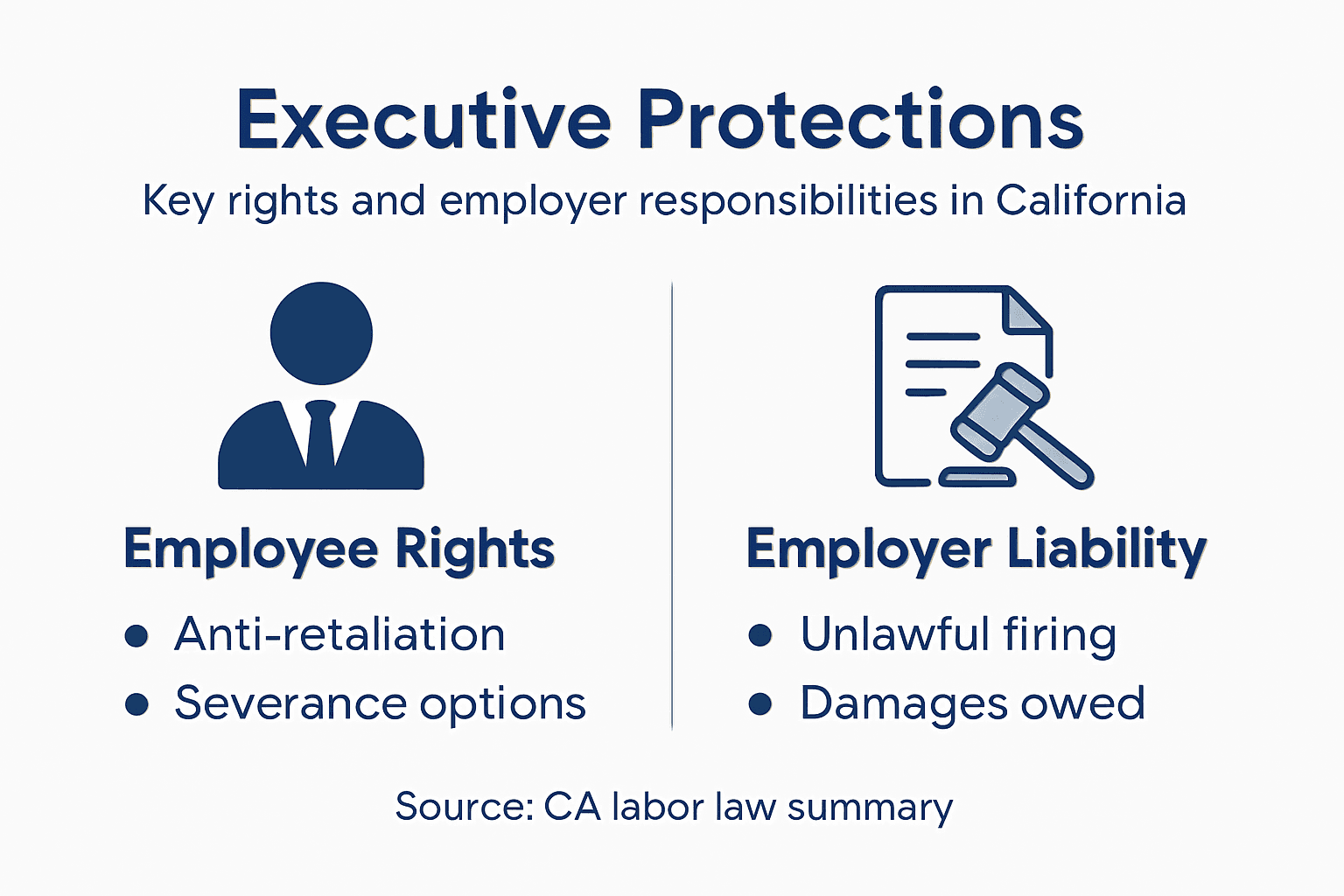
Understanding the nuanced interactions between employee rights and employer responsibilities requires a sophisticated approach. Executives and professionals must remain informed about their legal protections, recognizing that workplace law provides multiple layers of defense against potential corporate misconduct.
Pro tip: Maintain detailed, contemporaneous documentation of all workplace interactions, performance evaluations, and communication patterns to establish a robust record in potential legal proceedings.
Steps to Take After Unlawful Termination
Facing an unlawful termination can be overwhelming, but taking strategic, immediate action is crucial for protecting your professional rights and potential legal recourse. Systematic documentation becomes critical evidence in building a compelling case against improper workplace dismissal.
Immediate steps for executives after potential wrongful termination include:
- Request a written explanation of termination
- Preserve all employment-related documents
- Avoid signing any severance agreements without legal review
- Apply for unemployment benefits
- Document all interactions related to termination
- Collect contact information for potential witnesses
- Maintain a detailed timeline of events
The legal response timeline is time-sensitive, with specific statutes of limitations governing different types of employment claims. Government agencies provide critical reporting mechanisms for employees experiencing workplace discrimination or retaliatory termination.
Executives must approach post-termination actions methodically, understanding that comprehensive preparation can significantly strengthen potential legal claims. Consulting an employment law specialist early can help navigate complex procedural requirements and assess the viability of potential legal action.
Pro tip: Create a comprehensive digital and physical file containing all employment records, communication logs, and performance evaluations before potentially losing access to workplace documentation.
Protect Your Executive Rights Against Wrongful Termination in Mid-Wilshire
Facing wrongful termination as an executive can feel overwhelming especially when confronted with complex issues like retaliation discrimination or breach of contract in California’s at-will employment environment. This article outlines critical protections designed to safeguard your career reputation and legal rights if you believe you were dismissed unlawfully or unfairly in Mid-Wilshire.
If you are navigating executive wrongful termination challenges you need focused legal support that understands the nuances of employment law and executive contracts. The Mid-Wilshire team at Shirazi Law Office specializes in protecting senior professionals from unfair workplace treatment including retaliation and discriminatory dismissal. Visit our Wrongful Termination practice area to explore how we effectively defend your rights and pursue rightful remedies.
Don’t wait until it is too late to act. Protect your professional future and hold employers accountable today by contacting Shirazi Law Office at https://www.shirazilawoffice.com/. Early legal counsel can make a decisive difference in preserving your rights and career prospects.
Frequently Asked Questions
What constitutes wrongful termination for executives?
Wrongful termination for executives occurs when an employer fires them for illegal reasons, including discrimination, retaliation for reporting misconduct, or violating employment contracts.
What legal protections do executives have against wrongful termination?
Executives are protected under various laws that shield them from discrimination, safeguard whistleblowing activities, and prevent retaliatory actions by employers.
How can an executive document evidence of wrongful termination?
Executives should maintain comprehensive documentation, including workplace interactions, performance reviews, and communication logs to support their claims.
What steps should I take immediately after being wrongfully terminated?
After wrongful termination, request a written explanation, preserve all employment documents, avoid signing severance agreements without legal advice, and document all related interactions.
Recommended
- Wrongful Termination for Los Angeles Executives: Key Risks
- Wrongful Termination of Executives in Beverly Hills – Law Office of Brian Y. Shirazi, PC
- Wrongful Termination After Reporting Misconduct: Legal Impact on Downtown Los Angeles Executives – Law Office of Brian Y. Shirazi, PC
- Executive Terminations in Century City – Employee Rights





Your content always delivers exactly what people need 🌟 to hear right now