
Nearly one in four American healthcare professionals experience workplace obstacles when seeking medical leave or accommodations in Los Angeles. For dedicated employees managing health conditions, understanding your legal rights can mean the difference between job security and vulnerability. This guide explains critical protections and common challenges, offering clarity for healthcare and research workers who want to safeguard their careers and well-being.
Table of Contents
- Defining Medical Leave and Disability Rights
- Protected Leave Types for Healthcare Employees
- Legal Protections and Eligibility Criteria
- Handling Workplace Accommodations and Requests
- Common Pitfalls and Employer Violations
Key Takeaways
| Point | Details |
|---|---|
| Understanding Your Rights | Healthcare workers should be aware of their rights under the FMLA and ADA for medical leave and disability accommodation. |
| Documentation is Key | Keeping detailed records of medical interactions and accommodation requests can strengthen claims and ensure rights are upheld. |
| Communicate Effectively | Engage in clear communication with employers regarding accommodation needs to facilitate a supportive work environment. |
| Be Aware of Violations | Recognize potential employer violations, such as retaliation or failure to accommodate, to protect professional and personal rights. |
Defining Medical Leave and Disability Rights
Healthcare workers in Los Angeles navigate complex legal protections when facing medical challenges or disabilities. The Family and Medical Leave Act (FMLA) provides critical safeguards for employees requiring time away from work for medical reasons. This federal law ensures that eligible workers can take up to 12 weeks of unpaid, job-protected leave annually without risking their employment status.
Under the Americans with Disabilities Act (ADA), healthcare professionals with physical, psychological, or emotional impairments receive robust legal protections against workplace discrimination. The ADA mandates reasonable accommodations for qualified employees, ensuring that medical conditions do not become barriers to professional opportunities. This means Los Angeles healthcare institutions must make necessary workplace adjustments that enable disabled employees to perform their essential job functions effectively.
Eligibility for medical leave and disability rights depends on several key factors. For FMLA protection, employees must work for employers with 50 or more employees, have been employed for at least 12 months, and have worked a minimum of 1,250 hours in the previous year. The ADA applies more broadly, covering employers with 15 or more employees and protecting workers with substantial limitations in major life activities.
Pro tip: Document every medical interaction, accommodation request, and workplace communication to create a clear record of your medical leave and disability rights journey.
Here’s a comparison of key legal protections available to healthcare workers:
| Protection | Coverage Threshold | Primary Benefit | Limitations |
|---|---|---|---|
| FMLA | 50+ employees, 12 months tenure | 12 weeks job-protected leave | Unpaid, narrow definition of family |
| ADA | 15+ employees, disability required | Reasonable accommodations, anti-discrimination | May deny if undue hardship |
| Local Sick Leave Laws | Varies by city/state | Paid short-term sick leave | Not uniform, differs by employer location |
Protected Leave Types for Healthcare Employees
Healthcare workers in Los Angeles benefit from multiple protected leave categories that safeguard their professional and personal well-being. The Family and Medical Leave Act (FMLA) establishes comprehensive protections covering various critical life situations. Eligible healthcare employees can take up to 12 weeks of unpaid, job-protected leave for significant medical and family circumstances, including personal health challenges, childbirth, newborn care, adoption, foster care placement, and caring for seriously ill immediate family members.
Beyond FMLA protections, sick leave laws provide additional support for healthcare professionals. Sick leave regulations vary across states and localities, with some jurisdictions mandating paid leave for short-term illnesses, caregiving responsibilities, and personal medical needs. These provisions are particularly crucial for healthcare workers who often face higher exposure to health risks and complex medical scenarios.
Specific protected leave types for healthcare employees typically include medical leave for personal health conditions, family care leave, maternity and paternity leave, military family leave, and leave related to domestic violence or safety concerns. Each category has distinct eligibility requirements and documentation protocols. Healthcare institutions in Los Angeles must carefully navigate these regulations to ensure compliance and support their employees’ fundamental rights to medical and family-related absences.
Pro tip: Maintain comprehensive medical documentation and communicate proactively with your human resources department to ensure smooth processing of your protected leave requests.
Legal Protections and Eligibility Criteria
Healthcare workers in Los Angeles must understand the intricate legal protections governing disability and medical leave. FMLA eligibility requires specific criteria: employees must have worked for their employer at least 12 months, completed 1,250 hours of service in the past year, and be employed at locations with 50 or more employees within a 75-mile radius. These requirements ensure that only established employees receive comprehensive job-protected leave benefits.
The Americans with Disabilities Act (ADA) and FMLA provide robust legal frameworks for employees facing medical challenges. Workplace legal protections mandate reasonable accommodations and leave options for workers with serious health conditions. Employers must provide these accommodations unless they can demonstrate undue hardship, creating a balanced approach that supports employee health while maintaining workplace functionality.

Eligibility for legal protections involves nuanced considerations specific to each healthcare worker’s situation. Factors such as employment tenure, hours worked, employer size, and the nature of the medical condition all play critical roles in determining available protections. Healthcare institutions in Los Angeles must carefully evaluate individual circumstances, ensuring compliance with federal and state regulations while supporting their employees’ medical and personal needs.
Pro tip: Document every interaction, medical record, and workplace communication to build a comprehensive portfolio that substantiates your legal leave and disability accommodation claims.
Handling Workplace Accommodations and Requests
Healthcare workers seeking workplace accommodations must understand the critical process of requesting reasonable modifications. The accommodation process begins with clear communication between the employee and employer, involving an interactive dialogue that identifies appropriate adjustments without compromising essential job functions. Employees should be prepared to provide specific details about their medical condition and the specific accommodations they require to perform their professional responsibilities effectively.
The Americans with Disabilities Act (ADA) establishes comprehensive guidelines for workplace accommodations. Reasonable accommodations can include a wide range of modifications, such as schedule adjustments, specialized equipment, workplace facility modifications, or potential job reassignments. Healthcare institutions must carefully evaluate each request, balancing the employee’s medical needs with the organization’s operational requirements.
Successful accommodation requests typically involve a collaborative approach. Healthcare workers should document their medical requirements, prepare detailed explanations of how proposed accommodations will enable them to perform job duties, and be prepared to engage in a constructive dialogue with their employer. Medical documentation may be requested, but employers can only seek information directly related to understanding the necessary workplace modifications. Los Angeles healthcare institutions are obligated to consider accommodations in good faith, exploring multiple potential solutions that support employee health and workplace productivity.
Pro tip: Create a comprehensive written proposal outlining your specific accommodation needs, including medical documentation and a clear explanation of how the modifications will enable you to perform your essential job functions.
Common Pitfalls and Employer Violations
Healthcare workers in Los Angeles face numerous potential workplace challenges related to medical leave and disability rights. Wage and hour violations often intersect with disability accommodation issues, creating complex legal scenarios for healthcare professionals. Employers may attempt to circumvent legal obligations by misclassifying employees, refusing reasonable accommodations, or retaliating against workers who request medical leave or disability support.
Disability discrimination can manifest in subtle yet damaging ways. Common employer violations include refusing to engage in the interactive accommodation process, making discriminatory comments about an employee’s medical condition, imposing unreasonable performance standards that ignore medical limitations, or creating hostile work environments that discourage employees from seeking necessary accommodations. Healthcare institutions may also improperly deny leave requests, mishandle medical documentation, or create barriers that prevent employees from accessing their legal rights.
Some of the most significant pitfalls involve indirect forms of discrimination and systemic barriers. Healthcare workers might encounter employers who use coded language, create unnecessary bureaucratic hurdles, or implement policies that disproportionately impact employees with medical conditions. These violations can include sudden performance improvement plans after medical leave requests, unexplained shift changes, reduced work hours, or subtle forms of professional marginalization that are difficult to document but deeply damaging to an employee’s career trajectory.
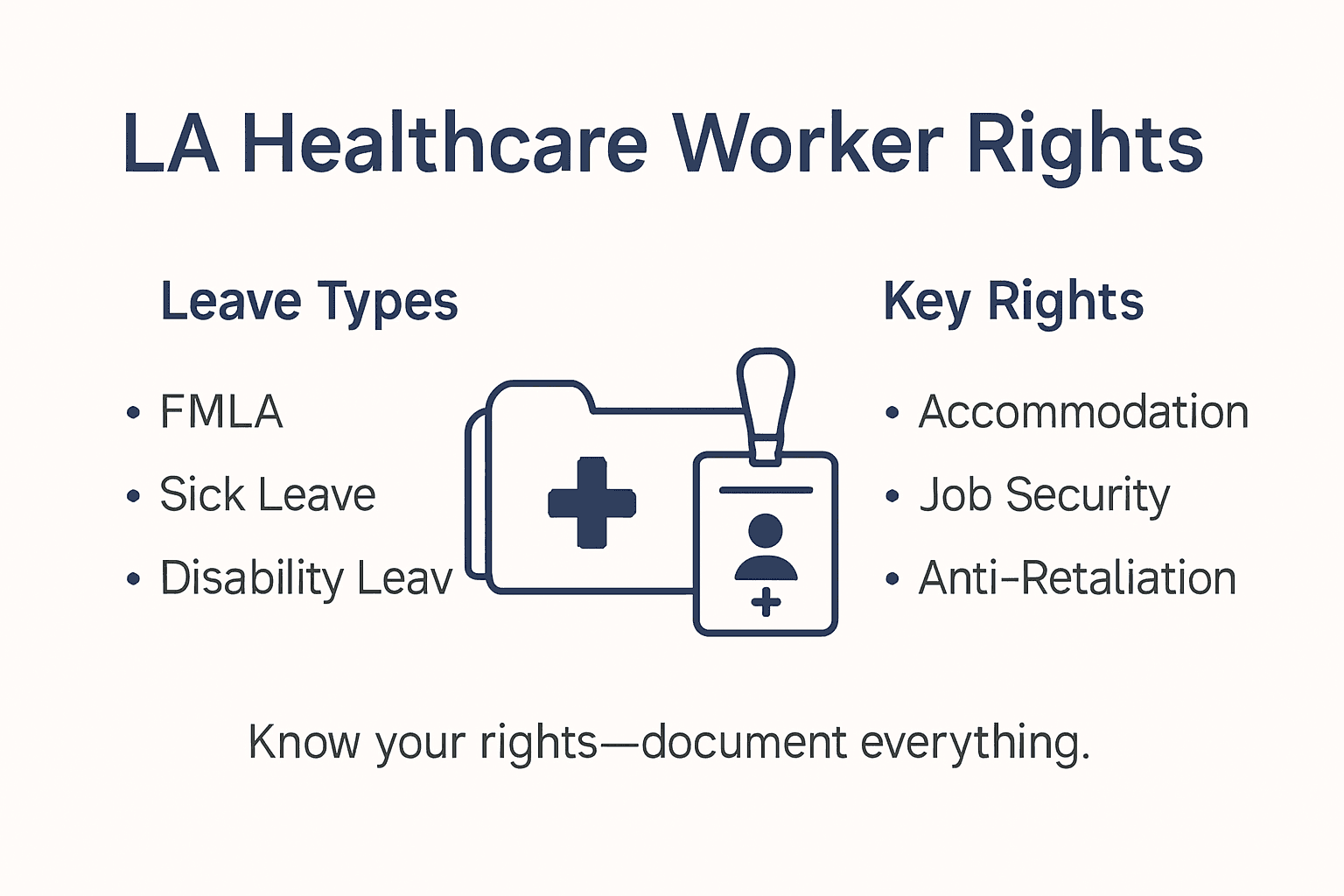
Below is a quick-reference summary of common employer violations affecting healthcare workers:
| Violation Type | Example Scenario | Potential Impact |
|---|---|---|
| Retaliation | Demoting after leave request | Job security threatened |
| Failure to Accommodate | Ignoring schedule adjustments | Hinders essential tasks |
| Poor Documentation Handling | Losing medical paperwork | Delays or denies leave/accommodation |
| Discriminatory Policies | Unfair performance expectations | Increased stress, unequal treatment |
Pro tip: Maintain a detailed, contemporaneous record of all workplace interactions, accommodation requests, and communications related to your medical condition to build a strong foundation for potential legal protection.
Protect Your Medical Leave and Disability Rights with Trusted Legal Support
Healthcare workers in Los Angeles face unique challenges when navigating medical leave and disability rights under laws like the Family and Medical Leave Act and the Americans with Disabilities Act. The stress of potential employer retaliation, denial of reasonable accommodations, or mishandling of medical documentation can be overwhelming and threaten your job security and well-being. Understanding your rights is essential, but having expert legal guidance can make all the difference when your workplace fails to respect those rights.
At Shirazi Law Office, we specialize in defending healthcare professionals against workplace retaliation and disability discrimination. If your employer refuses to accommodate your medical needs or retaliates after you request protected leave, our firm provides strategic, results-driven advocacy. Learn more about how we fight for employees facing unfair treatment in our Workplace Retaliation practice area. Serving Los Angeles neighborhoods including Westwood, we combine deep knowledge of California employment law with personalized support. Don’t wait until your rights are violated. Protect your career and health by contacting Shirazi Law Office today.
Frequently Asked Questions
What is the Family and Medical Leave Act (FMLA) and how does it protect healthcare workers?
The FMLA provides eligible healthcare workers with up to 12 weeks of unpaid, job-protected leave for significant medical and family circumstances without risking their employment status.
What are my rights under the Americans with Disabilities Act (ADA) as a healthcare worker?
The ADA prohibits workplace discrimination against employees with disabilities and mandates reasonable accommodations to ensure that medical conditions do not hinder job performance.
How do I request reasonable accommodations at work?
To request accommodations, start by having a clear conversation with your employer, outlining your medical needs and the specific adjustments required to perform your job effectively.
What should I do if my employer retaliates against me for requesting medical leave or accommodations?
If you suspect retaliation, document all relevant interactions and communications, and consult with a legal expert to explore your rights and potential actions against your employer.