

Read on to learn more about LGBTQ workplace rights in 2026. Over eighty percent of LGBTQ+ employees in major American cities report experiencing workplace discrimination or harassment at least once in their careers. For those in Los Angeles, unfair treatment can leave you questioning your safety, dignity, and future. Knowing exactly what California law says about your protections can be empowering. This overview lays out clear facts on your rights as a worker and what steps you can take if you face discrimination in the workplace.
Table of Contents
- Lgbtq+ Workplace Discrimination Defined Clearly
- Key California Laws Protecting Lgbtq+ Employees
- Common Types Of Discrimination And Harassment
- Employee Rights And Employer Duties In 2026
- Steps To Take When Facing Discrimination
- Remedies, Enforcement, And Legal Options
Key Takeaways
| Point | Details |
|---|---|
| Workplace Discrimination Prohibited | California law prohibits employment discrimination based on sexual orientation and gender identity, offering strong protections for LGBTQ+ employees. |
| Comprehensive Employee Rights | Employees have the right to work free from discrimination and harassment, with equal access to opportunities and safe facilities. |
| Legal Recourse and Remedies | There are multiple avenues for LGBTQ+ employees to seek justice, including filing complaints and seeking legal counsel. |
| Ongoing Legislative Enhancements | Future legal reforms in California will further strengthen protections and employer responsibilities, ensuring a more inclusive workplace environment. |
LGBTQ+ Workplace Discrimination Defined Clearly
Workplace discrimination against LGBTQ+ individuals represents a serious violation of civil rights in California. Under California law, employment discrimination based on sexual orientation or gender identity is explicitly prohibited, providing comprehensive legal protections for LGBTQ+ workers across numerous professional settings.
Discrimination can manifest in multiple harmful ways, including unfair hiring practices, unequal promotion opportunities, differential treatment in compensation, and hostile work environments. Specifically, employers cannot legally take adverse actions such as firing, demoting, or preventing career advancement based on an employee’s sexual orientation or gender identity. The California Fair Employment and Housing Act (FEHA) provides robust legal frameworks that protect workers from such discriminatory behaviors.
Key protections for LGBTQ+ employees in California encompass several critical areas:
- Protection from termination based on sexual orientation
- Equal opportunities for hiring and promotion
- Right to use restrooms corresponding to gender identity
- Protection from workplace harassment
- Legal recourse for discriminatory actions
Moreover, California law extends protection beyond direct employment actions. Harassment, including persistent misgendering, creating hostile work environments, or making derogatory comments about an individual’s sexual orientation or gender identity, is strictly prohibited. Employers are required to maintain professional environments that respect individual dignity and prevent any form of discriminatory treatment.
Pro tip: Document every instance of potential workplace discrimination, including dates, specific incidents, and potential witnesses, as this evidence can be crucial if you need to file a legal complaint.
Key California Laws Protecting LGBTQ+ Employees
California stands at the forefront of legal protection for LGBTQ+ employees, with comprehensive legislation designed to ensure workplace equality and prevent discrimination. Upcoming legal changes in 2026 will further strengthen these protections, signaling the state’s ongoing commitment to creating inclusive work environments.

The cornerstone of these protections is the Fair Employment and Housing Act (FEHA), which explicitly prohibits discrimination based on sexual orientation, gender identity, and gender expression. This law provides robust safeguards for LGBTQ+ workers, covering employers with five or more employees and ensuring comprehensive workplace rights.
Key legal protections under California law include:
- Prohibition of discrimination in hiring, promotion, and termination
- Requirement for employers to provide gender-neutral restroom facilities
- Protection from harassment based on sexual orientation or gender identity
- Mandated equal pay and benefits regardless of sexual orientation
- Elimination of religious exemptions that could limit LGBTQ+ workplace rights
The legal landscape continues to evolve, with recent legislative efforts focusing on increased transparency and enforcement. California’s laws go beyond mere protection, actively promoting workplace equity by requiring employers to implement comprehensive anti-discrimination training and maintain inclusive work environments.
Pro tip: Keep a detailed record of any workplace interactions that might constitute discrimination, including dates, specific comments, and potential witnesses, to strengthen your legal position if needed.
Here is a summary of how recent and upcoming California laws strengthen LGBTQ+ workplace protections:
| Law or Update | Year Effective | Key Advancement | Impact on LGBTQ+ Employees |
|---|---|---|---|
| Fair Employment and Housing Act (FEHA) | Existing | Explicit anti-discrimination | Protects against bias at work |
| Gender-Neutral Facilities Requirement | Existing | Restroom access aligned to ID | Ensures safety and dignity |
| Transparency & Inclusion Initiatives | 2024-2026 | Expanded reporting & training | Raises awareness and accountability |
| 2026 Regulatory Enhancements | 2026 | Broader employee protections | More robust rights and recourse |
Common Types of Discrimination and Harassment
Workplace discrimination and harassment targeting LGBTQ+ employees can manifest in numerous subtle and overt forms, creating toxic work environments that undermine professional dignity and career opportunities. California law provides comprehensive protections against a wide range of discriminatory behaviors, recognizing that discrimination extends far beyond simple termination or denial of promotion.
The most prevalent types of workplace discrimination for LGBTQ+ individuals include:
- Verbal Harassment: Offensive jokes, derogatory comments, or repeated misgendering
- Professional Exclusion: Being deliberately overlooked for assignments or team activities
- Unequal Treatment: Receiving different performance evaluations or compensation
- Sexual Harassment: Unwelcome sexual advances or inappropriate comments about sexual orientation
- Systemic Discrimination: Policies that indirectly disadvantage LGBTQ+ employees
Workplace harassment becomes legally actionable when it creates a hostile work environment that interferes with an employee’s work performance or creates an intimidating atmosphere. This can include persistent microaggressions, repeated inappropriate comments, deliberate exclusion from professional opportunities, or creating uncomfortable workplace dynamics that target an individual’s sexual orientation or gender identity.
Modern workplace discrimination often operates through sophisticated, less obvious mechanisms. Employers might use seemingly neutral policies or evaluation criteria that disproportionately impact LGBTQ+ employees, such as dress code requirements, bathroom access, or performance review processes that fail to account for gender identity and expression.
Pro tip: Maintain a confidential, detailed log of discriminatory incidents, including dates, specific language used, and potential witnesses, which can serve as crucial evidence if you need to file a formal complaint.
The following table highlights differences between direct discrimination and systemic discrimination in the workplace:
| Type of Discrimination | How It Occurs | Typical Examples | Potential Long-term Impact |
|---|---|---|---|
| Direct | Overt employer actions | Firing for gender identity | Immediate loss of work |
| Systemic | Biased policies or culture | Dress codes, biased evaluations | Ongoing limited advancement |
Employee Rights and Employer Duties in 2026
Workplace protections for LGBTQ+ employees are expanding significantly in 2026, with comprehensive legal frameworks designed to create more inclusive and equitable professional environments. These emerging regulations represent a substantial shift towards stronger employee rights and increased employer accountability across California.
Key employee rights for LGBTQ+ workers in 2026 include:
- Right to work free from discrimination based on sexual orientation or gender identity
- Protection from harassment and hostile work environments
- Equal access to professional opportunities and compensation
- Safe and respectful restroom access matching gender identity
- Legal recourse for workplace violations
Employers now have expanded duties to prevent discrimination and create inclusive workplaces, including mandatory training, implementing clear anti-discrimination policies, and proactively addressing potential workplace barriers. These responsibilities extend beyond mere compliance, requiring genuine commitment to creating supportive professional environments.
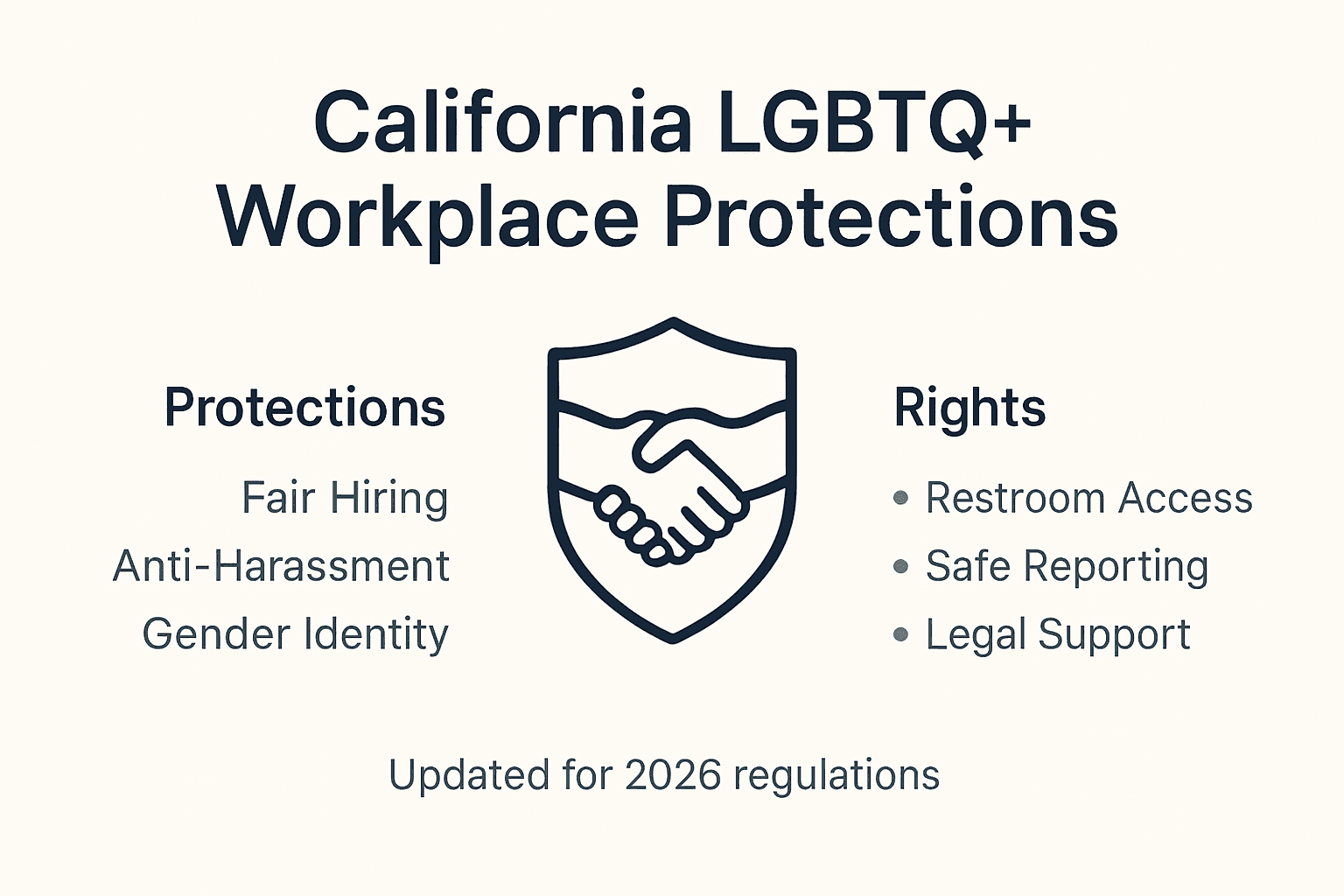
The evolving legal landscape demands that employers implement comprehensive strategies to protect LGBTQ+ employees. This includes developing transparent hiring practices, ensuring equal advancement opportunities, providing gender-neutral facilities, and establishing clear mechanisms for reporting and addressing discrimination.
Pro tip: Request a copy of your employer’s updated anti-discrimination policy and familiarize yourself with the specific reporting procedures for workplace issues.
Steps to Take When Facing Discrimination
Confronting workplace discrimination requires a strategic and documented approach to protect your professional rights and personal dignity. The California Civil Rights Department (CRD) provides comprehensive resources for employees navigating workplace discrimination challenges, offering multiple avenues for seeking resolution and legal protection.
Critical initial steps for addressing workplace discrimination include:
- Document every discriminatory incident in detail
- Gather potential witness statements or supporting evidence
- Review your company’s official anti-discrimination policies
- Report incidents through official workplace channels
- Understand your legal protections under California law
Employees facing discrimination have multiple formal reporting options, including filing complaints with the California Civil Rights Department, seeking legal counsel, or pursuing internal grievance procedures. Each approach requires careful documentation and a clear understanding of your specific workplace circumstances.
Navigating workplace discrimination demands a methodical approach. This means maintaining a confidential, chronological record of incidents, preserving email communications, noting dates and specific details, and understanding the potential emotional and professional impacts of pursuing a complaint. Professional legal consultation can provide personalized guidance tailored to your specific situation.
Pro tip: Create a secure, password-protected digital folder to store all documentation related to potential workplace discrimination, including emails, witness contact information, and detailed incident reports.
Remedies, Enforcement, and Legal Options
California provides robust legal frameworks for addressing workplace discrimination, offering multiple pathways for LGBTQ+ employees to seek justice and protect their professional rights. These remedies range from administrative complaint processes to potential litigation, ensuring comprehensive protection against discriminatory practices.
Legal options and potential remedies include:
- Filing formal complaints with the California Civil Rights Department
- Seeking monetary damages for lost wages and emotional distress
- Requesting workplace policy changes
- Pursuing reinstatement to a previous position
- Obtaining injunctive relief to prevent future discriminatory actions
- Securing compensation for legal expenses
The California Civil Rights Department actively investigates and enforces anti-discrimination laws, providing a structured approach for employees facing workplace discrimination. Their process involves comprehensive investigation, potential mediation, and formal enforcement actions that can result in significant workplace reforms and individual compensation.
Employees should understand that legal remedies extend beyond financial compensation. Successful cases can lead to systemic changes, including mandatory workplace training, policy revisions, and increased organizational accountability. Professional legal representation can help navigate these complex processes, ensuring that individual rights are comprehensively protected and potential long-term workplace impacts are considered.
Pro tip: Consult with an employment law specialist who specializes in LGBTQ+ workplace discrimination to understand the full range of potential legal strategies specific to your unique situation.
Protect Your LGBTQ+ Workplace Rights with Strategic Legal Support
Facing discrimination or harassment based on sexual orientation or gender identity can be overwhelming and deeply unfair. California’s evolving protections under the Fair Employment and Housing Act and upcoming 2026 laws create strong safeguards, yet navigating these complex legal standards demands clear guidance. If you are experiencing unfair treatment, hostile work environments, or retaliation at work, you need a trusted advocate who understands the nuances of LGBTQ+ workplace rights and employment law.
At Shirazi Law Office, we specialize in defending employees and executives in Los Angeles from unlawful workplace actions. Our focused expertise in wrongful termination, hostile environments, and discrimination claims empowers you to assert your rights with confidence. Do not wait until your situation worsens. Secure experienced representation today and take control of your professional future. Visit us now to learn how we can support your fight against workplace discrimination and protect your career.
Frequently Asked Questions
What are the key protections for LGBTQ+ employees in California under the new laws?
LGBTQ+ employees are protected from discrimination in hiring, promotion, and termination, have the right to use restrooms corresponding to their gender identity, and can seek legal recourse for harassment and hostile work environments.
How can an LGBTQ+ employee document instances of discrimination at work?
Employees should maintain a detailed record of discriminatory incidents, including dates, specific comments, witness names, and any other relevant information that can support their claims if needed.
What steps should an employee take if they experience workplace discrimination?
Employees should document incidents, review their company’s anti-discrimination policies, report incidents through official channels, and may consider seeking legal counsel for further guidance.
What remedies are available to LGBTQ+ employees facing discrimination in California?
Employees can file formal complaints, seek monetary damages, request changes to workplace policies, and pursue reinstatement or injunctions to prevent future discrimination.