

Most American hospitality workers in Los Angeles face workplace conditions where stress and harassment are more common than many realize. Being exposed to hostile environments is a harsh reality that can undermine employee well-being and professional dignity. For those dealing with discrimination, harassment, or intimidation on the job, this guide demystifies what constitutes a hostile work environment and highlights the critical protections and legal rights available under California employment law.
Table of Contents
- Defining Hostile Work Environments In Hospitality
- Types Of Harassment In Nightlife Settings
- California Laws Governing Workplace Conduct
- How Claims Are Proven And Addressed
- Employee Rights And Employer Responsibilities
- Avoiding Common Pitfalls In Filing Claims
Key Takeaways
| Point | Details |
|---|---|
| Understanding Hostile Work Environments | A hostile work environment involves severe and pervasive conduct that undermines employee dignity based on protected characteristics. |
| Types of Harassment | Nightlife settings see various forms of harassment, including quid pro quo, verbal, physical, and discriminatory harassment. |
| Employee Rights and Responsibilities | Employees have the right to report harassment without fear, while employers must actively prevent and address such behaviors. |
| Claim Filing Procedures | Thorough documentation and adherence to internal reporting mechanisms are crucial for successfully proving claims of workplace harassment. |
Defining Hostile Work Environments in Hospitality
In the dynamic landscape of Los Angeles hospitality, understanding what constitutes a hostile work environment is crucial for protecting employee rights. Legal definitions of hostile work environments extend beyond simple workplace discomfort, requiring specific conditions that systematically undermine an employee’s professional dignity and ability to perform their job.
A hostile work environment in hospitality emerges when workplace conduct becomes severe, pervasive, and creates an intimidating atmosphere based on protected characteristics like gender, race, age, or sexual orientation. Unlike normal workplace disagreements, these environments involve recurring behaviors that materially interfere with an employee’s work performance. The conduct must be more than occasional rudeness – it requires persistent, targeted actions that create an objectively hostile atmosphere.
In Los Angeles hospitality settings, such environments frequently manifest through inappropriate customer interactions, management harassment, gender-based discrimination, and systemic power dynamics unique to service industries. Legal standards require evidence of conduct so severe it fundamentally alters employment conditions, meaning isolated incidents typically do not qualify. Employees must demonstrate a pattern of discriminatory behavior that a reasonable person would find intimidating or offensive.
Pro tip: Document every incident of inappropriate workplace behavior, including dates, times, witnesses, and specific details, which can provide critical evidence if you need to pursue a legal claim.
Types of Harassment in Nightlife Settings
Nightlife and hospitality settings in Los Angeles present unique challenges for employee safety, with multiple complex forms of harassment emerging from intense customer interactions and power dynamics. Sexual harassment patterns in hospitality reveal systemic vulnerabilities that disproportionately impact workers, particularly women and marginalized employees.
Harassment in these environments manifests through several distinct categories. Quid pro quo harassment occurs when managers or supervisors explicitly or implicitly condition job benefits on sexual favors. Verbal harassment includes offensive jokes, inappropriate comments, and sexually charged language that creates an intimidating workplace atmosphere. Physical harassment encompasses unwelcome touching, inappropriate physical advances, and gestures that violate personal boundaries.
Discriminatory harassment extends beyond sexual misconduct, targeting employees based on protected characteristics such as race, gender identity, age, disability, or national origin. In nightlife settings, these behaviors can be particularly insidious, with power imbalances between staff, management, and customers creating environments where inappropriate conduct frequently goes unchallenged. Nightclub, bar, and restaurant employees often face heightened risks due to late-night settings, alcohol consumption, and customer service expectations that can blur professional boundaries.
Here’s a summary of common forms of harassment in nightlife hospitality settings:
| Harassment Type | Typical Behaviors | Impact on Employees |
|---|---|---|
| Quid Pro Quo | Job benefits tied to favors | Job security threatened |
| Verbal Harassment | Offensive jokes and comments | Increased stress and anxiety |
| Physical Harassment | Unwanted touching or advances | Compromised safety |
| Discriminatory Harassment | Targeting protected characteristics | Feelings of exclusion or fear |
Pro tip: Always document specific details of harassment incidents, including exact dates, times, locations, potential witnesses, and verbatim quotes, which can provide crucial evidence if legal action becomes necessary.
California Laws Governing Workplace Conduct
California has established comprehensive legal frameworks to protect employees from workplace harassment and discrimination, with the Fair Employment and Housing Act (FEHA) serving as a cornerstone of these protections. This robust legislation goes beyond federal standards, providing extensive safeguards for workers across various industries, including the challenging hospitality and nightlife sectors of Los Angeles.
The California Labor Code establishes clear employer responsibilities in maintaining a safe and respectful workplace. Employers must actively prevent harassment by implementing comprehensive anti-discrimination policies, conducting regular training, and creating mechanisms for employees to report inappropriate conduct without fear of retaliation. These obligations extend to all workplace interactions, including those with customers, supervisors, and coworkers, with significant legal consequences for non-compliance.
Under state law, workplace harassment is defined as unwelcome conduct based on protected characteristics such as race, gender, age, disability, sexual orientation, and gender identity. California Labor Commissioner’s Office enforces workplace rights through rigorous oversight and investigation of complaints. The legal standard requires that harassing behavior be severe or pervasive enough to create a hostile work environment, recognizing that even seemingly minor incidents can contribute to a pattern of discriminatory treatment.
Pro tip: Maintain a detailed, contemporaneous written record of any workplace harassment incidents, including specific dates, times, locations, and verbatim statements, which can provide critical documentation if legal action becomes necessary.
How Claims Are Proven and Addressed
Proving a hostile work environment claim requires a strategic and methodical approach, with employees needing to demonstrate clear evidence of discriminatory conduct. Successful claims in Los Angeles hospitality settings must establish that workplace harassment was severe or pervasive enough to materially alter employment conditions, going beyond isolated incidents to show a pattern of systematic discrimination.
The evidence gathering process is critical and typically involves multiple documentation strategies. Employees must compile comprehensive records including written communications, detailed incident logs, witness statements, and any relevant company documents that substantiate their claims. Internal reporting mechanisms are usually the first step, with employees required to follow their organization’s established complaint procedures before escalating to external agencies like the Equal Employment Opportunity Commission (EEOC) or California’s Department of Fair Employment and Housing.

Legal standards for hostile work environment claims demand a rigorous demonstration that harassment was directly linked to protected characteristics such as race, gender, age, or disability. The conduct must be objectively viewed as sufficiently offensive to create a hostile work environment, which means a reasonable person in the same situation would find the workplace intimidating, hostile, or abusive. This nuanced standard requires careful documentation and often depends on the cumulative impact of multiple incidents rather than a single egregious event.
Pro tip: Preserve all potential evidence, including text messages, emails, voicemails, and contemporaneous notes documenting harassment, as these can provide critical corroboration for your legal claim.
Employee Rights and Employer Responsibilities
In Los Angeles hospitality settings, employee rights are comprehensively protected under California law, establishing clear boundaries for workplace conduct and employer accountability. Workers are guaranteed a workplace free from discrimination and harassment, with legal protections extending to all employees regardless of immigration status, position, or tenure in the organization.
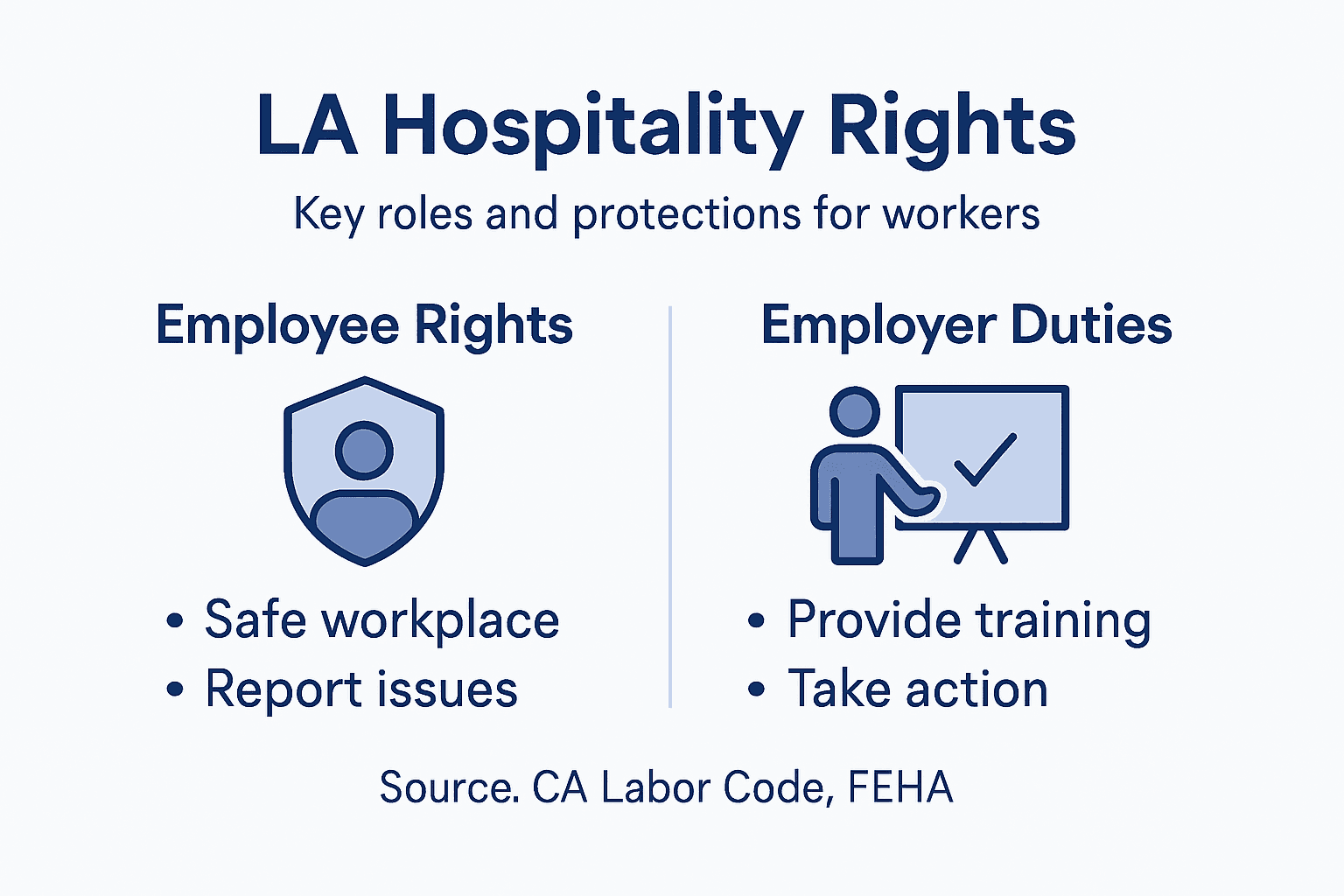
Employers bear significant legal responsibilities in preventing and addressing workplace harassment. This includes implementing robust anti-harassment policies, conducting regular training sessions, establishing clear reporting mechanisms, and taking immediate corrective action when complaints are filed. Supervisors and management must proactively create an environment that prevents discriminatory behavior, with accountability extending not just to direct employees but also to interactions with customers, vendors, and third-party contractors.
California workplace protection laws mandate specific employer actions, including prominently displaying workplace rights notices, maintaining confidential reporting systems, and protecting employees from retaliation. Workers have the right to report harassment without fear of job loss, reduced hours, or professional repercussions. These protections are particularly critical in high-stress hospitality environments where power dynamics can create vulnerability for employees.
Compare the roles and responsibilities under California workplace law:
| Role | Key Responsibilities | Failure Consequences |
|---|---|---|
| Employer | Prevent, train, respond | Legal penalties, fines |
| Employee | Report, document, cooperate | Claims may be denied |
| Supervisor | Enforce policies, address issues | Personal liability risk |
Pro tip: Always request and retain copies of workplace communication, training documents, and incident reports, as these can serve as crucial evidence if you need to demonstrate an employer’s failure to address harassment.
Avoiding Common Pitfalls in Filing Claims
In the complex landscape of workplace harassment claims, employees must navigate critical procedural requirements with precision and strategic documentation. Understanding the nuanced legal standards is essential for building a credible case, particularly in Los Angeles hospitality settings where power dynamics can complicate workplace interactions.
One of the most significant procedural challenges involves proper internal reporting and documentation. Employees must meticulously record harassment incidents, including specific dates, times, locations, verbatim statements, and potential witnesses. Failing to follow an employer’s established complaint procedures can potentially weaken or invalidate an otherwise legitimate claim. Each hospitality workplace typically has specific grievance mechanisms that must be carefully followed before escalating to external agencies.
Hostile work environment claims require comprehensive evidence demonstrating that harassment was severe and pervasive enough to materially alter workplace conditions. Many claims fail because employees cannot distinguish between general workplace conflict and legally actionable harassment. Legal standards demand more than isolated incidents, requiring a pattern of conduct that a reasonable person would find intimidating or offensive. Employees must understand that not every unpleasant workplace interaction constitutes harassment under the law.
Pro tip: Create a contemporaneous digital or physical log of all harassment incidents, including screenshots of communications, witness contact information, and detailed narrative descriptions, which can provide crucial supporting evidence for your claim.
Protect Your Rights Against Hostile Work Environments in LA Hospitality
Facing a hostile work environment at your hospitality job in Los Angeles can be overwhelming and emotionally draining. Persistent harassment or discrimination based on gender, race, or other protected characteristics can deeply impact your career and personal wellbeing. You deserve a workplace that respects your dignity and upholds your rights under California law.
At Shirazi Law Office, we specialize in helping employees like you who confront unlawful treatment and workplace hostility. Our experienced team understands the unique challenges in hospitality settings and offers dedicated representation for hostile work environment claims, sexual harassment, and workplace retaliation issues. Do not let intimidation or unfair treatment go unaddressed.
Take action now to safeguard your career and professional reputation. Visit our website to learn how we can support you or explore more on sexual harassment protections. Contact Shirazi Law Office today for a trusted partner in your fight for justice.
Frequently Asked Questions
What constitutes a hostile work environment in hospitality?
A hostile work environment in hospitality is defined as a workplace where conduct based on protected characteristics, such as gender, race, or age, becomes severe or pervasive enough to create an intimidating atmosphere that interferes with an employee’s ability to perform their job.
How can employees document harassment incidents effectively?
Employees should document harassment incidents by noting specific details, such as the date, time, location, potential witnesses, and a verbatim account of the behavior. Maintaining a thorough written record can serve as critical evidence in legal claims.
What legal protections are available for hospitality workers facing harassment?
California’s Fair Employment and Housing Act (FEHA) offers comprehensive protections against workplace harassment and discrimination, mandating that employers maintain a safe environment and take immediate action on complaints.
How do employees prove a hostile work environment claim?
To prove a hostile work environment claim, employees must demonstrate that the harassment was severe or pervasive enough to materially alter their working conditions. This typically involves gathering consistent evidence of a pattern of discriminatory behavior rather than isolated incidents.
Recommended
- Hostile Work Environment in LA | LA Employment Lawyer
- Sexual Harassment Claims in West Hollywood Workplaces
- Hostile Work Environment Claims: Impact on Mid-Wilshire Offices
- Workplace Retaliation in LA | Los Angeles Employment Lawyer
- Understanding Sexual Harassment Claims in Hospitality Post-#MeToo | Serendib Law Firm