

Unequal compensation remains a pressing reality for women executives in professional services across Los Angeles. The complexity of the gender pay gap is magnified by factors such as career breaks, fewer hours worked, and occupational shifts, with nearly 80 percent of lost earnings driven by work experience patterns according to McKinsey. Understanding how systematic barriers and legal protections impact your earnings is essential for safeguarding your career and asserting your workplace rights.
Table of Contents
- Defining The Gender Pay Gap In Professional Services
- Main Causes And Persistent Barriers For Women
- California Laws Addressing Pay Inequality
- Reporting, Disclosure, And Employer Obligations
- Legal Remedies And Best Steps For Executives
Key Takeaways
| Point | Details |
|---|---|
| Understanding the Gender Pay Gap | The gender pay gap is multifaceted, influenced by career breaks, reduced hours, and occupational shifts, impacting women’s long-term earnings. |
| Systemic Barriers | Deeply rooted systemic barriers continue to impede women’s career advancement and compensation equity in professional services. |
| California’s Legal Framework | California has established strong legal protections against pay discrimination, empowering women to challenge wage inequities effectively. |
| Employer Responsibilities | Employers are mandated to report comprehensive pay data, promoting transparency and accountability in compensation practices across professional sectors. |
Defining the Gender Pay Gap in Professional Services
The gender pay gap remains a persistent challenge within professional services, representing a complex economic disparity that extends far beyond simple wage differences. In Los Angeles, like many major metropolitan areas, women continue to experience systematic compensation inequities that impact their long-term financial trajectories.
Research demonstrates that the pay gap is multifaceted, with nearly 80 percent driven by work experience patterns. These patterns include women experiencing flatter career trajectories, working fewer hours, taking more career breaks, and sometimes transitioning to lower-paying occupational segments. The consequences extend beyond immediate salary differences, potentially resulting in significant lifetime earning disparities.
The complexity of the gender pay gap becomes even more nuanced when examining socioeconomic factors. Academic research reveals substantial wage gap variations across different demographic segments, with full-time women experiencing wage gaps ranging from 24% for those with lower education to 33% for those with advanced degrees. These statistics highlight that professional women in Los Angeles face intricate challenges related to compensation equity.
Understanding the gender pay gap requires recognizing its multidimensional nature, acknowledging systemic barriers, and developing strategic approaches to address persistent workplace inequities. Professional women must be equipped with knowledge about their rights, compensation trends, and potential legal protections.
Here’s a summary of how different career factors influence the gender pay gap:
| Factor | How It Contributes | Long-Term Impact |
|---|---|---|
| Career breaks | Reduced time in workforce | Lower total lifetime earnings |
| Fewer hours worked | Less annual income | Smaller raises and bonuses |
| Occupational shifts | Moving to lower-paying fields | Decreased salary potential |
| Limited advancement | Fewer promotions | Slower wage growth over time |
Pro tip: Document and track your professional achievements meticulously, creating a comprehensive portfolio that objectively demonstrates your value and can support potential salary negotiations or legal actions addressing pay discrimination.
Main Causes and Persistent Barriers for Women
The landscape of professional services in Los Angeles reveals deeply rooted systemic barriers that continue to impede women’s career advancement and compensation equity. These challenges extend far beyond simple wage discrepancies, encompassing complex social, cultural, and institutional dynamics that systematically disadvantage women in the workplace.
Occupational segregation and differential treatment represent significant obstacles for professional women. Mothers frequently experience career interruptions, working reduced hours and taking more substantial breaks compared to male counterparts, which directly impacts their long-term earning potential. This phenomenon is compounded by labor market structures that often provide wage premiums to fathers while simultaneously penalizing women with caregiving responsibilities.
Systemic discrimination in hiring and promotion practices creates additional barriers for women across professional services. These discriminatory practices manifest through unconscious biases, limited networking opportunities, and persistent gender stereotypes that undermine women’s professional credibility. The challenges are particularly acute for women of color and those from marginalized communities, who face compounded intersectional barriers that further restrict their career trajectories.
Addressing these persistent barriers requires a multifaceted approach that combines legal advocacy, corporate policy reform, and individual empowerment strategies. Professional women must develop robust support networks, continuously enhance their skills, and strategically navigate workplace dynamics to overcome systemic limitations.
Pro tip: Build a comprehensive professional network that includes mentors, sponsors, and allies who can provide strategic guidance, visibility, and support in navigating complex workplace environments.
California Laws Addressing Pay Inequality
California has pioneered comprehensive legislative efforts to combat gender pay discrimination, establishing some of the most robust legal protections for employees in the United States. These legal frameworks provide critical safeguards against systemic wage inequities that have historically disadvantaged women in professional services.
The California Equal Pay Act represents a cornerstone of these protections, explicitly prohibiting wage disparities based on sex, race, and ethnicity for employees performing substantially similar work. The legislation goes beyond traditional interpretations, expanding to include non-binary employees and implementing critical restrictions that prevent employers from using prior salary history as justification for pay differences. Employers are now required to maintain detailed wage records for at least three years, creating accountability and transparency in compensation practices.

Recent legislative amendments have further strengthened pay equity protections. California’s SB 642, set to take effect on January 1, 2026, dramatically expands the scope of wage considerations by including all forms of compensation. The law extends the statute of limitations for pay equity violations to three years and introduces more comprehensive protections for nonbinary gender individuals, signaling a progressive approach to addressing workplace discrimination.
The following table highlights key differences between California’s Equal Pay Act and SB 642:
| Provision | Equal Pay Act | SB 642 (2026) |
|---|---|---|
| Protected categories | Sex, race, ethnicity | Expanded, including nonbinary |
| Compensation scope | Predominantly wages | All forms of pay |
| Recordkeeping | 3 years | 3 years, plus greater detail |
| Statute of limitations | 2 years | 3 years |
These legal mechanisms empower professional women in Los Angeles to challenge discriminatory compensation practices, providing multiple avenues for seeking justice and workplace equity. By creating clear legal standards and enforcement mechanisms, California has positioned itself as a national leader in addressing systemic pay inequalities.
Pro tip: Document every aspect of your compensation, including benefits, bonuses, and non-monetary forms of payment, to build a comprehensive record that can support potential legal claims of pay discrimination.
Reporting, Disclosure, and Employer Obligations
California has implemented stringent reporting requirements designed to promote transparency and accountability in workplace compensation practices. These comprehensive regulations place significant responsibility on employers to disclose and address potential pay inequities across professional services sectors.
Comprehensive pay data reporting mandates that private employers with 100 or more employees must submit detailed annual reports to the Civil Rights Department. These reports must include aggregated pay data segmented by race, ethnicity, gender, and job categories, creating a robust mechanism for identifying systemic wage disparities. Employers must provide intricate details including total hours worked, pay rates, and demographic breakdowns across different organizational levels.
Annual workforce compensation reports represent a critical tool for ensuring pay equity. Employers must meticulously document compensation structures, including payroll data for both direct employees and labor contractors. The reporting requirements extend beyond simple numerical submissions, compelling organizations to conduct internal analyses of their compensation practices and potential systemic biases.
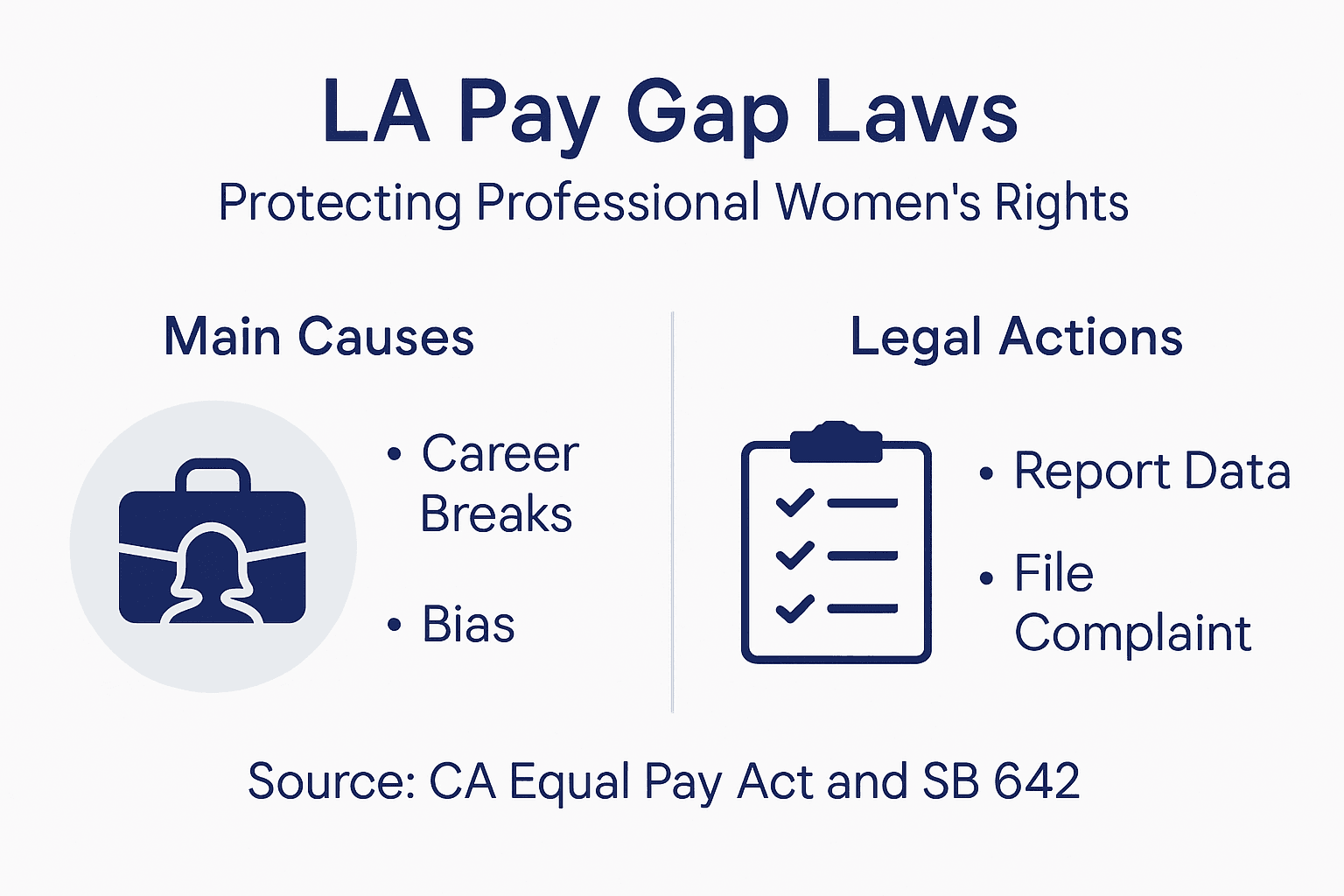
These disclosure obligations create meaningful accountability, transforming pay equity from a theoretical concept to a measurable, actionable objective. Professional women in Los Angeles now have unprecedented visibility into potential wage discrimination, with legal mechanisms that support comprehensive examination of compensation practices across industries.
Pro tip: Request and review your employer’s annual pay data report, comparing demographic representations and compensation ranges to identify potential systemic inequities in your workplace.
Legal Remedies and Best Steps for Executives
Executives confronting gender pay disparities must strategically navigate complex legal landscapes while protecting their professional interests and career trajectories. Legal remedies provide critical mechanisms for addressing systemic wage inequities in professional services environments.
Comprehensive pay equity strategies require proactive documentation and strategic action. Executives should initiate detailed pay audits, establish transparent compensation documentation, and create measurable equity goals that systematically address potential discriminatory practices. This approach not only mitigates legal risks but also demonstrates a commitment to fair workplace practices.
Key legal steps include gathering comprehensive compensation records, identifying specific instances of pay discrepancies, and consulting with employment law specialists who specialize in gender discrimination cases. Professional women must carefully document salary histories, performance evaluations, and comparative compensation data across similar job classifications. These records serve as critical evidence when pursuing legal remedies or negotiating workplace equity.
The legal landscape offers multiple avenues for addressing pay inequities, including internal grievance procedures, administrative complaints with state agencies, and potential litigation. Executives should approach these strategies methodically, understanding that each approach carries distinct advantages and potential consequences for their professional reputation and future career opportunities.
Pro tip: Create a confidential, comprehensive compensation portfolio documenting your professional achievements, salary history, and performance metrics to support potential legal claims of pay discrimination.
Take Control of Your Rights Against Gender Pay Inequality Today
If you are facing challenges related to the gender pay gap or suspect unfair wage disparities in your professional environment in Los Angeles, you are not alone. Many women experience systemic barriers such as reduced advancement opportunities and compensation inequities that affect their long-term financial security. Understanding your rights under California laws like the Equal Pay Act is crucial for protecting your career and income.
The Shirazi Law Office specializes in fighting for employees and executives confronting gender-based pay discrimination. Our team offers strategic legal support tailored to complex issues like wage and hour disputes and gender discrimination in the workplace. Don’t wait to address pay inequities that could impact your future earnings and professional reputation. Contact us now to learn how we can help you assert your rights and achieve fair compensation.
Frequently Asked Questions
What is the gender pay gap in professional services?
The gender pay gap in professional services refers to the economic disparity between men and women regarding their compensation. It encompasses not only wage differences but also factors like career advancement opportunities, work experience patterns, and systemic barriers that impact women’s long-term financial outcomes.
What are the main causes of the gender pay gap?
The primary causes of the gender pay gap include career breaks for caregiving, working fewer hours, shifts to lower-paying fields, and limited opportunities for advancement. Systemic discrimination in hiring and promotion practices, as well as unconscious biases, further exacerbate the issue, particularly for women from marginalized communities.
What legal protections exist to address pay inequality?
In California, the Equal Pay Act and recent amendments like SB 642 provide robust legal protections against pay discrimination based on gender, race, and ethnicity. These laws require employers to eliminate wage disparities and maintain detailed wage records to ensure accountability in compensation practices.
How can women in professional services challenge pay discrimination?
Women can challenge pay discrimination by documenting their compensation, performance evaluations, and achievements. They should be aware of their rights under state laws, request their employer’s annual pay data reports, and consider consulting with employment law specialists to navigate legal remedies available to address pay inequities.