

Corporate transitions rarely unfold as planned, leaving even the most seasoned Century City executives facing difficult questions about their rights and futures. Understanding executive severance and contract basics is not just a procedural task—it often defines financial security, professional reputation, and legal protection in the fast-paced California employment market. This guide brings clarity to the complex world of executive agreements, highlighting severance negotiations and contract essentials that empower leaders to make informed, strategic decisions.
Table of Contents
- Executive Severance And Contract Basics
- Types Of Severance Packages For Executives
- Legal Protections Under California Law
- Key Clauses In Executive Contracts
- Risks And Liabilities In Severance Disputes
- Negotiating A Fair Executive Exit
Key Takeaways
| Point | Details |
|---|---|
| Importance of Severance Agreements | Clearly outline financial and legal terms for executive departures, protecting both parties. |
| California Employment Regulations | Mandate that severance terms be fair and transparent, allowing for comprehensive legal protections. |
| Key Components of Severance Packages | Typically include base salary continuation, bonuses, and healthcare to provide financial stability. |
| Negotiation Strategies | Engaging a legal expert is crucial to ensure rights and interests are fully represented during negotiations. |
Executive Severance and Contract Basics
Executive severance agreements represent critical legal instruments that protect both employers and senior management during employment transitions. These comprehensive contracts outline the financial and legal terms surrounding an executive’s departure from an organization, establishing clear expectations and potential compensation arrangements. Negotiated severance terms typically include base salary continuation, performance bonuses, accelerated equity compensation, extended healthcare benefits, and transition support services.
In Century City and across California, these agreements require meticulous negotiation and strategic legal understanding. Executives must carefully evaluate post-employment restrictions such as confidentiality clauses, non-compete provisions, and potential legal releases. Severance negotiations consider multiple factors including industry standards, individual performance history, company financial health, and potential litigation risks. Many agreements mandate that executives agree to specific conditions in exchange for financial compensation, which can include waiving future legal claims against the organization.
California state employment regulations provide specific frameworks for these contracts. Bargaining contracts established under state guidelines ensure that severance terms maintain legal integrity and protect both organizational interests and employee rights. Executives should work closely with employment law specialists to understand the nuanced legal landscape, ensuring their interests are comprehensively represented during negotiation processes.
Pro tip: Always engage an experienced employment attorney specializing in executive contracts before signing any severance agreement to ensure your professional rights and financial interests are fully protected.
Types of Severance Packages for Executives
Executive severance packages represent complex financial arrangements tailored to protect senior management during employment transitions. Typical severance compensation structures include comprehensive financial components designed to provide stability and support during career shifts. These packages commonly encompass multiple elements such as base salary continuation, performance-based bonuses, accelerated equity compensation, extended healthcare benefits, and professional transition services.
Severance packages for high-level executives in Century City and Los Angeles typically incorporate several critical components. These may include lump sum payments calculated based on years of service, full payment of accrued but unused paid time off, continued health insurance coverage, potential stock option accelerations, and sometimes additional provisions like outplacement support or career counseling. Negotiated packages frequently include complex legal clauses such as non-compete agreements, confidentiality requirements, and potential waivers of future legal claims against the organization.

The specific composition of executive severance packages varies significantly depending on individual employment contracts, company policies, and industry standards. Severance package elements can range from straightforward financial compensation to intricate arrangements involving performance metrics, equity vesting schedules, and long-term incentive plan considerations. Executives should carefully review each component, understanding how different elements interact and impact their overall financial and professional transition strategy.
Pro tip: Consult an experienced employment law attorney who specializes in executive compensation to thoroughly review and negotiate the nuanced details of your severance package before signing.
Here is a summary of key components typically found in executive severance packages:
| Component | Purpose | Potential Financial Impact |
|---|---|---|
| Base salary continuation | Provides steady income | Maintains cash flow post-exit |
| Performance bonuses | Rewards past achievements | Boosts total compensation |
| Accelerated equity vesting | Secures ownership of company | May add significant value |
| Extended healthcare | Maintains insurance coverage | Reduces personal medical expenses |
| Outplacement services | Eases career transition | Supports rapid job search |
Legal Protections Under California Law
California employment law provides robust legal protections for executives navigating severance agreements and termination processes. Severance agreement regulations establish critical frameworks that protect both employers and employees during workplace transitions. These legal provisions ensure fair treatment, mandate transparent negotiation processes, and prevent potential exploitation of executive-level professionals in Century City and across Los Angeles.
Under California law, severance payments are treated distinctly from standard wage compensation, with specific legal implications for taxation and benefit calculations. Severance pay classifications impact unemployment benefits, income reporting, and potential legal claims. Severance payment classifications reveal that while these payments are taxable income, they are not considered traditional wages for final paycheck timing purposes. This nuanced legal distinction provides important protections for both employers and executives during separation negotiations.
The state’s legal framework requires careful review of severance agreements, particularly concerning release of claims and potential future legal actions. Executives must understand that severance contracts typically include comprehensive clauses protecting organizational interests while providing financial compensation. These agreements often require thorough negotiation, with California law ensuring that employees cannot be compelled to waive fundamental legal rights without clear, comprehensible terms and adequate compensation.
Pro tip: Consult an employment law specialist who understands California’s specific severance regulations to ensure your agreement provides comprehensive protection and fair compensation.
Key Clauses in Executive Contracts
Executive contracts represent intricate legal documents that establish comprehensive frameworks for professional relationships between senior management and organizations. Post-employment contract obligations encompass critical provisions that protect both organizational interests and executive professional mobility. These nuanced agreements go far beyond standard employment documentation, addressing complex scenarios related to compensation, intellectual property, and future professional conduct.
The most significant clauses in executive contracts typically include non-compete restrictions, confidentiality agreements, intellectual property assignments, and comprehensive performance expectations. These provisions carefully delineate boundaries between professional responsibilities, protecting company trade secrets while simultaneously ensuring fair treatment of executive-level professionals. Specific elements might include salary continuation terms, equity vesting schedules, potential bonus structures, and detailed protocols for potential termination scenarios.
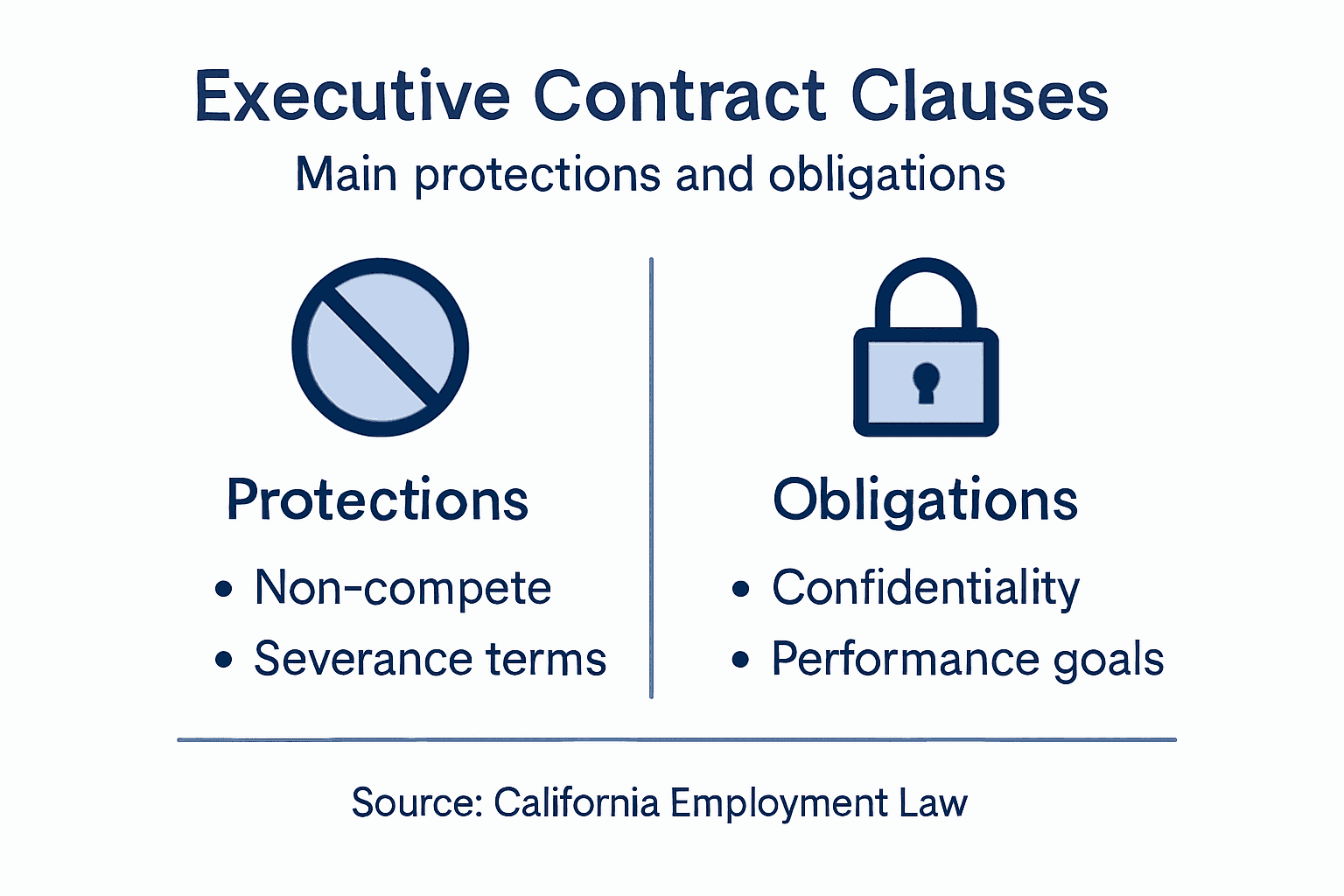
California’s unique employment landscape creates particular challenges and opportunities within executive contract negotiations. Unlike many states, California maintains stringent protections against overly restrictive non-compete clauses, emphasizing professional mobility and individual career development. Executives must carefully review each contractual provision, understanding how specific language might impact future employment opportunities, potential legal obligations, and overall professional trajectory in competitive markets like Century City and Los Angeles.
Pro tip: Always engage an experienced employment law attorney to meticulously review contract language, ensuring your professional interests are comprehensively protected and potential future limitations are fully understood.
Risks and Liabilities in Severance Disputes
Severance disputes represent complex legal landscapes fraught with potential financial and reputational risks for both executives and organizations in Century City and Los Angeles. Severance dispute liabilities encompass a wide range of potential legal and financial exposures that can significantly impact professional relationships and organizational stability. These disputes often emerge from misaligned expectations, ambiguous contractual language, or perceived breaches of negotiated terms.
The primary risks in severance disputes center around financial exposure and potential damage to professional reputations. Organizations face substantial litigation costs, potential brand reputation damage, and disruptions to ongoing business operations. Executives risk losing negotiated benefits, future employment opportunities, and potentially facing legal challenges that could limit their professional mobility. Critical areas of potential conflict include enforceability of non-compete clauses, calculation of compensation components, timing of payments, and interpretation of post-employment restrictions.
Navigating these disputes requires strategic legal approaches that carefully balance organizational interests with executive rights. Strategic negotiation techniques become crucial in mitigating potential legal risks. This involves creating clear, unambiguous contract language, ensuring compliance with California employment regulations, and developing comprehensive agreements that anticipate potential areas of future disagreement. Executives in Century City must be particularly attentive to the state’s unique legal landscape, which provides robust protections against overly restrictive employment conditions.
Pro tip: Document every communication and negotiate severance terms with meticulous attention to detail, preserving clear written records that can protect your interests in potential future disputes.
The following table compares risks and liabilities for both executives and organizations during severance disputes:
| Risk Area | Executive Perspective | Organization Perspective |
|---|---|---|
| Financial exposure | Loss of negotiated benefits | High litigation or settlement costs |
| Reputation impact | Loss of professional standing | Damage to employer brand |
| Future mobility | Restricted by contract clauses | Potential talent drain |
| Operational impact | Delay in seeking new positions | Business disruptions or turnover |
Negotiating a Fair Executive Exit
Negotiating an executive exit requires strategic communication and comprehensive understanding of both professional and legal landscapes. Leadership negotiation strategies emphasize the importance of clear communication, mutual respect, and seeking outcomes that protect the interests of both the executive and the organization. Successful negotiations in Century City demand nuanced approaches that balance professional reputation, financial considerations, and future career opportunities.
The most effective executive exit negotiations involve careful preparation and strategic documentation of key performance contributions. Negotiation components typically include comprehensive discussions around base compensation, performance bonuses, equity vesting, extended healthcare benefits, and potential outplacement support. Severance package negotiation tactics recommend executives research industry standards, understand company policies, and develop clear, well-documented requests that demonstrate their value to the organization.
California’s unique employment landscape provides additional complexity to executive exit negotiations. The state’s robust employee protection laws require sophisticated approaches that carefully navigate potential legal restrictions while preserving professional relationships. Executives must balance assertive negotiation with strategic compromise, understanding that the goal is to create a mutually beneficial separation that maintains professional dignity and future opportunities in competitive markets like Los Angeles and Century City.
Pro tip: Compile a comprehensive portfolio of professional achievements and quantifiable contributions before entering negotiations, providing concrete evidence of your value to strengthen your negotiating position.
Protect Your Executive Rights in Century City Severance Disputes
Executive severance disputes can create significant financial and reputational challenges for leaders in Century City. If you are facing complex issues like severance package disagreements, non-compete restrictions, or contract ambiguities, it is crucial to work with an attorney who understands these high-stakes challenges. Key pain points include navigating enforceability of contract clauses, securing negotiated benefits, and preventing damage to your professional future.
At Shirazi Law Office, we specialize in representing senior management and executives confronting severance and employment disputes in California. Our expertise ensures your rights are protected and your interests are served during difficult separation negotiations. Whether you need assistance with Senior Management Representation, resolving issues related to Non-Compete Agreements, or require localized support in Century City, we provide strategic legal guidance tailored to your unique situation.
Do not let severance disputes jeopardize your career or financial security. Contact Shirazi Law Office today at https://www.shirazilawoffice.com/ for a detailed consultation and take the first step toward protecting your professional future.
Frequently Asked Questions
What are executive severance agreements?
Executive severance agreements are legal contracts that outline the financial and legal terms surrounding an executive’s departure from an organization, detailing compensation arrangements, post-employment restrictions, and other obligations.
What components are typically included in an executive severance package?
Common components of an executive severance package include base salary continuation, performance bonuses, accelerated equity compensation, extended healthcare benefits, and outplacement support services to assist with career transitions.
How do California laws regulate executive severance agreements?
California employment laws provide specific frameworks for severance agreements, ensuring fair treatment during negotiations and protecting both employee rights and employer interests, including regulations on severance pay classifications and release of claims.
What risks are associated with severance disputes?
Severance disputes can lead to financial exposure, reputational damage, and operational disruptions for both executives and organizations. Common conflicts arise from ambiguous contractual language, misaligned expectations, and the enforceability of non-compete clauses.