

Many senior executives in California’s luxury hospitality industry believe severance pay is a legal entitlement, but this assumption can cost you significantly. California law does not mandate severance in most cases. Your package depends entirely on contract terms, company policy, and your negotiation power. Understanding these realities and securing expert legal guidance can transform your outcome, potentially increasing your compensation by 30% or more.
Table of Contents
- Understanding California Labor Law Basics For Executives
- Key Components Of Executive Severance Packages In Luxury Hospitality
- Non-Compete And Confidentiality Clauses: Negotiation Challenges And Legal Nuances
- Risks And Employer Retaliation Tactics In Severance Negotiations
- Strategic Timing And Negotiation Tactics For Senior Executives
- Common Misconceptions About Severance Agreements
- Practical Steps To Secure Fair Severance With Expert Legal Support
- Get Expert Legal Guidance For Your Severance Negotiations
- Frequently Asked Questions About Executive Severance In Beverly Hills
Key Takeaways
| Point | Details |
|---|---|
| Severance is contractual, not statutory | California law rarely requires severance pay; packages depend on employment agreements and company policies. |
| Legal counsel significantly improves outcomes | Executives working with employment law specialists secure 30% higher severance compensation on average. |
| Non-compete clauses lack enforceability | California prohibits most non-compete agreements, giving executives greater career mobility and negotiation leverage. |
| Confidentiality clauses require scrutiny | Overly broad confidentiality terms can limit future opportunities and damage professional reputation. |
| Strategic timing maximizes leverage | Negotiating early, ideally before termination notice, and using performance reviews as leverage points yields superior results. |
Understanding California Labor Law Basics for Executives
You need to grasp fundamental California employment law before entering severance negotiations. Unlike many states, California does not require employers to provide severance pay upon termination. Your severance package exists only if specified in your employment contract, executive agreement, or company policy.
However, California provides strong legal protections against unlawful termination. You cannot be fired for discriminatory reasons, in retaliation for whistleblowing, or in violation of public policy. These protections become critical leverage points during severance discussions, especially if you suspect your termination involves unlawful conduct.
One of California’s most significant legal advantages for executives is the state’s prohibition on non-compete agreements largely unenforceable in California since 1872. Business and Professions Code Section 16600 voids most non-compete clauses, meaning employers cannot restrict where you work after leaving. This gives you substantial negotiation power.
Key legal points for executives include:
- Severance pay depends entirely on contractual obligations, not statutory requirements
- California prohibits wrongful termination based on discrimination, retaliation, or public policy violations
- California labor laws for executives provide strong protections during contract negotiations
- Most non-compete restrictions are void and unenforceable under state law
- Understanding these fundamentals prevents employers from leveraging your legal misunderstandings
Pro Tip: Before signing any severance agreement, verify whether your termination potentially violated California employment laws. Unlawful termination significantly strengthens your negotiation position.
Key Components of Executive Severance Packages in Luxury Hospitality
Luxury hospitality severance packages typically contain multiple financial and non-financial elements. Understanding standard components helps you evaluate whether your offer meets industry norms or falls short.
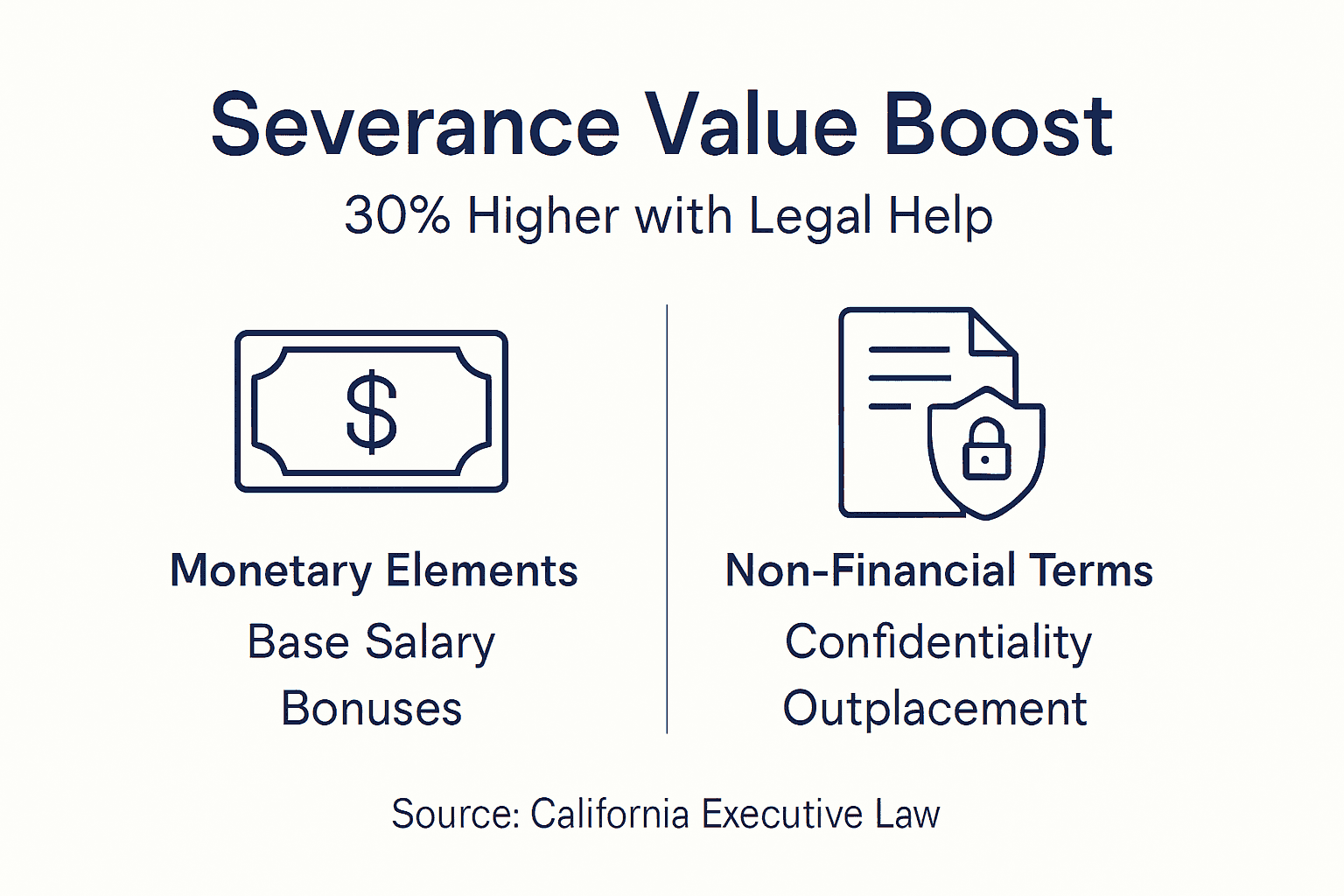
Salary continuation represents the most visible component. Executives typically receive one to twelve months of base salary, depending on tenure, position level, and company resources. Bonus payouts, including prorated annual bonuses and retention incentives, add substantial value. Some agreements also extend health insurance coverage through COBRA subsidies for six to twelve months.
Outplacement services and career transition support have become increasingly common. These programs provide resume writing, interview coaching, and networking assistance. For senior executives whose professional networks define their value, these services can expedite your next role.
Typical severance components in luxury hospitality:
| Component | Industry Standard | Value Consideration |
|---|---|---|
| Salary Continuation | 3-12 months base pay | Increases with seniority and tenure |
| Bonus Payout | Prorated annual bonus | Often negotiable based on performance |
| Equity Vesting | Accelerated vesting clause | Critical for stock option holders |
| Benefits Extension | 6-12 months COBRA subsidy | Significant for family health coverage |
| Outplacement Support | 3-6 months professional services | Enhances job search effectiveness |
Non-monetary terms carry equal importance. Confidentiality clauses restrict what you can disclose about your employment and departure. Non-disparagement provisions prevent both parties from making negative statements. Reference agreement terms specify what your former employer will say when contacted by potential employers.
Pro Tip: Calculate the total value of all components, both monetary and non-monetary, before evaluating your severance offer. A seemingly generous salary continuation may be offset by restrictive confidentiality clauses that limit your career options.
Non-Compete and Confidentiality Clauses: Negotiation Challenges and Legal Nuances
California’s unique legal landscape creates specific challenges around restrictive covenants. While non-compete agreements largely unenforceable in California since 1872 protects your mobility, employers frequently include them hoping you won’t challenge enforceability.
Business and Professions Code Section 16600 states that contracts restraining lawful professions, trades, or businesses are void. Courts interpret this broadly, invalidating most employment non-compete clauses. Limited exceptions exist for business sale situations and partnership dissolutions, but these rarely apply to executive employment relationships.
Confidentiality and non-disparagement clauses present more complexity. These provisions are generally enforceable when reasonable in scope and duration. However, employers often draft overly broad confidentiality terms that effectively prevent you from discussing your work experience, accomplishments, or even basic job responsibilities.
Critical considerations for restrictive covenants:
- California prohibits non-compete clauses in employment contexts, making them unenforceable against you
- Confidentiality agreements must be narrowly tailored to protect legitimate trade secrets and proprietary information
- Overly broad confidentiality terms can prevent you from marketing your skills and experience to future employers
- Non-disparagement clauses should be mutual, preventing your former employer from damaging your reputation
- Review all restrictive language with legal counsel before signing
Pro Tip: Negotiate confidentiality clause scope aggressively. Insist on language that permits you to describe your general job responsibilities, accomplishments, and professional skills without revealing actual trade secrets or proprietary business information.
Risks and Employer Retaliation Tactics in Severance Negotiations
Approximately 20 to 25 percent of senior executives report experiencing some form of retaliation or pressure during severance negotiations. Luxury hospitality employers may use various tactics to discourage you from negotiating aggressively or consulting legal counsel.

Common retaliation tactics include sudden modifications to your employment terms before finalized severance, withholding earned bonuses or commissions, threatening to contest unemployment benefits, or making disparaging statements to industry contacts. Some employers create artificial urgency by imposing extremely short deadlines for accepting severance offers.
California law prohibits retaliation against employees who assert their legal rights. If your employer responds to reasonable severance negotiation requests with punitive actions, you may have additional legal claims beyond wrongful termination. Documentation becomes essential.
Protecting yourself from employer retaliation:
- Document all severance negotiation communications in writing, preferably via email
- Avoid purely verbal discussions; confirm verbal conversations with written summaries
- Consult with executive retaliation claims in Los Angeles specialists if you experience pressure tactics
- Understand your rights regarding wrongful termination risks for executives in California
- Never sign under duress or artificial time pressure without legal review
Retaliatory conduct during severance negotiations can significantly increase your leverage. Employers who engage in unlawful retaliation expose themselves to additional damages and liability. Your attorney can use this leverage to secure better terms.
Strategic Timing and Negotiation Tactics for Senior Executives
Timing dramatically impacts severance negotiation outcomes. The ideal moment to negotiate severance terms is before you receive termination notice, ideally when you first accept an executive position or during contract renewals.
Including severance provisions in your initial employment agreement establishes clear expectations and removes the power imbalance present during actual termination discussions. If you missed this opportunity, your next best timing is during annual performance reviews or contract renegotiations when your value to the organization is most visible.
Research shows senior executives who engage employment law specialists secure 30% higher severance compensation compared to those who negotiate alone. Early legal consultation, ideally before you receive a severance offer, maximizes this advantage.
Strategic steps for optimal negotiation timing:
- Review and negotiate severance terms when accepting your executive position, not during termination
- Use annual performance reviews showcasing strong results as leverage for enhanced severance provisions
- Engage employment law counsel immediately upon sensing potential termination or receiving severance offers
- Avoid accepting initial offers without thorough legal review and strategic response
- Leverage any potentially unlawful conduct by your employer to strengthen your negotiating position
- Request reasonable time to review all severance documents, typically 21 to 45 days
Employers often present severance agreements with artificial urgency, suggesting you must decide immediately. California law provides you the right to reasonable review time. Never feel pressured to sign on the spot.
Understanding timing and negotiation tactics for executives specific to California’s legal environment gives you significant advantages. Your attorney can identify optimal timing for counteroffers and strategic concessions.
Common Misconceptions About Severance Agreements
Several persistent myths about severance agreements can undermine your negotiation strategy. Correcting these misconceptions empowers you to negotiate from a position of knowledge and strength.
The most dangerous misconception is that severance pay is legally required. As discussed, California law rarely mandates severance. Your entitlement depends entirely on contractual provisions and company policy. Believing you have automatic legal rights to severance weakens your negotiation approach.
Many executives mistakenly believe non-compete clauses in their severance agreements are enforceable. California’s strong public policy against employment non-competes means these provisions are almost always void. Signing an agreement containing non-compete language does not make it legally binding.
Another common myth suggests that confidentiality clauses only protect the employer’s legitimate business interests. In reality, overly broad confidentiality provisions can prevent you from discussing your own professional accomplishments and work experience, significantly damaging your future career prospects.
Key misconceptions to avoid:
- Severance pay is not a statutory right in California; it depends on contracts and policies
- Non-compete clauses in employment agreements are generally unenforceable under California law
- Confidentiality provisions can be negotiated and must be reasonable in scope
- You always have the right to consult an attorney before signing severance documents
- Initial severance offers are almost never final; negotiation is expected and appropriate
Understanding these realities prevents costly mistakes. Many executives accept inadequate severance terms because they incorrectly believe the initial offer represents their only option or legal entitlement.
Practical Steps to Secure Fair Severance with Expert Legal Support
Securing fair severance requires methodical preparation and strategic execution. Following these practical steps significantly improves your outcome.
First, conduct a comprehensive review of your employment contract, executive agreement, and any company policies addressing severance. Identify specific provisions governing termination payments, benefits continuation, and restrictive covenants. This review reveals your contractual baseline.
Second, consult a specialized employment law attorney experienced in executive severance negotiations. Your attorney will assess your legal rights, identify potential claims strengthening your position, and develop a strategic negotiation approach. This consultation should occur before you respond to any severance offer.
Third, evaluate all restrictive clauses in the proposed severance agreement. Non-compete provisions should be challenged as unenforceable. Confidentiality and non-disparagement clauses should be narrowed to protect only legitimate employer interests while preserving your ability to market your skills and experience.
Fourth, develop timing and leverage strategies. Identify your strongest negotiation points, whether contractual entitlements, potential legal claims, or your specialized knowledge and relationships. Your attorney helps you deploy these leverage points effectively.
Fifth, engage legal representation during actual negotiations. Senior executives who engage employment law specialists secure 30% higher severance compensation because attorneys understand legal nuances and negotiation dynamics that maximize outcomes.
| Negotiation Approach | Average Severance Value | Success Rate | Timeline |
|---|---|---|---|
| Without Legal Counsel | 3-6 months salary | 45-55% | 2-4 weeks |
| With Expert Legal Support | 6-12 months salary + enhanced terms | 75-85% | 4-8 weeks |
Implementation checklist:
- Gather all employment contracts, policies, and communications documenting your relationship
- Schedule consultation with employment law specialist before responding to severance offers
- Document any potentially unlawful conduct by your employer
- Request adequate time to review and negotiate severance terms
- Work with counsel to draft strategic counteroffers addressing all agreement components
Your attorney serves as both advisor and negotiator, handling direct communications with your employer while you focus on your career transition. This division of roles prevents emotional responses and maintains professional relationships.
Get Expert Legal Guidance for Your Severance Negotiations
Shirazi Law Office specializes in representing senior executives in Beverly Hills’ luxury hospitality sector during severance negotiations and employment disputes. We understand the unique challenges you face and provide personalized contract review, strategic negotiation counsel, and aggressive protection of your rights.
Our firm exclusively practices employment law, giving us deep expertise in California’s complex legal landscape. We help executives navigate non-compete challenges, confidentiality concerns, and retaliation risks while maximizing financial and professional outcomes.
Explore our comprehensive employment law resources for additional insights into executive rights and employer obligations. When you’re ready to discuss your severance situation, contact our experienced employment lawyer in Los Angeles for a confidential consultation. We’ll help you secure the fair and comprehensive severance agreement you deserve.
Frequently Asked Questions About Executive Severance in Beverly Hills
What rights do senior executives have in California regarding severance pay?
California law does not mandate severance pay for executives. Your rights depend entirely on your employment contract, executive agreement, or company severance policy. However, you have strong protections against wrongful termination, discrimination, and retaliation that can strengthen your negotiation position significantly.
How enforceable are non-compete clauses in California severance agreements?
Non-compete clauses in employment contexts are almost entirely unenforceable in California under Business and Professions Code Section 16600. Even if your severance agreement contains non-compete language, courts will generally void these provisions, allowing you to work for competitors or start competing businesses after departure.
What should executives look for in confidentiality clauses?
Confidentiality clauses should be narrowly tailored to protect only legitimate trade secrets and proprietary business information. Reject overly broad provisions that prevent you from discussing your general job responsibilities, professional accomplishments, or industry knowledge. Insist on language that preserves your ability to market your skills and experience to future employers.
When is the best time to negotiate severance terms?
The optimal time is when you first accept an executive position or during contract renewals, before any termination discussion begins. If you missed this opportunity, negotiate immediately upon receiving a severance offer. Never accept initial offers without thorough review and strategic response, and always request adequate time for legal consultation.
How can legal counsel improve severance negotiation outcomes?
Employment law specialists understand California’s complex legal framework and negotiation dynamics that most executives miss. Attorneys identify leverage points, draft strategic counteroffers, and handle direct negotiations professionally. Research shows executives working with legal counsel secure 30% higher severance compensation compared to those negotiating alone, plus better non-monetary terms protecting their careers and reputations.