
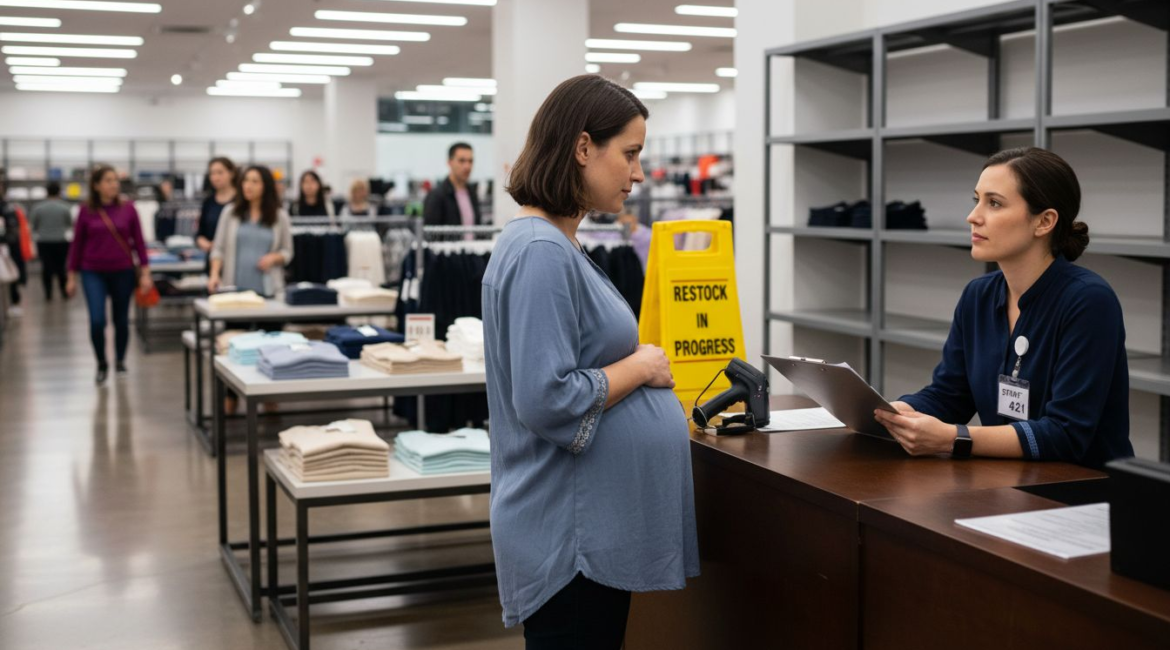
More than one in five American women report discrimination at work during pregnancy, putting their health and livelihoods at risk. If you work in retail in Los Angeles and face unfair treatment around maternity leave or job security, you are not alone. Understanding your rights and California’s unique legal protections can be the key to challenging discrimination and securing a stable, respectful workplace.
Table of Contents
- Defining Pregnancy Discrimination in Retail Workplaces
- Types of Discrimination Faced by Pregnant Employees
- California Employment Laws and Legal Protections
- Employer Duties Regarding Maternity Leave and Accommodation
- Filing a Claim and Seeking Legal Redress
- Common Pitfalls and How to Protect Rights
Key Takeaways
| Point | Details |
|---|---|
| Understanding Protections | Pregnant employees should be aware of both federal and California state laws that protect against pregnancy discrimination in the workplace. |
| Documenting Discrimination | Keeping detailed records of interactions and any discriminatory actions can help strengthen potential legal claims. |
| Employer Responsibilities | Employers are legally required to provide reasonable accommodations for pregnant workers to ensure their health and job performance. |
| Filing Claims | Employees facing discrimination must document their experiences and file claims within statutory deadlines to seek redress for unfair treatment. |
Defining Pregnancy Discrimination in Retail Workplaces
Pregnancy discrimination remains a serious challenge for women working in retail environments across the United States. Legal protections under the Pregnancy Discrimination Act establish clear guidelines about how employers must treat pregnant employees, yet violations continue to be widespread in service and retail industries.
Under federal law, pregnancy discrimination occurs when an employer treats a woman unfairly due to her pregnancy status, affecting her employment opportunities, work assignments, promotions, or job security. Specific protections clarify that employers cannot discriminate based on pregnancy, childbirth, or related medical conditions, which is considered a form of sex discrimination under Title VII of the Civil Rights Act.
In retail settings, pregnancy discrimination can manifest through multiple harmful practices:
- Refusing to hire pregnant applicants
- Demoting or reducing work hours for pregnant employees
- Denying reasonable workplace accommodations
- Terminating employment during pregnancy
- Excluding pregnant workers from training or advancement opportunities
Retail workers face unique challenges due to the physically demanding nature of their work, which makes understanding and enforcing pregnancy discrimination protections especially critical. These protections apply regardless of whether a woman works full time, part time, or is an hourly employee in clothing stores, grocery markets, or department stores across California.
Pro tip: Document every interaction and communication related to your pregnancy and work status, creating a clear record that could support potential legal action if discrimination occurs.
Types of Discrimination Faced by Pregnant Employees
Pregnant employees in retail environments encounter numerous discriminatory practices that systematically undermine their professional opportunities and job security. Workplace discrimination against pregnant workers manifests through multiple complex and harmful strategies that challenge fundamental employment rights and equity.
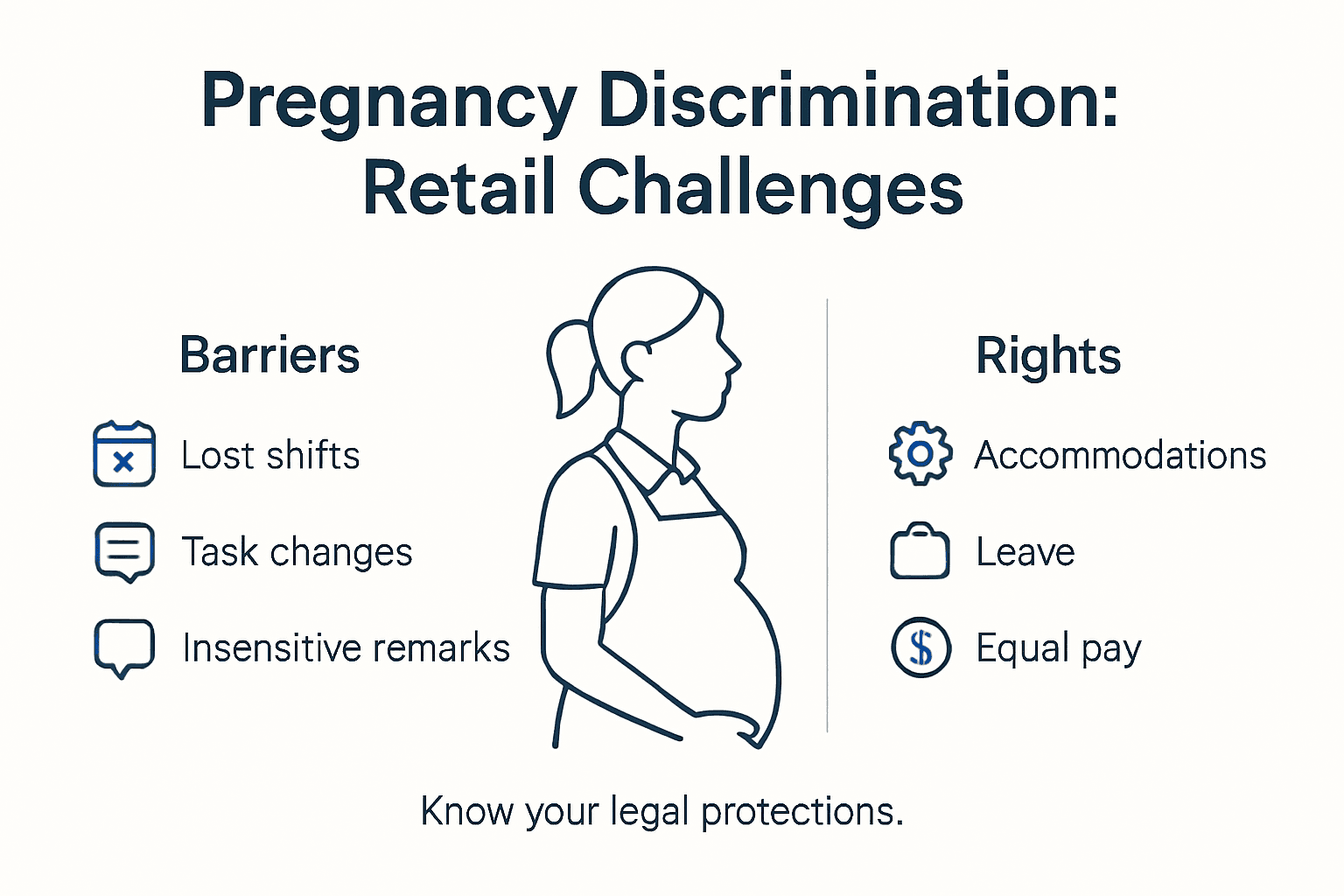
The most prevalent types of pregnancy discrimination in retail workplaces include:
- Hiring Discrimination: Employers deliberately avoiding hiring visibly pregnant candidates or creating interview scenarios that disadvantage pregnant applicants
- Accommodation Denial: Refusing reasonable workplace modifications like reduced lifting requirements or temporary alternative assignments
- Hostile Work Environment: Creating uncomfortable workplace conditions through passive-aggressive behaviors, isolation, or increased scrutiny
- Career Progression Barriers: Systematically blocking pregnant employees from training opportunities, promotions, and professional development
Retail environments present unique challenges due to physically demanding work requirements. Pregnant workers often face additional pressures related to standing for extended periods, lifting merchandise, and maintaining rigorous customer service standards. These workplace dynamics can create significant obstacles for women attempting to maintain professional momentum during pregnancy.
Understanding these discriminatory patterns is crucial for pregnant employees to recognize potential workplace violations and protect their legal rights. Each discriminatory action represents not just a personal challenge but a broader systemic issue affecting women’s economic opportunities across service industries.
Pro tip: Maintain a detailed, contemporaneous journal documenting any discriminatory interactions, workplace changes, or communication patterns that might indicate pregnancy-based differential treatment.
California Employment Laws and Legal Protections
California stands at the forefront of protecting pregnant workers, offering some of the most comprehensive legal safeguards in the United States. The Pregnant Workers Fairness Act (PWFA) provides robust protections for employees with pregnancy-related limitations, ensuring that employers must provide reasonable workplace accommodations.
The state’s legal framework extends beyond federal protections, establishing multiple layers of defense for pregnant employees in retail and other industries. Key legal protections include:
- Mandatory reasonable accommodations for pregnancy-related work restrictions
- Protection against discriminatory termination or demotion
- Required workplace modifications to support pregnant workers
- Guaranteed job security during pregnancy and postpartum periods
California law mandates that employers treat pregnant workers equally, providing comprehensive support through workplace adjustments and modified duties. These protections are particularly crucial in physically demanding retail environments, where pregnant employees might require temporary work modifications to maintain their health and job performance.
The legal landscape for pregnant workers in California is dynamic and evolving, with state regulations often providing stronger protections than federal mandates. Employers must navigate complex requirements that balance workplace productivity with fundamental employee rights, ensuring pregnant workers can continue their professional trajectories without fear of discrimination or undue hardship.
This table highlights key differences between federal and California state protections for pregnant retail workers.
| Protection Aspect | Federal Law (PDA, Title VII) | California State Law (PWFA, FEHA) |
|---|---|---|
| Coverage Threshold | Most employers with 15+ workers | Most employers, including smaller firms |
| Reasonable Accommodation | Required for pregnant workers | Broader, including temporary transfers |
| Job Security | Prohibits wrongful termination | Includes postpartum job restoration |
| Medical Information Privacy | Enforced under ADA guidelines | Stronger confidentiality requirements |
Pro tip: Familiarize yourself with both federal and California state pregnancy protection laws, as state regulations frequently offer more comprehensive coverage than national standards.
Employer Duties Regarding Maternity Leave and Accommodation
Employers in California face comprehensive legal obligations when supporting pregnant employees, particularly in physically demanding retail environments. Employers with 15 or more employees must provide reasonable accommodations for pregnancy-related conditions, ensuring pregnant workers can continue their professional responsibilities without undue hardship.
Specific employer duties include:
- Modifying job responsibilities to reduce physical strain
- Providing additional rest breaks
- Offering alternative assignments when current duties pose health risks
- Ensuring workplace safety for pregnant employees
- Maintaining confidentiality regarding pregnancy-related medical information
Legal requirements mandate that employers proactively support pregnant workers through workplace adjustments and non-discriminatory practices. This includes protecting employees from retaliation when requesting accommodations and maintaining transparent communication about workplace modifications.
Retail employers must be particularly attentive to pregnancy accommodation requirements, as these industries often involve physically demanding tasks like lifting, standing for extended periods, and handling heavy merchandise. The law requires employers to engage in an interactive process with pregnant employees, collaboratively developing reasonable workplace adjustments that ensure both worker safety and job performance.
Pro tip: Document all accommodation requests and employer responses in writing, creating a clear record of communication and potential legal protection.
Filing a Claim and Seeking Legal Redress
Navigating pregnancy discrimination claims requires strategic understanding of legal processes and documentation. Employees facing workplace discrimination can file charges with the U.S. Equal Employment Opportunity Commission (EEOC) or a state Fair Employment Practices Agency, initiating critical legal protections for pregnant workers in retail and other industries.
The claim filing process involves several essential steps:
- Documenting specific instances of discrimination
- Collecting supporting evidence and workplace communications
- Filing a formal charge within statutory time limitations
- Participating in potential mediation or investigation processes
- Preparing for potential litigation if resolution cannot be achieved
Workers denied reasonable accommodations can pursue legal action through EEOC channels, which investigate claims and facilitate potential settlements. Potential remedies may include reinstatement, back pay, policy modifications, and monetary damages addressing workplace discrimination.
Successful claims require meticulous documentation and a clear narrative demonstrating how an employer violated pregnancy discrimination protections. Retail employees must be prepared to articulate specific instances of unfair treatment, showing how their pregnancy status directly influenced workplace decisions or treatment.
Review this summary of steps to strengthen your pregnancy discrimination claim in the retail workplace.
| Claim Preparation Step | Purpose | Recommended Practice |
|---|---|---|
| Documentation | Build evidence of unfair treatment | Keep dated records and emails |
| Accommodation Request | Show efforts to resolve issues | Submit requests in writing |
| Legal Consultation | Understand protection and next steps | Meet with an employment attorney |
| Timely Filing | Meet statutory deadlines for claims | Check federal and state time limits |
Pro tip: Maintain a comprehensive, dated record of all workplace interactions, accommodation requests, and employer responses to strengthen potential legal claims.
Common Pitfalls and How to Protect Rights
Pregnant employees in retail environments face numerous potential legal challenges that can undermine their workplace rights. Advocates recommend understanding common pitfalls to proactively protect against pregnancy discrimination, ensuring comprehensive legal protection and workplace security.
Key potential pitfalls include:
- Lack of awareness about legal rights
- Fear of employer retaliation
- Insufficient documentation of workplace interactions
- Delayed reporting of discriminatory practices
- Misunderstanding accommodation request procedures
Employees can protect their rights through strategic approaches:
- Request workplace accommodations in writing
- Maintain detailed records of all communications
- Understand both federal and state pregnancy discrimination laws
- Seek legal consultation early in potential dispute situations
- Recognize and document specific instances of differential treatment
Retail workplaces present unique challenges for pregnant employees, often involving physically demanding tasks that require careful navigation of accommodation rights. Employees must be prepared to articulate specific needs while understanding the legal boundaries of reasonable workplace modifications.
Pro tip: Create a contemporaneous digital journal documenting workplace interactions, accommodation requests, and any potential discriminatory behaviors, ensuring a comprehensive and dated record of your experiences.
Protect Your Rights Against Pregnancy Discrimination in Retail Workplaces
Facing pregnancy discrimination in a retail job can feel isolating and unjust. When employers refuse reasonable accommodations, reduce hours, or threaten job security simply because of pregnancy status, it is not only unfair but illegal under California law. If you are experiencing these challenges, you deserve knowledgeable legal support to defend your rights and workplace dignity.
At Shirazi Law Office, we specialize in employment disputes including pregnancy discrimination and wrongful termination affecting retail employees and professionals across Los Angeles. Our dedicated team understands the complex protections under both federal and California laws such as the Pregnant Workers Fairness Act. We help clients document violations, navigate claims, and secure the accommodations and job security they need to thrive during pregnancy.
Take control of your workplace situation now. Do not wait until discrimination worsens or your job is at risk. Visit Shirazi Law Office to learn how we can protect you from unlawful treatment with practical, experienced legal guidance. Your professional future and peace of mind are worth immediate action.
Frequently Asked Questions
What is pregnancy discrimination in the retail workplace?
Pregnancy discrimination in the retail workplace occurs when an employer treats an employee unfairly due to her pregnancy status, impacting her job opportunities, work conditions, and security.
What legal protections exist for pregnant employees in retail?
Pregnant employees in retail are protected under the Pregnancy Discrimination Act, which prohibits discrimination based on pregnancy, childbirth, or related medical conditions. Additionally, state laws may offer broader protections regarding accommodations and job security.
How can I document pregnancy discrimination at work?
To document pregnancy discrimination, maintain a detailed record of all relevant interactions, including emails, communication about accommodations, and notes regarding any discriminatory behavior or treatment.
What should I do if I experience pregnancy discrimination at work?
If you experience pregnancy discrimination, it is essential to document the incidents, request accommodations in writing, and consider filing a charge with the Equal Employment Opportunity Commission (EEOC) or a state agency to protect your rights.




[…] Pregnancy Discrimination and Job Security in Retail Law […]
[…] shifts, or receive fewer hours because management assumes a pregnant worker cannot handle the job. Pregnancy discrimination in retail law addresses these specific scenarios. What makes this illegal is not whether the employer’s […]
[…] Pregnancy Discrimination and Job Security in Retail Law […]
[…] employees in boutique fitness studios and salons face specific discriminatory practices that often go unchallenged. Denial of accommodations tops the list. When you request modified […]
[…] treatment in California retail. When employers ignore them, you have legal options. Issues like pregnancy discrimination and sexual harassment also intersect with wage violations, creating compounding workplace problems […]
[…] than 1 in 5 women in LA boutique retail report discrimination or a lack of accommodations during pregnancy. If you […]