

Nearly one in three American healthcare workers reports experiencing workplace harassment that affects job performance and well-being. For professionals in Mid-Wilshire, the pressure of long hours and high-stakes patient care can make recognizing a hostile environment even harder. Understanding what truly defines a hostile workplace empowers you to identify unacceptable behavior early and take informed steps that protect your rights and professional reputation.
Table of Contents
- What Defines A Hostile Work Environment
- Recognizing Types In Healthcare Settings
- California Legal Standards And Protections
- Reporting Procedures And Documentation
- Employee Rights And Employer Duties
- Risks, Remedies, And Common Pitfalls
Key Takeaways
| Point | Details |
|---|---|
| Definition of Hostile Work Environment | A hostile work environment is characterized by severe or pervasive discriminatory behavior that impacts an employee’s ability to work. |
| Types of Harassment in Healthcare | Common forms include verbal abuse, professional bullying, sexual harassment, and discriminatory practices. |
| Legal Protections in California | California law offers robust protections against workplace harassment, requiring employers to implement anti-harassment policies and training. |
| Importance of Documentation | Employees facing harassment should meticulously document incidents to strengthen legal claims and protect themselves. |
What Defines a Hostile Work Environment
A hostile work environment represents a serious legal concept in employment law that goes far beyond typical workplace disagreements. According to legal definitions, this occurs when discriminatory or harassing conduct becomes so severe or pervasive that it fundamentally alters an employee’s work conditions and ability to perform professionally.
Specifically, a hostile work environment involves repeated, unwelcome behavior targeting an individual based on protected characteristics such as race, gender, age, disability, national origin, or religion. The Equal Employment Opportunity Commission (EEOC) emphasizes that such conduct must create an intimidating, offensive, or threatening atmosphere that a reasonable person would find intolerable. This means isolated incidents or minor conflicts typically do not qualify as legally actionable harassment.
Critical elements that define a hostile work environment include:
- Frequency and duration of inappropriate conduct
- Severity of the behavior
- Whether the actions are physically threatening or humiliating
- Impact on the employee’s ability to work effectively
- Demonstration of discriminatory intent or pattern
Healthcare professionals in Mid-Wilshire offices should understand that workplace harassment can manifest through various behaviors like repeated offensive jokes, derogatory comments, unwanted sexual advances, or deliberate professional sabotage targeting specific individuals or protected groups.
Pro tip: Document every incident of potential harassment with specific dates, times, witnesses, and detailed descriptions to strengthen any future legal claim.
Recognizing Types in Healthcare Settings
Healthcare environments are uniquely vulnerable to complex forms of workplace harassment, with professionals facing multiple distinct types of hostile interactions. Research on workplace abuse in health professions reveals that these environments can encompass a wide range of discriminatory and harmful behaviors that extend far beyond simple interpersonal conflicts.
The most prevalent types of hostile work environments in medical settings typically include:
- Verbal Abuse: Persistent aggressive language, yelling, or demeaning comments
- Professional Bullying: Systematic undermining of an employee’s professional capabilities
- Sexual Harassment: Unwanted sexual advances, inappropriate comments, or quid pro quo situations
- Racial and Ethnic Discrimination: Targeting individuals based on race, national origin, or cultural background
- Gender-Based Microaggressions: Subtle, often unconscious discriminatory behaviors
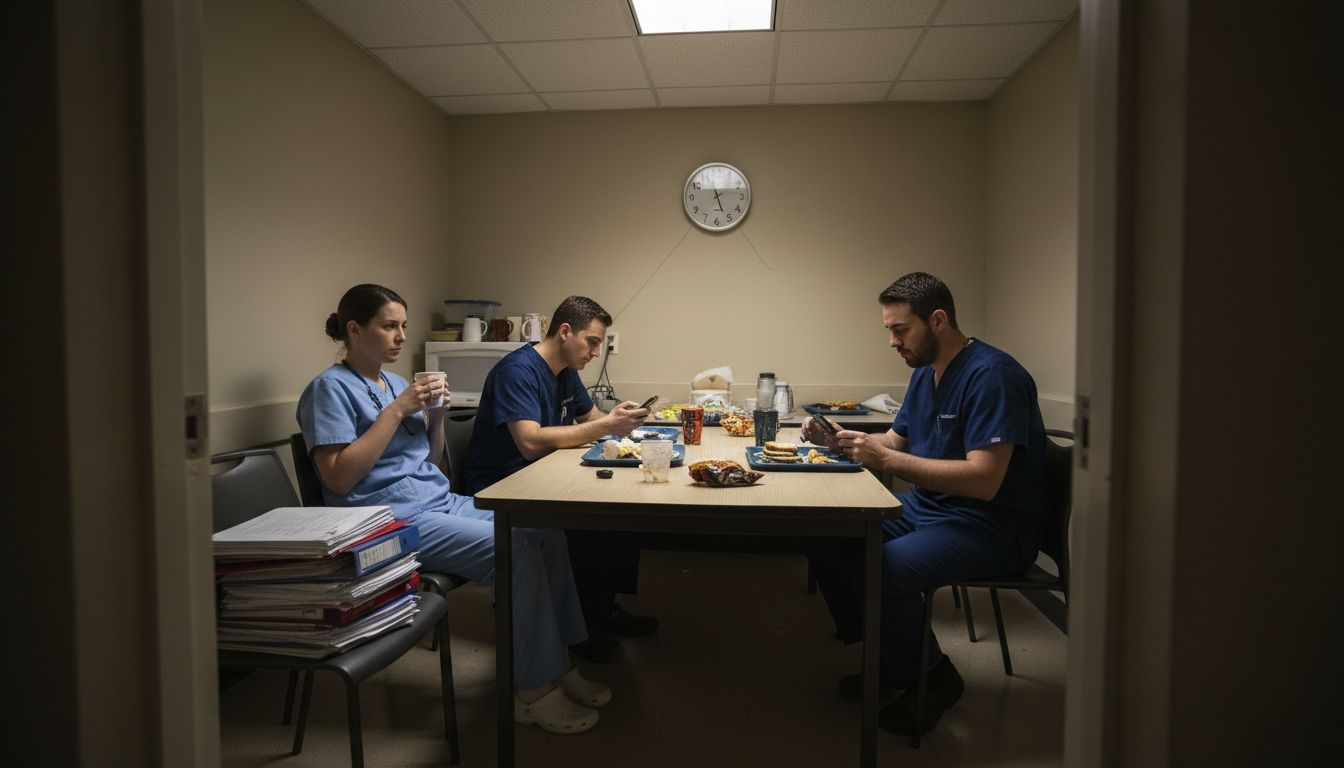
Mid-Wilshire healthcare professionals should be particularly aware of power dynamics that can enable hostile workplace interactions. These dynamics often emerge between hierarchical roles like senior physicians, nursing staff, administrative personnel, and junior medical professionals. Such environments can create significant psychological strain, potentially compromising not just employee well-being but also patient care quality.
Moreover, healthcare settings present unique challenges due to high-stress environments, long working hours, and intense emotional labor. Workplace harassment in these contexts can manifest through professional sabotage, exclusionary practices, unequal work distribution, or systematic marginalization of certain employee groups.
Pro tip: Maintain a confidential, detailed log of any inappropriate workplace interactions, including specific dates, witnesses, and precise descriptions of incidents to support potential legal documentation.
California Legal Standards and Protections
California maintains some of the most robust workplace protection laws in the United States, offering comprehensive safeguards against hostile work environments. California’s Fair Employment and Housing Act (FEHA) establishes rigorous standards that go beyond federal regulations, providing expansive protections for employees in Mid-Wilshire and throughout the state.
Under these legal standards, employers have significant responsibilities to prevent and address workplace harassment. The key legal requirements include:
- Implementing clear anti-harassment policies
- Conducting mandatory workplace harassment training
- Establishing effective complaint and investigation procedures
- Protecting employees from retaliation when reporting harassment
- Maintaining a workplace free from discriminatory conduct
Unlike federal standards, California law provides broader definitions of protected characteristics and lower thresholds for what constitutes a hostile work environment. This means employers can be held strictly liable for supervisor misconduct, and the standards for proving harassment are more employee-friendly. Specifically, the behavior does not need to be as severe or pervasive as required under federal law to constitute a legal violation.
Healthcare professionals in Mid-Wilshire should understand that these protections cover a wide range of workplace interactions, including verbal abuse, discriminatory practices, sexual harassment, and systemic marginalization. The law recognizes that hostile work environments can manifest through subtle and overt mechanisms that compromise professional dignity and workplace safety.
Here’s a summary comparing federal and California workplace harassment standards for healthcare professionals:
| Standard | Federal Law | California Law |
|---|---|---|
| Protected Traits | Limited to race, sex, etc. | Expanded to more categories |
| Severity Requirement | Must be severe/pervasive | Less strict, broader scope |
| Employer Liability | Harder to prove | Strict, extends to supervisors |
| Employee Protections | Basic anti-retaliation | Stronger anti-retaliation policies |
Pro tip: Familiarize yourself with your employer’s specific anti-harassment policies and document any potential violations contemporaneously with detailed, objective notes.
Reporting Procedures and Documentation
Healthcare professionals facing hostile work environments must understand the critical importance of systematic documentation and strategic reporting. The EEOC’s Enforcement Guidance emphasizes comprehensive procedures that protect employees and establish clear pathways for addressing workplace misconduct.
Effective reporting requires meticulous documentation that includes:
- Date and time of each specific incident
- Precise descriptions of harassing behaviors
- Names of all individuals involved
- Potential witnesses
- Context and impact of the interaction
- Any supporting evidence like emails, messages, or recordings
Mid-Wilshire healthcare workers should follow a structured reporting process that typically involves multiple steps. This often begins with internal reporting through human resources or designated workplace compliance officers, followed by potential external reporting to state or federal agencies if internal mechanisms fail to address the issue adequately.
Under California law, employees have specific protections that shield them from retaliation when reporting workplace harassment. Federal guidelines recommend thorough documentation to support potential legal claims, emphasizing the importance of creating a contemporaneous, objective record of all interactions that contribute to a hostile work environment.
Pro tip: Create a confidential, password-protected digital file with timestamped, detailed notes about each harassment incident, ensuring you capture objective details without emotional commentary.
Below is a reference table outlining common workplace harassment reporting options for healthcare staff:
| Reporting Channel | Characteristics | When to Use |
|---|---|---|
| Human Resources | Internal, confidential | First step, policy violations |
| Compliance Officer | Specialized oversight | For complex or systemic issues |
| State Agency | External investigation | When internal process fails |
| EEOC | Federal protection | Severe or unresolved cases |
Employee Rights and Employer Duties
Healthcare professionals in Mid-Wilshire must understand the comprehensive legal protections that safeguard their workplace rights. Federal guidelines establish clear expectations for preventing workplace harassment, delineating specific rights for employees and corresponding responsibilities for employers.
Employees are guaranteed fundamental rights that include:
- Protection from discriminatory treatment
- Right to report harassment without fear of retaliation
- Confidential investigation of workplace misconduct
- Access to impartial complaint procedures
- Preservation of professional dignity and respect
- Protection from systemic workplace discrimination
Employers bear significant legal obligations in maintaining a safe work environment. These duties extend beyond mere policy creation and include active prevention, thorough investigation, and meaningful intervention. California law imposes strict liability on employers who fail to address harassment, requiring proactive measures such as comprehensive training, clear reporting mechanisms, and swift disciplinary actions against misconduct.
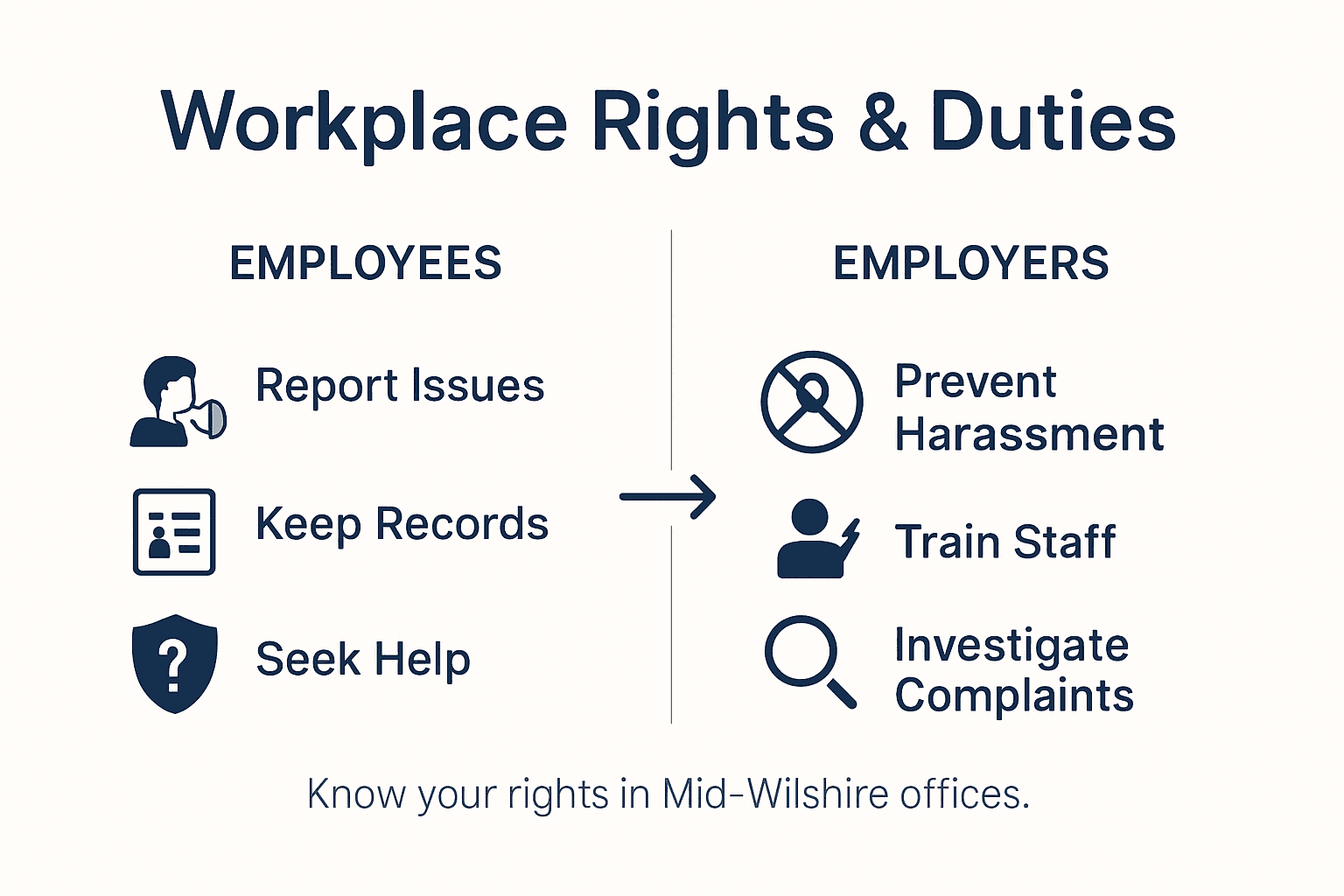
U.S. workplace protection laws mandate that employers establish robust systems to identify, prevent, and remediate hostile work environments. This includes developing clear anti-harassment policies, conducting regular training sessions, creating accessible reporting channels, and protecting employees who come forward with complaints.
Pro tip: Maintain a personal record of all workplace interactions and potential harassment incidents, including dates, witnesses, and specific details, to support potential future legal proceedings.
Risks, Remedies, and Common Pitfalls
Healthcare professionals in Mid-Wilshire must comprehensively understand the potential risks and strategic remedies associated with hostile work environments. Research reveals multiple complex dimensions of workplace harassment that extend beyond simple interpersonal conflicts.
Potential risks in hostile work environments include:
- Significant psychological distress
- Decreased professional productivity
- Career trajectory interruption
- Potential long-term emotional trauma
- Financial and professional reputation damage
- Compromised patient care quality
Litigation strategies and legal challenges emphasize the critical importance of documentation and strategic reporting. Healthcare professionals must understand that successful claims require demonstrating that harassment was sufficiently severe or pervasive to create an objectively hostile work environment, not merely representing isolated or trivial incidents.
Common pitfalls that can undermine potential legal claims include failing to utilize internal complaint procedures, insufficient evidence collection, and misunderstanding the complex legal standards for proving workplace harassment. Employers often defend against liability by demonstrating they implemented reasonable preventative measures and maintained robust reporting mechanisms.
Pro tip: Consult with an employment law specialist before making formal complaints to strategically assess your specific situation and maximize potential legal protections.
Protect Your Rights Against Hostile Work Environments in Mid-Wilshire
Facing repeated harassment or discrimination that disrupts your professional life in a Mid-Wilshire healthcare or office setting can be overwhelming. The emotional toll combined with California’s complex legal standards can make it difficult to know where to turn. Key challenges like employer retaliation, lack of proper investigation, and the need for detailed documentation require expert guidance to navigate successfully. Understanding your rights under laws like FEHA and having strategic legal support can be the difference between enduring a hostile work environment and reclaiming your career and peace of mind.
At Shirazi Law Office, we specialize in representing employees and executives confronting workplace harassment, retaliation, and discrimination. Our firm focuses exclusively on employment law issues affecting professionals in Los Angeles neighborhoods including Mid-Wilshire. We offer personalized, results-driven advocacy to protect your rights against wrongful conduct and employer inaction. If you are dealing with harassment at work, do not wait until the situation escalates. Learn more about your workplace rights and take the important first step toward securing strong legal representation and comprehensive workplace protections today.
Frequently Asked Questions
What constitutes a hostile work environment?
A hostile work environment occurs when discriminatory or harassing conduct becomes so severe or pervasive that it fundamentally alters an employee’s work conditions and ability to perform effectively. The behavior must be targeted based on protected characteristics such as race, gender, age, disability, national origin, or religion.
How do I recognize signs of hostile work environment in healthcare settings?
Signs of a hostile work environment in healthcare can include verbal abuse, professional bullying, sexual harassment, racial or ethnic discrimination, and gender-based microaggressions, often exacerbated by power dynamics and high-stress situations common in medical settings.
What are my rights if I experience harassment at work?
Employees have the right to be free from discriminatory treatment, report harassment without fear of retaliation, and expect a confidential investigation of their complaints. Employers must take proactive measures to prevent and address workplace harassment.
What steps should I take if I experience a hostile work environment?
You should document every incident of potential harassment, including dates, descriptions, and witnesses. Report it to your HR department or compliance officer, and consider external reporting to state or federal agencies if appropriate. Always keep a confidential log of interactions to support any potential legal actions.