
Over half of American workers now expect their employers to offer protections that go far beyond basic pay and safety. This shift is not just a trend but a sign of how rapidly workplace expectations are evolving as technology transforms the way people work. With new rights surrounding mental health, digital privacy, and flexible arrangements, understanding the latest employee protections is more important than ever for staying informed and advocating for fair treatment.
Table of Contents
- Defining Employee Rights In 2025
- Major Types Of Workplace Discrimination
- Retaliation And Whistleblower Protections
- Global Shifts In Employment Law
- Obligations For Employers And Workers
- Common Mistakes When Claiming Employee Rights
Key Takeaways
| Point | Details |
|---|---|
| Emerging Employee Rights | In 2025, employees are advocating for comprehensive rights, including mental health support and protections against digital discrimination. Companies must implement transparent accountability mechanisms to ensure fair treatment throughout employment. |
| Workplace Discrimination Challenges | Key discrimination types have evolved, including algorithmic bias and political view discrimination. Employees should document incidents to assert their rights effectively. |
| Strengthened Whistleblower Protections | Legal frameworks now provide robust protections for whistleblowers reporting misconduct. Employees are protected from retaliation when reporting unethical behavior across various platforms. |
| Employer and Worker Responsibilities | Mutual obligations have expanded, requiring employers to offer comprehensive support and for workers to engage actively in professionalism and skill development. Knowing your rights and responsibilities is essential for navigating workplace dynamics in 2025. |
Defining Employee Rights in 2025
The landscape of employee rights is undergoing a profound transformation in 2025, driven by rapid technological changes, evolving workplace dynamics, and heightened awareness of worker protections. The SHRM Global Worker Project reveals that modern employees now expect comprehensive rights that extend far beyond traditional compensation structures.
Key emerging employee rights in 2025 encompass multiple critical dimensions. Workers are now demanding holistic workplace protections that include mental health support, flexible work arrangements, protection against digital discrimination, and robust mechanisms for reporting workplace misconduct. These rights reflect a significant shift from previous decades, where employee welfare was often considered secondary to organizational productivity. Digital platforms, remote work technologies, and increased global connectivity have fundamentally reshaped how employees conceptualize their professional rights and expectations.
The most significant developments in employee rights center around protection from emerging forms of workplace discrimination. This includes safeguards against algorithmic bias in hiring processes, protection from unwarranted digital surveillance, and comprehensive policies addressing microaggressions in virtual work environments. Companies are now required to implement transparent accountability mechanisms that demonstrate proactive commitment to fair treatment across all employment stages – from recruitment through career development and potential termination.
Pro Tip for Employee Rights Navigation: Document everything. Maintain a detailed, timestamped record of all workplace interactions, communications, and potential discriminatory incidents, as contemporaneous evidence becomes crucial when asserting your professional rights in 2025.
Major Types of Workplace Discrimination
Workplace discrimination remains a critical challenge in modern professional environments, manifesting through various complex and interconnected forms of systemic bias. A multifaceted research study exploring discrimination in professional careers reveals that employees continue to face significant barriers across multiple dimensions of identity and professional experience.
The primary types of workplace discrimination in 2025 encompass several key categories. Age Discrimination represents a pervasive issue where older workers face systematic exclusion from career advancement opportunities, particularly in technology and innovation-driven sectors. Gender Discrimination persists through unequal pay structures, limited leadership opportunities, and subtle workplace microaggressions. Racial Discrimination continues to manifest through hiring biases, unequal professional development pathways, and systemic barriers that limit career progression for historically marginalized communities.
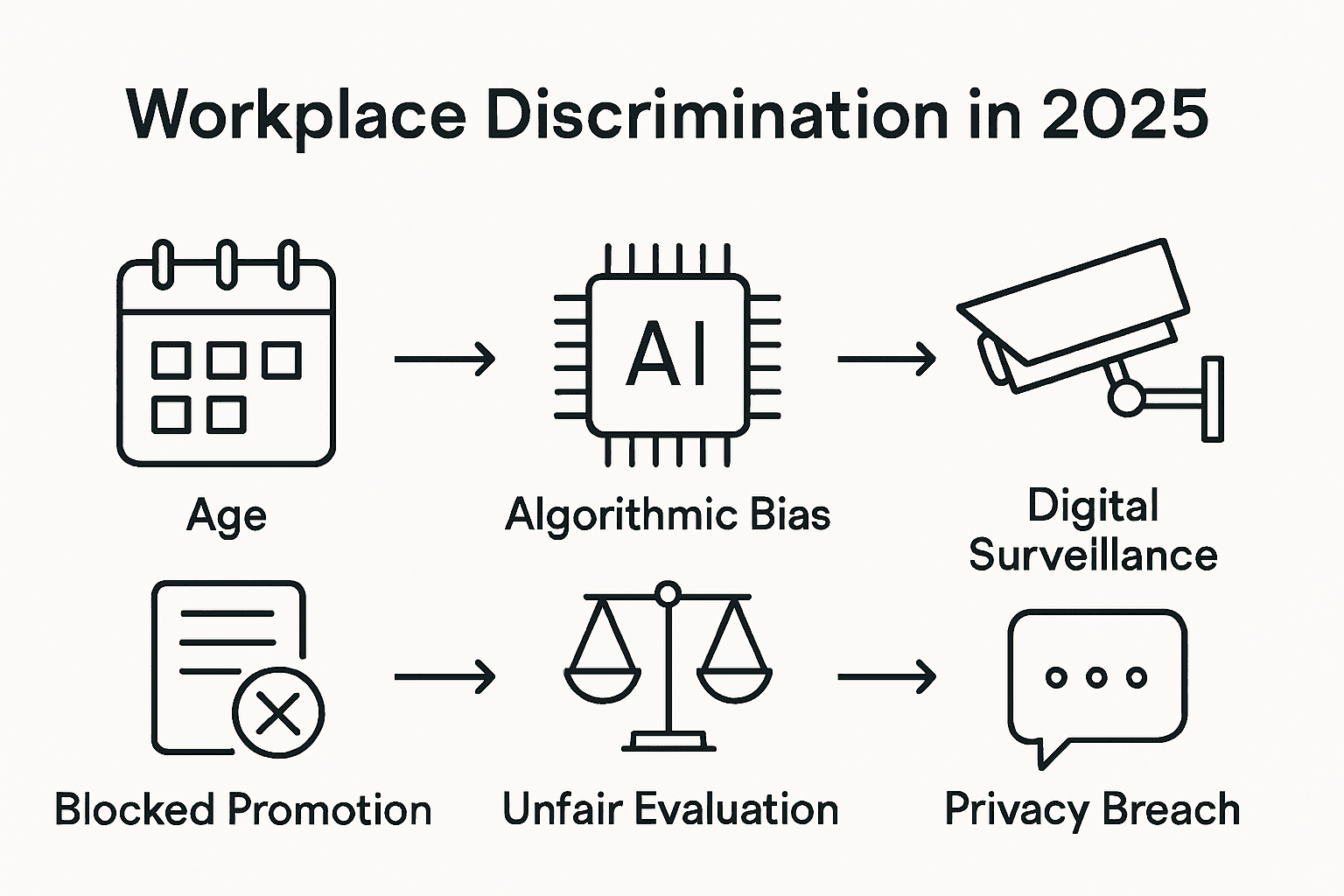
Research on workplace disparities further illuminates additional discrimination types that extend beyond traditional categorizations. These include discrimination based on disability status, which impacts workplace accessibility and professional opportunities, political view discrimination that can create hostile work environments, and emerging forms of digital discrimination enabled by algorithmic decision making. Technological platforms and artificial intelligence systems can inadvertently perpetuate existing biases, creating new challenges for equitable workplace treatment.
Here’s a concise comparison of emerging forms of workplace discrimination and their unique challenges in 2025:
| Discrimination Type | Unique Challenge | Typical Scenario Example |
|---|---|---|
| Algorithmic Bias | Inherited bias in hiring algorithms | AI excludes older candidates |
| Digital Surveillance | Unwarranted tracking of employees | Monitoring remote worker activity |
| Political View Discrimination | Hostility based on political beliefs | Exclusion after political discussion |
| Disability (Tech-Related) | Inaccessible digital workplace tools | Platform lacks screen reader access |
| Gender in Virtual Settings | Subtle microaggressions via chats | Gendered language in team calls |
Pro Tip for Identifying Discrimination: Learn your rights. Familiarize yourself with federal and state anti-discrimination laws, document potential discriminatory incidents with specific details, and understand the formal complaint processes available in your workplace and through external regulatory agencies.
Retaliation and Whistleblower Protections
The landscape of employee protections has dramatically evolved, with robust mechanisms now safeguarding workers who expose workplace misconduct. Mercer’s Global Legislative Update for 2025 highlights the critical importance of comprehensive whistleblower protections in modern corporate environments.

Whistleblower Rights have expanded significantly, providing employees with multilayered legal protections when reporting unethical or illegal workplace activities. These protections cover a wide range of potential violations, including financial fraud, safety violations, discrimination, harassment, and environmental misconduct. Employees who report such issues are now legally shielded from potential retaliatory actions such as termination, demotion, reduced work hours, salary cuts, or professional marginalization. The legal framework requires employers to establish transparent reporting mechanisms and implement strict consequences for any form of workplace retaliation.
Modern whistleblower protections extend beyond traditional reporting channels, recognizing the complex digital landscape of contemporary workplaces. Legislative updates in 2025 emphasize protection for employees who report misconduct through various platforms, including internal compliance systems, external regulatory agencies, and even anonymous digital reporting tools. These protections are particularly crucial in industries with high potential for systemic misconduct, such as technology, finance, healthcare, and government sectors.
Pro Tip for Whistleblower Protection: Document everything meticulously. Maintain a comprehensive, timestamped record of all communications, incidents, and interactions related to your whistleblower report, ensuring you have robust evidence to support your claim and protect yourself from potential retaliatory actions.
Global Shifts in Employment Law
The landscape of global employment law is experiencing unprecedented transformation, driven by technological advancements, shifting workforce demographics, and evolving social expectations. International Labor Organization’s Global Employment Trends Report highlights the complex interconnections between technological innovation, worker protections, and legal frameworks in the modern global economy.
Technological Disruption has become a primary catalyst for legal reimagination in employment regulations. Artificial intelligence, remote work technologies, and digital platforms are compelling jurisdictions worldwide to reconsider traditional employment classifications. Emerging legal frameworks now address critical issues such as algorithmic workplace discrimination, digital worker privacy, cross-border employment rights, and the legal status of gig economy and platform-based workers. These shifts represent a fundamental reconstruction of how employment relationships are conceptualized, regulated, and protected across different global contexts.
The most significant global employment law transformations center on adaptive legal mechanisms that recognize the increasingly fluid nature of work. Countries are developing more flexible regulatory approaches that balance worker protections with the need for organizational agility. This includes comprehensive regulations addressing remote work arrangements, digital nomad visas, portable benefits systems, and advanced protections for workers in platform-based and decentralized employment models. The legal frameworks are moving beyond traditional national boundaries, creating more interconnected and responsive employment protection systems that can adapt to rapid technological and social changes.
Pro Tip for Global Employment Awareness: Stay informed globally. Continuously educate yourself about international employment trends, follow reputable international labor organizations, and understand how technological and legal shifts might impact your professional opportunities and rights across different jurisdictions.
Obligations for Employers and Workers
Mercer’s Global Legislative Update for May 2025 reveals a transformative landscape of mutual responsibilities between employers and workers, characterized by increasingly complex and interconnected obligations that reflect the rapidly evolving workplace environment.
Employer Obligations have expanded dramatically, encompassing far more than traditional compensation and basic workplace safety. Modern employers are now legally required to provide comprehensive support systems that include mental health resources, flexible work arrangements, transparent career development pathways, and proactive diversity and inclusion initiatives. These obligations extend to implementing robust technological safeguards that protect employee privacy, prevent algorithmic discrimination, and ensure fair evaluation mechanisms that are not influenced by unconscious biases. Employers must also develop clear communication channels that enable workers to report concerns, seek guidance, and participate in organizational decision making processes.
Worker Responsibilities have correspondingly evolved to match the increased organizational expectations. Employees are now expected to maintain continuous professional development, demonstrate adaptability in rapidly changing technological environments, and actively participate in creating inclusive workplace cultures. Legislative updates in June 2025 emphasize the importance of workers understanding their rights, maintaining professional boundaries, and contributing to organizational transparency. This includes responsibilities such as reporting potential ethical violations, maintaining digital workplace etiquette, and engaging in ongoing skill enhancement to remain competitive in dynamic job markets.
To help clarify evolving mutual expectations, here is a summary of contemporary employer and worker obligations in 2025:
| Area | Employer Obligation | Worker Responsibility |
|---|---|---|
| Workplace Flexibility | Offer remote/hybrid work and schedule options | Adapt to flexible arrangements |
| Mental Health Support | Provide resources and reduce stigma | Seek help proactively, maintain well-being |
| Technological Fairness | Safeguard against algorithmic and digital biases | Report concerns about fairness and bias |
| Professional Growth | Ensure transparent career development pathways | Engage in continual skill development |
Pro Tip for Navigating Workplace Obligations: Know your contract inside and out. Carefully review all employment agreements, understand the detailed expectations for both you and your employer, and don’t hesitate to seek clarification or legal advice if any aspects of your professional responsibilities seem ambiguous or potentially problematic.
Common Mistakes When Claiming Employee Rights
Research on awareness of HR laws and employee rights reveals that many workers inadvertently undermine their legal protections through critical procedural errors when attempting to assert their workplace rights. Understanding these common mistakes is crucial for effectively navigating complex employment law landscapes.
Documentation Failures represent the most prevalent error employees make when claiming rights. Many workers fail to maintain comprehensive, contemporaneous records of workplace interactions, discriminatory incidents, or communication exchanges that could substantiate their claims. This includes neglecting to save emails, text messages, performance reviews, and detailed accounts of conversations that might provide critical evidence. Employees often discover too late that verbal promises or undocumented conversations carry minimal legal weight when challenging workplace discrimination or wrongful employment practices.
Another significant mistake involves premature or inappropriate escalation of workplace concerns. Many employees bypass internal reporting mechanisms, fail to follow established grievance procedures, or communicate complaints in emotionally charged or unprofessional manners that can damage their credibility. Successful rights claims require strategic, methodical approaches that demonstrate professionalism, adherence to organizational protocols, and a clear understanding of legal frameworks. Workers must carefully document each step of their complaint process, maintain composed and factual communication, and understand the specific legal standards required to substantiate their claims.
Pro Tip for Rights Protection: Create a comprehensive documentation system. Establish a secure, organized digital or physical folder where you systematically store all workplace communications, performance records, and potential evidence of discrimination or rights violations, ensuring you have a robust paper trail if legal action becomes necessary.
Protect Your Rights in the Evolving Workplace of 2025
Understanding your employee rights in 2025 means confronting challenges like digital discrimination, algorithmic bias, and retaliation protections. These issues can create complex legal obstacles that require experienced guidance to navigate. If you feel overwhelmed by these new workplace dynamics or worry about unfair treatment and inadequate documentation of incidents you face at work you are not alone.
Take control of your professional future today. At Shirazi Law Office, our employment law experts specialize in defending workers against discrimination and retaliation while ensuring your rights are fully protected under the latest laws. Don’t wait until a critical moment jeopardizes your career. Visit our website and learn how we can support you now. Your peace of mind in the changing employment landscape starts here.
Frequently Asked Questions
What are the key employee rights expected in 2025?
In 2025, employees are expecting comprehensive rights that include mental health support, flexible work arrangements, protection against digital discrimination, and robust mechanisms for reporting misconduct.
How has workplace discrimination evolved in 2025?
Workplace discrimination in 2025 has seen significant changes, focusing on issues such as algorithmic bias, digital surveillance, and political view discrimination, in addition to traditional biases related to age, gender, and race.
What are the obligations of employers towards employee rights in 2025?
Employers are obligated to provide mental health resources, implement flexible work options, ensure fair evaluation practices, and establish clear communication channels for reporting concerns among other responsibilities.
What common mistakes do employees make when asserting their rights?
Common mistakes include failing to document workplace interactions properly and prematurely escalating concerns without following established grievance procedures, which can undermine their claims.




[…] industry, with comprehensive standards designed to prevent workplace harassment and discrimination. Employee rights in California represent some of the most progressive and protective legal frameworks in the United […]
[…] emails, text messages, scheduling records, and performance reviews. Fourth, consult a qualified employee rights 2025 discrimination laws attorney as early as possible to understand your options and deadlines. Fifth, if appropriate, file […]
[…] Employee Rights in 2025 – Navigating Discrimination Laws […]