
What happens when a false accusation spreads through your Hollywood studio—costing you deals and damaging trust with industry partners? In Los Angeles, the stakes for executives and senior managers at brands like Netflix and Paramount Pictures go far beyond personal reputation. The distinction between opinion and defamatory false statements carries legal and financial consequences that can reshape your entire career. This guide explains how California law defines workplace defamation, what evidence you need, and how to protect your professional standing from rapid reputational harm.
Table of Contents
- Defining Defamation In Hollywood Studios
- Types And Examples Of Studio Defamation
- California Law On Workplace Defamation
- Employee Rights And Employer Responsibilities
- Risks, Damages, And Legal Strategies
Key Takeaways
| Point | Details |
|---|---|
| Understanding Defamation | Defamation in Hollywood requires a false statement, publication, fault, and actual harm to reputation or career. |
| Legal Protections in California | California law protects employees against defamation, allowing recovery for damages caused by false statements in the workplace. |
| Types of Defamation | Both libel (written) and slander (spoken) can damage professional reputations, with libel often easier to prove due to documentation. |
| Documentation Importance | Keeping detailed records of defamatory statements, witnesses, and impacts is crucial for legal claims and proving damages. |
Defining Defamation in Hollywood Studios
Defamation in Hollywood isn’t about hurt feelings or bad reviews. It’s a specific legal injury caused by false statements that damage your professional reputation. In the studio environment, where careers depend on relationships and credibility, understanding this distinction matters tremendously.
Defamation requires four core elements. You need a false statement of fact, not opinion or hyperbole. The statement must be communicated to at least one other person, causing publication. There must be some level of fault on the speaker’s part, and the statement must cause actual damage to your reputation or career.
In Hollywood, defamation and libel take unique forms because the industry operates on public perception and social credibility. A false claim about your professional conduct, ethics, or work quality can spread rapidly through studio networks, industry publications, or social media.
Public figures face a higher standard. Studio executives and high-profile creative leaders are often considered public figures, which means you must prove the speaker acted with actual malice—knowing the statement was false or showing reckless disregard for its truth.
False statements of fact differ from opinions. Someone saying “this director made a terrible film” is opinion. Someone saying “this director embezzled $2 million” is a false statement of fact—and if it’s untrue, it crosses into defamation territory.
The distinction between libel (written) and slander (spoken) matters in court. Written defamation on social media, in emails, or published articles can be easier to prove because it’s documented. Spoken comments at industry events are harder to verify but equally damaging to your standing.
To better understand written and spoken defamation in Hollywood, here’s a comparison of libel versus slander:
| Aspect | Libel (Written) | Slander (Spoken) |
|---|---|---|
| Typical Context | Social media, emails, articles | Meetings, phone calls, events |
| Evidence | Usually documented and permanent | Relies on witness testimony |
| Impact | Can spread rapidly online | May harm reputation locally |
| Legal Challenges | Easier to prove, traceable | Harder to verify, less durable |
Key elements to document:
- The exact false statement made about you
- Who made the statement and when
- Who heard or read it (publication)
- How it harmed your career or reputation
- The speaker’s knowledge of its falsity
Damage can be professional or financial. Lost opportunities, rejected projects, damaged client relationships, or diminished earning potential all count. In studios, even whispered false claims about reliability or integrity can cost you deals.
Online defamation presents particular challenges. Defamation on the internet combines the permanence of written statements with the speed of viral spread, creating reputation damage that traditional defamation law wasn’t originally designed to address.
Your career in Hollywood depends on trust and reputation—defamatory false statements directly threaten both your professional standing and earning capacity.
Pro tip: Keep detailed records of false statements made about you, including dates, speakers, witnesses, and any written documentation; this evidence becomes critical if you need to prove defamation in court later.
Types and Examples of Studio Defamation
Studio defamation takes many forms, and understanding the specific types helps you recognize when your reputation has been legally harmed. The line between harsh criticism and actionable defamation can blur quickly in Hollywood’s competitive environment.
Libel is written defamation. This includes social media posts, emails, industry articles, or internal memos containing false statements about you. In studios, a single damaging Instagram post or LinkedIn comment can reach thousands instantly and cause career-altering consequences.

Slander is spoken defamation. False statements made at industry events, in meetings, or through phone conversations count as slander. The challenge here is proving who said what—it’s your word against theirs unless someone witnessed it.
Common types of studio defamation include:
- False accusations of criminal conduct or unethical behavior
- Claims of professional incompetence or inability to complete work
- Allegations of financial misconduct, fraud, or theft
- False statements about your mental or physical health
- Unfounded claims about sexual misconduct or harassment
- Statements questioning your professional judgment or reliability
False accusations of misconduct damage careers instantly. When someone falsely claims you engaged in sexual harassment, discrimination, or abuse, the accusation itself—even before any investigation—can blacklist you from projects. The reputation damage is immediate and severe.
Professional competence attacks hurt your future work. Falsely telling producers you’re unreliable, miss deadlines, or deliver poor work prevents you from getting hired. These statements directly affect your earning potential and career trajectory.
Online defamation in the studio context has grown significantly. Defamation in media and entertainment can spread across industry networks, streaming platforms, and social media faster than traditional defamation ever could, making quick response critical.
Real example: A studio executive falsely tells colleagues you embezzled funds during a past project. The statement is untrue, but it spreads through the network. You lose three pending opportunities because producers heard the claim.
Another scenario: A former collaborator posts on social media that you engaged in inappropriate conduct on set. This is completely fabricated, but the post gets shared by industry accounts and damages your professional standing.
The most damaging defamation in Hollywood often targets your professional ethics, reliability, or judgment—the exact qualities studios use to decide whether to hire you.
Pro tip: Document the specific defamatory statement word-for-word, note when and where it was made, identify who heard or read it, and gather evidence of how it affected your career—this documentation is essential for proving damages later.
California Law on Workplace Defamation
California offers specific legal protections against workplace defamation that go beyond general defamation law. Understanding these protections is critical for studio professionals in Los Angeles and throughout California.
California requires proof of four distinct elements. You must show a false statement of fact was published, that it harmed your reputation, that the speaker showed fault (negligence or intent), and that you suffered actual damages. This framework applies in workplace settings just as it does elsewhere.
Publication means more than you might think. In California, telling even one coworker counts as publication. A false claim whispered in a studio hallway, shared in an email, or posted on social media all satisfy this requirement. The statement doesn’t need to reach thousands—just one third party.
The fault standard depends on your status. For private figures like most studio employees, the speaker must have acted negligently—they should have known the statement was false or didn’t bother checking. For public figures or those involved in matters of public concern, you must prove actual malice: the speaker knew it was false or acted with reckless disregard for the truth.
California defamation law covers:
- False statements that imply criminal conduct
- False claims about professional competence or reliability
- Statements damaging business relationships or career prospects
- False accusations of ethical or moral violations
- Statements that expose someone to hatred or ridicule
Privilege provides limited protection to speakers. California recognizes certain privileges—like truthful statements made in legal proceedings or honestly held opinions. However, California defamation law requires that privileged statements be made without malice and in good faith.
Damages in workplace defamation are substantial. California allows recovery for lost earnings, damage to professional reputation, emotional distress, and punitive damages if the speaker acted with malice. In Hollywood, where careers depend on reputation, these damages can reach six or seven figures.
Time matters in California. You have one year from the date you discover the defamation to file a lawsuit. Missing this statute of limitations deadline bars your claim entirely, so prompt action is essential.
Workplace defamation claims in California recognize that false statements in employment contexts cause specific, measurable harm to your career and earning potential.
California law protects your professional reputation as a valuable asset—defamatory false statements directly threaten your livelihood and career prospects.
Pro tip: File a cease and desist letter immediately upon discovering defamation, document all damages with dates and specific lost opportunities, and consult an employment attorney within months of the defamatory statement to preserve your legal rights.
Employee Rights and Employer Responsibilities
Your rights as a studio employee extend beyond salary and working conditions. California law gives you specific protections against defamation and requires employers to maintain a workplace free from false, reputation-damaging statements.
You have the right to a reputation free from workplace defamation. This means colleagues and supervisors cannot make false statements about your professional conduct, ethics, or competence without legal consequence. Your employer must take this seriously.
Employers have clear responsibilities. Studio executives and management cannot knowingly spread false information about employees, supervisors cannot make defamatory statements to damage your career, and the employer must act promptly if defamation occurs within the workplace.
Your core rights include:
- Protection from false statements affecting your job performance or career
- The right to know who made defamatory statements about you
- The ability to respond to false allegations in your personnel file
- Protection from retaliation if you report defamation
- Access to witness statements and documentation supporting false claims
Employers must inform you of your rights. California requires that workplace rights be communicated to all employees in writing. This includes your protection against defamation and the right to report it without fear of retaliation.
Your employer cannot retaliate against you for reporting defamation. If you complain about false statements harming your reputation, your boss cannot fire you, demote you, cut your hours, or punish you in any way. This protection applies even if the defamatory statement came from management.
Employers are responsible for workplace conduct. If a supervisor or coworker makes defamatory statements, the employer is on notice and must respond. Failure to investigate or address the false statements can make the employer liable as well.
Document everything carefully. Defamation in the workplace requires proving the specific false statements made, who heard them, and how they damaged you. Keep emails, texts, written notes, and witness contact information.
Your right to remedy is protected. You can file a complaint with your HR department, demand a formal investigation, request written corrections in your personnel file, and pursue legal action if necessary.
Employers cannot ignore defamation—they have a legal duty to protect employees from false statements that damage careers and reputation.
Pro tip: Immediately notify your HR department in writing when defamation occurs, request written documentation of the false statement and the investigation, and keep copies of everything for your legal file.
Risks, Damages, and Legal Strategies
Workplace defamation carries serious consequences for your career and finances. Understanding the potential damages and how to build a strong legal case is essential for protecting your interests.
Financial damages are quantifiable and substantial. Lost wages from rejected job opportunities, diminished earning potential, benefits you didn’t receive, and business deals that fell through all count as economic damages. In Hollywood, where project-based work dominates, these losses add up quickly.
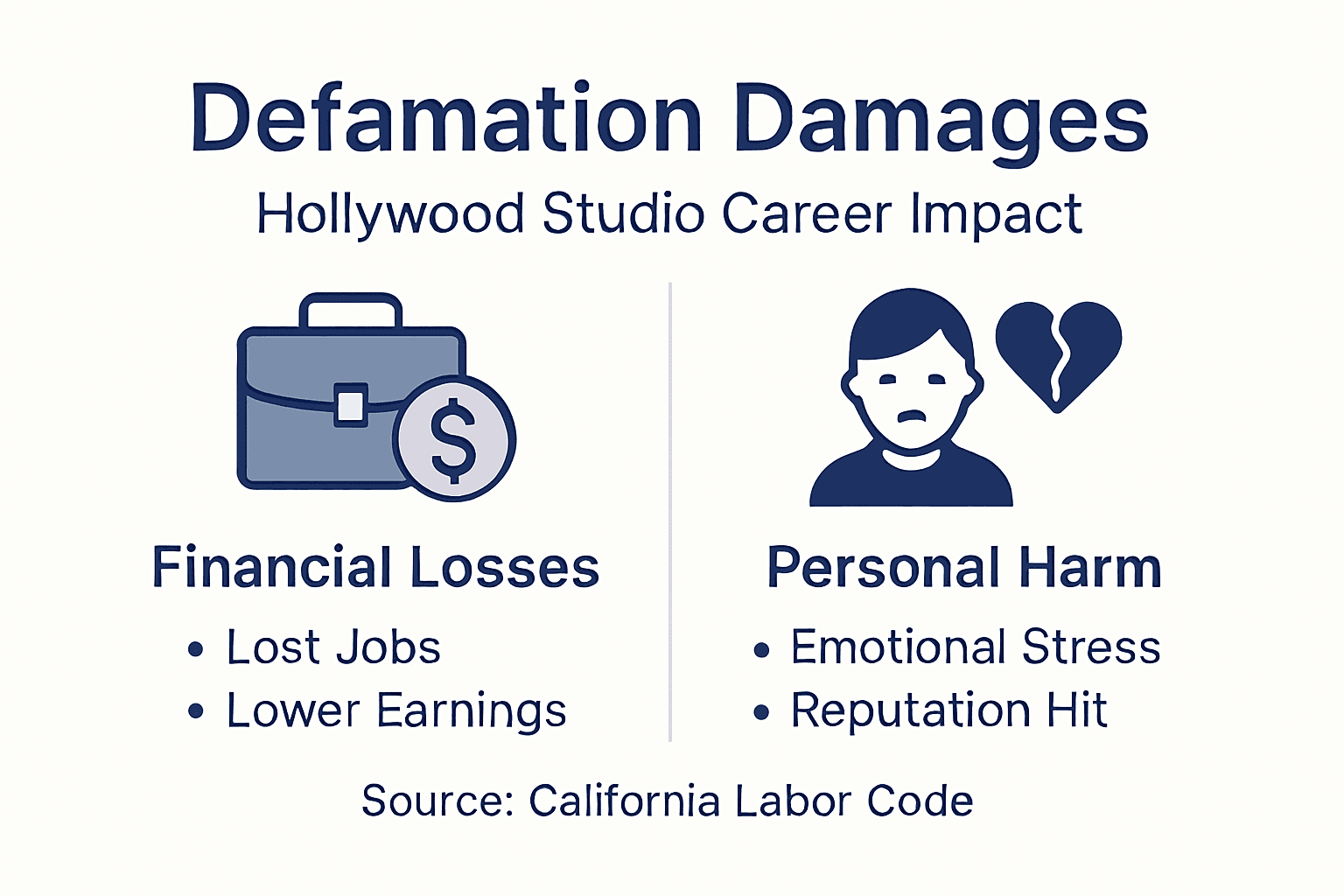
Non-economic damages address reputation and emotional harm. Courts recognize that false statements cause pain, suffering, anxiety, and permanent damage to your professional standing. These damages are harder to calculate but often exceed financial losses.
The following table highlights common damages and their effects for defamation victims in Hollywood studios:
| Type of Damage | Typical Examples | Possible Effects |
|---|---|---|
| Financial Loss | Lost contracts, rejected jobs | Reduced income, career stalling |
| Professional Harm | Damaged industry reputation | Fewer future opportunities |
| Emotional Impact | Distress, anxiety | Impaired mental health |
| Litigation Costs | Attorney fees, court expenses | Added financial pressure |
Common risks and damages include:
- Lost income from rejected projects or positions
- Reduced earnings in future employment
- Damage to professional reputation and standing
- Emotional distress and mental health impacts
- Career derailment and lost advancement opportunities
- Costs of litigation and attorney fees
Proving damages requires solid documentation. You need financial records showing lost income, evidence of job opportunities that disappeared, witness testimony about the defamation’s impact, and expert opinions on career damage. Proving damages in defamation cases requires showing a direct connection between the false statement and your measurable losses.
Your legal strategy starts with evidence gathering. Collect the exact false statements, identify all people who heard or read them, document your career timeline before and after the defamation, gather emails and communications, and preserve social media posts or articles.
Establish falsity first. You must prove the statement was factually false, not opinion or hyperbole. A false claim about specific conduct differs from someone’s subjective criticism of your work.
Demonstrate fault by the speaker. Show they knew it was false or should have known through reasonable investigation. This varies based on whether you’re a public or private figure, but negligence is the standard for most studio employees.
Connect the statement to your damage. Prove the defamation caused specific, measurable harm to your career. Show studios rejected you after hearing the false claim, projects dried up, or your reputation shifted noticeably.
Successful defamation claims require documented evidence linking false statements to measurable career and financial harm—vague claims about reputation damage alone won’t succeed.
Pro tip: Create a chronological timeline documenting the exact false statement, when you discovered it, who communicated it to you, every lost opportunity afterward with dates, and all financial impacts with supporting documentation.
Protect Your Hollywood Career From Workplace Defamation Now
If you are facing false statements that threaten your professional reputation in Hollywood studios you understand how quickly defamation can derail your career. This article highlights critical challenges including proving falsity establishing fault and documenting damages to protect yourself in an industry where reputation is everything. Whether you are dealing with defamatory social media posts whispered rumors or baseless accusations damaging your earning potential and industry standing requires immediate action.
At Shirazi Law Office we specialize in protecting California employees executives and senior management from workplace defamation and retaliation. Our deep knowledge of workplace defamation and Hollywood employment issues ensures you get strategic representation focused on defending your rights and restoring your career. Don’t wait until opportunities disappear take control today. Visit Shirazi Law Office to schedule your confidential consultation and safeguard your professional future.
Frequently Asked Questions
What constitutes defamation in Hollywood studios?
Defamation in Hollywood refers to false statements that damage an individual’s professional reputation. It requires a false statement of fact communicated to a third party that causes harm.
How do libel and slander differ in the context of defamation?
Libel refers to written defamation, such as posts on social media or articles, while slander refers to spoken defamation, such as comments made during meetings or events. Libel is typically easier to prove due to its documented nature.
What are the key elements I need to prove a defamation claim?
To prove defamation, you must demonstrate four elements: a false statement of fact, publication to at least one other person, some level of fault by the speaker, and actual damage to your reputation or career.
What are my rights as a studio employee regarding workplace defamation?
You have the right to a reputation free from defamatory statements, protection from retaliation for reporting defamation, and the ability to respond to false allegations affecting your career. Employers must address defamation seriously and take steps to investigate claims.





[…] provide another avenue when studios make false statements damaging your professional reputation. Hollywood workplace defamation protections allow you to recover damages if studios spread lies about your performance, ethics, or reasons for […]