

Facing unfair treatment on the job can shake even the most accomplished leaders. For female executives in Mid-Wilshire, gender discrimination often lurks in subtle decision-making, networking, and promotion practices, undermining your hard-earned authority and career momentum. Understanding how this discrimination operates and knowing your rights under United States and California law puts you in a stronger position to defend your role, protect your reputation, and chart a safe course through workplace uncertainty.
Table of Contents
- Defining Gender Discrimination In The Workplace
- Recognizing Common Forms Of Gender Bias
- California Laws Governing Gender Discrimination
- Reporting Procedures And Legal Timelines
- Unique Risks For Female Executives And Managers
Key Takeaways
| Point | Details |
|---|---|
| Understand Gender Discrimination | It involves unfair treatment based on gender, affecting hiring, promotions, pay, and workplace dynamics. |
| Recognize Legal Protections | California offers extensive protections that exceed federal laws, covering gender identity and sexual orientation. |
| Document Discriminatory Incidents | Keep detailed, chronological records of incidents to strengthen potential legal claims. |
| Acknowledge Unique Challenges | Female executives face unique barriers that can hinder career advancement and require strategic networking and support. |
Defining Gender Discrimination in the Workplace
Gender discrimination represents a serious workplace violation that undermines professional opportunities and individual dignity. According to the U.S. Equal Employment Opportunity Commission, this form of discrimination involves unfair treatment based on an individual’s sex or gender across multiple employment domains.
Workplace gender discrimination can manifest through various harmful practices:
- Unequal compensation for equivalent work
- Denial of promotion opportunities
- Differential treatment during hiring processes
- Harassment related to gender identity
- Negative consequences for pregnancy or caregiving responsibilities
The core legal definition encompasses any employment action that treats an employee differently specifically because of their gender. Adverse employment decisions rooted in gender stereotypes or biases are legally prohibited, protecting workers from systemic workplace inequities.
Gender discrimination transforms professional environments from spaces of potential into landscapes of limitation, preventing talented individuals from reaching their full career potential.
In Mid-Wilshire’s professional landscape, gender discrimination often occurs subtly through overlooked mechanisms like workplace bias and systemic barriers. These can include informal networks that exclude certain genders, performance evaluation processes with inherent gender biases, and leadership development programs that disproportionately favor specific gender groups.
Legal protections extend beyond traditional binary gender categories, encompassing sexual orientation, gender identity, and transgender status. This comprehensive approach recognizes the complex spectrum of gender experiences in modern professional environments.
Pro tip: Document every instance of potential gender discrimination, including dates, witnesses, and specific interactions, which can provide critical evidence if legal action becomes necessary.
Recognizing Common Forms of Gender Bias
Gender bias in professional environments extends far beyond overt discrimination, manifesting through subtle yet pervasive mechanisms that undermine professional equity. The Equal Employment Opportunity Commission highlights systematic practices that perpetuate workplace inequalities across multiple dimensions of employment.
Common forms of gender bias include:
- Unequal pay for equivalent work
- Systematic exclusion from leadership opportunities
- Performance evaluation processes with inherent gender prejudices
- Differential treatment during hiring and promotion decisions
- Microaggressions that marginalize specific gender identities
- Punitive responses to pregnancy or family caregiving responsibilities
Workplace microaggressions represent particularly insidious forms of gender discrimination, creating hostile environments through seemingly minor yet psychologically damaging interactions. These can range from interrupting female colleagues more frequently to making inappropriate comments about appearance or professional capabilities.
Gender bias transforms workplaces from collaborative environments into psychological minefields where talented professionals are systematically disadvantaged.
In Mid-Wilshire’s professional landscape, gender discrimination often emerges through subtle systemic barriers that create invisible obstacles for certain gender groups. These barriers might include informal networking structures that inadvertently exclude specific genders, performance assessment frameworks with implicit biases, and leadership development programs that disproportionately benefit traditional gender demographics.

Legal protections have evolved to recognize increasingly nuanced manifestations of gender discrimination, extending beyond traditional binary categorizations to encompass sexual orientation, gender expression, and transgender experiences. This comprehensive approach acknowledges the complex spectrum of gender identity in contemporary professional environments.
Pro tip: Maintain a detailed, confidential record of potential discriminatory incidents, including specific dates, witnesses, and contextual details to establish a comprehensive pattern of workplace bias.
California Laws Governing Gender Discrimination
California provides some of the most comprehensive legal protections against gender discrimination in the United States, offering robust safeguards for employees across multiple professional sectors. Gender discrimination laws in California extend far beyond federal standards, creating a more stringent framework for workplace equity and employee rights.
Key legislative protections for employees include:
- California Fair Employment and Housing Act (FEHA)
- Equal Pay Act of California
- Pregnancy Discrimination Protection
- Gender Identity and Sexual Orientation Anti-Discrimination Provisions
- Workplace Harassment Prevention Regulations
- Expanded Definitions of Gender Discrimination
State-level protections in California are particularly comprehensive, prohibiting discrimination based on gender identity, gender expression, and sexual orientation. These laws cover virtually every aspect of employment, including hiring, promotion, compensation, training, and termination processes.
California’s legislative framework recognizes gender discrimination as a multifaceted issue extending beyond traditional binary interpretations of workplace interactions.
The California Fair Employment and Housing Act (FEHA) provides significantly broader protections than federal regulations. This state law covers employers with five or more employees, creating a more inclusive environment for workers across different organizational scales. FEHA explicitly prohibits discriminatory practices that might be considered legally acceptable under federal guidelines.
Legal remedies for gender discrimination in California are extensive, allowing employees to pursue damages through administrative complaints with the California Civil Rights Department or through direct civil litigation. Potential compensation can include back pay, reinstatement, emotional distress damages, and potential punitive sanctions against discriminatory employers.
Here is a quick reference guide to California’s legal remedies for gender discrimination:
| Remedy Type | What It Involves | Typical Outcomes |
|---|---|---|
| Administrative Claim | File with Civil Rights Department | Back pay, job reinstatement |
| Civil Lawsuit | Legal action in state court | Damages, potential penalties |
| Mediation | Negotiated settlement with employer | Confidential agreements |
| Injunctive Relief | Court mandates employer to act or stop | Policy changes, cessation order |
Pro tip: Consult with an employment law specialist who understands California’s nuanced gender discrimination statutes to evaluate the specific circumstances of your workplace situation.
Reporting Procedures and Legal Timelines
Navigating the complex landscape of gender discrimination claims requires a strategic understanding of precise reporting procedures and critical legal timelines. Filing a discrimination charge demands careful attention to procedural details and strict adherence to statutory deadlines.
Key steps in the reporting process include:
- Document all instances of discriminatory behavior
- Gather supporting evidence and witness statements
- Identify specific discriminatory actions or patterns
- Preserve communication records and performance evaluations
- Maintain a contemporaneous written record of incidents
- Consult with an employment law specialist
Statutory timelines are critically important in gender discrimination claims. In California, employees must typically file administrative complaints within one year of the alleged discriminatory act, with federal claims requiring action within 180 to 300 days depending on specific circumstances.
Legal recourse has an expiration date. Delay can permanently extinguish your right to seek justice.
The reporting process involves multiple potential channels, including the California Civil Rights Department, the Equal Employment Opportunity Commission (EEOC), and potential civil litigation. Each avenue has distinct procedural requirements, potential remedies, and strategic considerations that can significantly impact the ultimate outcome of a discrimination claim.
Legal documentation serves as the foundation of any successful discrimination claim. Comprehensive records should include dates, specific incidents, potential witnesses, and any corroborating evidence that demonstrates a pattern of discriminatory treatment.
Pro tip: Create a confidential, chronological log of discriminatory incidents immediately, including specific dates, direct quotes, and potential witnesses to strengthen your potential legal claim.
Unique Risks for Female Executives and Managers
Female executives and managers in Mid-Wilshire’s professional landscape face distinctive challenges that extend beyond traditional workplace discrimination. Gender discrimination risks are particularly complex for women in leadership positions, involving nuanced professional barriers that can significantly impact career trajectories.
Unique professional challenges include:
- Persistent glass ceiling limitations
- Disproportionate performance scrutiny
- Systemic credibility undermining
- Higher standards for leadership validation
- Increased likelihood of social and professional backlash
- Complex intersectional discrimination dynamics
Leadership discrimination manifests through subtle yet pervasive mechanisms that challenge women’s professional advancement. These can range from being overlooked for critical assignments to experiencing more stringent performance evaluations compared to male counterparts.
Female executives navigate a professional landscape where their competence is perpetually questioned, their achievements are systematically minimized, and their leadership is viewed through a more critical lens.
In Mid-Wilshire’s competitive professional environment, female executives often encounter sophisticated forms of discrimination that are challenging to document and prove. These can include informal networking exclusions, strategic professional isolation, and microaggressions that undermine leadership credibility without leaving explicit evidence.
Career progression risks for female managers frequently involve complex power dynamics that extend beyond traditional discrimination frameworks. Women in leadership roles must simultaneously manage professional performance, navigate institutional biases, and protect their career trajectories from systemic impediments.
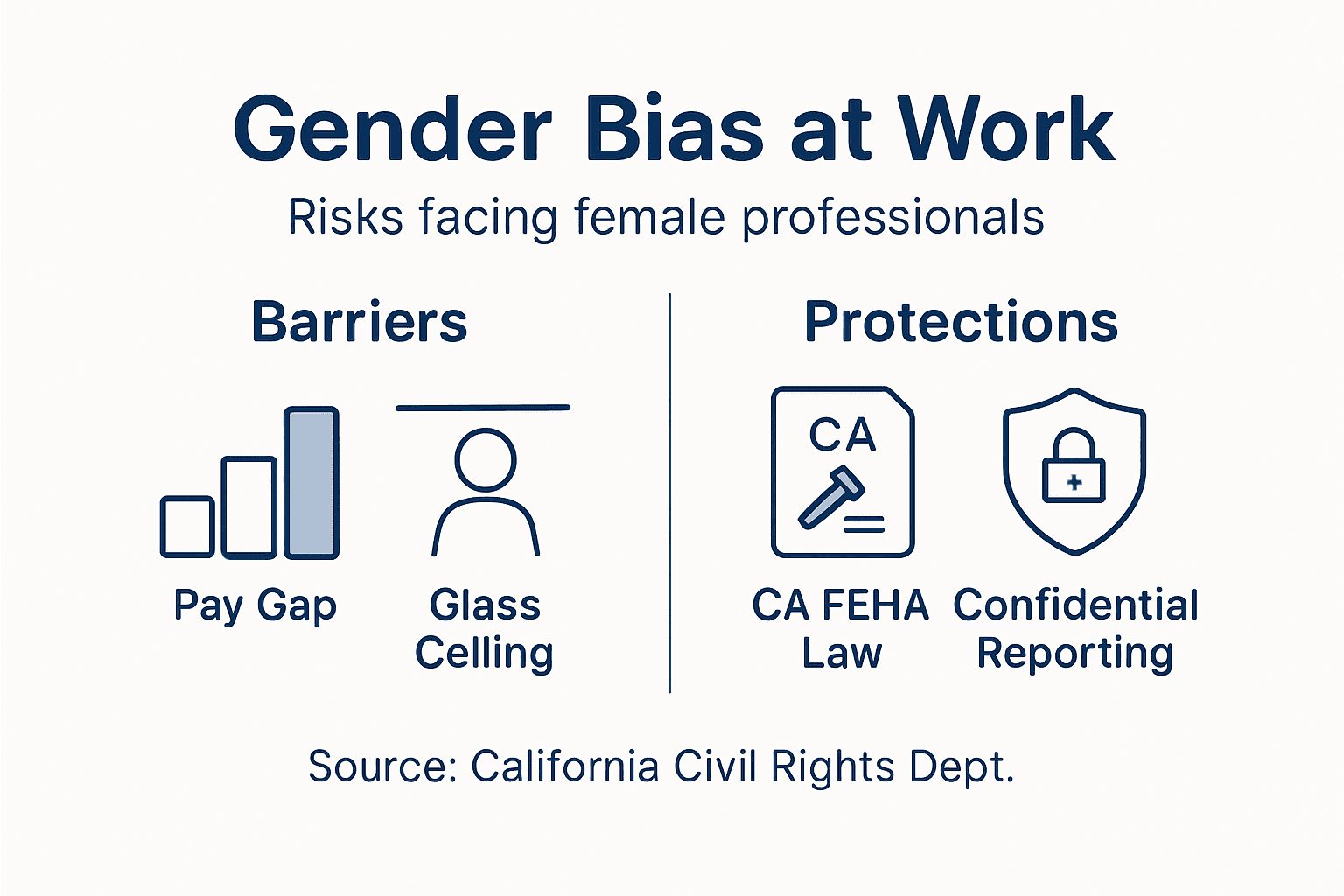
The table below compares unique career barriers faced by female executives versus non-executives:
| Barrier Type | Female Executives | Other Women Professionals |
|---|---|---|
| Networking Exclusion | Board-level event isolation | Team or department exclusion |
| Performance Scrutiny | Higher scrutiny on outcomes | Limited project opportunities |
| Leadership Undermining | Credibility consistently probed | Management roles rarely offered |
| Social Backlash | Public visibility, media focus | Peer criticism, subtle bias |
Pro tip: Develop a comprehensive professional network of mentors and allies who can provide strategic support and documentation of your professional achievements and challenges.
Protect Your Rights Against Gender Discrimination in Mid-Wilshire
If you are facing gender discrimination, harassment, or unfair treatment at your Mid-Wilshire workplace you are not alone. The challenges outlined in this article like biased performance evaluations, limited advancement opportunities, and hostile work environments can deeply affect your career and personal well-being. Understanding your legal protections is the first step toward reclaiming your professional dignity and overcoming systemic barriers.
At Shirazi Law Office, we specialize in representing employees and executives confronting gender bias across Los Angeles, including Mid-Wilshire. Our team offers strategic support for complex situations involving wrongful termination, hostile work environments, pregnancy discrimination, and more. Explore our dedicated Gender Discrimination practice area and learn how we address unlawful workplace conduct with tailored legal solutions. When you are ready to take action, visit our Mid-Wilshire page to connect with attorneys who understand your community and industry.
Do not wait until discrimination impacts your career irreparably. Act now to protect your rights and professional reputation with expert legal guidance. Contact Shirazi Law Office and secure the representation you deserve.
Frequently Asked Questions
What constitutes gender discrimination in the workplace?
Gender discrimination in the workplace refers to unfair treatment based on an individual’s sex or gender, including issues like unequal pay, denial of promotions, and differential treatment during hiring processes.
What are common forms of gender bias that can occur at work?
Common forms of gender bias include unequal pay for equivalent work, exclusion from leadership opportunities, inherent biases in performance evaluations, and microaggressions that marginalize specific gender identities.
How can I report gender discrimination at my workplace?
To report gender discrimination, document all instances of discriminatory behavior, gather supporting evidence, and file a complaint with relevant authorities like the Equal Employment Opportunity Commission (EEOC) or your state’s civil rights department.
What legal protections exist against gender discrimination in California?
California laws offer extensive protections against gender discrimination, including the California Fair Employment and Housing Act (FEHA), which covers a wide range of employment actions and prohibits discrimination based on gender identity, sexual orientation, and gender expression.





Thanks for sharing your unique 😊 💪 🌻 gifts with everyone who follows your inspiring journey here