
Pressure can mount quickly when you start thinking about how pregnancy will impact your job and future career. California laws combine with federal protections to offer strong workplace discrimination safeguards for expecting parents in Beverly Grove. This guide helps you identify your rights to pregnancy and parental leave, recognize signs of unfair treatment, and know what protections are available to keep your career on track while you focus on your growing family.
Table of Contents
- Defining Pregnancy And Parental Leave Rights
- Types Of Leave: PDL, CFRA, FMLA, And PFL
- Eligibility, Duration, And Benefit Structures
- Employer Obligations And Employee Protections
- Handling Discrimination, Retaliation, Or Denial Of Leave
Key Takeaways
| Point | Details |
|---|---|
| Pregnancy and Parental Leave Rights | Employees in Beverly Grove and California are protected from discrimination and career setbacks during pregnancy and parental leave, ensuring they can balance work and family needs. |
| Key Leave Types | California provides specific protections like Pregnancy Disability Leave (PDL) and the California Family Rights Act (CFRA), offering various leave duration and job protection options. |
| Employer Obligations | Employers must provide reasonable accommodations, maintain health coverage during leave, and prevent discrimination against pregnant employees to foster a supportive workplace. |
| Addressing Discrimination | Employees facing workplace discrimination or retaliation related to pregnancy can seek legal recourse and must document incidents to protect their rights effectively. |
Defining Pregnancy And Parental Leave Rights
Pregnancy and parental leave represent critical legal protections designed to support employees during significant life transitions. In Beverly Grove and throughout California, these rights ensure workers can balance professional responsibilities with family needs without fear of discrimination or career setbacks.
Under federal guidelines, the Family and Medical Leave Act provides essential workplace protections for expecting and new parents. This legislation offers critical safeguards, including:
- Up to 12 weeks of unpaid, job-protected leave per year
- Coverage for birth and care of newborn children
- Eligibility for employees who have worked at least 12 months
- Protection for workers in companies with 50 or more employees
California law goes beyond federal standards, providing additional protections for pregnant employees. The state mandates reasonable workplace accommodations and prohibits discrimination based on pregnancy, childbirth, or related medical conditions. These protections ensure that pregnant workers can continue their careers without facing unfair treatment or professional barriers.
Key legal protections under California pregnancy discrimination laws include:
- Protection from termination or demotion due to pregnancy
- Right to reasonable workplace modifications
- Guaranteed return to equivalent position after leave
- Protection from harassment or adverse employment actions
Federal regulations like the Pregnancy Discrimination Act further strengthen these protections by prohibiting unfavorable treatment related to pregnancy in all employment aspects. This comprehensive legal framework ensures that pregnant employees in Beverly Grove can focus on their health and growing families without workplace stress.
Pro tip: Document all interactions and requests related to pregnancy accommodations to protect your legal rights and create a clear record of workplace communications.
Types Of Leave: PDL, CFRA, FMLA, And PFL
Navigating pregnancy and parental leave in California involves understanding a complex landscape of legal protections. Several key leave types provide comprehensive support for employees during significant life transitions, each with unique characteristics and benefits.
The paid family and medical leave landscape in California offers multiple protective mechanisms for workers. These primary leave types include:
- Pregnancy Disability Leave (PDL): Specifically designed for pregnancy-related medical conditions
- California Family Rights Act (CFRA): Provides job-protected leave for family and medical reasons
- Family and Medical Leave Act (FMLA): Federal protection for unpaid leave
- Paid Family Leave (PFL): Offers partial wage replacement during leave
Prenatal and parental leave protections vary significantly between these programs. Pregnancy Disability Leave (PDL) allows up to four months of job-protected leave for employees unable to work due to pregnancy, childbirth, or related medical conditions. This protection applies to employers with five or more employees and covers physical limitations directly related to pregnancy.

The California Family Rights Act (CFRA) provides additional protection, offering up to 12 weeks of unpaid, job-protected leave for bonding with a new child, caring for a family member with a serious health condition, or addressing the employee’s own serious health condition. Unlike PDL, CFRA focuses on broader family care needs beyond pregnancy-specific disabilities.
At the federal level, the Family and Medical Leave Act (FMLA) provides foundational protections for eligible employees. These protections include:
- Up to 12 weeks of unpaid leave
- Job protection during leave
- Continuation of group health insurance
- Applies to employers with 50 or more employees
Paid Family Leave (PFL) represents California’s unique wage replacement program, offering partial wage replacement for workers taking time to bond with a new child or care for a seriously ill family member. While PFL does not guarantee job protection, it works in conjunction with other leave types to provide financial support during critical family moments.
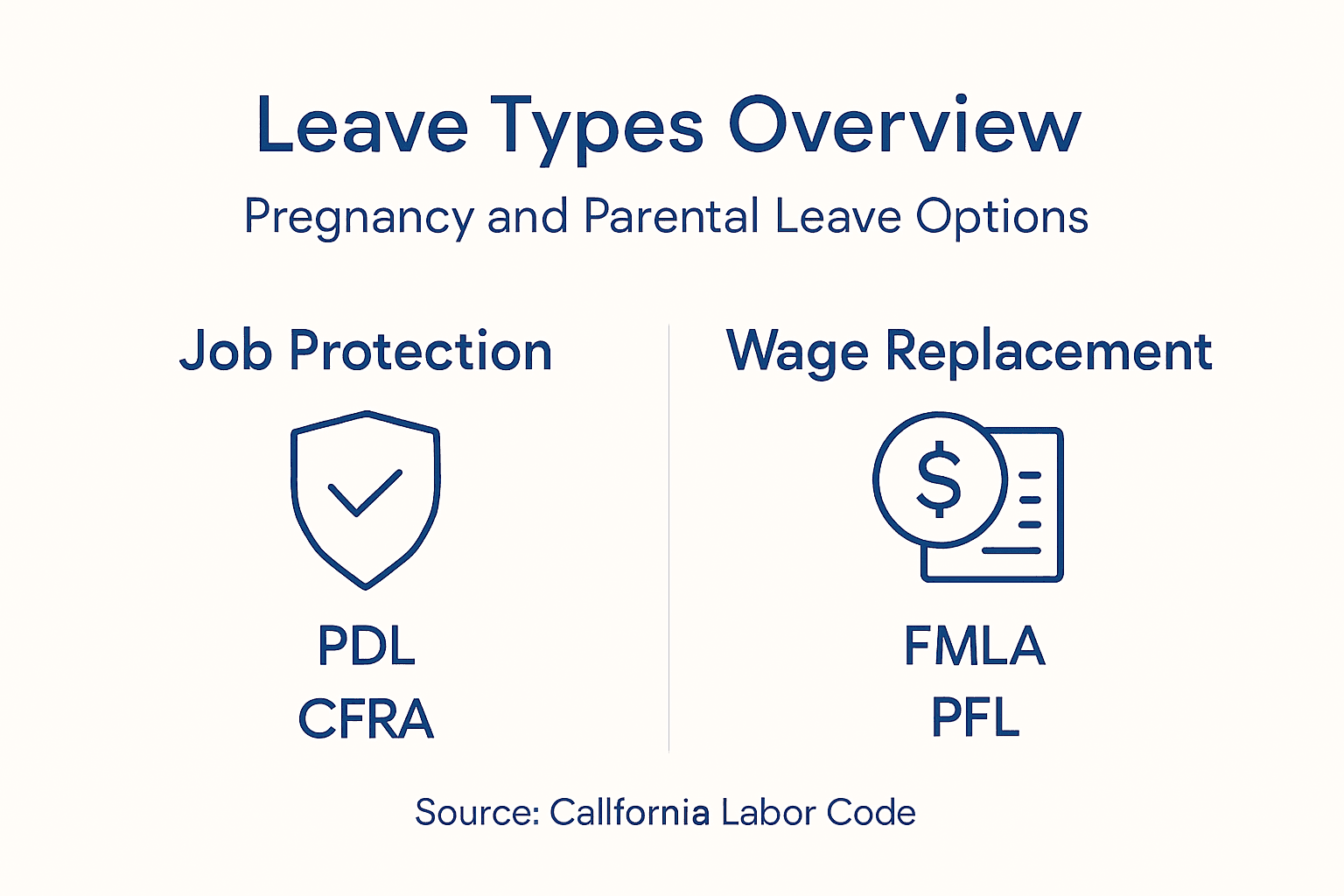
Here is a comparison of California and federal leave types with their unique features:
| Leave Type | Job Protection | Wage Replacement | Maximum Duration |
|---|---|---|---|
| PDL | Yes, position guaranteed | No wage paid | Up to 4 months |
| CFRA | Yes, position guaranteed | No wage paid | Up to 12 weeks |
| FMLA | Yes, federal protection | No wage paid | Up to 12 weeks |
| PFL | No job guarantee | 60%-70% of wages | Up to 8 weeks |
California’s leave laws are among the most comprehensive in the United States, offering multiple layers of protection for employees during significant life events.
Pro tip: Consult with your human resources department or an employment lawyer to understand how these different leave types might intersect and apply to your specific situation.
Eligibility, Duration, And Benefit Structures
Understanding the nuanced eligibility requirements and benefit structures for pregnancy and parental leave in California demands careful attention to detail. Each leave type comes with specific criteria that employees must meet to access these critical protections.
Paid family and medical leave benefits vary significantly across different programs. The primary eligibility considerations include:
- Employment tenure requirements
- Minimum hours worked
- Employer size and location
- Specific family or medical event qualifications
For Federal Family and Medical Leave Act (FMLA) eligibility, employees must meet strict criteria. These include:
- Minimum of 12 months employment with the current employer
- At least 1,250 hours worked in the previous 12-month period
- Employment at a location with 50 or more employees within 75 miles
- Qualifying family or medical event
California’s leave programs often provide more comprehensive protections. Pregnancy Disability Leave (PDL) applies to employers with five or more employees, offering more inclusive coverage compared to federal standards. This protection allows up to four months of leave for pregnancy-related medical conditions, regardless of the employee’s tenure or total hours worked.
The Paid Family Leave (PFL) program in California offers a unique wage replacement structure. Unlike other leave types, PFL provides partial wage replacement typically ranging from 60% to 70% of an employee’s regular earnings, subject to state-defined maximum weekly benefits. This financial support enables workers to take time off for critical family moments without complete loss of income.
California’s leave laws represent some of the most employee-friendly protections in the United States, offering multiple layers of support for workers during significant life transitions.
Pro tip: Carefully document your employment history, hours worked, and specific medical or family care needs to streamline your leave application process.
Employer Obligations And Employee Protections
Navigating the complex landscape of employer obligations and employee protections requires a comprehensive understanding of legal requirements surrounding pregnancy and parental leave in California. Employers face significant responsibilities in maintaining a fair and supportive workplace environment.
Employer legal requirements encompass a broad range of protective measures designed to safeguard employees during pregnancy and parental transitions. Key employer obligations include:
- Providing job-protected leave
- Continuing group health benefits during leave
- Offering reasonable workplace accommodations
- Preventing discrimination based on pregnancy status
- Maintaining employee confidentiality
Under federal and state laws, employers must adhere to strict guidelines that protect employees from pregnancy-related discrimination. Pregnancy Discrimination prohibits employers from:
- Refusing to hire or promote pregnant employees
- Forcing unnecessary medical leave
- Reducing job responsibilities without justification
- Creating hostile work environments
Reasonable accommodations are a critical aspect of employer obligations. This might include modified work duties, adjusted schedules, temporary transfer to less strenuous positions, or ergonomic workplace modifications that support pregnant employees’ health and continued productivity.
Group Health Benefits must be maintained during leave, ensuring that employees do not lose critical medical coverage during their pregnancy and parental transition periods. Employers cannot require employees to use paid time off during protected leave, and they must reinstate employees to equivalent positions upon return.
The following summarizes employer obligations and employee protections in California:
| Employer Duty | Benefit to Employee | When Enforced |
|---|---|---|
| Provide accommodations | Ensures workplace comfort | During pregnancy |
| Maintain health coverage | Prevents loss of insurance | Throughout leave period |
| Prohibit retaliation | Safeguards career | After leave requests |
| Reinstatement to role | Maintains job security | Upon return from leave |
California’s legal framework provides some of the most comprehensive protections in the United States, establishing a high standard for employee rights during pregnancy and parental transitions.
Pro tip: Document all workplace interactions and accommodation requests in writing to create a clear record of communication and protect your legal rights.
Handling Discrimination, Retaliation, Or Denial Of Leave
Pregnant employees in Beverly Grove face complex legal challenges when confronting workplace discrimination, retaliation, or improper leave denial. Understanding your rights and the appropriate response mechanisms is crucial for protecting your professional and personal well-being.
Under federal guidelines, pregnancy discrimination laws provide comprehensive protections against unfair treatment. Employees experiencing adverse actions related to pregnancy have multiple legal recourses, including:
- Filing complaints with the Equal Employment Opportunity Commission (EEOC)
- Seeking legal consultation from employment attorneys
- Documenting all discriminatory incidents
- Requesting formal workplace investigations
- Pursuing potential legal remedies
Workplace Retaliation represents a serious violation of employee rights. Employers are explicitly prohibited from taking negative actions in response to an employee’s pregnancy-related leave request or accommodation needs. Such prohibited retaliatory actions include:
- Terminating employment
- Reducing job responsibilities
- Demoting or passing over for promotion
- Creating hostile work environments
- Implementing punitive scheduling changes
Legal mechanisms exist to protect employees from discriminatory practices. The Pregnancy Discrimination Act and Pregnant Workers Fairness Act establish clear guidelines that require employers to:
- Provide reasonable workplace accommodations
- Maintain consistent performance evaluation standards
- Prevent harassment or differential treatment
- Ensure equal opportunities for career advancement
Employees have the right to challenge discriminatory practices and seek legal remedies without fear of further retaliation.
Pro tip: Maintain a detailed, dated record of all workplace interactions, communications, and potential discriminatory incidents to strengthen your potential legal case.
Protect Your Pregnancy and Parental Leave Rights in Beverly Grove
Navigating pregnancy and parental leave laws can feel overwhelming when facing job protection, discrimination, or retaliation challenges in Beverly Grove. If you are struggling to secure your Pregnancy Disability Leave or worried about employer retaliation after requesting accommodations, you deserve skilled legal support to safeguard your rights. At Shirazi Law Office, we specialize in employment law matters that affect expecting and new parents, including unfair treatment related to pregnancy or gender discrimination. Our dedicated team understands the complexities of California’s leave laws such as PDL, CFRA, FMLA, and wage protections like Paid Family Leave.
Don’t let pregnancy discrimination or denial of leave jeopardize your career or well-being. Visit our Pregnancy Discrimination page or learn more about local issues on the Beverly Grove category page. Take decisive action now to protect your professional future and personal health. Contact Shirazi Law Office at www.shirazilawoffice.com for a confidential consultation and start asserting your employee rights today.
Frequently Asked Questions
What is Pregnancy Disability Leave (PDL)?
Pregnancy Disability Leave (PDL) allows employees to take up to four months of job-protected leave for pregnancy-related medical conditions, covering both the birth of a child and recovery associated with childbirth.
How does the California Family Rights Act (CFRA) differ from the Family and Medical Leave Act (FMLA)?
The CFRA provides up to 12 weeks of unpaid, job-protected leave for bonding with a new child or caring for a seriously ill family member, while the FMLA offers similar protections but requires specific eligibility criteria such as employment tenure and number of hours worked.
Can an employer deny leave for pregnancy or parental reasons?
No, employers cannot deny leave that qualifies under federal or California state laws, including PDL, CFRA, FMLA, and PFL. Employees are protected from discrimination and retaliation when requesting leave.
What should I do if I experience discrimination or retaliation related to my pregnancy leave?
If you encounter discrimination or retaliation, document all incidents and report them to your employer’s HR department. You can also file a complaint with the Equal Employment Opportunity Commission (EEOC) or seek legal consultation to explore your options.





[…] Pregnancy and Parental Leave—Key Legal Rights for Beverly Grove Employees – Law Office of Br… […]