

Working long hours for a family business in the Fairfax District can feel rewarding, but unresolved pay disputes quickly erode trust. The lines between professional and personal relationships often make wage theft difficult to spot or address. Whether you face unpaid overtime or missing wages, understanding your rights under California law is your strongest defense. This guide sheds light on compensation violations unique to family-run workplaces and outlines actionable steps to protect your earnings and peace of mind.
Table of Contents
- Defining Wage Theft In Family Businesses
- Common Wage Theft Tactics And Examples
- California Laws Governing Wage Theft
- Employee Rights And Legal Remedies
- Employer Liabilities And Penalties
- Prevention Strategies For Wage Theft Risks
Key Takeaways
| Point | Details |
|---|---|
| Wage Theft Mechanisms | Common practices in family businesses include paying below minimum wage, refusing overtime compensation, and misclassifying employees. |
| Legal Protections in California | California offers robust legal frameworks against wage theft, including strict minimum wage laws and strong enforcement mechanisms. |
| Employee Rights | Workers can file claims, pursue lawsuits, and seek penalties for wage violations without fear of retaliation from employers. |
| Prevention Strategies | Vigilant payroll practices and regular audits can help family businesses avoid wage theft risks and ensure compliance with labor laws. |
Defining Wage Theft in Family Businesses
Wage theft represents a pervasive problem in family-owned businesses throughout the Fairfax District, often occurring through subtle and complex mechanisms. Wage theft fundamentally involves employers illegally withholding legally earned compensation from workers, which can manifest in multiple harmful ways.
In family business contexts, wage theft frequently emerges through several critical mechanisms:
- Paying workers below minimum wage standards
- Refusing to compensate overtime hours worked
- Misclassifying employees as independent contractors
- Making unauthorized paycheck deductions
- Forcing employees to work “off-the-clock” without compensation
The unique dynamics of family businesses can make wage theft particularly insidious. Unlike traditional corporate environments, family-owned enterprises often rely on informal employment arrangements, blurred professional boundaries, and unwritten expectations that can inadvertently facilitate compensation violations.
Wage theft is not just a technical legal violation—it represents a fundamental breach of worker trust and economic fairness.
Understanding these nuanced forms of wage theft requires recognizing how family business structures can create environments where illegal compensation practices might seem normalized or difficult to challenge. Employees may feel hesitant to confront family members about payment discrepancies, creating a culture of silent exploitation.
Pro tip: Document every hour worked, maintain clear communication about compensation expectations, and do not hesitate to seek legal guidance if you suspect wage theft in your family business workplace.
Common Wage Theft Tactics and Examples
In the Fairfax District, family businesses frequently employ sophisticated wage theft tactics impacting workers across various employment arrangements. These manipulative practices often exploit workers’ vulnerabilities and rely on complex compensation strategies that circumvent legal protections.
Wage theft in family businesses typically manifests through multiple deceptive mechanisms:
- Systematically underreporting total hours worked
- Paying below standard minimum wage rates
- Refusing overtime compensation
- Misclassifying employees as independent contractors
- Creating unpaid “training” or “probationary” periods
- Making unauthorized paycheck deductions
- Forcing employees to work during unpaid breaks
The economic impact of these practices is substantial. In Los Angeles County alone, wage theft represents a staggering financial problem, with approximately $1.35 billion stolen from workers annually. Immigrant workers and low-wage employees in family-owned enterprises remain particularly susceptible to these unethical compensation strategies.
Wage theft is not merely a technical violation—it represents a systematic economic exploitation that undermines worker dignity and financial stability.
Family businesses often leverage personal relationships and power dynamics to normalize these compensation violations. Employees might feel reluctant to challenge payment discrepancies, fearing potential personal or professional repercussions within a familial work environment.

Pro tip: Maintain meticulous personal records of hours worked, communicate compensation expectations in writing, and consult employment legal professionals if you suspect systematic wage theft.
California Laws Governing Wage Theft
California has established comprehensive wage theft legal protections designed to safeguard workers’ rights and combat compensation violations in family businesses and other employment settings. These robust legal frameworks provide multiple layers of defense against unfair labor practices, offering significant protections beyond federal standards.
Key protections under California wage theft laws include:
- Minimum wage requirements set at $16.90 per hour by 2026
- Mandatory overtime compensation rates
- Strict prohibitions against employee misclassification
- Restrictions on unauthorized paycheck deductions
- Enhanced penalties for repeated wage violations
- Local ordinances providing additional worker safeguards
The California Labor Commissioner’s Office plays a critical role in enforcing these regulations, with aggressive investigation and prosecution strategies targeting employers who systematically underpay workers. Wage theft enforcement represents a priority for state regulatory agencies, particularly in regions with high concentrations of family-owned and small businesses.
California’s wage protection laws are among the most comprehensive in the United States, offering workers unprecedented legal recourse against compensation violations.
Unlike many states, California’s legal framework allows workers multiple avenues for addressing wage theft, including filing complaints with state agencies, pursuing civil lawsuits, and accessing administrative hearing processes. These mechanisms provide substantial protections for employees in family businesses who might otherwise feel vulnerable to economic exploitation.
Here’s a quick comparison of how wage theft is addressed under federal law versus California law:
| Aspect | Federal Law | California Law | Local Ordinances |
|---|---|---|---|
| Minimum Wage | $7.25/hour | $16.90/hour by 2026 | May exceed state rates |
| Overtime Requirements | After 40 hrs/week | After 8 hrs/day, 40/wk | Enhanced penalties possible |
| Worker Classification | Fewer protections | Strict enforcement | Varies by jurisdiction |
| Penalties for Violations | Fines, back pay | Higher fines, criminal risk | Additional sanctions |
Pro tip: Document every wage-related interaction, retain all pay stubs and employment records, and consult with an employment attorney if you suspect persistent compensation violations.
Employee Rights and Legal Remedies
Employees in family businesses have substantial legal protections under California law, with multiple avenues for wage recovery available to workers experiencing compensation violations. These rights extend to all workers, regardless of immigration status or employment arrangement, providing comprehensive safeguards against economic exploitation.
Legal remedies for wage theft include:
- Filing formal wage claims with the California Labor Commissioner’s Office
- Initiating civil lawsuits for unpaid wages and damages
- Requesting administrative hearings to resolve compensation disputes
- Seeking penalties against employers for repeated violations
- Recovering back wages, including interest and potential additional compensation
- Protecting against employer retaliation for reporting wage violations
The legal process for addressing wage theft typically involves several strategic steps. Workers can file detailed complaints documenting specific compensation discrepancies, triggering comprehensive investigations by state labor authorities. These investigations can result in settlements, administrative hearings, or potential legal proceedings that hold employers accountable.
Workers have the right to full compensation, regardless of the size or familial nature of their workplace.
Unique to California, the legal framework provides robust protections that go beyond federal standards, ensuring workers in family businesses have meaningful recourse against systematic wage theft. The state’s aggressive enforcement mechanisms create significant deterrents for employers who might otherwise exploit worker vulnerabilities.
The legal process for recovering unpaid wages often follows several steps:
| Step | Purpose | Outcome |
|---|---|---|
| File Wage Claim | Notify authorities of violation | Investigation begins |
| Administrative Hearing | Assess facts, resolve dispute | Settlement possible |
| Civil Lawsuit | Pursue larger compensation | Court-awarded damages |
| Appeal | Challenge initial decision | Case may be reconsidered |
Pro tip: Maintain meticulous documentation of all work hours, communications, and compensation details to strengthen potential legal claims against wage theft.
Employer Liabilities and Penalties
Family businesses in the Fairfax District face significant legal consequences when engaging in wage theft enforcement actions. These penalties extend far beyond simple monetary compensation, potentially threatening the entire business’s operational sustainability and reputation.
Specific employer liabilities include:
- Mandatory payment of back wages with interest
- Civil penalties ranging from $100 to $1,000 per violation
- Potential criminal prosecution for repeated offenses
- Legal fees and court costs
- Potential business license suspension
- Mandatory compliance training and monitoring
The Private Attorneys General Act (PAGA) provides an additional layer of complexity, allowing employees to pursue civil penalties directly against employers. This mechanism dramatically increases potential financial exposure for family businesses that systematically violate wage regulations.
Wage theft penalties in California are designed to be punitive, creating substantial deterrents against exploitative labor practices.
Unlike many states, California’s enforcement mechanisms are particularly aggressive. Repeat violations can trigger escalating sanctions that compound quickly, potentially transforming a minor wage discrepancy into a financially devastating legal challenge for family-owned enterprises.
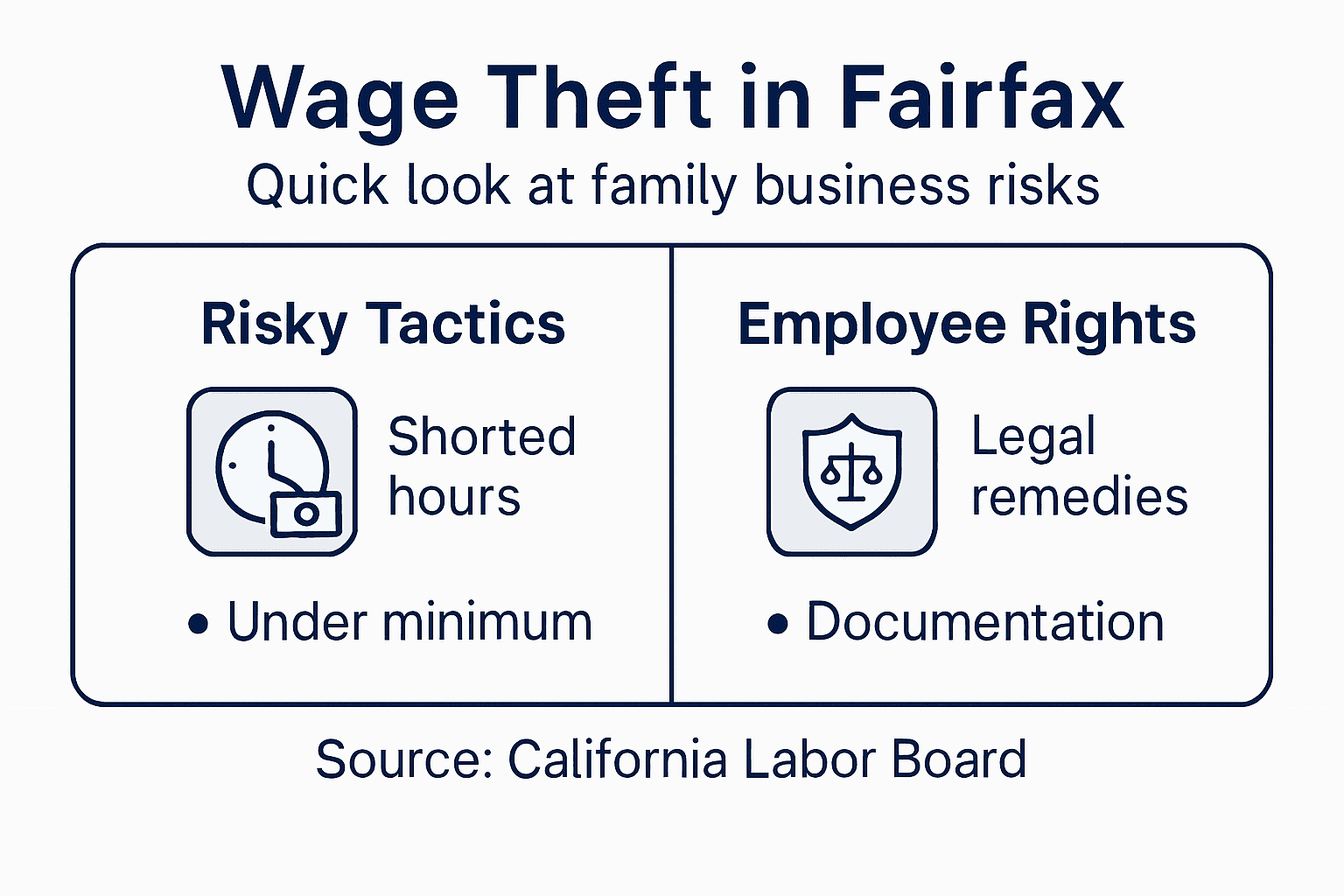
Pro tip: Implement robust payroll tracking systems and conduct regular internal audits to proactively identify and rectify potential wage compliance issues before they escalate into legal challenges.
Prevention Strategies for Wage Theft Risks
Family businesses in the Fairfax District can proactively mitigate wage theft risks through comprehensive compliance and prevention strategies. Understanding and implementing strategic safeguards is crucial for maintaining ethical workplace practices and avoiding potentially devastating legal consequences.
Key prevention strategies include:
- Developing comprehensive written payroll policies
- Maintaining meticulous time and wage records
- Conducting regular internal wage audits
- Providing mandatory employee classification training
- Establishing transparent compensation communication protocols
- Implementing robust timekeeping technology
- Creating clear overtime compensation guidelines
The compliance framework requires family businesses to go beyond simple record-keeping. Employers must actively educate themselves and their workforce about wage and hour regulations, ensuring every employee understands their rights and compensation structure.
Proactive wage compliance is not just a legal requirement—it’s a fundamental aspect of maintaining workplace integrity and employee trust.
Unlike reactive approaches, successful prevention demands continuous education and systematic review. Family businesses should view wage compliance as an ongoing process, not a one-time checklist. This approach helps identify potential issues before they escalate into significant legal challenges.
Pro tip: Invest in digital payroll management systems that automatically track hours, calculate overtime, and generate comprehensive documentation to minimize wage theft risks.
Protect Your Rights Against Wage Theft in Fairfax District Family Businesses
Wage theft poses serious challenges for employees in family-run businesses throughout the Fairfax District. Common issues like unpaid overtime, misclassification, and unauthorized paycheck deductions unfairly strip workers of their hard-earned wages and can create a culture of silent exploitation. If you find yourself unsure about your compensation or hesitant to raise concerns due to family dynamics or employer pressure, it is critical to know your rights and take action quickly.
At Shirazi Law Office, we specialize in Wage and Hour Disputes and understand the complex challenges unique to family businesses in the Fairfax District. Our experienced team is dedicated to protecting employees against unlawful wage practices and enforcing California’s strong labor laws. Don’t wait until wage theft impacts your financial stability and professional reputation. Connect with us today at https://www.shirazilawoffice.com/ or learn more about how we defend worker rights in the Fairfax District.
Take charge now and secure the full compensation you deserve. Your employer must be held accountable and you should never face wage theft alone.
Frequently Asked Questions
What is wage theft in family businesses?
Wage theft in family businesses involves illegally withholding earned compensation from workers, which can include practices like paying below minimum wage, refusing overtime pay, or misclassifying employees.
What are some common tactics used for wage theft?
Common tactics include underreporting hours worked, paying below minimum wage, making unauthorized paycheck deductions, and forcing employees to work off-the-clock without compensation.
How can employees prove wage theft in a family business?
Employees can prove wage theft by maintaining detailed records of hours worked, documenting communication regarding pay, and seeking legal guidance if discrepancies arise.
What legal protections do employees have against wage theft?
Employees have legal protections under California law, which includes minimum wage requirements, overtime compensation, and the ability to file claims with the Labor Commissioner’s Office for unpaid wages.





[…] Avenue’s high-volume restaurants create environments where wage theft risks flourish. Managers often lack proper training on California labor law, while owners prioritize […]