

Workplace boundaries sometimes blur in fast-paced Mid-Wilshire offices, leaving professionals uncertain when behavior crosses into dangerous territory. Facing sexual harassment at work is not only disruptive but also a violation of your fundamental rights under both California and federal law. This guide breaks down key legal protections, outlines exact steps for documenting incidents, and gives you the tools to address misconduct confidently and safely.
Table of Contents
- Defining Sexual Harassment In California Workplaces
- Recognizing Types And Patterns Of Workplace Harassment
- Legal Framework: California And Federal Protections
- How To Report And Document Harassment Incidents
- Employee Rights, Employer Duties, And Retaliation Risks
Key Takeaways
| Point | Details |
|---|---|
| Understanding Harassment Types | Sexual harassment in California includes Quid Pro Quo and Hostile Work Environment, affecting anyone regardless of gender. |
| Documentation is Essential | Keep a detailed log of incidents to support any future claims and strengthen your case. |
| Know Your Rights | Employees have the right to a harassment-free workplace and protections against retaliation when reporting harassment. |
| Legal Framework | Familiarize yourself with both California and federal laws, as California typically offers broader protections. |
Defining Sexual Harassment in California Workplaces
Sexual harassment represents a serious form of workplace discrimination that can profoundly impact professional environments in Mid-Wilshire and across California. Sexual harassment in California encompasses multiple complex dimensions beyond simple inappropriate behavior.
Under California law, sexual harassment involves two primary categories of misconduct:
- Quid Pro Quo Harassment: Where employment benefits are explicitly conditioned on submitting to sexual advances
- Hostile Work Environment: Unwelcome conduct that creates an intimidating, offensive, or hostile workplace atmosphere
The legal definition extends beyond traditional assumptions, recognizing that harassment can occur through various interactions:
- Between individuals of any gender
- Through verbal, physical, or visual communication
- Whether initiated by supervisors, coworkers, or non-employees
Key Characteristics of workplace sexual harassment include:
- Persistent unwelcome sexual advances
- Inappropriate physical contact
- Sexual comments or suggestive remarks
- Display of sexually explicit materials
- Repeated requests for sexual favors
Critical legal standards determine harassment by examining whether the conduct is severe or pervasive enough to create an objectively hostile work environment. This means isolated incidents might not constitute legal harassment, but repeated or extremely inappropriate actions potentially do.

Pro tip: Document every incident of potential harassment with dates, times, witnesses, and specific details to strengthen any future legal claims.
Recognizing Types and Patterns of Workplace Harassment
Workplace harassment extends far beyond simple inappropriate interactions, representing a complex legal and ethical challenge for Mid-Wilshire professionals. California workplace harassment regulations mandate comprehensive understanding of various harassment manifestations that can create toxic work environments.
Harassment patterns typically emerge through multiple interconnected mechanisms:
- Power Dynamics: Harassment often exploits hierarchical workplace relationships
- Repetitive Behavior: Consistent patterns of inappropriate conduct
- Psychological Manipulation: Subtle techniques designed to intimidate or control
Critical harassment patterns include:
- Verbal harassment involving offensive language
- Non-verbal intimidation through gestures or expressions
- Digital harassment through emails, messages, or social media
- Physical proximity and unwelcome physical interactions
Key Harassment Indicators professionals should recognize:
- Persistent unwelcome comments about physical appearance
- Inappropriate sexual jokes or suggestive remarks
- Repeated requests for personal contact outside work
- Deliberate professional isolation or exclusion
- Unwanted physical touching or invasion of personal space
The complexity of harassment means that individual incidents might seem minor, but collectively can create a profoundly damaging workplace environment. Harassment transcends gender, occurring between individuals of any gender, position, or professional status.
Workplace harassment is less about isolated incidents and more about creating a pattern of systemic intimidation and power manipulation.
Pro tip: Maintain a confidential, detailed log of every harassment incident, including dates, specific behaviors, potential witnesses, and your emotional and professional impact.
Legal Framework: California and Federal Protections
Workplace sexual harassment protections in Mid-Wilshire and across California are comprehensively established through a robust dual-layer legal framework combining state and federal statutes. Sexual harassment legal protections provide employees critical safeguards against discriminatory workplace conduct.
The primary legal mechanisms protecting employees include:
- California Fair Employment and Housing Act (FEHA): State-level comprehensive anti-discrimination statute
- Title VII of the Civil Rights Act: Federal-level workplace discrimination protection
- California Civil Rights Department (CRD): State enforcement agency
- Equal Employment Opportunity Commission (EEOC): Federal enforcement agency
Key differences between California and federal protections involve:
- Scope of protected categories
- Damages and compensation limits
- Filing deadlines for complaints
- Employer size requirements
Critical Legal Protections encompass multiple dimensions:
- Protection against quid pro quo harassment
- Safeguards against hostile work environments
- Coverage for all gender identities and expressions
- Prohibitions on retaliatory actions
- Mandatory employer prevention responsibilities
California’s legal framework typically provides broader protections compared to federal standards, offering more comprehensive coverage for employees across diverse workplace settings.
Here’s a summary comparing California vs. federal workplace sexual harassment protections:
| Aspect | California FEHA | Federal Title VII |
|---|---|---|
| Employer Size Requirement | 5 or more employees | 15 or more employees |
| Filing Deadline | 3 years from incident | 180-300 days from incident |
| Protected Categories | Broader, includes gender identity and expression | Focused on sex, gender, race, etc. |
| Damages/Compensation Limits | No statutory caps | Caps based on employer size |
| Enforcement Agency | California Civil Rights Department | Equal Employment Opportunity Commission |
Legal protections are not just rules, but fundamental rights designed to ensure workplace dignity and respect.
Pro tip: Always document potential harassment incidents in detail, including dates, specific behaviors, and potential witnesses, to strengthen any future legal claims.
How to Report and Document Harassment Incidents
Navigating sexual harassment complaints requires strategic, careful documentation and precise reporting mechanisms to protect your professional rights in Mid-Wilshire workplaces. Workplace harassment complaint procedures demand meticulous attention to detail and understanding of legal protocols.
Essential documentation strategies include:
- Contemporaneous Recordkeeping: Log incidents immediately after they occur
- Objective Language: Use neutral, factual descriptions
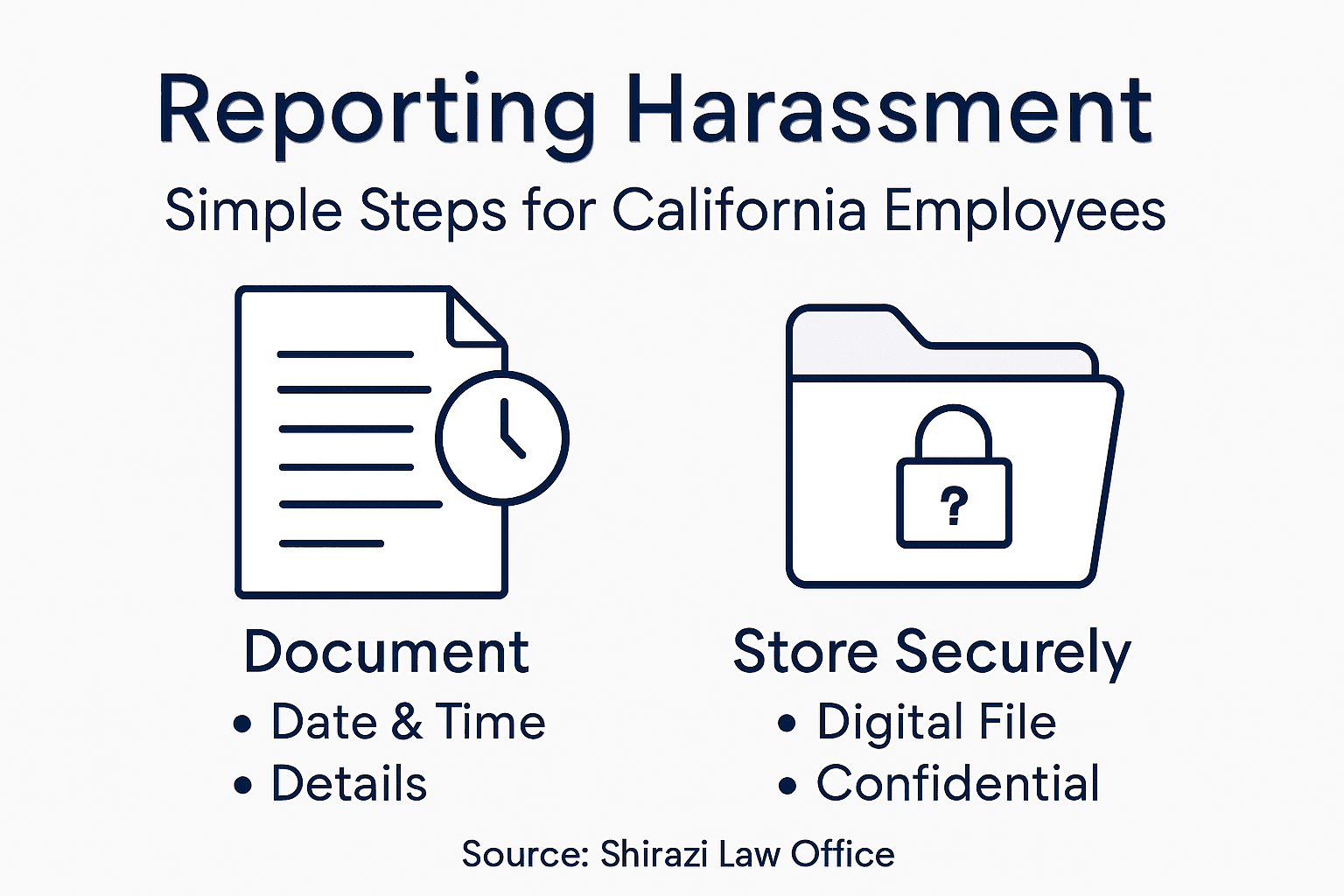
- Comprehensive Details: Include dates, times, locations, and specific behaviors
- Witness Information: Note potential corroborating individuals
Critical reporting steps involve:
- Inform your human resources department in writing
- Provide a detailed, chronological account of incidents
- Retain copies of all communications
- Follow company harassment reporting protocols
- Consider external reporting to California Civil Rights Department
Key Documentation Elements professionals should capture:
- Verbatim quotes of inappropriate statements
- Specific descriptions of inappropriate behaviors
- Electronic communication evidence
- Dates and times of each incident
- Emotional and professional impact statements
Documentation serves multiple critical purposes, functioning as both a personal protection mechanism and potential legal evidence should formal action become necessary.
Thorough, objective documentation transforms your experience from a personal challenge into a legally actionable complaint.
Pro tip: Create a secure, password-protected digital file to store all harassment documentation, ensuring confidentiality and systematic record preservation.
Employee Rights, Employer Duties, and Retaliation Risks
Understanding the intricate landscape of workplace protections requires comprehensive knowledge of employee rights and employer responsibilities in Mid-Wilshire offices. Workplace retaliation legal standards provide critical safeguards against discriminatory practices and punitive actions.
Employee rights encompass multiple fundamental protections:
- Right to a Harassment-Free Workplace: Safe professional environment
- Right to Report: File complaints without fear of retaliation
- Right to Confidentiality: Protect personal information during investigations
- Right to Non-Discrimination: Equal treatment regardless of gender
Employer duties involve critical responsibilities:
- Implement comprehensive anti-harassment policies
- Conduct thorough, impartial investigations
- Take immediate corrective action
- Provide regular employee training
- Maintain confidential reporting mechanisms
Retaliation Warning Signs professionals should recognize:
- Sudden performance evaluations change
- Unexpected job reassignment
- Reduction in work hours or responsibilities
- Exclusion from professional opportunities
- Hostile work environment following complaint
Retaliation can manifest through subtle and explicit actions, making documentation and understanding of legal protections crucial for workplace safety.
Use this table to quickly identify major retaliation warning signs after reporting harassment:
| Retaliation Indicator | Typical Timing | Possible Impact |
|---|---|---|
| Negative performance review | Within weeks of complaint | Threat to job security |
| Workplace exclusion | Shortly after reporting | Professional isolation |
| Loss of responsibilities | Visible within a month | Reduced career growth |
| Hostile interactions | Frequent post-complaint | Increased workplace stress |
Retaliation is not just an ethical violation, but a legally actionable offense with significant consequences for employers.
Pro tip: Consult an employment attorney immediately if you experience potential workplace retaliation, preserving all communication and documentation.
Get Expert Help with Sexual Harassment Complaints in Mid-Wilshire Workplaces
Experiencing sexual harassment at work can feel overwhelming and isolating. When unwelcome advances or a hostile work environment disrupt your professional life, understanding your rights and taking effective action becomes critical. This article highlighted the importance of documenting incidents and knowing legal protections under California law. If you are navigating these challenges in Mid-Wilshire, you deserve experienced legal support that protects your dignity, enforces employer accountability, and stops retaliation before it escalates.
The Sexual Harassment and Hostile Work Environment resources at Shirazi Law Office are designed specifically to help professionals like you. Our firm focuses exclusively on employment law in Los Angeles, including Mid-Wilshire. We understand the emotional toll and legal complexity involved. Do not wait until the situation worsens. Visit our Mid-Wilshire page to learn more about how we serve your area.
Take control of your work life today by contacting Shirazi Law Office. Get dedicated legal guidance that helps you assert your rights and pursue fair outcomes. Protect yourself with the support you need right now at https://www.shirazilawoffice.com/.
Frequently Asked Questions
What constitutes sexual harassment in the workplace?
Sexual harassment in the workplace includes unwanted sexual advances, offensive remarks, or a hostile work environment that can hinder an employee’s ability to work.
How should I document incidents of sexual harassment?
Document incidents by keeping a detailed log with dates, times, specific behaviors, and potential witnesses. Use objective language and include emotional impacts to strengthen your claims.
What legal protections exist for employees experiencing harassment?
Employees are protected under laws like the California Fair Employment and Housing Act and Title VII of the Civil Rights Act, which prohibit discrimination and harassment based on gender and other factors.
What steps should I take to report sexual harassment?
To report sexual harassment, inform your human resources department in writing, provide a chronological account of incidents, retain copies of all communications, and follow your company’s reporting protocols.





[…] owners, property managers, and other tenant companies whose employees create hostile conditions. Sexual harassment complaints in Mid-Wilshire offices require understanding these […]