
Facing a serious health issue at work can quickly become complicated for healthcare professionals in Westwood. The rules around medical leave and disability rights are shaped by powerful laws like the Americans with Disabilities Act and the Family and Medical Leave Act, which grant vital protections including job security, confidentiality, and the right to reasonable accommodations. Understanding disability discrimination protections empowers you to stand up for your rights and confidently manage workplace challenges related to illness or injury.
Table of Contents
- Medical Leave and Disability Rights Explained
- Types of Protected Leave for Healthcare Staff
- California Laws Governing Employee Leave
- Eligibility and Filing Requirements for Westwood
- Employer Responsibilities and Retaliation Risks
- Common Mistakes and Enforcement Actions
Key Takeaways
| Point | Details |
|---|---|
| Understanding Rights | Healthcare workers should be aware of their rights under the ADA and FMLA, including job protection and reasonable accommodations for medical conditions. |
| State-Specific Protections | California laws like the CFRA and PDL provide additional leave benefits and protections beyond federal regulations. |
| Documentation is Key | Maintaining detailed medical documentation and communicating openly with HR are essential for successfully navigating leave requests. |
| Know Employer Responsibilities | Employers must protect employees’ rights during medical leave and cannot discriminate based on health conditions. |
Medical Leave and Disability Rights Explained
Healthcare workers in Westwood face complex medical leave and disability regulations that protect their employment rights. Understanding these legal protections is critical for navigating workplace challenges related to health conditions. Disability accommodation rights are particularly nuanced for medical professionals.
Federal laws provide comprehensive protections for workers managing medical conditions. The Americans with Disabilities Act (ADA) and Family and Medical Leave Act (FMLA) establish fundamental rights for employees. Key protections include:
- Job-protected medical leave
- Right to reasonable workplace accommodations
- Continuation of health benefits during leave
- Protection against workplace discrimination
- Confidentiality of medical information
Under the ADA’s disability rights guidelines, employers with 15 or more employees must provide reasonable accommodations for qualified individuals with physical or mental impairments. These accommodations might include modified work schedules, assistive technologies, or temporary medical leave.
Healthcare workers should understand their specific rights. Documentation from healthcare providers is crucial when requesting medical accommodations. Employers cannot discriminate against workers based on disability status, and they must engage in an interactive process to determine appropriate workplace adjustments.
Eligibility Factors for medical leave and disability rights typically include:
- Employment duration
- Employer size
- Specific medical condition
- Impact on major life activities
- Documentation of disability
Confidentiality and non-retaliation are fundamental principles protecting workers who assert their medical leave and disability rights.
Pro tip: Maintain detailed medical documentation and communicate transparently with your human resources department when requesting accommodations.
Types of Protected Leave for Healthcare Staff
Healthcare workers in Westwood have access to multiple types of protected leave under federal and state regulations. Paid family and medical leave policies provide critical protections for medical professionals managing personal and family health challenges.
The primary types of protected leave for healthcare staff include:
- Personal Medical Leave: Time off for an employee’s own serious health condition
- Family Care Leave: Providing care for a critically ill family member
- Parental Bonding Leave: Time after birth or adoption of a child
- Military-Related Leave: Supporting family members in military service
- Pregnancy-Related Medical Leave: Accommodations for pregnancy and childbirth
Under the Family and Medical Leave Act (FMLA), eligible healthcare workers can receive up to 12 weeks of unpaid, job-protected leave. The specifics of coverage depend on several factors:
- Employer size (typically 50+ employees)
- Employee’s length of service
- Hours worked in the previous year
- Specific medical condition
- Documentation from healthcare providers
Healthcare workers must carefully document their leave requirements and communicate transparently with their employers to ensure protection under these regulations.
State-level programs may offer additional paid leave benefits beyond federal mandates. California, in particular, has robust protections that supplement FMLA requirements, providing more comprehensive support for medical professionals.
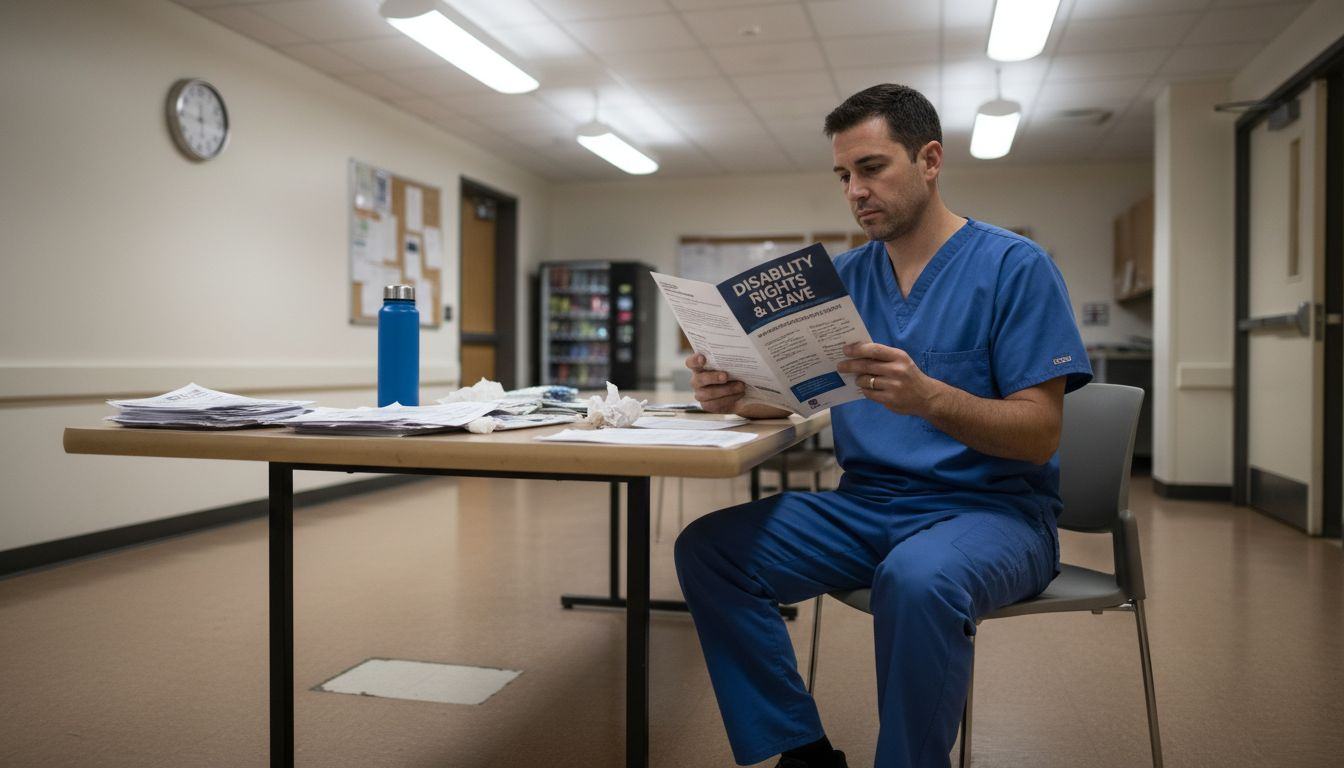
Pro tip: Maintain detailed medical documentation and understand your specific eligibility requirements before requesting protected leave.
California Laws Governing Employee Leave
Healthcare workers in Westwood benefit from robust state-level protections designed to safeguard their employment rights during medical and family challenges. California Family Rights Act regulations provide comprehensive frameworks for employee leave that extend beyond federal mandates.
Key California leave laws include:
- California Family Rights Act (CFRA): Provides job-protected unpaid leave
- Pregnancy Disability Leave (PDL): Specific protections for pregnancy-related conditions
- State Disability Insurance (SDI): Wage replacement during medical leave
- Paid Family Leave (PFL): Partial wage replacement for family care
- Small Employer Leave Provisions: Protections for businesses with 5-49 employees
Under the CFRA, eligible employees can access critical protections:
- Up to 12 weeks of unpaid, job-protected leave
- Eligibility for employers with 5+ employees
- Qualifying reasons including serious health conditions
- Protection against workplace discrimination
- Potential concurrent use with other leave programs
California’s leave laws are designed to provide flexibility and protection for workers facing significant personal and family medical challenges.
The state’s employment regulations offer comprehensive leave benefits that go beyond federal requirements. Healthcare workers in Westwood should understand these nuanced protections, which can include wage replacement, job protection, and continued health benefits during extended leave periods.
Here’s how federal and California medical leave laws compare for healthcare workers:
| Feature | Federal FMLA | California CFRA/State Laws |
|---|---|---|
| Job Protection | Up to 12 weeks unpaid leave | Up to 12 weeks unpaid leave |
| Employer Size | 50 employees or more | 5 employees or more |
| Wage Replacement | Not provided | Partial wage replacement available |
| Covered Conditions | Serious health, family care, childbirth | Expanded qualifying conditions |
| Pregnancy Protections | General coverage only | Dedicated Pregnancy Disability Leave |
Pro tip: Carefully document your medical conditions and consult with your human resources department to maximize your leave benefits under California law.
Eligibility and Filing Requirements for Westwood
Healthcare workers in Westwood must navigate specific eligibility criteria for medical leave that protect their employment rights. Understanding these requirements is crucial for successfully accessing medical and family leave benefits.
Key eligibility requirements include:
- Minimum 12 months of employment (not necessarily consecutive)
- At least 1,250 hours worked in the previous 12 months
- Employment with a company of 5 or more employees
- Qualifying medical or family care reasons
- Proper medical documentation
The filing process for medical leave involves several critical steps:
- Obtain medical certification from healthcare provider
- Submit formal leave request to employer
- Provide required documentation within 15 days
- Await employer response within 5 business days
- Maintain communication throughout leave period
Precise documentation and timely communication are essential when requesting medical leave in California.
Employers must respond to leave requests promptly and maintain health benefits during approved leave periods. Healthcare professionals should carefully track their employment history and gather comprehensive medical documentation to support their leave applications.
Pro tip: Create a comprehensive medical leave file with all necessary documentation before initiating your leave request to streamline the approval process.
Employer Responsibilities and Retaliation Risks
Healthcare workers in Westwood must understand the critical legal protections against workplace discrimination and retaliation. Workplace retaliation laws provide comprehensive safeguards for employees exercising their medical leave rights.
Employer responsibilities include:
- Maintaining job protection during medical leave
- Continuing health insurance benefits
- Avoiding discriminatory actions
- Providing clear communication about leave policies
- Respecting employee medical privacy
Retaliation can manifest through various adverse actions:
- Wrongful termination
- Demotion or reduced responsibilities
- Salary or hour reductions
- Hostile work environment
- Threats or intimidation tactics
Employers cannot legally punish employees for asserting their medical leave and disability rights under California law.
Healthcare professionals experiencing potential retaliation should document workplace incidents carefully. The Labor Commissioner’s office enforces worker protections, and employees can file formal complaints regardless of immigration status.
Pro tip: Maintain a detailed, dated record of all workplace interactions and communications related to your medical leave request to protect against potential retaliation.
Common Mistakes and Enforcement Actions
Healthcare workers in Westwood must be aware of potential pitfalls when navigating medical leave regulations. Medical leave claim mistakes can significantly impact an employee’s rights and job security.
Common mistakes healthcare workers often make include:
- Failing to provide timely medical certification
- Misunderstanding leave law differences
- Inadequate documentation of medical conditions
- Not communicating clearly with human resources
- Overlooking specific employer notification requirements
Potential enforcement actions by California agencies address various violations:
- Denying job-protected leave
- Unauthorized disciplinary actions
- Failure to reinstate employees
- Discriminatory treatment during leave
- Misclassification of leave requests
California agencies take a strict approach to protecting employee medical leave rights and will investigate complaints thoroughly.
Employers can face significant penalties for workplace leave law violations. The Department of Fair Employment and Housing provides robust resources for employees to report and seek relief from illegal practices.
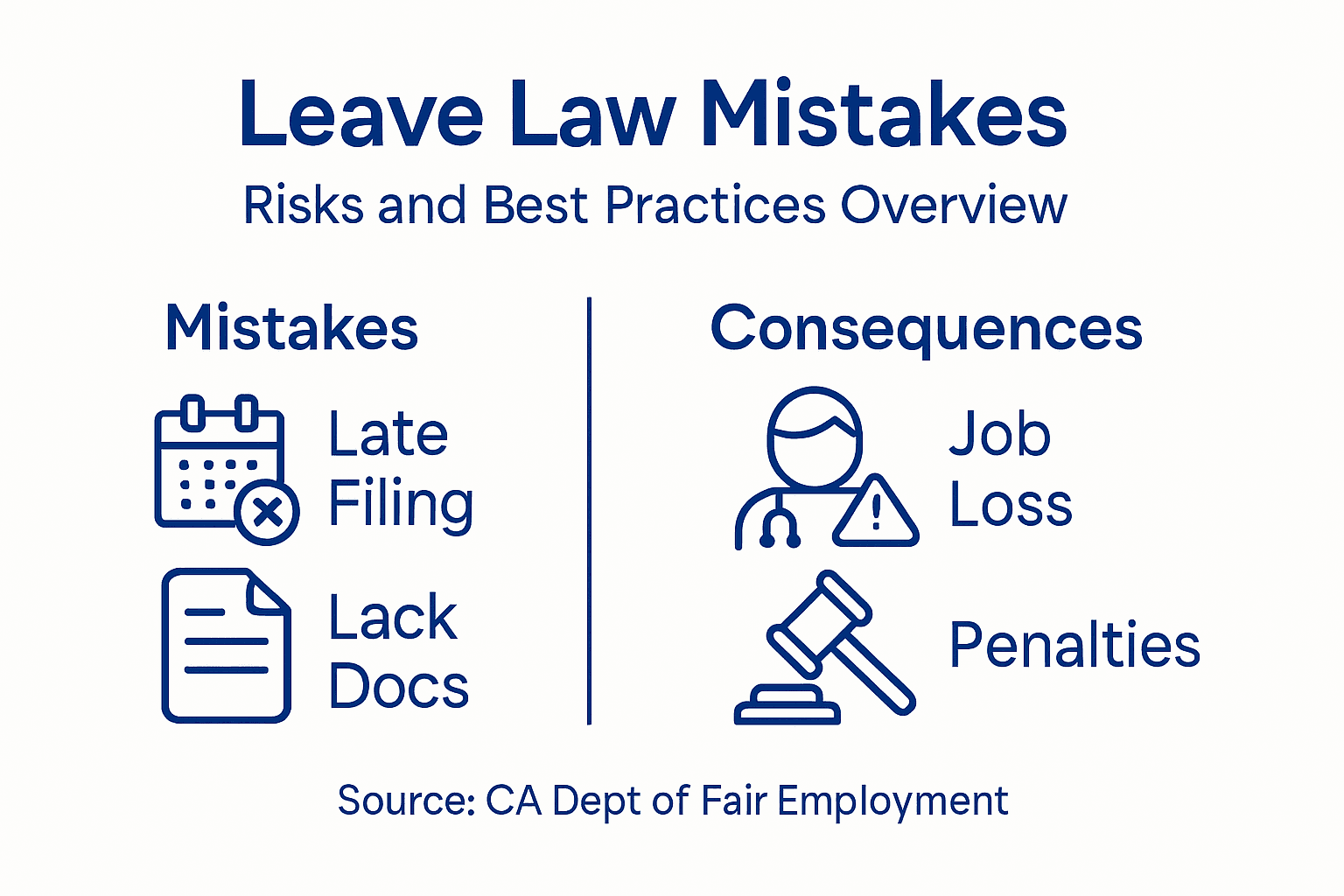
The following table summarizes common missteps and effective prevention strategies for filing medical leave:
| Mistake | Possible Consequence | Best Practice |
|---|---|---|
| Late documentation | Denied or delayed leave | Submit paperwork promptly |
| Vague medical records | Reduced legal protection | Provide clear, detailed notes |
| Poor employer communication | Leave misunderstandings | Maintain open HR dialogue |
| Neglecting eligibility | Loss of job protection | Confirm all qualifying requirements first |
Pro tip: Maintain a comprehensive file of all medical documentation, communication records, and leave requests to protect yourself against potential workplace disputes.
Protect Your Medical Leave and Disability Rights with Expert Legal Support
Navigating the complexities of medical leave and disability rights as a healthcare worker in Westwood can feel overwhelming. You may be concerned about job protection, securing reasonable accommodations, or avoiding workplace retaliation. Understanding federal and California laws like the ADA, FMLA, and CFRA is critical but often confusing. Key challenges include meeting eligibility requirements, providing proper documentation, and ensuring your employer respects your rights without discrimination.
At Shirazi Law Office, we specialize in fighting for the rights of employees facing disability discrimination and medical leave disputes. Whether you need guidance on reasonable accommodations or protection against retaliation, our team provides dedicated support tailored to your unique situation. Learn more about your rights as a healthcare professional in Westwood by exploring our Workplace Disability Discrimination resources and local legal expertise at our Westwood Practice.
Don’t wait until your workplace rights are compromised. Act now to protect your job security and well-being by contacting us at Shirazi Law Office for a confidential consultation. Secure the legal protection you deserve today.
Frequently Asked Questions
What are my rights regarding medical leave as a healthcare worker?
As a healthcare worker, you have the right to job-protected medical leave under federal laws like the Family and Medical Leave Act (FMLA) and the Americans with Disabilities Act (ADA). These laws ensure you can take leave for serious health conditions without the risk of losing your job.
How do I request reasonable accommodations for a disability at work?
To request reasonable accommodations, you should provide documentation from your healthcare provider detailing your medical condition and the specific accommodations needed. You’ll then need to submit this information to your employer and engage in an interactive process to determine suitable adjustments.
What types of leave are protected under California law for healthcare workers?
In California, healthcare workers can access various types of protected leave, such as personal medical leave, family care leave, parental bonding leave, military-related leave, and pregnancy-related medical leave. These leaves can often run concurrently with FMLA protections.
What should I do if I experience retaliation for taking medical leave?
If you face retaliation for taking medical leave, document any adverse actions you experience, such as changes in job responsibilities or hostile work environment incidents. You can file a complaint with the Labor Commissioner’s office, which enforces worker protections against discrimination and retaliation.