

Walking into a Beverly Grove office, you may notice men and women working side by side but leaving with very different paychecks. For female professionals, the gender pay gap means earning around 82 to 85 percent of what men make for the same full-time, year-round work, according to Pew Research Center data. This persistent issue directly impacts your financial stability, career growth, and long-term security. Understanding the real reasons behind pay disparities—and your legal options in California—helps you protect your income and advocate for change.
Table of Contents
- Defining The Gender Pay Gap And Common Myths
- How Wage Disparities Affect Women In Beverly Grove
- Legal Protections For Equal Pay In California
- Steps For Addressing Gender Wage Discrimination
- Employer Obligations And Compliance Risks
Key Takeaways
| Point | Details |
|---|---|
| Understanding the Gender Pay Gap | The gender pay gap reflects systemic inequalities, with women earning significantly less than men for comparable work. Discrimination, not just personal choices, contributes to this disparity. |
| Impact on Women in Beverly Grove | Women in Beverly Grove earn approximately 82-85% of what men earn, leading to substantial lifetime earnings losses. This gap notably affects women of color who experience compounded discrimination. |
| Legal Protections in California | California has robust equal pay laws mandating equal pay for substantially similar work, regardless of job title. Employers must disclose salary estimates to enhance transparency and reduce wage gaps. |
| Addressing Discrimination | To address wage discrimination, document disparities and gather evidence before approaching HR or legal counsel. A strategic and informed approach is crucial for effective resolution. |
Defining the Gender Pay Gap and Common Myths
The gender pay gap is the measurable difference between what men and women earn for comparable work. According to the OECD, the gender wage gap is defined as the difference between median earnings of men and women relative to median earnings of men, expressed as a percentage. This means if men earn $1.00, women earn approximately $0.80 to $0.83 for the same position and experience level.
In Beverly Grove’s corporate environment, this translates to real dollars leaving your paycheck every single year. A woman earning $80,000 annually faces the same gap as someone making $200,000. The percentages compound over decades, costing women hundreds of thousands in lifetime earnings, retirement savings, and financial security.
Here’s where misconceptions take hold. Many employers claim the gap simply reflects women’s “choices”—taking time off, pursuing different careers, or working fewer hours. This narrative, while common, oversimplifies a complex reality. Research shows the gap cannot be fully explained by differences in education or experience alone, indicating that discrimination and structural inequalities play a significant role.
The unadjusted gap (the raw 20 percent difference) accounts for all earnings disparities without considering job titles or hours worked. The adjusted gap attempts to control for these factors, but even when adjusted, a measurable disparity remains. That remaining gap points directly to discrimination.
Another myth: “Women just need to negotiate better.” While salary negotiation matters, it cannot eliminate systemic bias. If you’re in a position where similar male colleagues earn 15 to 25 percent more despite identical qualifications, better negotiation skills won’t fully bridge that gap created by institutional pay practices.
Pro tip: Document your compensation relative to male colleagues in similar roles and tenure levels. If disparities exist, preserve this evidence—it becomes critical if you pursue legal action regarding discriminatory pay practices.
How Wage Disparities Affect Women in Beverly Grove
Wage disparities in Beverly Grove hit harder than national statistics suggest. Women in this Los Angeles community earn approximately 82-85% of what men earn for the same full-time, year-round work. That 15 to 18 percent gap compounds year after year, turning a temporary disadvantage into a permanent financial disadvantage that follows women through their entire careers.

Consider the practical impact on your life right now. If you earn $100,000 annually, a male colleague in the identical position earns $15,000 to $18,000 more per year. Over ten years, that’s $150,000 to $180,000 in lost income. After thirty years, the cumulative effect reaches $450,000 to $540,000 in missed earnings, retirement contributions, and compound growth. Your financial security—your ability to save for retirement, buy property, support your family—shrinks measurably because of gender-based pay discrimination.
The problem intensifies for women of color in Beverly Grove’s professional services and corporate sectors. Wage disparities vary significantly by race, with some women earning as low as 73 cents for every dollar earned by men. This creates a dual disadvantage: both gender and racial discrimination compound the pay gap simultaneously.
Wage disparities also reduce your negotiating power and financial autonomy. When you earn less from the start, you have fewer resources to invest, advocate for yourself, or leave unhealthy work situations. Women trapped in hostile environments or facing discrimination often cannot afford to leave because they’ve been systematically underpaid for years. The wage gap becomes a tool of control.
Beyond immediate income loss, disparities damage long-term financial security. Lower lifetime earnings mean smaller retirement accounts, reduced Social Security benefits, and decreased inheritance for your children. One generation’s wage discrimination becomes the next generation’s economic disadvantage.
Here’s a summary of how wage disparities affect women in Beverly Grove compared to national averages:
| Group | Beverly Grove Earnings (% of Men’s) | National Average (% of Men’s) | Lifetime Loss (30 Years) |
|---|---|---|---|
| Women (overall) | 82-85% | 80-83% | $450,000 – $540,000 |
| Women of Color | As low as 73% | Around 75% | Over $700,000 |
Pro tip: Request a comprehensive pay equity analysis comparing your salary to male colleagues in identical or substantially similar roles—this documentation becomes essential evidence if discrimination claims arise later.
Legal Protections for Equal Pay in California
California offers some of the strongest equal pay protections in the nation. The state law prohibits paying employees differently based on sex, race, ethnicity, sexual orientation, or gender identity when performing substantially similar work. This protection applies regardless of employer intent or justification. If you and a male colleague perform work requiring substantially similar skill, effort, responsibility, and working conditions, California law mandates equal compensation.
What counts as “substantially similar” work is broader than you might think. It does not require identical job titles or duties. An employer cannot claim two positions are different simply because they have different names or minor variations in responsibilities. California’s legal framework focuses on actual skill, effort, responsibility, and working conditions as the measure of comparable work, protecting you from technical job classification schemes designed to justify pay discrimination.
Transparency requirements strengthen your ability to identify discrimination. Starting January 1, 2026, California’s enhanced Pay Equity Enforcement Act requires employers to provide a good faith salary estimate upon hire. This transparency makes it harder for employers to hide wage disparities and easier for you to recognize if you are being underpaid compared to peers. Documentation of offered salaries becomes crucial evidence.
The law’s expanding definition of pay discrimination now includes non-binary genders and all forms of compensation beyond base salary. Bonuses, commissions, stock options, health benefits, and retirement contributions all count. An employer cannot offer men superior benefits packages while claiming equal pay for equal work.
California law also supplements federal Equal Pay Act protections, meaning you have multiple legal avenues to pursue discrimination claims. State law is often more favorable to employees than federal standards. If you work in professional services or corporate Beverly Grove positions, you have substantial legal standing to challenge wage discrimination through California courts.
Pro tip: Request your employer’s written job description, performance metrics, and compensation structure in writing, creating documentary evidence of what your role actually entails and how your pay compares to similarly situated male colleagues.
The table below compares key legal protections for equal pay in California:
| Legal Protection | What It Covers | Application Scope | Business Impact |
|---|---|---|---|
| CA Equal Pay Act | Sex, race, ethnicity, orientation | Substantially similar work, not just job title | Broad coverage, strict compliance needed |
| Pay Transparency | Mandatory salary disclosure | Applies to new hires from 2026 | Reduces hidden wage gaps |
| Expanded Definition | Includes bonuses, benefits, non-binary status | All compensation forms | Increases legal risk for employers |
Steps for Addressing Gender Wage Discrimination
Addressing gender wage discrimination requires a strategic, documented approach. Start by gathering concrete evidence of the disparity. Collect your offer letters, pay stubs, performance reviews, and any documentation showing your responsibilities and qualifications. Request written clarification of your job duties, performance metrics, and compensation structure from your employer. This creates an official record of what your position actually entails.
Next, research comparable positions at your company and in the Beverly Grove market. Identify male colleagues performing substantially similar work and determine what they earn. Use salary databases, industry reports, and networking conversations to establish external benchmarks. This comparative analysis becomes your evidence that discrimination exists, not coincidence or performance differences.
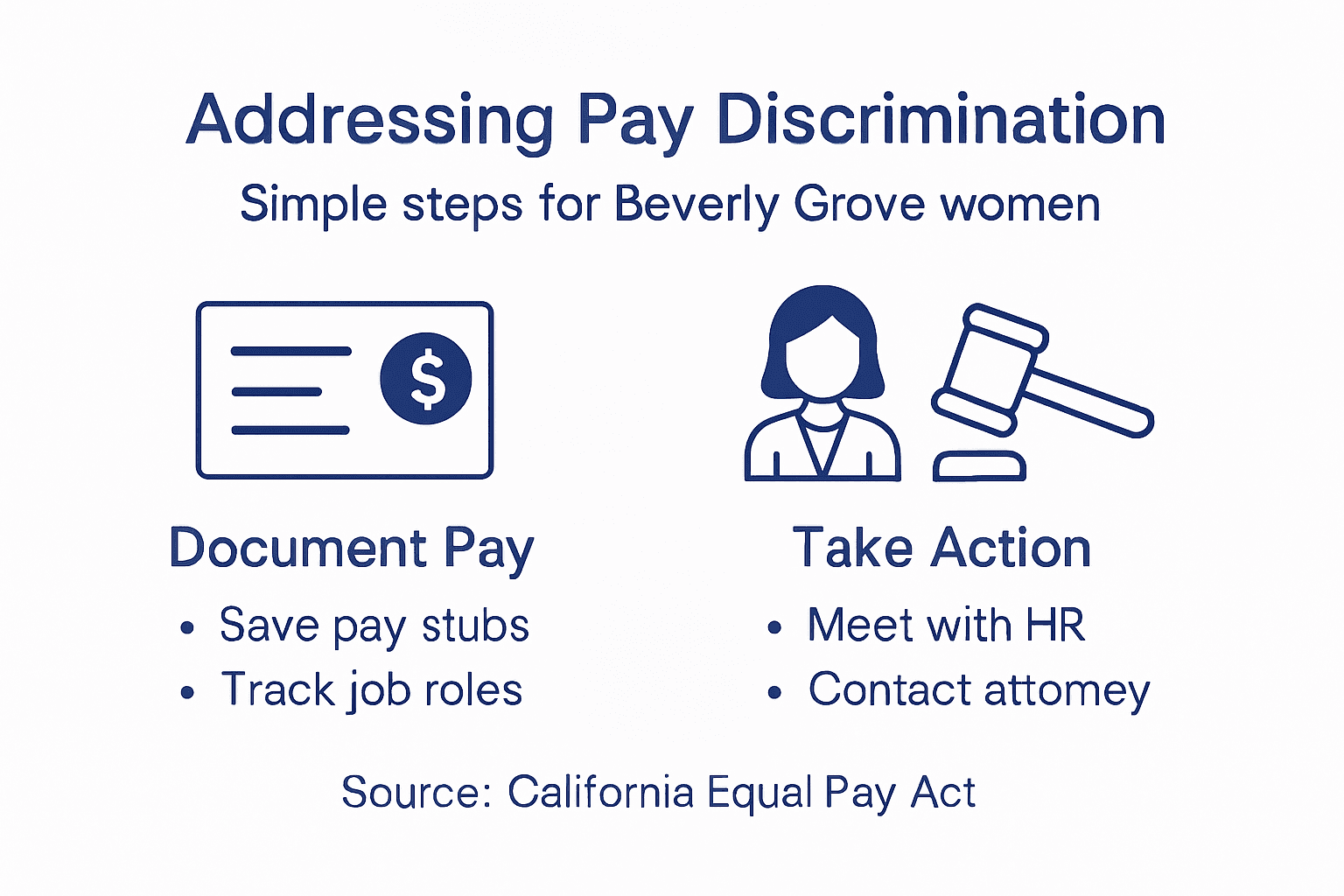
Document everything meticulously. Keep detailed records of salary discussions, emails about compensation, and any statements suggesting gender influenced pay decisions. Policy strategies like pay transparency requirements and bans on salary history inquiries create legal frameworks protecting your right to discuss compensation and challenge discrimination systematically.
Consider raising the issue internally first if you feel safe doing so. Request a formal meeting with HR or your manager to discuss pay equity. Present your documented evidence professionally and ask for a specific explanation of the wage disparity. Request a written response. This creates an internal record and gives the employer an opportunity to correct the problem voluntarily.
If internal resolution fails, consult an employment law attorney immediately. California law allows you to challenge wage discrimination in court. An attorney can file administrative complaints, demand documentation through discovery, and pursue damages including back pay, front pay, and penalties. Many Beverly Grove professionals recover substantial settlements without trial.
Pro tip: Never discuss your discovery of wage discrimination on company email or through official HR channels until you have copies of all relevant pay documentation and have consulted with an employment attorney about your rights.
Employer Obligations and Compliance Risks
California employers face significant legal obligations regarding equal pay. They must compensate men and women equally for substantially equal work involving similar skill, effort, and responsibility under comparable working conditions. This is not optional guidance. It is binding legal requirement with serious consequences for violations.
Employers cannot hide behind job title differences or minor variations in duties to justify wage gaps. Under the Equal Pay Act of 1963, employers must carefully evaluate job roles and compensation structures to ensure compliance and mitigate liability. If you perform substantially similar work to a male colleague, your employer is legally required to pay you the same amount. Period.
Non-compliance exposes employers to substantial financial liability. When wage discrimination is proven, employers must pay back wages covering the entire period of discrimination, often spanning multiple years. A woman earning $100,000 annually who discovers a 15 percent wage gap may recover $15,000 per year going back four, five, or even six years. That quickly becomes $60,000 to $90,000 in back pay alone, before penalties and attorney fees.
Effective compliance requires Beverly Grove employers to conduct regular pay equity assessments. This means systematically comparing compensation across all positions, identifying disparities, and documenting business justifications for any differences. Employers who fail to conduct these assessments invite litigation and demonstrate deliberate indifference to compliance obligations.
California also imposes penalties beyond back wages. Courts can award front pay (future lost wages), emotional distress damages, and punitive damages in cases of intentional discrimination. The employer also pays the employee’s attorney fees and court costs, multiplying the total financial exposure dramatically. Many Beverly Grove employers settle discrimination cases for six figures rather than face trial.
Transparency requirements strengthen employer accountability. When employers must disclose salary ranges and pay practices, discrimination becomes harder to conceal. Smart employers embrace compliance proactively rather than waiting for employee complaints and lawsuits.
Pro tip: If you suspect your employer is intentionally maintaining wage disparities despite multiple employees raising concerns, this demonstrates knowing non-compliance and increases the likelihood of punitive damages in litigation.
Take Control of Your Rights Against Gender Pay Discrimination in Beverly Grove
If you are facing the challenges of unequal pay despite performing substantially similar work, the emotional and financial toll can feel overwhelming. The persistent gender pay gap in Beverly Grove is not just a statistic—it impacts your lifetime earnings, retirement security, and professional dignity. Understanding key concepts like “substantially similar work” and legal protections under California law is critical for protecting yourself from unjust wage disparities.
At Shirazi Law Office, we specialize in Gender Discrimination cases that affect women in Beverly Grove and across Los Angeles. Our focused expertise empowers you with strategic representation tailored to your situation so you can challenge pay inequity effectively. Do not let systemic bias limit your financial future or silence your voice. Visit our Beverly Grove page to learn more about how we serve local clients. Protect your workplace rights by consulting with us today at Shirazi Law Office. The sooner you act, the stronger your case and the better your chance to secure fair compensation and dignity at work.
Frequently Asked Questions
What is the gender pay gap?
The gender pay gap is the measurable difference between what men and women earn for comparable work, often expressed as a percentage. For example, if men earn $1.00, women typically earn about $0.80 to $0.83 for the same job and experience level.
How do wage disparities affect women financially?
Wage disparities can lead to significant financial loss for women, compounding over the years. For instance, a woman earning $100,000 may lose $15,000 to $18,000 annually compared to a male colleague in the same position, amounting to hundreds of thousands in lost income over a career.
What legal protections exist for women facing wage discrimination?
California law prohibits pay discrimination based on sex and other factors for workers performing substantially similar work. This law offers strong protections, allowing women to seek equal pay for equal work, regardless of job titles.
What steps can women take to address gender wage discrimination?
Women can begin by documenting their compensation and duties compared to male colleagues, researching salary benchmarks, and requesting a formal pay equity analysis from their employer. If issues persist, it may be advisable to consult an employment law attorney for guidance on possible legal action.