
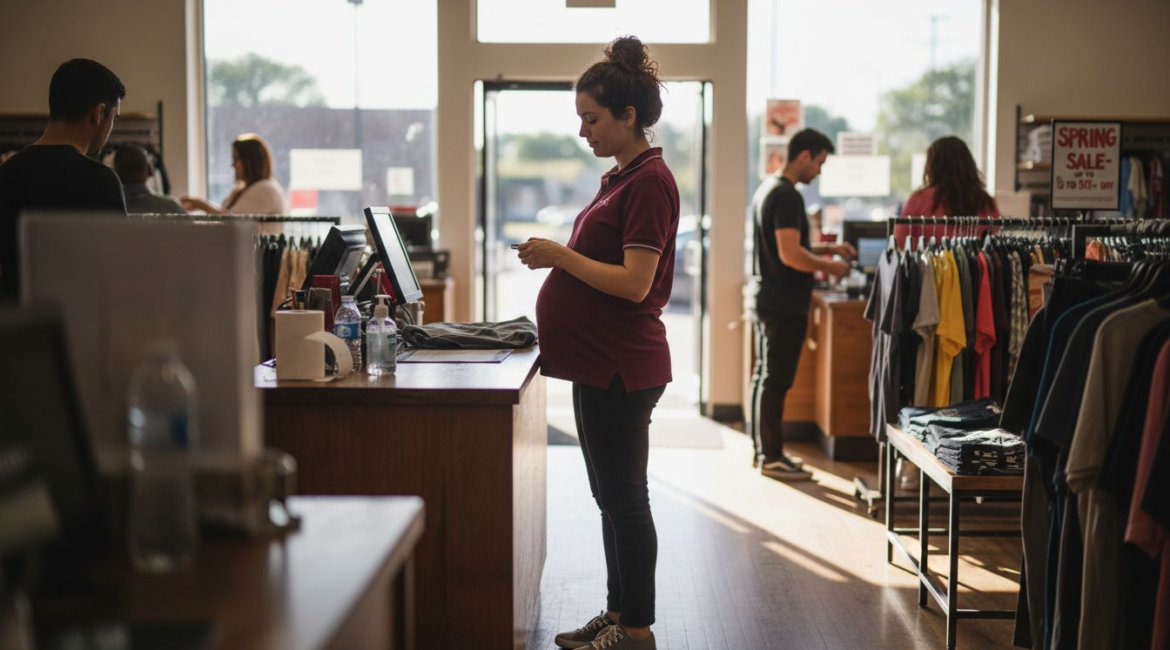
Sudden schedule changes or unexplained cutbacks in hours can leave pregnant retail workers feeling vulnerable in the Fairfax District of Los Angeles. Pregnancy discrimination is often subtle, yet it is illegal under both federal and California law. Pregnancy discrimination occurs when employment decisions are made based on pregnancy, childbirth, or related medical conditions. This article lays out how the law protects you, what counts as discrimination in retail, and key steps to safeguard your rights.
Table of Contents
- Defining Pregnancy Discrimination In Fairfax Retail
- Types Of Discrimination Facing Pregnant Employees
- California Laws Protecting Pregnant Workers
- Employee Rights And Employer Responsibilities
- Risks Of Non-Compliance For Businesses
- Legal Remedies For Victims Of Discrimination
Key Takeaways
| Point | Details |
|---|---|
| Understanding Discrimination | Pregnancy discrimination involves adverse employment actions based on pregnancy status, and it is illegal under both federal and California laws. |
| Employee Rights | Employees in Fairfax retail have the right to equal treatment and reasonable accommodations for pregnancy-related needs. |
| Documentation Importance | Documenting interactions regarding pregnancy with your employer is crucial for providing evidence in discrimination cases. |
| Legal Remedies | Victims of pregnancy discrimination can seek various remedies, including back pay, reinstatement, and policy changes through legal channels. |
Defining Pregnancy Discrimination in Fairfax Retail
Pregnancy discrimination in the workplace isn’t always obvious. It doesn’t always show up as someone directly saying “you’re pregnant, so we won’t hire you.” Instead, it can appear as sudden schedule changes, unexpected terminations, denied promotions, or being reassigned to less desirable positions after your employer learns you’re pregnant. If you work in retail in the Fairfax District, understanding what legally constitutes pregnancy discrimination is your first step toward protecting yourself.
Pregnancy discrimination occurs when an employer makes employment decisions based on pregnancy, childbirth, or related medical conditions. This is illegal under federal law, specifically the Pregnancy Discrimination Act, which amended Title VII of the Civil Rights Act. The law is remarkably broad in scope. It doesn’t just protect current pregnancy. It covers past pregnancies, potential pregnancy, and medical conditions related to pregnancy like postpartum conditions and lactation. Your employer cannot legally discriminate against you for seeking fertility treatments, experiencing pregnancy complications, taking maternity leave, or breastfeeding. The protection extends across every employment decision: hiring, firing, compensation, job assignments, promotions, benefits eligibility, and working conditions.
Retail environments in Fairfax present particular vulnerabilities. Retail typically involves physical demands, customer interaction, and rigid scheduling. A pregnant employee might face pressure to take unscheduled leave, be reassigned to less desirable shifts, or receive fewer hours because management assumes a pregnant worker cannot handle the job. Pregnancy discrimination in retail law addresses these specific scenarios. What makes this illegal is not whether the employer’s concerns might be understandable. Rather, the law prohibits making any employment decision based on pregnancy status. Even if your manager frames a decision as “protecting you” or “looking out for your health,” it’s still discrimination if pregnancy is the reason.
Under California law, which provides additional protections beyond federal requirements, employers must treat pregnant employees the same as non-pregnant employees with similar limitations or abilities. An employer cannot require you to take leave simply because you’re pregnant. They cannot force you to work different hours. They cannot exclude you from job responsibilities. The law does allow employers to require reasonable medical documentation about your condition and need for accommodations, but they must provide those same accommodations to other employees with similar limitations.
Pro tip: Document every conversation about your pregnancy with your employer, including dates, who was present, and what was discussed. Keep copies of emails, text messages, and any written communications regarding your work assignments, schedule, or any negative treatment you experience. This contemporaneous record becomes crucial evidence if you eventually need to pursue legal action.
Types of Discrimination Facing Pregnant Employees
Pregnancy discrimination in retail workplaces takes many forms, and not all of it looks like outright rejection or firing. In fact, many pregnant employees in Fairfax retail face subtle, ongoing discrimination that chips away at their job security, hours, and advancement opportunities. Understanding the specific ways discrimination can manifest helps you recognize when your rights are being violated and take action.
One of the most common forms is refusal to hire or promote. Employers may decide not to hire a pregnant applicant or pass over a pregnant employee for advancement because they assume she won’t be committed to the job or will need excessive time off. Retail managers sometimes make these assumptions without any evidence. Another widespread issue is reduction of hours or reassignment to undesirable positions. A pregnant cashier might suddenly be moved to stockroom duties she wasn’t trained for, or her hours get cut significantly. Employers justify this by claiming concern for the employee’s safety, but the law treats such actions as discrimination when they’re based on pregnancy status. Denial of reasonable accommodations is also illegal. If a pregnant employee needs to sit down more frequently due to back pain, or needs more frequent bathroom breaks, these are reasonable accommodations that employers must provide unless granting them creates undue hardship. The Pregnant Workers Fairness Act requires employers to provide reasonable accommodations to pregnant workers in most circumstances.
Harassment related to pregnancy represents another serious category of unlawful treatment. This might include comments about your appearance, questions about whether you plan to return after maternity leave, suggestions that you’re not capable of handling your current responsibilities, or being excluded from meetings and decisions. Retail environments can be particularly hostile because customer-facing roles create visibility around pregnancy. Coworkers or managers might make inappropriate jokes or comments, or customers might complain, with management failing to protect you. Termination or forced leave is the most severe form of discrimination, but it happens regularly. An employer might fire a pregnant employee, claim she’s being “put on leave,” reduce her hours to force her to quit, or create a hostile work environment to push her out.
What ties all these actions together is one thing: pregnancy is the reason the adverse action occurred. The employer doesn’t have to say it explicitly. If the timing, pattern, or circumstances suggest pregnancy played a role in the decision, that’s discrimination. A retail worker who’s had a spotless record for two years and suddenly faces discipline after announcing her pregnancy has a strong indicator of unlawful treatment. Pregnancy discrimination in Los Angeles affects retail workers across the region, and the patterns are remarkably consistent.
Pro tip: If you experience what feels like discrimination, write down specific dates, times, who was involved, and exactly what happened. Include any comments made about your pregnancy or assumptions about your abilities. This timeline becomes invaluable if you need to file a complaint with the California Department of Fair Employment and Housing or pursue legal action.
California Laws Protecting Pregnant Workers
California employment law goes significantly further than federal protections when it comes to pregnant workers. While federal law sets a floor, California builds on that foundation with robust state-level protections that give you more comprehensive safeguards. If you work in a Fairfax retail environment, understanding these California-specific rights is crucial because they often provide stronger protections than federal law alone.
California requires employers with five or more employees to provide reasonable accommodations for medical needs related to pregnancy, childbirth, and related conditions. This is a broad mandate. Reasonable accommodations can include providing a stool or chair so you can sit during shifts, allowing more frequent breaks, reassigning you to lighter duties, modifying your work schedule, or transferring you to a different position. The key word is reasonable. Your employer doesn’t have to restructure the entire business, but they must make genuine efforts to accommodate your medical needs unless doing so would cause undue hardship. In retail, where standing for eight-hour shifts is standard, accommodations like providing a chair or allowing frequent breaks are typically both reasonable and necessary.
Pregnancy Disability Leave is one of California’s most powerful protections. You are entitled to up to four months of unpaid, job-protected leave for disabilities related to pregnancy, childbirth, or related medical conditions. Unlike federal leave, which requires your employer to continue health insurance coverage, pregnancy and parental leave laws in Los Angeles workplaces outline exactly how this leave interacts with other California requirements. Pregnancy disability leave can be taken intermittently as medically necessary. This means if your doctor recommends reduced hours for two weeks, you can take those two weeks of leave rather than being forced to choose between full-time work and no work at all. Your employer must maintain your health insurance coverage while you’re on pregnancy disability leave, and your job remains protected. When you return from leave, you must be restored to your original position or an equivalent position with equivalent pay, benefits, and terms of employment.
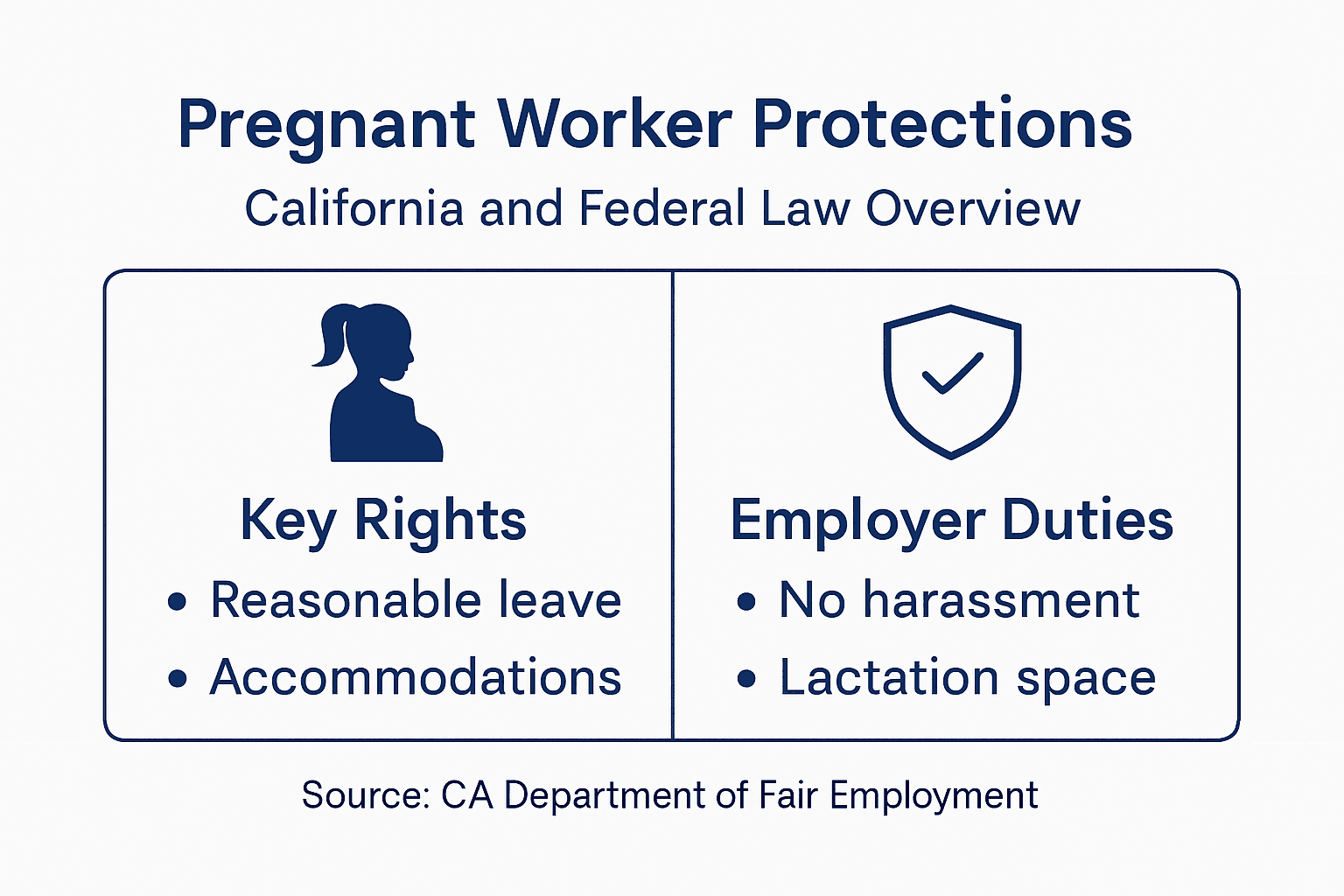
California also mandates that employers provide private lactation space for nursing mothers. The space must be something other than a bathroom, and employers cannot require you to use a bathroom or storage area for expressing breast milk. Additionally, California law explicitly prohibits discrimination, harassment, and retaliation based on pregnancy. This protection is broader than federal law and covers not just termination but any adverse employment action. Retaliation is particularly important. If you request an accommodation, take pregnancy disability leave, or file a complaint about pregnancy discrimination, your employer cannot retaliate against you by reducing hours, cutting pay, changing your schedule negatively, or any other adverse action.
The following table highlights core differences between federal and California pregnancy discrimination protections:
| Protection Area | Federal Law (PDA) | California Law |
|---|---|---|
| Reasonable Accommodations | Limited; only if provided to others | Broad; proactive accommodations required |
| Medical Leave | Up to 12 weeks unpaid (FMLA) | Up to 4 months for disability |
| Health Insurance Continuity | Required during FMLA leave | Required during leave |
| Lactation Space | Not specified | Private space (not a bathroom) mandatory |
Pro tip: Request accommodations and disability leave in writing through email to your manager or HR department. Keep copies of all requests and responses. Written documentation creates a clear record of what you asked for and when you asked for it, which protects you if your employer later claims you never made the request or changes the terms of what was agreed upon.
Employee Rights and Employer Responsibilities
Pregnancy discrimination laws create a clear framework where you have specific rights and your employer has corresponding legal obligations. Understanding this balance is essential because it empowers you to recognize when your employer is crossing the line and helps you document violations effectively. In a Fairfax retail environment, knowing exactly what you’re entitled to and what your employer must do sets the foundation for protecting yourself.
Your fundamental right is equal treatment in all employment matters. This means pregnancy discrimination laws cover hiring, pay, job assignments, promotions, training, benefits, and firing among other employment decisions. Your employer cannot make decisions based on pregnancy status, assumptions about your commitment, or stereotypes about what pregnant workers can or cannot do. If your non-pregnant coworker receives a raise, gets promoted, or keeps their current schedule, you must receive the same treatment if you’re similarly situated. Your employer also must provide reasonable accommodations for pregnancy-related medical needs unless doing so creates undue hardship. This is not optional or discretionary. If you need to sit during your shift, your employer must allow it. If you need more frequent bathroom breaks, your employer must accommodate that. If you need modified duties due to pregnancy complications, your employer must work with you to find a solution. The burden is on your employer to prove that accommodating you would genuinely create undue hardship, not merely inconvenience.
Your employer cannot force you to take leave if another accommodation is possible. This is a critical distinction. Some employers try to push pregnant workers out by insisting they take pregnancy disability leave when what you actually need is a schedule change or modified duties. You get to decide what accommodation works for your situation in consultation with your doctor. Your employer must also treat you the same as other employees with similar abilities or disabilities. If your employer allows a non-pregnant employee with a back injury to work light duty, they must allow you the same accommodation for pregnancy-related back pain. Medical confidentiality is protected under federal law, meaning your employer cannot share your pregnancy status or medical information with coworkers, customers, or other unauthorized people.
Your employer’s responsibilities also include preventing harassment and retaliation. They cannot permit coworkers or managers to harass you based on pregnancy, and they cannot retaliate if you request accommodations, take leave, or file a complaint. In California specifically, employers must provide suitable lactation spaces and cannot require you to use bathrooms for expressing breast milk. They must also guarantee job reinstatement to the same or comparable position after pregnancy disability leave. Medical documentation may be required from your healthcare provider to support leave requests, but your employer must handle this confidentially and cannot use it as a basis for discrimination.
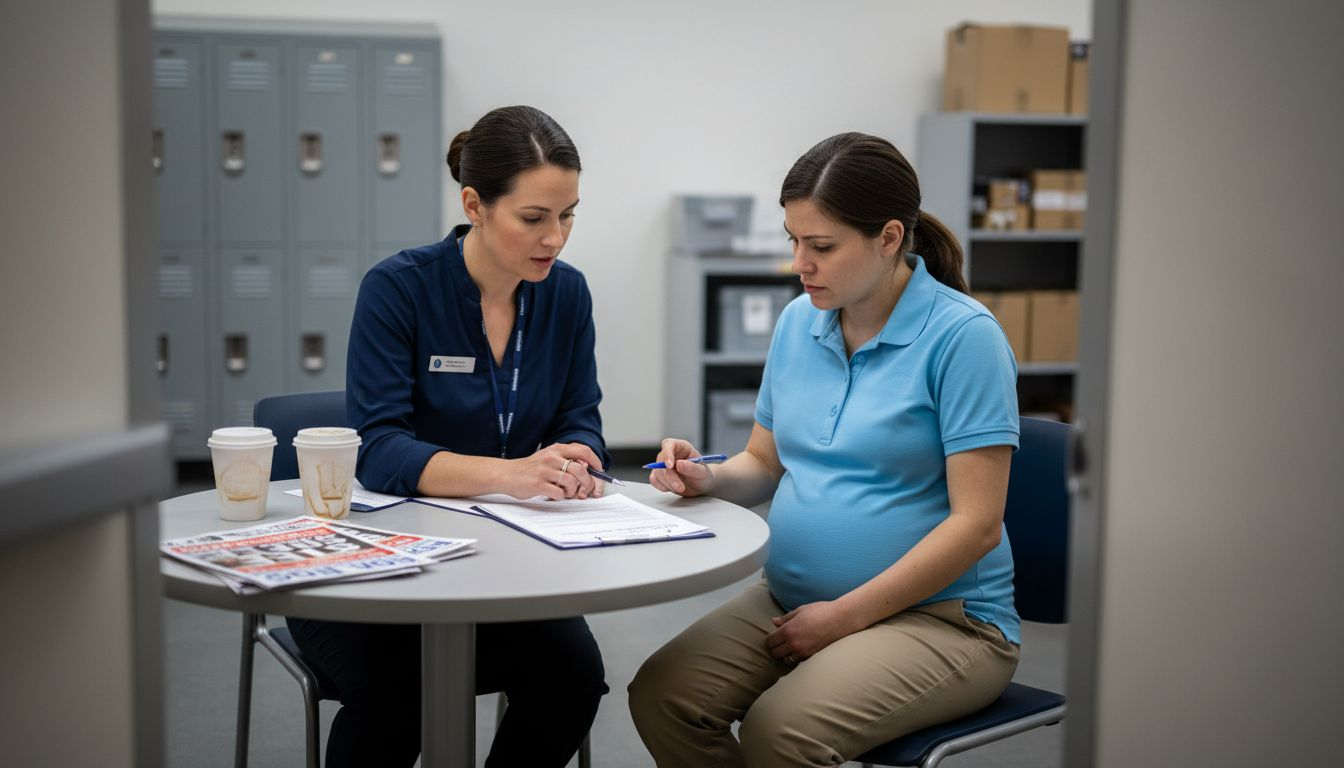
Pro tip: Keep detailed records of all accommodation requests, approvals, and any denials your employer makes. If an employer refuses an accommodation, ask them in writing to explain why they believe it would cause undue hardship. Many employers back down when forced to articulate their reasoning, and their written response becomes powerful evidence if you later need to file a claim.
Risks of Non-Compliance for Businesses
While this article focuses on protecting your rights as a pregnant employee, understanding the business side of pregnancy discrimination helps explain why some employers still violate the law despite clear legal requirements. Retail businesses in Fairfax that fail to comply with pregnancy discrimination laws face serious legal and financial consequences that extend far beyond a single employee’s experience. These risks often motivate businesses to change behavior when employees understand them and assert their rights.
Employers that violate pregnancy discrimination laws face direct legal action from the EEOC and individual lawsuits from affected workers. The financial exposure is substantial. Pregnancy discrimination lawsuits result in significant monetary damages to victims, and settlements in established cases have reached millions of dollars. Beyond the settlement amount itself, employers must pay attorney fees, court costs, and damages for lost wages, emotional distress, and punitive damages in cases involving intentional discrimination. Injunctive relief can require employers to change policies, provide training, and implement monitoring systems. A single pregnancy discrimination case can cost a retail business anywhere from tens of thousands to hundreds of thousands of dollars when all costs are factored in.
The damage extends beyond the courtroom. Non-compliance leads to lost employee trust and severe damage to company reputation. In today’s environment where employees share experiences on social media and review sites, a pregnancy discrimination case becomes public knowledge quickly. Potential employees see these cases and avoid applying. Current employees lose confidence in management and become less engaged. In retail especially, where turnover is already high, a pregnancy discrimination lawsuit accelerates departures and makes recruitment harder. Customers also notice. Some customers make purchasing decisions based on company values and reputation. A business known for discriminating against pregnant workers faces boycotts and negative publicity that impacts sales. The retail industry is particularly vulnerable to public scrutiny because customer-facing employees are visible and their treatment becomes part of the customer experience.
Diminished employee morale and loss of qualified workers create operational and financial problems that persist long after a lawsuit resolves. When pregnant employees are mistreated, other employees witness it and worry about their own job security. This reduces productivity, increases absenteeism, and damages workplace culture. Retail businesses lose experienced, trained workers who might otherwise have remained loyal. The cost of recruiting and training replacements is substantial, especially for specialized positions. Additionally, pregnancy discrimination non-compliance risks costly litigations and brand damage that disproportionately affect small and medium retailers operating on thin profit margins. For a small retail chain in Fairfax, a single major lawsuit can threaten the entire business.
Pro tip: If you experience discrimination, document everything and consult with an employment lawyer early. Many employers will negotiate reasonable settlements when faced with clear legal violations and competent representation, rather than risk the uncertainty and expense of litigation.
Legal Remedies for Victims of Discrimination
If you experience pregnancy discrimination in a Fairfax retail environment, you have legal pathways to seek justice and recover damages. Understanding these remedies empowers you to take action and hold your employer accountable. You don’t have to simply accept discriminatory treatment. The law provides specific mechanisms designed to compensate victims and prevent future violations.
The first step for most pregnancy discrimination victims is filing a complaint with the appropriate government agency. In California, you file with the Civil Rights Department (formerly DFEH), which has authority to investigate pregnancy discrimination claims. You can also file with the federal EEOC, which investigates under Title VII of the Civil Rights Act. The filing deadline is typically tight, usually within one year of the discrimination occurring, so timing matters. These agencies investigate your complaint at no cost to you and can issue findings of discrimination. If the agency finds merit, they may attempt to mediate between you and your employer. If mediation fails, the agency can issue a “right to sue” letter, allowing you to proceed with a lawsuit. This government investigation often motivates employers to settle because it validates your claim and signals serious legal exposure.
If your case proceeds to litigation, the remedies available are substantial. Victims of pregnancy discrimination may pursue reinstatement, back pay, compensatory damages, and policy changes through settlements or court orders. Back pay covers all wages you lost from the date of the discriminatory action until resolution. If you were wrongfully terminated, you can recover every paycheck you would have earned. Compensatory damages cover non-monetary harm like emotional distress, damage to your reputation, and the stress of job searching while pregnant. In cases involving intentional discrimination, you may also recover punitive damages, which punish the employer and deter future violations. Policy changes are often included in settlements, requiring the employer to revise hiring practices, accommodation procedures, and anti-discrimination training. These changes protect other employees and create accountability going forward.
This table summarizes common legal remedies available to victims of pregnancy discrimination:
| Remedy Type | What It Provides | Example Impact |
|---|---|---|
| Back Pay | Recovers lost wages | Restores earnings from missed shifts |
| Reinstatement | Return to job position | Regains former role with benefits |
| Compensatory Damages | Emotional or personal loss compensation | Addresses stress and reputation harm |
| Policy Changes | Required employer reforms | Updates training and hiring practices |
Under California law, you have additional protections. The Pregnant Workers Fairness Act guarantees your right to reasonable accommodations without retaliation, and violations of this protection open additional avenues for recovery. You can also claim damages for retaliation if your employer takes adverse action against you for requesting an accommodation, taking leave, or filing a complaint. Many pregnancy discrimination cases settle before trial because employers recognize the strength of the evidence and want to avoid public litigation and jury verdicts, which can exceed settlement offers significantly. An experienced employment lawyer evaluates whether your case is strong, estimates potential damages, and handles negotiations while you focus on your health and family.
Pro tip: File your complaint with the Civil Rights Department as soon as possible after the discrimination occurs, even if you’re still employed and trying to work things out. The filing creates an official record with a dated complaint, and you can often keep your complaint confidential while pursuing internal resolution.
Protect Your Rights Against Pregnancy Discrimination in Fairfax Retail
Pregnancy discrimination can profoundly affect your career and well-being in a busy retail environment. Challenges like sudden schedule changes, denied accommodations, reduced hours, or even wrongful termination are serious violations of your rights under both federal and California law. If you feel sidelined, harassed, or unfairly treated due to your pregnancy status you deserve strong legal support that understands the nuances of employment law and fights to hold employers accountable.
At Shirazi Law Office we specialize in Pregnancy Discrimination and broader Employment Law matters in the Fairfax District and greater Los Angeles region. Our skilled legal team provides strategic guidance and powerful representation to help you secure reasonable accommodations protect your job and seek fair remedies if discrimination has caused you harm. Do not let your employer ignore their legal responsibilities or silence your concerns. Take action now because delays can limit your options. Visit Shirazi Law Office and connect with a trusted advocate who will fight for your rights and your future.
Frequently Asked Questions
What constitutes pregnancy discrimination in the workplace?
Pregnancy discrimination occurs when an employer makes employment decisions based on a person’s pregnancy, childbirth, or related medical conditions. This includes actions such as hiring, firing, promotions, and job assignments that are influenced by the employee’s pregnancy status.
What rights do pregnant employees have regarding accommodations in the workplace?
Pregnant employees have the right to reasonable accommodations for medical needs related to pregnancy. This can include flexible scheduling, rest breaks, or light-duty assignments. Employers are required to treat pregnant employees the same as other workers with similar limitations unless it creates undue hardship for the business.
What should I do if I experience pregnancy discrimination at work?
If you experience pregnancy discrimination, document every instance of discriminatory behavior, including dates, times, and involved parties. Then, file a complaint with the appropriate agency, such as the Civil Rights Department or the EEOC, to begin the process of seeking justice and potential compensation.
What legal remedies are available for victims of pregnancy discrimination?
Victims of pregnancy discrimination can pursue several legal remedies, including back pay for lost wages, reinstatement to their previous position, compensatory damages for emotional distress, and changes to employer policies to prevent future violations.





[…] Pregnancy Discrimination in Fairfax Retail – Employee Rights and Legal Remedies – Law Office… […]