

More than one in five American executives who report corporate wrongdoing experience workplace retaliation that threatens their careers in Los Angeles. Facing an employer’s backlash can lead to damaged professional standing and even jeopardize future opportunities. For executives navigating these disputes, understanding how California laws protect whistleblowers and learning key steps to safeguard both reputation and legal rights is vital for long-term career stability.
Table of Contents
- Defining Executive Retaliation After Reporting Misconduct
- Types of Retaliatory Actions Against Executives
- California Laws Protecting Whistleblowers
- Essential Steps for Building a Strong Claim
- Risks, Remedies, and Executive Protections
- Safeguarding Reputation During Retaliation Disputes
Key Takeaways
| Point | Details |
|---|---|
| Executive Retaliation Defined | Executive retaliation occurs when employers take adverse actions against executives after they report misconduct, protected under California law. |
| Legal Protections for Whistleblowers | California law offers robust protections for whistleblowers, preventing retaliation regardless of whether reported misconduct is proven. |
| Mitigating Risks and Remedies | Executives face significant risks when reporting, but California law provides remedies such as compensation and reinstatement for those who experience retaliation. |
| Reputation Management Strategies | Maintaining professionalism and strategic communication is essential for protecting one’s reputation during retaliation disputes. |
Defining Executive Retaliation After Reporting Misconduct
Executive retaliation represents a serious legal violation where employers deliberately harm an executive’s professional standing after they report organizational misconduct. Workplace retaliation protections in California safeguard executives who expose unethical or illegal practices within their organizations.
Under California law, executive retaliation occurs when an employer takes adverse employment actions against an executive specifically in response to their good faith reporting of illegal activities, harassment, discrimination, or other workplace violations. These retaliatory actions can include termination, demotion, reduced responsibilities, salary cuts, negative performance evaluations, or creating a hostile work environment designed to push the executive out.
The legal definition requires proving that the adverse action was directly connected to the executive’s protected reporting activity. California’s Fair Employment and Housing Act (FEHA) and whistleblower statutes provide robust protections, ensuring that executives who report misconduct cannot be punished for their transparency. This means even if the reported misconduct is not ultimately proven, the executive remains legally protected if they acted with reasonable belief and genuine intent.
Pro tip: Document every interaction and communication related to your misconduct report, as detailed evidence can become crucial in establishing a potential retaliation claim.
Types of Retaliatory Actions Against Executives
Executives facing workplace retaliation often encounter a complex landscape of strategic professional attacks designed to undermine their career and reputation. These retaliatory actions can manifest in numerous subtle and overt ways, senior management representation experts recognize as deliberate attempts to marginalize high-level professionals who challenge organizational misconduct.
Retaliatory actions typically include a range of calculated professional interventions intended to diminish an executive’s status, influence, and future employment prospects. These can involve direct employment actions like termination or demotion, as well as more nuanced professional sabotage such as:
- Systematic reduction of job responsibilities
- Intentional exclusion from critical meetings and strategic decision-making processes
- Unwarranted negative performance evaluations
- Deliberate professional isolation within organizational networks
- Withholding critical professional opportunities or promotions
- Creating hostile work environments designed to force resignation
- Spreading professional disinformation or damaging workplace rumors
Moreover, retaliatory tactics can extend beyond immediate workplace interactions, potentially involving strategic efforts to damage an executive’s professional reputation in industry networks. Employers might attempt to undermine future employment prospects by providing negative references, blocking professional recommendations, or engaging in subtle character assassination through professional communication channels.
Pro tip: Maintain comprehensive documentation of all professional interactions, communications, and potential retaliatory actions to build a robust legal defense if workplace misconduct escalates.
California Laws Protecting Whistleblowers
California has established robust legal protections for whistleblowers, recognizing the critical role employees play in exposing organizational misconduct. Wrongful termination protections provide comprehensive safeguards for executives and employees who report unethical or illegal practices within their workplace.
Whistleblower protections in California are designed to shield employees from retaliation across multiple legal frameworks. These protections cover a wide range of scenarios, including:
- Reporting violations of state or federal laws
- Exposing potential health and safety violations
- Disclosing financial fraud or accounting irregularities
- Highlighting discriminatory workplace practices
- Revealing environmental law violations
- Reporting sexual harassment or workplace misconduct
- Exposing potential criminal activities within an organization
The California Labor Code and Fair Employment and Housing Act (FEHA) provide comprehensive legal shields for whistleblowers. These laws explicitly prohibit employers from taking retaliatory actions against employees who report misconduct in good faith, regardless of whether the reported issue is ultimately substantiated. Executives are afforded special protections that recognize their unique position in organizational hierarchies and their potential exposure to significant professional risks when reporting corporate wrongdoing.
Here’s a summary of California whistleblower laws and their impact on executive protections:
| Law or Statute | Who Is Protected | Scope of Protection | Common Remedies |
|---|---|---|---|
| California Labor Code | All employees, executives | Retaliation for reporting violations | Compensation, reinstatement |
| Fair Employment & Housing Act (FEHA) | Executives, staff | Discrimination, harassment, retaliation | Damages, attorney’s fees |
| Whistleblower Statutes | Employees, executives | Fraud, safety, legal violations | Civil lawsuits, settlements |
Pro tip: Consult with an employment law specialist before making a formal report to understand the specific legal protections that apply to your unique situation.
Essential Steps for Building a Strong Claim
Successful executive retaliation claims require meticulous preparation and strategic documentation. Employee rights documentation provides critical guidance for professionals seeking to protect their career and legal standing when confronting workplace misconduct.
Claim preparation involves a comprehensive approach to gathering and preserving evidence. Executives should focus on creating a robust documentation strategy that includes:
- Maintaining a detailed chronological record of all potentially retaliatory actions
- Collecting email correspondence, performance reviews, and communication records
- Preserving copies of original reports of misconduct
- Documenting specific instances of professional harm or career impediment
- Recording witness statements from colleagues who can corroborate the retaliation
- Tracking any changes in job responsibilities or professional treatment after reporting
- Securing performance records that demonstrate prior professional excellence
Legal experts recommend creating a comprehensive narrative that connects the reported misconduct to subsequent retaliatory actions. This requires building a clear, logical timeline that demonstrates a direct link between the whistleblowing activity and the professional consequences experienced. Executives must be prepared to show that the adverse actions were a direct result of their good-faith reporting, rather than performance-related issues or other legitimate business considerations.
Pro tip: Create a secure, organized digital archive of all relevant documentation, storing multiple backup copies in different locations to ensure evidence preservation.
Risks, Remedies, and Executive Protections
Executive retaliation claims involve significant professional and legal complexities that require strategic navigation. Retaliation claims in Hollywood highlight the nuanced challenges professionals face when challenging organizational misconduct and seeking legal remedies.
Professional risks associated with whistleblowing can be substantial, potentially impacting an executive’s career trajectory and future employment prospects. These risks encompass multiple dimensions:
- Potential industry blacklisting
- Damage to professional reputation
- Psychological and emotional stress
- Financial uncertainty during legal proceedings
- Potential challenges in securing future leadership roles
- Emotional and professional isolation
- Long-term career momentum disruption
California law provides multiple remedies for executives experiencing retaliation, including potential compensation for lost wages, damages for emotional distress, reinstatement to previous positions, and legal fees. Executives can seek relief through administrative complaints with state agencies, civil lawsuits, and negotiated settlements. The legal framework recognizes the unique vulnerabilities of professionals who expose organizational misconduct and offers comprehensive protections designed to prevent and remedy retaliatory actions.

This table compares common risks and legal remedies for executives facing workplace retaliation:
| Professional Risk | Example Scenario | Remedy Under California Law |
|---|---|---|
| Damage to reputation | Negative references provided | Compensation for harm, defamation claims |
| Career disruption | Exclusion from leadership roles | Reinstatement, lost wages |
| Financial uncertainty | Delay in employment during litigation | Legal fees coverage, settlements |
Pro tip: Consult with an employment law specialist who understands executive-level dynamics before making any formal legal moves to protect your professional interests.
Safeguarding Reputation During Retaliation Disputes
Executives confronting workplace retaliation must implement strategic approaches to protect their professional reputation and career integrity. Workplace defamation claims represent critical legal mechanisms for professionals seeking to mitigate potential long-term damage from retaliatory actions.
Reputation management during legal disputes requires a multifaceted approach that balances legal strategy with professional discretion. Executives should consider implementing the following protective measures:
- Maintain strict confidentiality about ongoing legal proceedings
- Communicate professionally and strategically with industry networks
- Document all interactions and potential reputation-damaging communications
- Avoid public confrontations or emotional responses
- Preserve professional relationships where possible
- Develop a consistent narrative that emphasizes professional integrity
- Seek strategic legal counsel to manage public perception
- Control information sharing across professional platforms
Successful reputation preservation demands a calculated approach that separates emotional responses from strategic legal action. Executives must carefully manage communication channels, ensuring that their professional narrative remains focused on their expertise, accomplishments, and commitment to ethical business practices. This approach involves crafting a measured response that demonstrates professionalism while protecting against potential character assassination or industry marginalization.
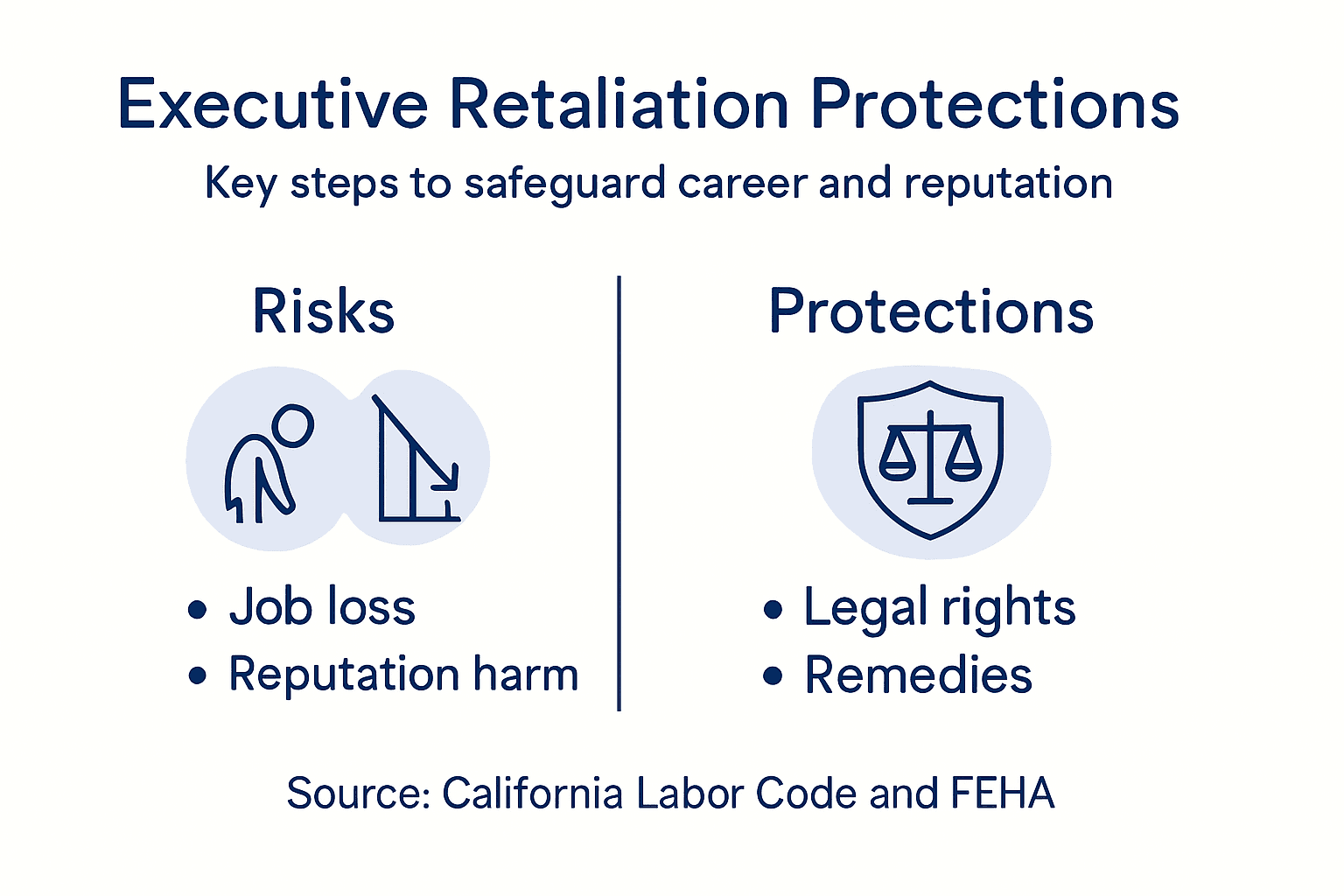
Pro tip: Engage a professional reputation management consultant who specializes in executive-level disputes to develop a comprehensive strategy for protecting your professional brand.
Protect Your Career and Reputation from Executive Retaliation Today
Facing executive retaliation after reporting workplace misconduct can feel overwhelming and isolating. This serious challenge often threatens your professional standing, future opportunities, and peace of mind. If you are experiencing adverse actions such as demotion, exclusion from key decisions, or damaging professional rumors, know that California law offers strong protections against such unfair treatment.
At Shirazi Law Office, we specialize in defending executives and senior management in Los Angeles against all forms of workplace retaliation. Our focused experience with Workplace Retaliation and Wrongful Termination claims allows us to provide strategic and personalized legal representation to safeguard your rights, reputation, and career trajectory. Do not wait until professional damage escalates. Visit our Downtown Los Angeles office or contact us through Shirazi Law Office today to take the crucial first step toward protecting yourself and achieving the justice you deserve.
Frequently Asked Questions
What constitutes executive retaliation in the workplace?
Executive retaliation occurs when an employer takes adverse actions against an executive because they reported misconduct, such as illegal activities or workplace violations. This can include termination, demotion, or creating a hostile work environment.
How does California law protect whistleblowers from retaliation?
California law offers robust protections to whistleblowers under the Fair Employment and Housing Act (FEHA) and the Labor Code, ensuring that employees who report misconduct in good faith cannot face retaliation, regardless of the outcome of the report.
What types of actions can be considered retaliatory against an executive?
Retaliatory actions can include termination, demotion, reduced job responsibilities, negative performance evaluations, being excluded from critical meetings, and even spreading damaging rumors about the executive in professional circles.
What steps can executives take to build a strong retaliation claim?
To build a strong claim, executives should document all interactions related to their report, keep track of potentially retaliatory actions, gather evidence such as emails and performance reviews, and create a detailed timeline connecting the report to any adverse actions taken against them.





[…] Executive Retaliation Claims in Los Angeles: Protecting Career and Reputation […]
[…] and across Los Angeles enjoy robust legal protections against unfair workplace treatment. Executive retaliation claims provide critical workplace safeguards that shield professionals from arbitrary or discriminatory employment […]