

Most American professionals are surprised to learn that nearly half of workplace sexual harassment incidents go unreported each year. In busy Mid-Wilshire offices, understanding what truly counts as sexual harassment can determine whether your rights are fully protected or quietly ignored. By clearly defining harassment and knowing current policy standards, you stand better equipped to safeguard yourself and help foster safer work environments for your colleagues.
Table of Contents
- Defining Sexual Harassment at Work
- Types of Sexual Harassment in Offices
- California Laws Governing Workplace Harassment
- Employer Duties and Prevention Strategies
- Common Failures in Policy Enforcement
- Employee Rights and Legal Remedies
Key Takeaways
| Point | Details |
|---|---|
| Understanding Sexual Harassment | Sexual harassment includes unwelcome sexual advances and behaviors that create a hostile environment, affecting employee well-being and professional growth. |
| Types of Harassment | Quid pro quo and hostile work environment are two primary forms of harassment, each requiring specific employer responses and legal compliance. |
| Employer Responsibilities | Employers must implement clear policies, conduct training, and ensure thorough investigations to prevent and address harassment effectively. |
| Employee Rights | Employees have the right to report harassment, seek legal remedies, and receive protection from retaliation under applicable laws. |
Defining Sexual Harassment at Work
Sexual harassment represents a serious violation of workplace safety and professional conduct that can significantly impact an employee’s work environment and career trajectory. Under California law and federal guidelines, sexual harassment encompasses unwelcome sexual advances, inappropriate requests for sexual favors, and verbal or physical conduct of a sexual nature that creates an intimidating or hostile work setting.
The legal definition of sexual harassment involves several critical components. These include conduct that is unwelcome, sexual in nature, and either severe or pervasive enough to interfere with an individual’s work performance or create an offensive workplace environment. It is crucial to understand that sexual harassment can occur between individuals of any gender, involving supervisors, coworkers, clients, or customers.
In Mid-Wilshire offices, sexual harassment can manifest through various behaviors, such as inappropriate comments, suggestive gestures, unwanted physical contact, sexual jokes, displaying sexually explicit materials, or making sexual propositions. These actions become legally actionable when they are unwelcome and create a work environment that a reasonable person would find intimidating, hostile, or offensive.
Pro tip: Document every incident of potential harassment meticulously, including dates, times, witnesses, and specific details to support any future legal action or workplace complaint.
Types of Sexual Harassment in Offices
Sexual harassment in professional settings manifests through multiple complex and harmful behaviors that can profoundly impact workplace dynamics and employee well-being. Two primary legal categories of sexual harassment exist: quid pro quo and hostile work environment, each representing distinct yet equally damaging forms of workplace misconduct.
Quid pro quo harassment occurs when employment benefits, promotions, or job security are explicitly or implicitly conditioned on sexual cooperation. This might involve a supervisor suggesting a raise or career advancement in exchange for sexual favors, creating a coercive and unethical power dynamic. In contrast, hostile work environment harassment involves persistent, unwelcome sexual conduct that creates an intimidating or offensive workplace atmosphere. Such behaviors can include inappropriate sexual jokes, unwanted physical contact, suggestive comments, displaying sexually explicit materials, or making repeated romantic advances that make employees feel uncomfortable.
Beyond these primary categories, sexual harassment can also be classified into verbal, physical, and visual forms. Workplace sexual harassment encompasses a range of inappropriate behaviors including lewd gestures, offensive remarks, unwanted touching, sexual violence threats, and stalking. These actions can occur between any genders and across various workplace relationships, involving supervisors, coworkers, clients, or customers.
Here’s a side-by-side look at the two main legal types of workplace sexual harassment:
| Type of Harassment | Definition | Typical Examples | Legal Consequence |
|---|---|---|---|
| Quid Pro Quo | Employment benefits linked to sexual favors | Supervisor offers promotion for sexual cooperation | Direct liability for company |
| Hostile Work Environment | Persistent, unwelcome, sexual conduct impacts workplace | Offensive jokes, unwanted touching, sexual images | Requires remediation or damages |
Pro tip: Familiarize yourself with your company’s specific sexual harassment reporting procedures and maintain a detailed, dated record of any inappropriate interactions to support potential future investigations.
California Laws Governing Workplace Harassment
California stands at the forefront of employee protection, with robust legal frameworks designed to combat workplace sexual harassment comprehensively. California workplace harassment laws establish stringent guidelines that go beyond federal regulations, providing extensive protections for employees across diverse professional environments.
The Fair Employment and Housing Act (FEHA) serves as the cornerstone of workplace harassment prevention in California. This landmark legislation mandates that employers maintain harassment-free workplaces, conduct thorough investigations into complaints, and provide mandatory sexual harassment prevention training. The law covers all employers with five or more employees, ensuring comprehensive protection across small businesses and large corporations alike. Importantly, the FEHA recognizes harassment as a form of discrimination, allowing employees to seek legal remedies through the California Civil Rights Department or the Equal Employment Opportunity Commission (EEOC).
Under California law, sexual harassment is defined broadly to include not just explicit sexual advances, but also subtle forms of misconduct that create hostile work environments. Employers bear significant legal responsibility for preventing and addressing harassment, including potential liability for actions of supervisors, coworkers, and even non-employees like clients or vendors. The law protects employees from retaliation when reporting harassment, ensuring workers can come forward without fear of professional consequences.
Pro tip: Maintain a detailed written record of any harassment incidents, including dates, times, witnesses, and specific behaviors, which can be crucial evidence if you need to file a formal complaint.
The table below summarizes key California employer responsibilities for preventing sexual harassment:
| Legal Duty | Description | Business Impact |
|---|---|---|
| Written Policy | Create and share clear rules prohibiting harassment | Sets workplace standards, avoids confusion |
| Employee Training | Provide regular, interactive instruction to all staff | Reduces incidents and legal risk |
| Complaint Investigation | Promptly and thoroughly address every report | Improves trust, limits liability |
| Anti-Retaliation Measures | Protect employees from retaliation when reporting | Encourages complaints, supports compliance |
Employer Duties and Prevention Strategies
Employers in Mid-Wilshire and throughout California face increasingly rigorous legal obligations to prevent and address workplace sexual harassment. Comprehensive prevention strategies have become a critical component of organizational risk management and employee protection.

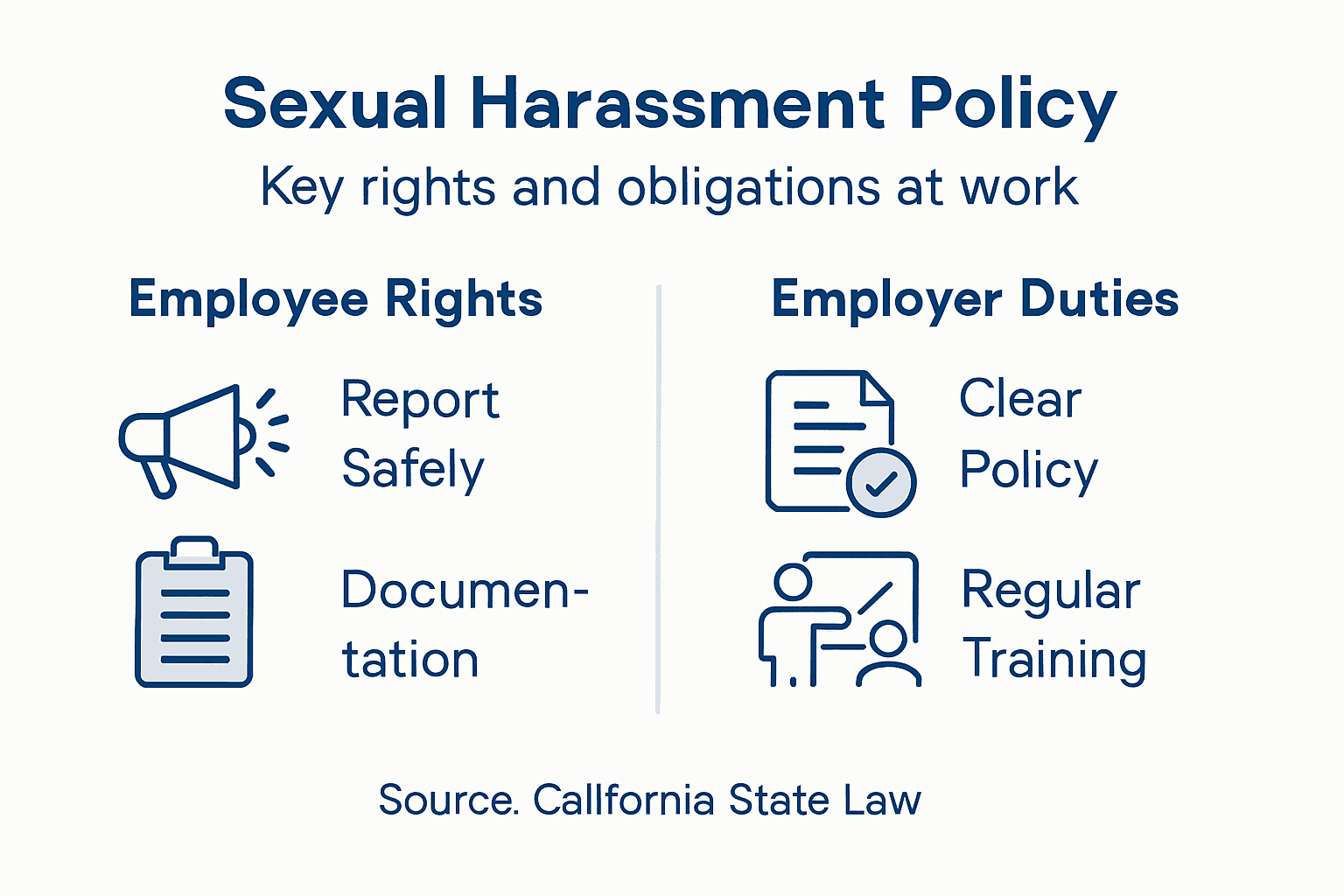
Effective workplace harassment prevention requires a multifaceted approach. Employers must develop clear, written sexual harassment policies that explicitly define prohibited behaviors, establish reporting mechanisms, and outline potential consequences for violations. Training programs should be mandatory, interactive, and conducted regularly for all employees, with special emphasis on management-level personnel who bear additional responsibility for maintaining a safe work environment. These programs should cover recognizing harassment, understanding reporting procedures, and understanding the potential legal and professional consequences of inappropriate workplace conduct.
Starting October 2024, employers will face even more stringent requirements, including a legal duty to proactively assess and mitigate harassment risks. This anticipatory approach means organizations must go beyond reactive policies and implement systematic prevention strategies. Key elements include conducting regular workplace climate assessments, creating confidential reporting channels, ensuring prompt and thorough investigations of any harassment claims, and implementing protective measures that prevent potential future incidents.
Pro tip: Develop a comprehensive sexual harassment prevention strategy that includes anonymous reporting mechanisms, regular training updates, and clear communication of zero-tolerance policies to create a safer workplace culture.
Common Failures in Policy Enforcement
Mid-Wilshire workplaces frequently encounter systemic challenges in addressing sexual harassment, often rooted in deeply ingrained organizational deficiencies. Organizations consistently mishandle harassment investigations, creating environments that inadvertently protect perpetrators and discourage victim reporting.
Ineffective training programs represent a primary failure in policy enforcement. Many employers conduct mandatory sexual harassment training as a perfunctory checkbox exercise, using generic presentations that lack meaningful engagement or practical scenario-based learning. These superficial training sessions often fail to address the nuanced power dynamics, implicit biases, and contextual complexities that enable harassment to persist. Moreover, organizations frequently design training that focuses on legal compliance rather than cultivating genuine cultural change and mutual workplace respect.
Another critical enforcement failure involves the investigative process itself. Workplace investigations into harassment claims are frequently compromised by institutional biases, inadequate documentation, and a tendency to prioritize organizational reputation over employee safety. Employers often conduct superficial or intentionally limited investigations, fail to take prompt corrective actions, and may even retaliate against employees who file legitimate complaints. This systemic approach not only perpetuates a toxic workplace culture but also exposes organizations to significant legal and financial risks.
Pro tip: Develop an independent, confidential reporting mechanism that allows employees to document harassment experiences without fear of professional repercussions or institutional bias.
Employee Rights and Legal Remedies
Employees experiencing sexual harassment in Mid-Wilshire offices have robust legal protections under both federal and California state laws. Comprehensive workplace harassment rights provide employees multiple avenues for addressing and challenging inappropriate workplace conduct, ensuring their professional dignity and safety.
Under Title VII of the Civil Rights Act and California’s Fair Employment and Housing Act, employees have the right to file formal complaints with government agencies like the Equal Employment Opportunity Commission (EEOC) or the California Civil Rights Department. These legal mechanisms protect workers from sexual harassment across all professional interactions, including those with supervisors, coworkers, clients, and customers. Employees can seek various remedies such as workplace accommodations, financial compensation, potential reinstatement, and protection from retaliatory actions by their employers.
Documentation becomes crucial in establishing a credible harassment claim. Employees should meticulously record incidents, including dates, times, specific behaviors, potential witnesses, and any communication related to the harassment. Contemporaneous documentation strengthens legal claims and provides a clear narrative of the workplace misconduct. Additionally, employees have the right to utilize internal reporting mechanisms, seek legal representation, and access support organizations that offer free or low-cost guidance through the complex process of addressing workplace sexual harassment.
Pro tip: Preserve all evidence of harassment, including emails, text messages, and detailed written accounts, and consult with an employment law professional before making any formal workplace complaints.
Protect Your Workplace Rights Against Sexual Harassment in Mid-Wilshire Offices
Sexual harassment continues to create unsafe and hostile work environments that can deeply affect your career and well-being. If you are facing unwelcome advances, quid pro quo situations, or a hostile work environment as described in the article, understanding your rights and having strong legal support is critical. The emotional toll and professional risks involved demand immediate action and knowledgeable representation.
At Shirazi Law Office, we specialize in protecting employees from sexual harassment and related workplace violations in the Mid-Wilshire area. Our experienced team is dedicated to helping victims document incidents, navigate complex reporting procedures, and pursue justice under California’s robust laws. Learn more about our focused services in Sexual Harassment and specific support for workers in Mid-Wilshire.
Do not wait until it is too late to safeguard your rights and professional future. If you are dealing with harassment or hostile conduct at work, contact us today at Shirazi Law Office for a confidential consultation and take the first step toward a safer workplace.
Frequently Asked Questions
What constitutes sexual harassment in the workplace?
Sexual harassment in the workplace includes unwelcome sexual advances, inappropriate requests for sexual favors, and any verbal or physical conduct of a sexual nature that creates an intimidating or hostile work environment.
What are the two main types of sexual harassment?
The two primary types of sexual harassment are quid pro quo, where job benefits are contingent on sexual cooperation, and hostile work environment, which involves pervasive unwelcome sexual conduct that makes the workplace uncomfortable.
What are employees’ rights when facing sexual harassment?
Employees have the right to file complaints with agencies like the EEOC or California’s Civil Rights Department, seek remedies for harassment, and be protected from retaliation for reporting misconduct.
What should an employee do if they experience sexual harassment?
Employees should document each incident thoroughly, report it according to their company’s reporting procedures, and consider seeking legal advice to understand their rights and options.